


Pros cons for decision ability ppt slides






Try Before you Buy Download Free Sample Product
 Impress Your
 Audience
 100%
100% Editable
 Save Hours
 of Time


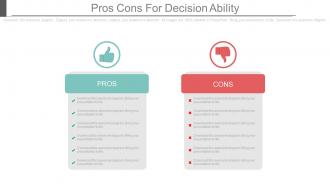
Taking the right decision for the business growth is important it decides the fate of it. Our pros con for decision ability PPT slide is created on the assessment making process. The simple yet elegant looking presentation design will definitely assist you to make your viewers understand the importance of taking the right approach for the business development. Pros and cons can be used to demonstrate as what practices need to be followed to ensure that the company objectives are fulfilled and what all needs to be avoided. The PowerPoint image provides the opportunity to the business management team to make a check list of do’s and dont’s and then create the strategy as per it. The key points can be highlighted in the pros section and the ones that are not required can be updated in the cons section. Both are important as you cannot just share the good practices but you also make your viewers know why they are considered best for the business. So, take the right step towards the success by downloading this impeccable Presentation slide. Alter your approach if called for with our Pros Cons For Decision Ability Ppt Slides. You will acquire a large dose of flexibility.
People who downloaded this PowerPoint presentation also viewed the following :
Pros cons for decision ability ppt slides with all 4 slides:
Cut out the garbage with our Pros Cons For Decision Ability Ppt Slides. They contain absolutely accurate data
FAQs for Pros cons for decision
So first you gotta figure out what the actual problem is - sounds obvious but trust me, half the time we're solving the wrong thing. Then gather your data, brainstorm solutions, and weigh your options. Pick one and roll with it. Here's what nobody tells you though: most people just stop there and never check if their decision actually worked out. That's dumb. You need to circle back later and see how it went - otherwise you're just making the same mistakes over and over. Oh, and don't get stuck researching forever trying to find perfect info. Set yourself a deadline or you'll be there all day.
So basically your brain loves taking shortcuts, which sounds efficient but actually screws you over pretty regularly. Like you'll only pay attention to stuff that confirms what you already think (confirmation bias), or get weirdly attached to the first number someone throws at you. I swear once you start noticing these patterns, you see them everywhere. The annoying part? Even when you know about bias, you still fall for it. My advice - just slow down when making big choices. Actually try to find people who'll tell you you're wrong. It's uncomfortable but worth it.
Honestly, data just stops you from making terrible decisions based on feelings alone. Like, we've all been there with the gut instinct disasters. When you actually look at numbers, patterns jump out that you'd totally miss otherwise. You can see what's bombing vs what's crushing it. Plus you won't look like an idiot when someone asks "but why though?" - you've got receipts. Predicting outcomes becomes way easier too. I'd say start super simple, maybe just track a few key things for whatever you're deciding on. Even basic metrics beat flying blind every single time.
Oh man, group dynamics are everything when it comes to making decent decisions together. If people feel safe speaking up, you'll get actual debate and different perspectives - which is gold. But throw in some office politics or that one person who dominates every conversation? Either everyone just nods along (groupthink city) or nobody says anything useful. I've watched perfectly smart teams crash and burn because of this stuff. Mix up who runs meetings sometimes, or try having people submit ideas anonymously first - especially for the messy topics nobody wants to touch.
Dude, echo chambers are decision killers - get different viewpoints before you commit to anything. I swear by this 10-10-10 thing: will I care about this in 10 minutes? 10 months? 10 years? Game changer. Also, play devil's advocate with your team and actually challenge ideas instead of just nodding along. Oh, and keep a little journal of your choices so you can see if you're making the same mistakes repeatedly (we all do it). Before you get attached to any option, figure out what winning looks like. Just pick one of these to try this week.
Honestly, drawing stuff out changed everything for me. Decision trees show you all the "what if" scenarios with actual odds. Pros/cons lists work better when you can weight things visually side by side. I used to just stare at spreadsheets forever (terrible idea). Charts make messy data actually make sense. Even doodles help - like mind maps for brainstorming different paths. The trick isn't getting fancy with it. Just pick whatever visual fits your situation and actually sketch it out instead of keeping everything in your head spinning around.
Okay so first thing - figure out who gets screwed over and who wins when you make big calls. I'm talking employees, customers, shareholders, the whole community. Be transparent about your process (people can smell BS from a mile away). Think past just making money - what happens in 5 years? Can you actually live with yourself afterward? Oh and don't forget the environmental stuff, that matters more now than ever. Honestly the whole thing's way messier than business school makes it sound, but asking "who am I hurting here?" before you pull the trigger covers most of it.
Risk assessment gives you actual data to make better decisions - you figure out what might go wrong and how likely each thing is to happen. Map out the threats, see how they'd mess with your goals, then decide which ones actually matter. Honestly, most companies skip this step and just wing it. Short sentences work great for the big stuff. You can pivot away from sketchy moves or at least have backup plans ready. Don't make major calls without running through the risks first - you'll thank yourself later when things don't blow up.
Okay so when people are butting heads over decisions, first thing - actually listen to everyone before trying to fix anything. Make a pros/cons list or something similar to keep things factual instead of getting all emotional about it. If it's getting heated, maybe bring in someone neutral? The "yes, and..." thing works well too - builds on ideas rather than shooting them down. You can also break big decisions into smaller chunks, which honestly makes everything less overwhelming. Or just set a deadline and force everyone to pick something. Main thing is keeping everyone focused on what you're all trying to accomplish together.
Yeah, time pressure totally messes with your decision-making. You skip over crucial stuff and just grab the first option that seems okay instead of actually weighing alternatives. Plus when you're stressed about deadlines, you end up trusting your gut more - which honestly isn't always the move for big decisions. It's kinda like how I make terrible food choices when I'm hangry at the store. Best trick I've found? Set fake deadlines way before the real ones. Gives you breathing room to think without that last-minute panic clouding everything.
Honestly, stakeholder analysis is just figuring out who gives a damn about your decision and whether they can actually do anything about it. Map out everyone - your boss, end users, even that accounting guy who weirdly has opinions on everything. The whole point? You don't want someone derailing your project three months in because you forgot to loop them in. Figure out their concerns early, see who needs convincing vs who just wants updates. I'd start by writing down everyone who's affected, then rank how much power and interest they actually have. Saves you headaches later, trust me.
Dude, culture totally shapes how we make decisions. Some places are all about getting everyone to agree first - takes forever but everyone's happy. Others? The boss just decides and boom, done. Risk tolerance is wildly different too. Like, Americans will often just go for it while other cultures want to analyze everything to death first. Relationships vs pure logic is another big one. Honestly, I've seen so many meetings go sideways because people didn't get this. Once you notice these patterns though, you can adjust how you approach things with different teams. Saves a lot of headaches.
So basically a decision matrix lets you score each option against what matters to you most - way better than just winging it. I mean, gut feelings are fine sometimes but this actually shows you everything side by side. The cool part is it makes you figure out your priorities first before jumping into a choice. Score everything 1-5 for each factor you care about. Super straightforward but you'll actually see real differences between options. Oh and if someone questions your decision later? You've got the whole breakdown right there. Honestly saves so much second-guessing.
Honestly, emotional intelligence is like having extra info that logic alone can't give you. You know when you're stressed or pissed off and might make a dumb choice? EI helps you catch that. I've dodged so many terrible decisions just by reading the room better - people's faces tell you everything. Oh, and you start thinking about how your choices will mess with other people's feelings, not just the practical stuff. Before any big decision, I literally ask myself "what's going on in my head right now?" Works every time.
Look, decision-making got crazy complicated with all this tech everywhere. Sure, you get tons of real-time data and AI predictions now - honestly sometimes it's too much info, you know? Routine stuff? Let automation handle that no problem. But anything requiring actual context or creative thinking still needs you in the driver's seat. I'd figure out which decisions you can automate first (the boring repetitive ones), then focus your energy on the complex stuff that actually matters. It's about working smarter, not drowning in data overload.
-
Editable templates with innovative design and color combination.
-
Design layout is very impressive.