


QA QC Management Process Plan




Try Before you Buy Download Free Sample Product
 Impress Your
 Audience
 100%
100% Editable
 Save Hours
 of Time


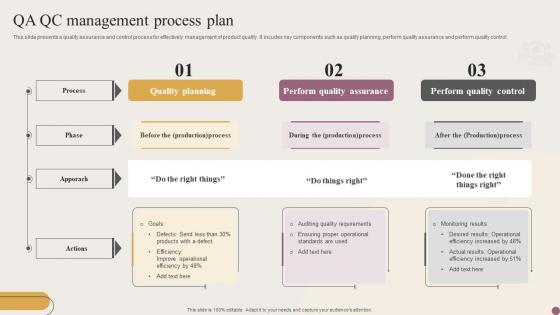
This slide presents a quality assurance and control process for effectively management of product quality. It incudes key components such as quality planning, perform quality assurance and perform quality control.
People who downloaded this PowerPoint presentation also viewed the following :
QA QC Management Process Plan with all 6 slides:
Use our QA QC Management Process Plan to effectively help you save your valuable time. They are readymade to fit into any presentation structure.






FAQs for QA QC
So QA is like setting up guardrails before you start - defining how stuff should be built right from day one. QC comes after and plays detective, catching problems through testing and inspection. QA runs throughout your whole project timeline. QC happens at specific checkpoints when you're reviewing deliverables. Honestly, I've seen too many teams try to rely on just one approach and it never works out. You really need both working together if you want to actually manage quality well. Can't just test your way out of bad processes, you know?
Look, it basically stops problems before they blow up on your customers. You get consistent quality checks at every step, plus real-time data showing you what's going wrong early. Honestly, once your team stops fighting it, the thing's pretty solid. Everyone becomes accountable - they know their role and you can track issues back fast. Fewer returns, happier customers, lower production costs since you're not always putting out fires. My buddy's company saw results in like 3 months. The accountability part alone makes it worth it.
Look, risk management is basically your safety net for QA stuff. It spots problems before they blow up in your face. You can figure out which tests actually matter and stop wasting time on pointless checks. Honestly, most people do this backwards - they just react to whatever breaks instead of preventing it. Smart approach is weaving risk assessment into your whole workflow from day one. That way you're not scrambling when defects slip through. Plus it helps you balance the whole "how much quality can we afford" conversation with management. Way better than crossing your fingers and hoping nothing goes wrong.
Honestly? Start with the basics - defect detection rates, how many bugs escape to customers, and your cost of quality. Time-to-resolution matters too. I always get way too into the numbers early on, but trends tell the real story over time. Test coverage and cycle times are solid productivity indicators. When you roll out your strategy, establish baselines first. Then watch how those KPIs shift quarter to quarter - that's where the magic happens. Build a simple dashboard so you can catch issues fast. Trust me, you'll thank yourself later when problems jump out immediately instead of hiding in spreadsheets.
Start with TestRail or Zephyr for managing your test cases - way easier than spreadsheets. Selenium's still the go-to for web automation, but Cypress is pretty slick if you're doing modern stuff. Jenkins or GitLab will save your sanity for CI/CD. Obviously grab Jira for bug tracking (ugh, necessary evil). JMeter's solid for performance testing when you need it. Honestly though? The tools don't matter if your team won't actually use them. I've seen so many setups fail because people just... didn't keep things updated.
Figure out what standards you actually need first - ISO 9001, FDA stuff, Six Sigma, whatever applies to your industry. Build your QA around those from the start, don't try to retrofit later. Internal audits are a lifesaver because finding issues yourself beats having external auditors surprise you (learned that the hard way). Document literally everything and make sure your team knows the procedures inside out. Monthly compliance check-ins help too. The trick is weaving it into daily work instead of treating it like some separate thing you'll deal with eventually.
Honestly, the worst part is usually not having enough people or budget to do things right. Your team will push back on changes too - nobody likes switching up their routine. Plus when QA and dev teams don't talk? Total disaster waiting to happen. Start with whatever's causing you the most headaches right now. Don't try fixing everything at once, you'll burn out. Get your processes documented so people actually know what they're supposed to do. Regular check-ins between departments help a ton. And yeah, you definitely need your boss on board for proper staffing and tools, otherwise you're just spinning your wheels.
Honestly? Start by making it clear that quality isn't just QA's problem - it's everyone's. When someone spots a mistake or suggests improvements, celebrate the hell out of it. People need to see you actually care about that stuff. Give your team real standards upfront, plus the training to hit them. And please create an environment where people can report issues without getting their heads bitten off - that blame culture kills everything. Oh, and ask them what's blocking good work right now. You'd be surprised what you'll hear.
Honestly, start with defect rates and first-pass yield - those tell you everything. Cycle times matter too. Cost of quality is where it gets interesting though, like how much you're actually spending on prevention vs fixing stuff that already went wrong. Customer complaints are brutal but necessary - they show if your QC is legit working in the real world. Don't forget return rates either. Track your team's inspection times and audit results too. The trick is watching trends over time instead of just random snapshots. Pick maybe 3-4 metrics that actually matter for your process first, then add more later.
Honestly, just bake feedback loops right into your QA process from day one. Track your defect rates and customer complaints - that's your starting point. Monthly team retrospectives are clutch for figuring out what's actually broken vs. what's working fine. Here's the thing though - you've gotta actually DO something with those insights, not just nod and move on (guilty of this myself). Set up some dashboards to watch your key numbers, and try small tweaks to see what sticks. The real wins come when people feel safe calling out problems without getting their heads bitten off.
Honestly, training's huge for QA teams because standards keep changing and new testing methods pop up constantly. Your staff will make way more mistakes without it - trust me on that one. Well-trained people spot issues early, which saves you a ridiculous amount of time and cash later. It also helps with retention since nobody wants to feel clueless at their job. Figure out where your team's knowledge gaps are first, then set up regular training sessions covering both the technical stuff and quality standards. Way better than dealing with compliance headaches down the road.
Customer feedback is gold for your QA strategy - shows you exactly what's failing in real time. When complaints roll in about specific defects, trace them straight back to your testing. Where did you miss it? I've seen companies totally ignore satisfaction scores and wonder why they keep shipping junk. Review complaint patterns weekly, check warranty claims, all that stuff. Short feedback loops are everything here. Customer says something's broken? Update your testing criteria that same week. Don't sit on it. Their complaints should directly shape what you're checking for next.
So digital transformation basically flips QA on its head. Instead of waiting until the end to catch problems, you get real-time monitoring that spots defects as they happen. The AI stuff is wild - it can actually predict issues before they occur. Manual checks get automated, your paperwork goes digital (thank god), and teams can collaborate way better. Plus everything's traceable now. Best part? You're not stuck doing boring repetitive work anymore - you can focus on actually solving problems. I'd start with whatever manual process eats up most of your time first.
Yeah, cross-functional collab is a game changer for QA. You'll catch bugs way earlier when your QA team actually talks to dev, ops, and product regularly. Different teams spot totally different issues - like dev might miss UX problems that product catches immediately. Building quality into the whole process beats scrambling to fix everything at the end, trust me on that one. I'd start with weekly syncs between QA and your main stakeholders. Oh, and make sure everyone can see the same quality metrics - transparency helps a ton. It's honestly just easier when everyone's aligned from day one instead of playing detective later.
Honestly, make your QA docs something people will actually use instead of just filing away. Write step-by-step stuff that's dead simple to follow. Screenshots help a ton - way better than trying to describe everything in text. Also explain WHY you're doing each step so it's not just mindless button-clicking. Keep the formatting consistent across everything (sounds boring but trust me). Version control is huge - track every single change and get sign-offs. Oh, and here's what really works: grab someone who's never seen your process before and watch them try to follow your instructions. You'll spot gaps you totally missed. Makes such a difference.
-
Informative design.
-
The slides are remarkable with creative designs and interesting information. I am pleased to see how functional and adaptive the design is. Would highly recommend this purchase!