


Real estate sales performance dashboard marketing plan for real estate project




Try Before you Buy Download Free Sample Product
 Impress Your
 Audience
 100%
100% Editable
 Save Hours
 of Time


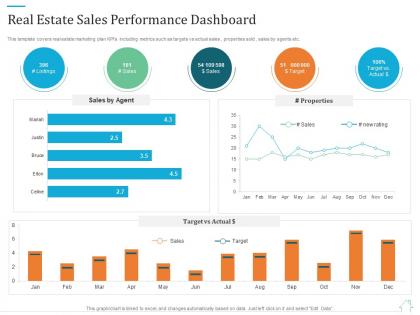
This template covers real estate marketing plan KPIs including metrics such as targets vs actual sales , properties sold , sales by agents etc.
People who downloaded this PowerPoint presentation also viewed the following :
Real estate sales performance dashboard marketing plan for real estate project with all 2 slides:
Use our Real Estate Sales Performance Dashboard Marketing Plan For Real Estate Project to effectively help you save your valuable time. They are readymade to fit into any presentation structure.

FAQs for Real estate sales performance dashboard marketing plan for
For your dashboard, I'd start with the obvious stuff - property values, how long places sit on the market, and what's actually available to buy. Price per square foot is huge for comparisons. If you're looking at rentals, track those yields too. Market absorption rates show you real demand (way more useful than people think). Mortgage rates matter obviously, plus buyer qualification ratios tell you who can actually afford what. Demographic data for neighborhoods is honestly where the magic happens - shows you where things are headed. You can always add more later depending if you're buying, selling, or just trying to make money off rentals.
Dude, spreadsheets are the worst for real estate analysis. Charts and heat maps make everything so much clearer - you can actually see price trends, rental yields, market patterns without wanting to cry. It's like... you know when you finally get glasses and realize trees have individual leaves? Same energy. Dashboards help you compare properties side by side and spot neighborhoods before they get crazy expensive. I got distracted by fancy graphs when I started though. Focus on metrics that'll actually help you decide whether to buy or not.
Dude, real-time data is like having eyes everywhere on your properties. Instead of finding out about problems weeks later, you get instant alerts when stuff breaks, tenants move out, or rent payments bounce. The dashboard connects to sensors, payment apps, market feeds - all that good stuff. Small issues don't turn into massive headaches anymore because you can jump on them right away. Honestly, I wish I'd set this up years ago. Start with alerts for whatever keeps you up at night - probably maintenance calls and late payments, right?
Dude, get a real estate dashboard - it's a game changer. All your market data lives in one spot instead of scattered across random spreadsheets (which, honestly, was driving me insane). Price trends, inventory, days on market... you can finally see what's actually happening. Those visual charts make shifts super obvious. Like when luxury condos start sitting forever or starter home areas suddenly go crazy. I kicked myself for not using one earlier because I missed so many signals. Oh, and set alerts for key stuff so you catch opportunities right when they pop up instead of weeks later when it's too late.
Your dashboard should definitely have occupancy rates and NOI tracking - that's bread and butter stuff. Lease expiration dates are crucial too, plus tenant payment status and maintenance workflows. Market comps are honestly such a pain to pull manually (I waste like an hour on that daily). Portfolio maps help visualize everything at once. Cash flow projections and your deal pipeline need to be visible. Automated investor reports will save you tons of time, and CRM integration is a must. But here's what I'd actually do first - figure out your three biggest daily headaches and build widgets to fix those. Way more practical than trying to do everything at once.
Honestly, customization is a game changer because you only see what actually matters to you. Like if you're in sales, prioritize conversion metrics. Inventory person? Focus on listing trends. Default dashboards are usually garbage - way too generic. I'd start by figuring out your top 3 metrics you check constantly, then build around those. Custom alerts save so much time too. You're not digging through random widgets anymore, just getting straight to the stuff you need to act on. Way less hunting, way more doing.
First thing - get your data formats consistent and set up regular update schedules for everything (MLS, analytics, property systems, all of it). Build a central warehouse instead of hitting each source directly every time. Your dashboard will actually load without everyone wanting to throw their laptop. Set up quality checks to catch weird data early. Figure out which metrics your users actually care about - don't try to integrate everything at once, that's just asking for headaches. Oh, and document where your data comes from. When someone inevitably complains that your numbers don't match their random Excel sheet, you'll need to explain why.
Connect your dashboard to historical sales data, economic indicators, demographic trends - that's your foundation. Then run machine learning models to spot patterns and forecast where prices are heading. Layer in interest rates, employment numbers, local inventory data. Honestly, you don't need super complex AI - basic regression models catch most trends just fine. Set up automated alerts for when big market shifts look like they're coming. Oh, and start with 3-6 month forecasts first. Once you're confident in the accuracy, then you can stretch it out further. Trust me, keeping it simple at first saves headaches later.
Honestly, getting people off their beloved spreadsheets is gonna be your biggest headache - everyone thinks they're a Excel wizard, you know? Data quality will bite you too if it's messy going in. Plus some folks just freeze up when they see too many chart options. Here's what actually works: run quick training on maybe 2-3 features they'll use every day. Clean your data first (boring but necessary). Create dead simple guides with screenshots - like, really dumbed down. Oh, and pick someone on each team to be your "dashboard person" who can field the random questions. Trust me on that last one.
Dude, you NEED a real estate dashboard. Your clients can check everything themselves - offer updates, inspection dates, closing stuff. No more "where are we at?" calls every day (thank god). Upload docs, share comps, whatever they need is right there. Set up alerts so they get pinged when something actually happens. Honestly saves me like 2 hours a week of explaining the same thing over and over. Clients love it because they're not sitting around wondering what's going on, and you'll love not being their personal Google assistant.
Make those buttons way bigger - nobody wants to tap a tiny filter button with their thumb. Stack your property cards vertically and put the good stuff (price, location, killer photos) right at the top. Honestly, maps on mobile are such a pain because everyone tries to zoom and then gets stuck. Maybe make them expandable or just offer a simple list view instead? Keep filters dead simple at first, then let people dig into advanced options if they want. Oh, and actually test on real phones - I've learned the hard way that Chrome dev tools lie about how scrolling really feels.
Honestly, it's a game changer for tracking all your properties without drowning in spreadsheets. You get everything in one spot - ROI, cash flow, occupancy rates, the whole deal. The visual charts make it way easier to spot which properties are actually making money vs. just sitting there. Plus you can set up alerts so you don't have to constantly check if vacancy rates are getting sketchy. Most connect right to your property management software, so the data updates automatically. I spent way too many weekends manually updating Excel before I switched - never going back to that mess.
Dude, go cloud for sure. You can pull up data from literally anywhere - stuck at a showing, working from your couch, whatever. Everything updates automatically so you're not dealing with old listings or stale market info. Your team can actually work together instead of that whole "wait, which version are we using?" mess. Honestly the mobile thing alone is worth it in real estate. Adding new agents is super easy too, no tech drama involved. Only skip it if you've got some crazy security requirements, but most people don't.
Honestly, dashboards are a game changer for compliance stuff. All your regulatory requirements get tracked automatically in one spot - fair housing metrics, disclosure deadlines, licensing renewals, the whole nine yards. No more digging through endless spreadsheets (thank god). When inspection season hits, you'll get instant compliance reports and alerts before deadlines sneak up on you. Different markets have different rules, so you can customize views for whatever applies to you. Oh, and set up those automated reporting schedules ASAP. Trust me, you don't want auditors showing up when you're unprepared - been there, not fun.
Honestly, AI and machine learning are crushing it right now with predictive analytics - like, they can forecast property values with crazy accuracy. IoT sensors are everywhere too, tracking foot traffic, air quality, you name it. Virtual tours through AR/VR are becoming standard (saves so much time tbh). Blockchain's helping with property transactions and ownership records, though that's still pretty new territory. Oh, and these aren't just nice-to-haves anymore. Companies without this tech are getting left behind fast.
-
Understandable and informative presentation.