

Rebranding and relaunching powerpoint presentation slides





Try Before you Buy Download Free Sample Product
 Impress Your
Audience
 100%
Editable
 Save Hours
of Time


Employ these Rebranding And Relaunching PowerPoint Presentation Slides and showcase your company’s plan of action for evolving the business operations. These content-ready brand development PPT templates will help you in choosing the right target market and audience for your products and services. Present your ideas and visions for rebuilding the company to keep up with the changing market trends with these brand revitalizing PPT layouts. Gain the interest of the audience by showcasing your company’s background, mission, and core values using our business strategy PPT slideshow in an attractive yet informative manner. Mention the list of customer retention challenges like changing demographics, technological shifts, and lost market share through this brand strategy PPT presentation. Share your brand attributes and personality in these business development PPT designs. Focus on the elimination as well as the incorporation of essential brand elements with the help of this product positioning PowerPoint slideshow. Download this business revival PowerPoint deck and create a roadmap for your company’s smooth business operational flow.
People who downloaded this PowerPoint presentation also viewed the following :
Content of this Powerpoint Presentation
Companies, regardless of their size and exposure, are often in a situation where rebranding is necessary. It's not limited to changes in the color scheme or logo.
Imagine a room of stakeholders waiting for you to reveal the new vision for your company. These people would fix their eyes on you, almost listening to every spoken word or watching every visual presentation. Here is where the demonstration of a visual powerpoint speaks volumes about a new vision. Whether a firm is unveiling a new logo, redesigning its products, or fixing a new mission, the powerpoint is the storyteller.
However, creating an impactful presentation is not easy; splitting the concise message about the brand's identity in its new form requires careful planning and design. Modern design principles emphasize visual appeal that engages viewers and ensures that the slides stick in their minds. However, the design consistency, logical flow, and quality of the text cannot be overlooked. That is why SlideTeam's Rebranding and Relaunching PowerPoint Presentation Slides are the perfect solution to these pertinent challenges.
When you go through different slides, every slide artfully and clearly presents your company's changes and developments. Every slide provides a fresh portion of information about your company and its work, from the company's history and mission to the product's announcement and the message behind the new logo. By the end of the presentation, it is not just a set of slides but a cohesive roadmap that helps you navigate your way through the complex process of rebranding and relaunching.
So, it's time to leverage the power of these slides. So, without ado, explore and get ahead.
Check out our blog on Rebranding Approach Powerpoint Presentation Slides for effective brand presence.
Template 1 - About Us
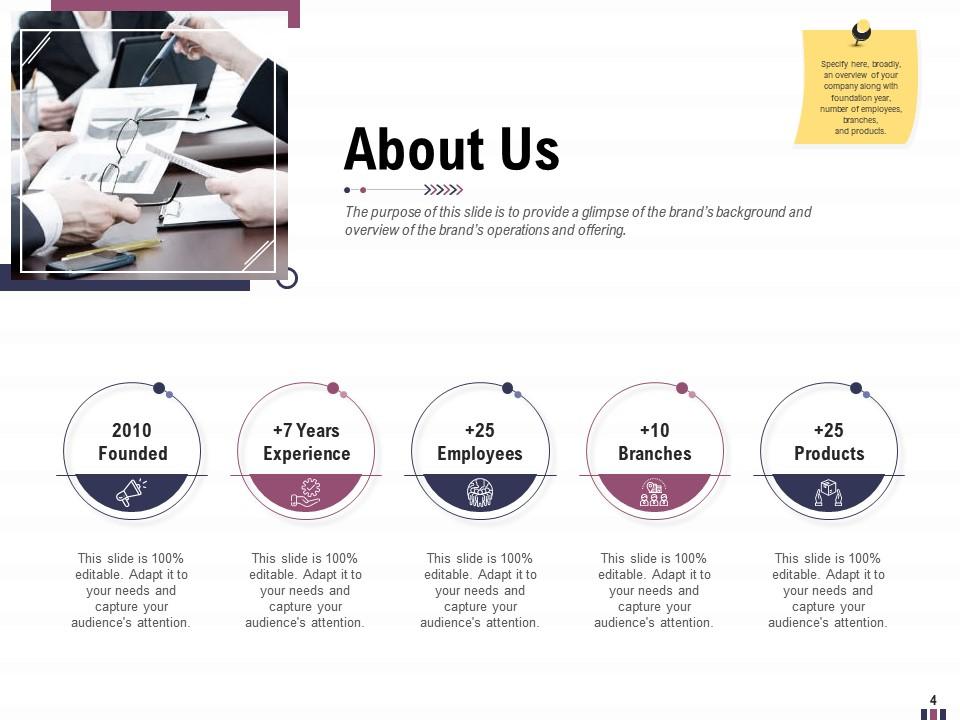
The slide provides a short overview of your brand. It gives all the essential information regarding your type of business, such as the year of foundation and experience, the number of employees, and the location of branches. The slide is perfect for a corporate presentation, pitch deck, business proposal, and presentation to potential investors or business partners. The content is not overloaded, and the layout is clean and appealing, which makes the information clear and professional. Whether you are just launching your new brand, rebranding your product or platform, or changing the scope of your operations, these points should be included in your presentation to inform your speaker and invite your potential partners or investors.
Template 2 - Brand, Mission, Vision, and Values
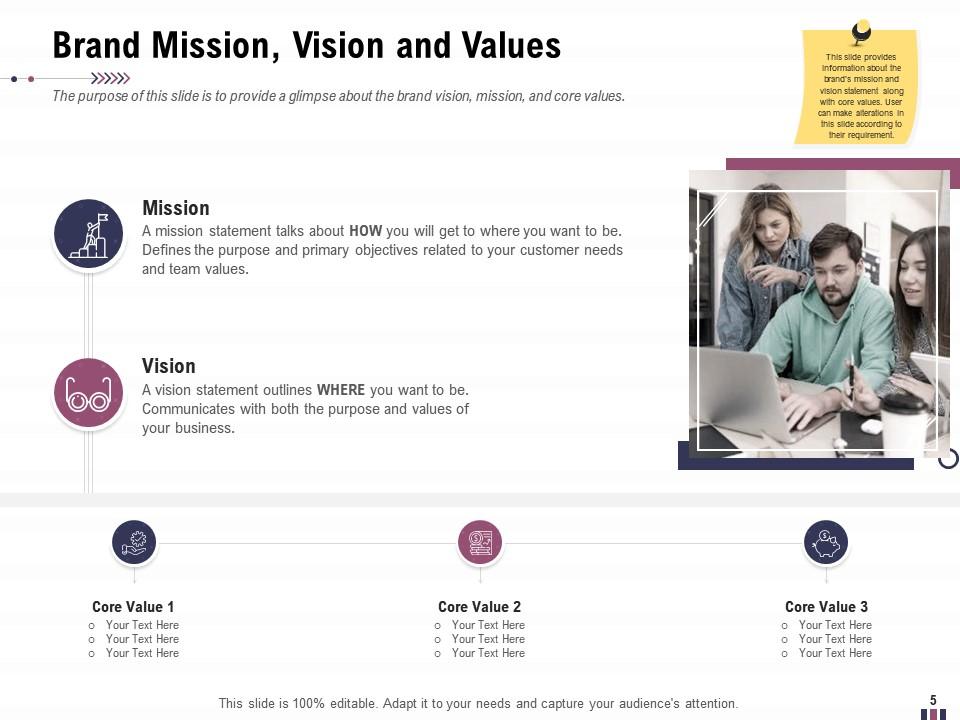
This PPT Template delineates your brand's mission, vision, and values, providing stakeholders with something to relate your brand to. Integrity, innovation, sustainability, diversity, and excellence are the core values depicted that form the DNA of what you do. Whether you are introducing a new brand or redefining an existing one, this one slide will be enough to make sure that your key stakeholders and the target audience can understand and resonate with the brand.
Template 3 - Brand Challenges
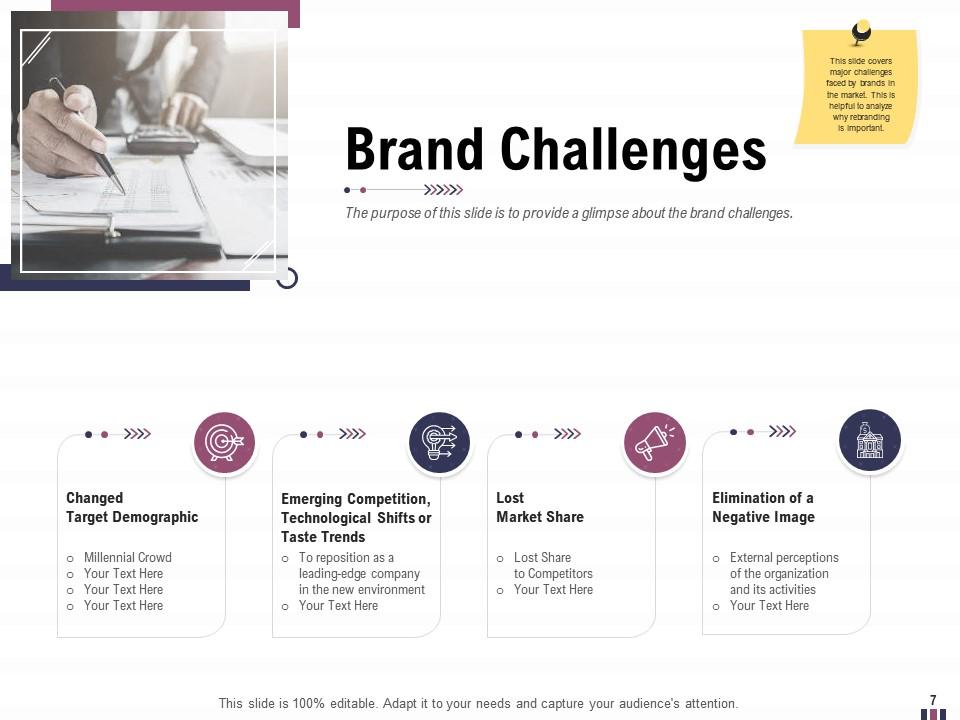
This Slide provides a range of challenges that may occur when working on rebranding and relaunching a company. The problem encompasses such issues as lost market share, removed negative brand image, changed target markets, new competition, development in technology, and changes in customer tastes. This slide is a tool for stakeholders to help them diagnose all the possible challenges and find solutions to respond to the risks and benefit from the opportunities. For whoever the information is presented, whether it is executives, marketing teams, or investors, the discussion on how to remove and respond to challenges is needed to facilitate proactive work and ensure that challenges do not affect the company's presence and growth.
Template 4 - Overcoming Branding Challenges
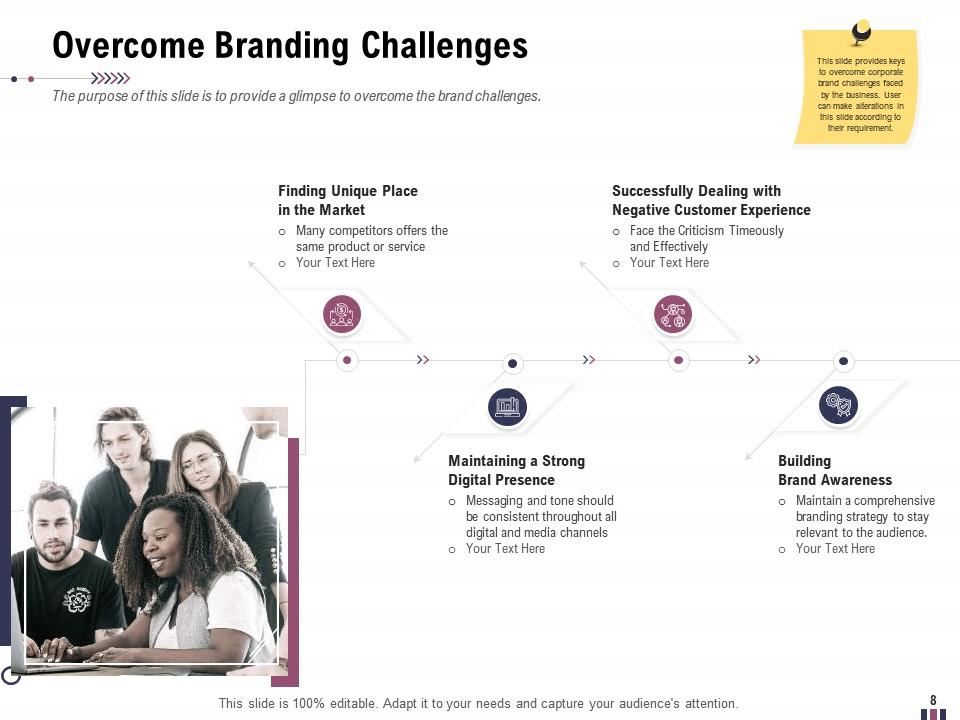
This slide addresses critical impediments encountered throughout the branding process. It provides solutions to common difficulties experienced when attempting to carve a niche in the market, address customer experiences pertaining to the brand, maintain a robust digital footprint, and develop brand awareness. Whether for an audience of executives, marketers, or investors, the slide acts as a tool for discussion, during which ways to effectively tackle challenges may be identified to position your brand in the market better. Use it to hurdle branding obstacles together with others and innovate solutions to fortify your marketing.
Template 5 - Brand Positioning
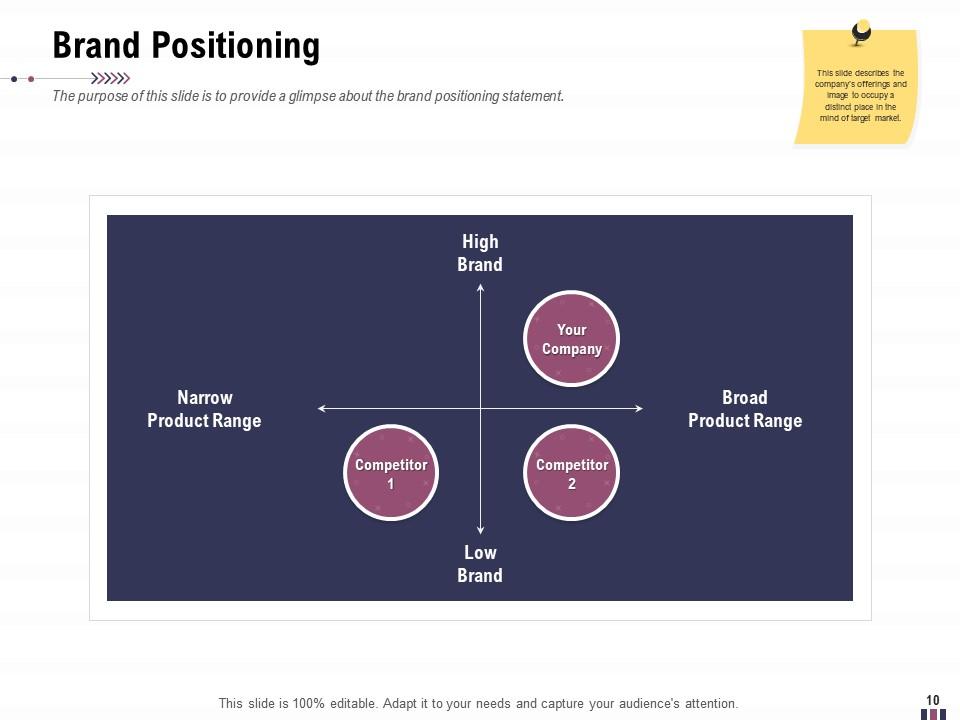
This slide represents your brand's position in relation to the competitors and is being shown more visually. The system categorizes both brands using the criteria of the brand's strength and its product range. The positions of the competitors can be extremely high and extremely low on the market; however, the product range can vary from relatively narrow to extremely broad. The slide helps define, understand, and communicate your brand's unique place in the market. It is also helpful when presenting a new marketing strategy.
Get an insight into our blog on Rebranding Strategy Powerpoint PPT Template for a practical approach.
Template 6 - Brand Attributes
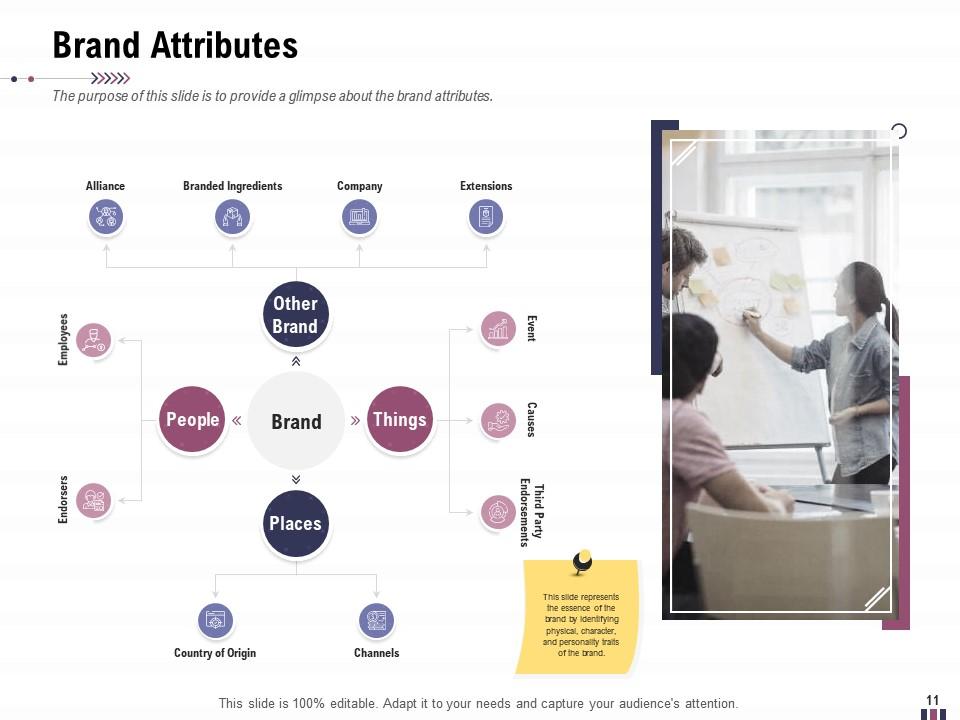
This slide provides an in-depth perspective on all the diverse attributes that this brand is associated with. Some of the numerous aspects that form the brand's being include brand alliances and use of branded ingredients, company values and the brand's extensions, people and places, countries of origins, distribution channels, third-party endorsements, support for causes and participation in events, and, finally, employees. The contiguous attributes indicate that they all form a typical brand or encompass everything the brand is about.
Template 7 - Brand Personality
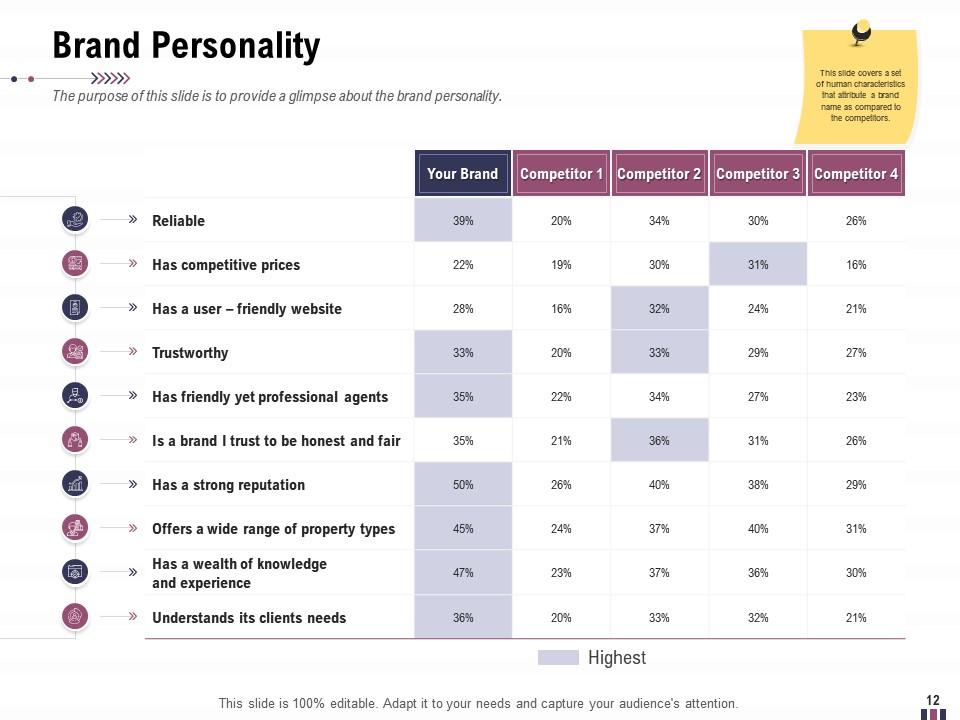
This slide is a comparative analysis of your brand's personality with competitors'. This template is very crucial to marketers, brand strategists, or executives who want to set their brands apart in the market. It helps you say what about your brand genuinely matters compared to the competitors. It helps you develop and execute the brand narrative, refine your brand positioning strategy, and improve the image of your brand.
Template 8 - Target Audience Profile
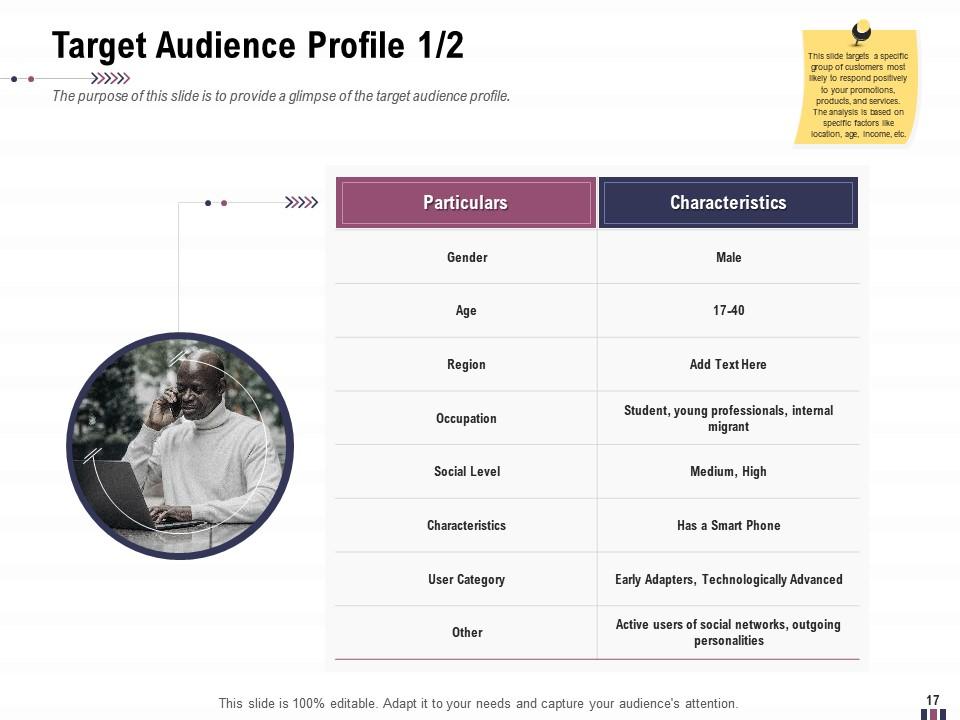
This PPT reflects clearly on the age and psychographic profile of your target audience. Gender, age range, occupation, social status, and the category of users, as well as other key characteristics, are highlighted and studied for you to make use of. Marketing teams, strategists, and brand managers find this layout valuable, as they must ensure that rebranding or relaunching efforts correspond to their audience's image. Considering these data, the slide provides a clear overview of who your ultimate customers are.
Template 9 - Launch Plan
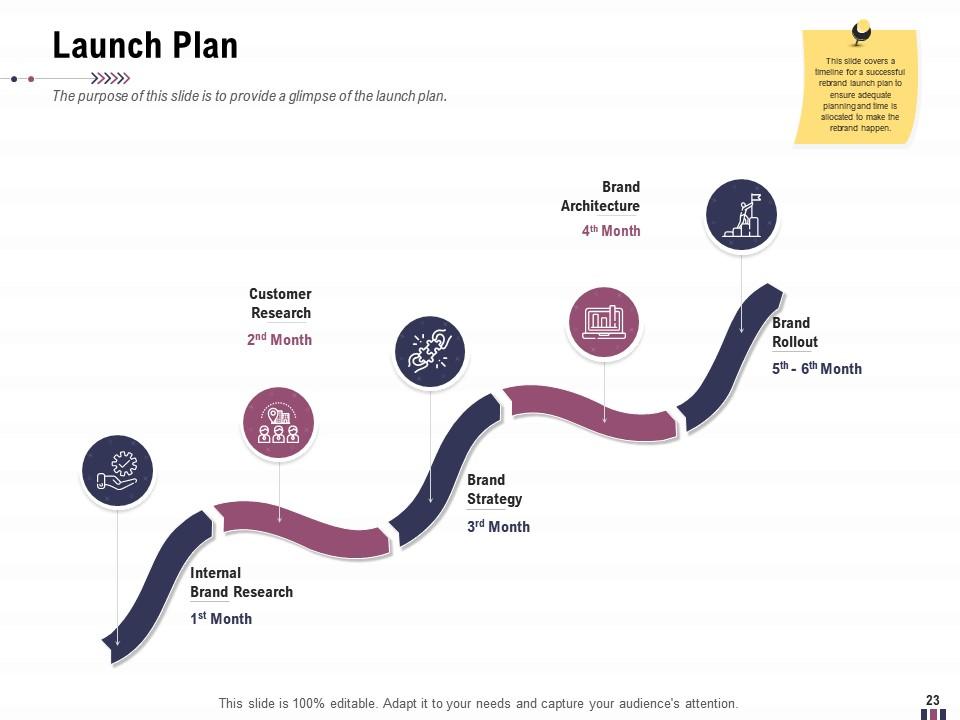
This slide provides a comprehensive and detailed plan of a phased approach to introducing your rebranding or re-launch to the market. It is a visual representation of a timeline that takes you through the months; it entails understanding and interacting strategically with the phases such as internal brand research, brand strategy, systems, and customer service, along with processes such as DX, emerging markets, experimentalism, brand architecture, and systems. As you present it to the executives, investors, or your team, this slide spells out the steps of your launch plan.
Template 10 - Budget Allocation
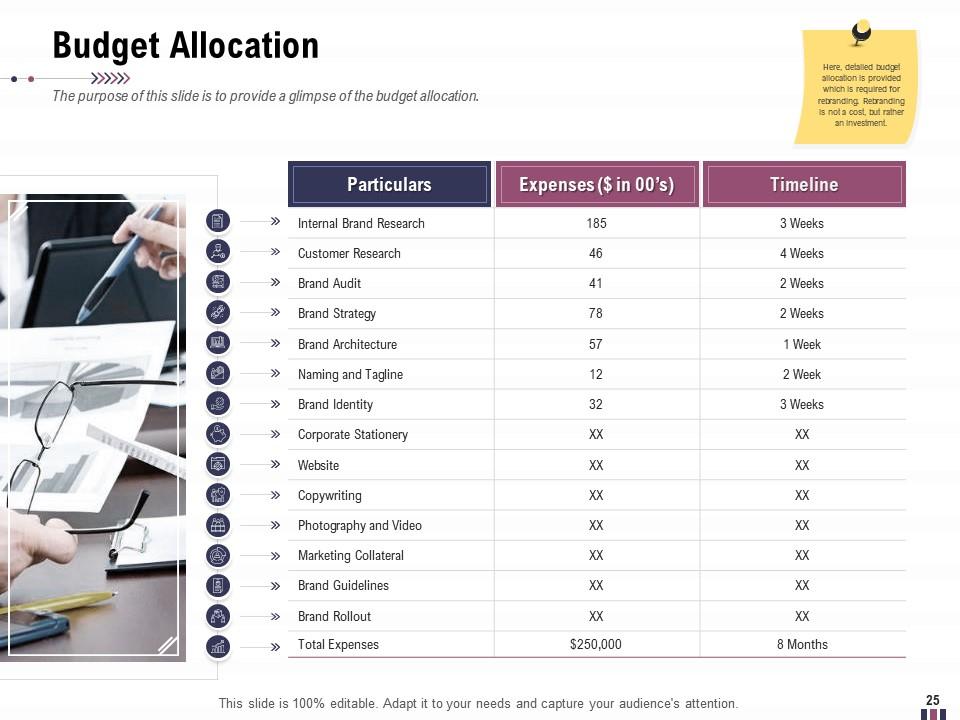
This slide details the distribution of expenditures on the different aspects of brand marketing. It provides a clear list of the purpose and cost of the internal brand research, strategy development, audit, copywriting, creation of the website, and brand launch, as well as the production of the guidelines, identity, architecture, naming, and tagline, and finally, the marketing collateral. The slide is easy to understand and adjust, which helps to reach an agreement between the budget allocations and grand strategy goals.
Enhance Your Brand Presence to a Whole New Level
Across the business world, marketers are rebranding and relaunching their businesses to craft a clear message and present it in a series of vivid and persuasive slides. Our slides do not just contain visuals. Every visual is supposed to tell a concise story. Indeed, the pace of organizational life is changing rapidly, and sometimes, employees grapple with new ideas. Download and start your journey to rebranding with us.
PS Look out for our blog on Rebranding Communication Plan Powerpoint templates to learn ways of communication.
Rebranding and relaunching powerpoint presentation slides with all 39 slides:
Use our Rebranding And Relaunching Powerpoint Presentation Slides to effectively help you save your valuable time. They are readymade to fit into any presentation structure.


FAQs for Rebranding and relaunching
Look for the obvious stuff first - sales dropping, your logo looking ancient, messaging that confuses people. Major market shifts are huge red flags too. Expanding somewhere new? Definitely rebrand. Had some PR disasters? Yeah, probably time for a fresh start. Sometimes your competitors just make you look... well, old and crusty. But honestly? Trust your gut here. If your brand feels like wearing clothes that don't fit anymore, that's reason enough. The worst thing is when your brand actually pushes customers away instead of drawing them in. I'd start with checking how everything's performing against your goals.
Just be straight with them about what's happening - send a personal email explaining the rebrand and why you're doing it. Companies totally blow this by being way too corporate and vague. Hit multiple channels too: social media, website updates, even your email signature. Honestly, the worst thing is when customers feel ambushed by changes. Give them 2-3 weeks heads up before launch. Maybe throw in some exclusive behind-the-scenes stuff? Makes them feel like they're part of it instead of just... witnessing it, you know?
Look, market research is basically your insurance policy against a rebrand disaster. Survey your current customers first - find out what they actually think about your brand right now. Then test your new concepts with focus groups before you commit to anything. I'd also scope out what competitors are doing so you can find an opening they missed. Seriously, I've watched too many businesses rebrand on pure instinct and crash hard. Customer interviews should be step one, way before you even touch design stuff. The research shows you what's broken, what's working, and where the opportunities are hiding.
Here's my take: figure out how people actually *feel* about your brand right now - not just their logical thoughts. Do some digging through social media, surveys, whatever. The goal isn't throwing away good vibes you've built up over the years (that'd be insane). What works is creating messaging that connects the old emotional stuff to where you're headed. Show people how this rebrand is basically amplifying what they already love about you. Honestly, most rebrands fail because they ignore the emotional side completely. Bridge that gap first, then worry about the fancy new logo.
Honestly, the biggest mistake I see? Companies rebranding just because they're sick of their current look - total waste of money. Make sure you're actually fixing a business problem first. Budget way more than you think for rollout too. Updating everything from your website to those random trade show banners always takes forever and costs double. I learned this the hard way lol. Don't skip getting input from your team and customers early on. Test concepts with real people before you commit. Oh, and resist getting obsessed with the "perfect" logo - there's like 50 other touchpoints that matter just as much.
Dude, you HAVE to be consistent everywhere after a rebrand - I'm talking website, socials, emails, packaging, all of it. One old logo floating around will confuse people and mess up your whole vibe. My friend's company had their LinkedIn still showing old colors while the website was totally updated. Big mistake. Make a brand guide and actually check every place customers see you. Short sentences work better sometimes. The rebrand won't stick if you're sloppy about rolling it out everywhere at once.
Honestly, you'll need to look at both hard numbers and the softer stuff. Compare your website traffic, social media engagement, and sales from before vs after - give it at least 6 months though. Brand awareness surveys are clutch too. Customer feedback is probably the most telling thing - run some focus groups or just collect testimonials to see if people actually get your new vibe. Oh, and don't ignore how your employees feel about it since they're basically walking advertisements. Some benefits won't show up right away, which is frustrating but normal. Set up monthly tracking and pivot based on what you're seeing.
Visuals are huge - like, people see your logo and colors before they even read anything. Your new look has to scream whatever vibe you're going for, whether that's sleek and modern or trustworthy or fun. I've watched companies totally bomb their rebrand because they barely changed anything visually, so customers were just confused about what was different. Colors hit people emotionally too, which is kinda wild when you think about it. You don't want your palette saying "boring corporate" when you're trying to be innovative. First step? Look at what your current visuals are telling people vs. where you actually want to land.
Honestly, you've gotta make them feel like they're part of building this thing, not just getting bulldozed by corporate decisions. Tell them WHY you're doing this rebrand super early - like, way before you think you need to. People hate surprises at work. Get their actual input through surveys or whatever, and use some of their ideas if you can. I've watched companies totally bomb this by announcing everything after it's already set in stone. Do regular Q&As so they can ask the messy questions. Give them a preview of the new stuff before customers see it - makes them feel important. Oh, and train them properly on the messaging so they don't look clueless when clients ask about it.
Social media's gonna be your best bet for getting the word out. Update everything at once - logos, bios, all that visual stuff - so it looks cohesive. Then tell people WHY you rebranded, because honestly, everyone's gonna be curious (and maybe a little suspicious). Share some behind-the-scenes content and stories from your team or customers that fit the new vibe. Oh, and pick some hashtags to use consistently across platforms. The big thing though? Actually respond to people's comments and questions. This is your shot to walk them through what's changing and why it matters.
Honestly? Rebranding is risky as hell for loyalty. When it works, customers love the fresh vibe and you'll pull in new people too. But mess it up and you're basically telling your loyal base "thanks, we don't need you anymore." I've seen brands completely tank because they went too far from what people originally connected with. Your best bet is getting current customers involved first - ask what they actually want, explain your reasoning. Don't just drop a total makeover on them out of nowhere. Keep the stuff they trust about you intact.
Okay so honestly? Figure out what your customers actually love about you - not what you *think* they love. Your reliability, your values, whatever visual stuff they recognize immediately. Those stay. But be real about nostalgia vs. actual value. I've seen brands cling to random outdated crap that literally nobody cares about anymore lol. Test new stuff with your existing people first. They'll roast you if you mess up the good parts. Focus changes on solving actual problems or meeting needs they have now. Short bursts work better than massive overhauls anyway.
Track brand awareness stuff first - recognition surveys, social sentiment, website traffic. Business metrics matter just as much though: conversion rates, acquisition costs, revenue growth. Brand recall surveys are honestly pretty eye-opening when you see the results. Email open rates and social follows tell you if people actually care about the new direction. I'd set up monthly tracking so you catch any weird dips early. Oh and don't sleep on sentiment analysis - sometimes a rebrand lands totally different than you expect it to.
Start gathering feedback super early in the process - surveys, focus groups, the usual stuff. But honestly, social media listening is where you'll find the real gold since people are way more honest online than in formal surveys. Test your new concepts with your most loyal customers first because they won't sugarcoat it. Document everything though (I learned this the hard way) so you can actually back up your decisions to stakeholders later. The biggest thing? Listen to what they're really saying, not just what fits your vision. Oh, and keep collecting feedback throughout - don't just do it once at the beginning.
Honestly, storytelling is what makes rebrands stick. You want people to feel something, not just notice you changed your logo. Address why you're doing this whole rebrand thing and where you're going - but make it about them, not you. It's like when you tell someone why you switched careers... there's gotta be a real reason that makes sense. Keep it genuine across everything you do or people will smell the BS from a mile away. Short version: create a "why" that actually resonates instead of just announcing changes.
-
Awesome use of colors and designs in product templates.
-
It saves your time and decrease your efforts in half.
-
Unique design & color.
-
Designs have enough space to add content.
-
Designs have enough space to add content.