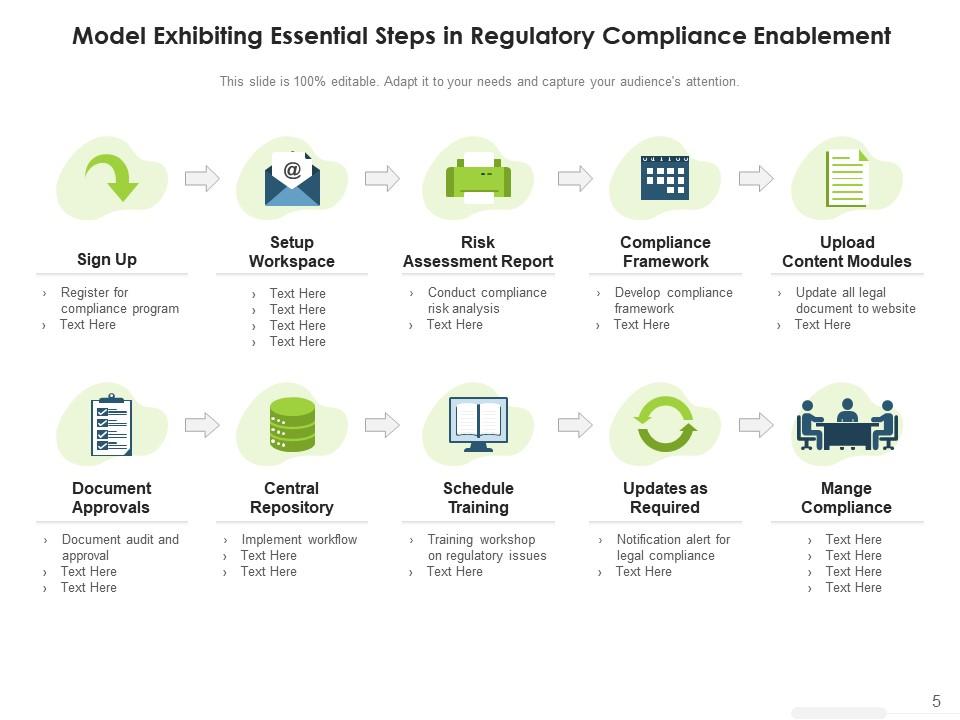
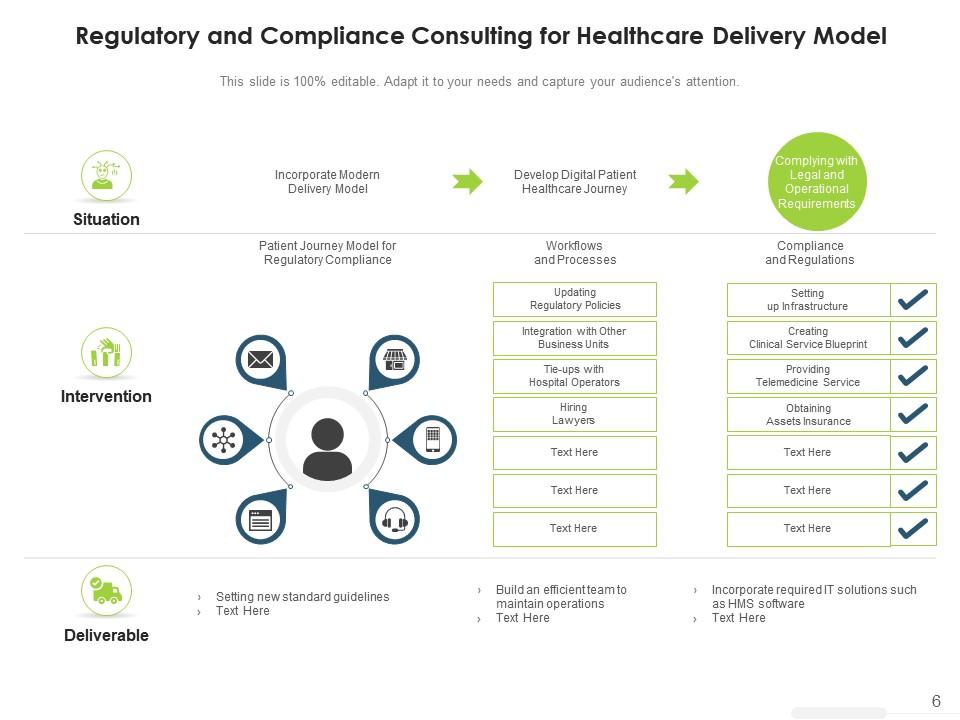
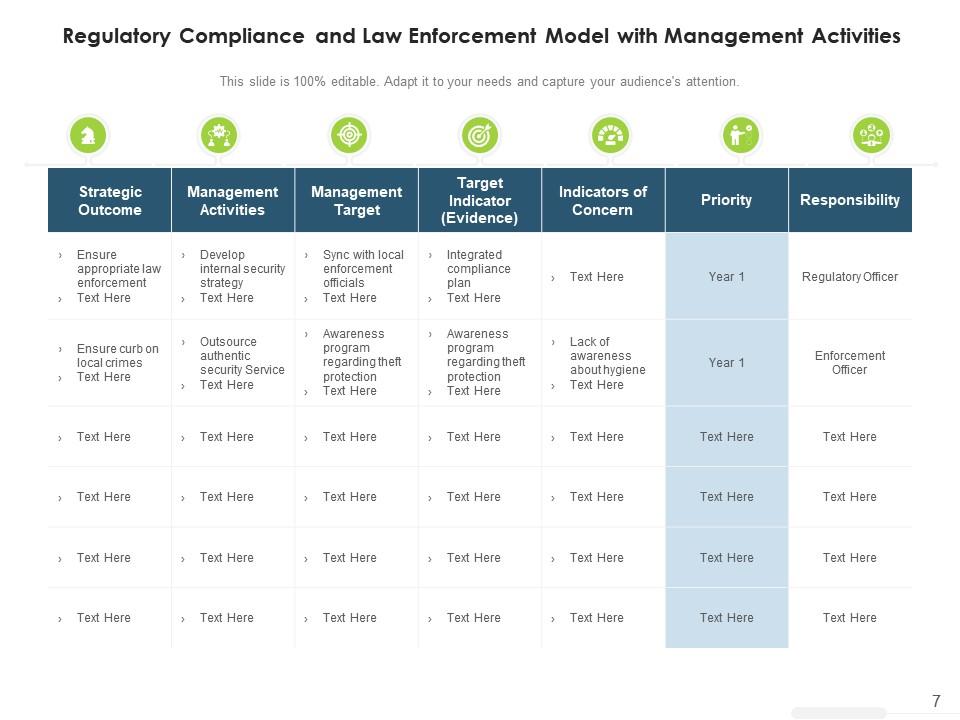
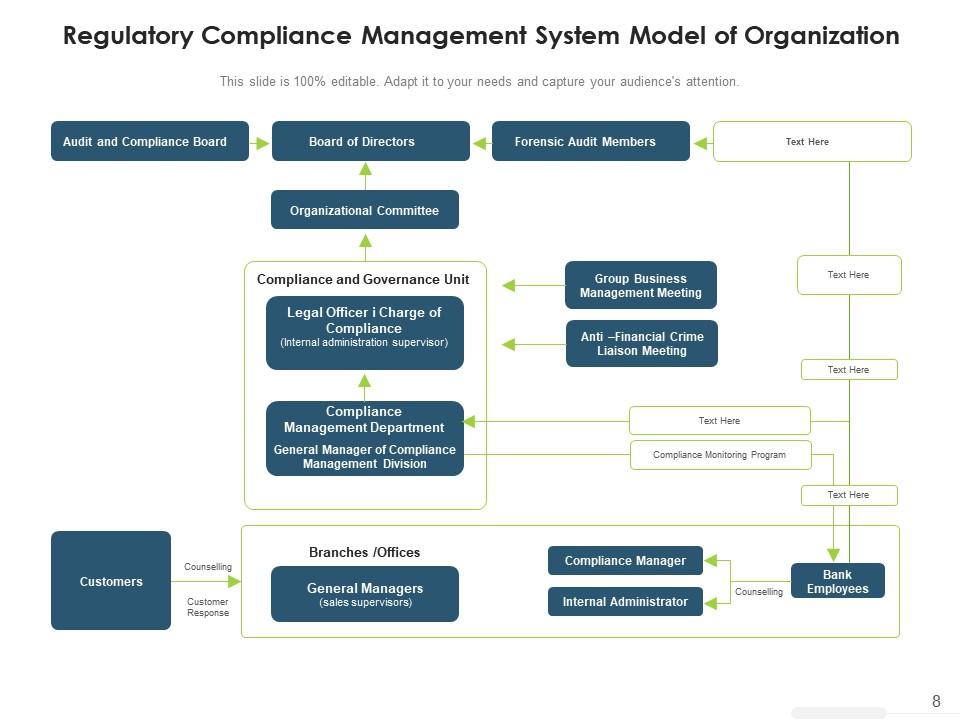
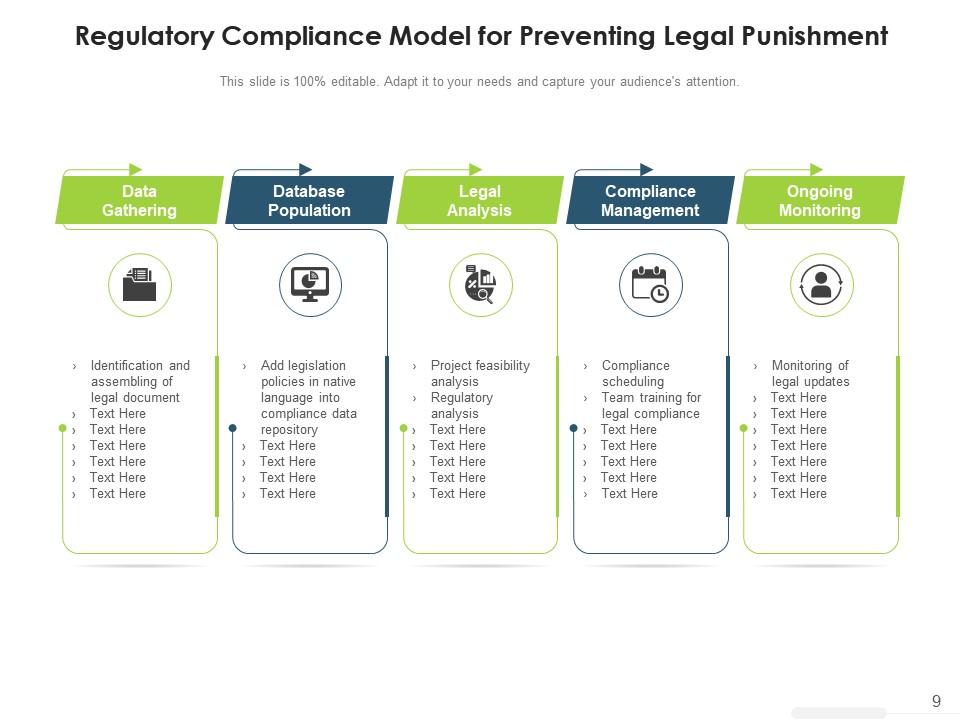
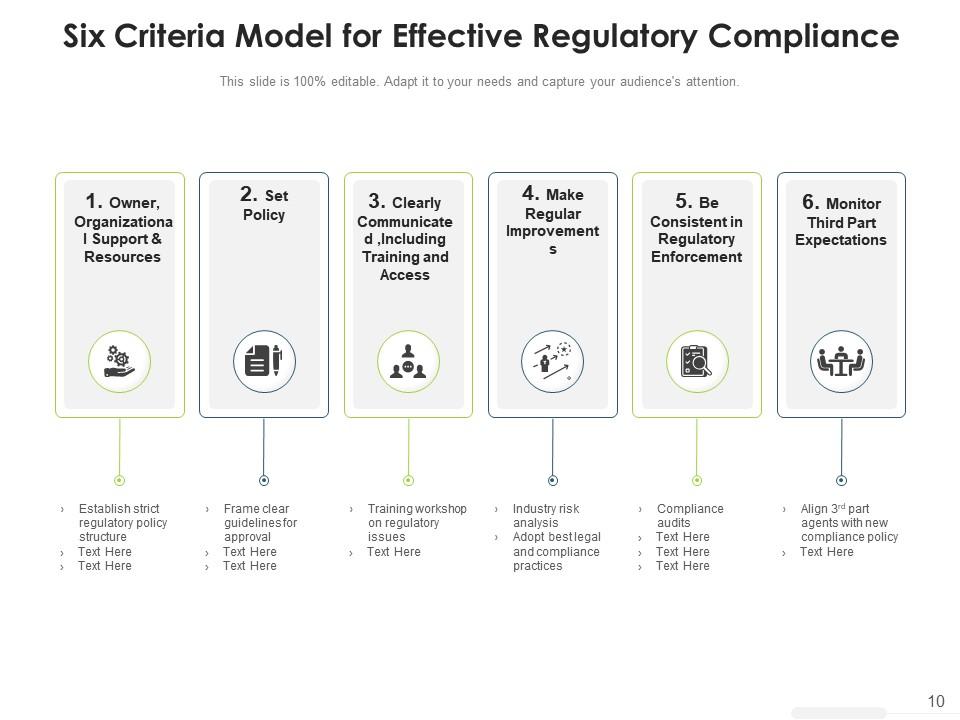
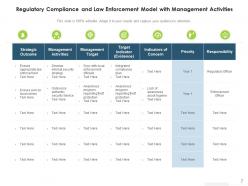
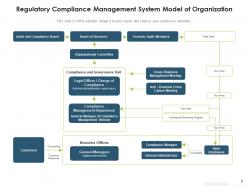
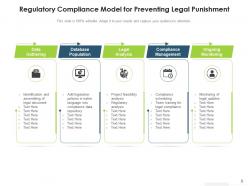
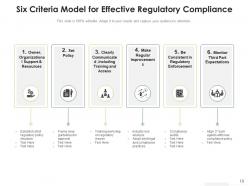
Regulatory compliance model staying compliant central repository ongoing monitoring

Rating:
92%
Regulatory compliance model staying compliant central repository ongoing monitoring
Slide 1 of 11

or

Favourites Favourites

Try Before you Buy Download Free Sample Product

Audience Impress Your
Audience
Editable 100%
Editable
Time Save Hours
of Time
The Biggest Sale is ending soon in
0
0
:
0
0
:
0
0
Rating:
92%
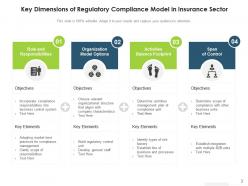
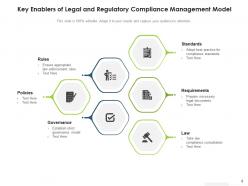
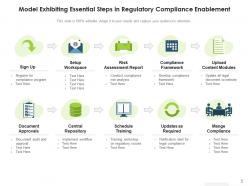
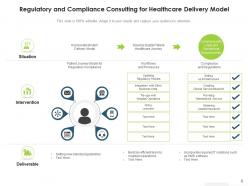
Deliver a lucid presentation by utilizing this Regulatory Compliance Model Staying Compliant Central Repository Ongoing Monitoring. Use it to present an overview of the topic with the right visuals, themes, shapes, and graphics. This is an expertly designed complete deck that reinforces positive thoughts and actions. Use it to provide visual cues to your audience and help them make informed decisions. A wide variety of discussion topics can be covered with this creative bundle such as Staying Compliant, Central Repository, Ongoing Monitoring. All the eleven slides are available for immediate download and use. They can be edited and modified to add a personal touch to the presentation. This helps in creating a unique presentation every time. Not only that, with a host of editable features, this presentation can be used by any industry or business vertical depending on their needs and requirements. The compatibility with Google Slides is another feature to look out for in the PPT slideshow.

People who downloaded this PowerPoint presentation also viewed the following :

FAQs for Regulatory compliance model staying compliant central

Key components include governance frameworks, risk assessment protocols, policy management systems, monitoring mechanisms, and audit trails. These elements work together by establishing clear accountability structures, identifying compliance gaps, and ensuring continuous oversight, with many financial institutions and healthcare organizations finding that integrated compliance models significantly reduce regulatory violations while streamlining operational efficiency.

Organizations can assess their current compliance status through comprehensive audits, gap analyses, regulatory mapping exercises, compliance software tools, and third-party assessments. These methodologies enable systematic evaluation by identifying regulatory obligations, documenting existing controls, and measuring performance gaps, with many financial services and healthcare institutions finding that regular assessments streamline remediation efforts while enhancing overall risk management.

Technology revolutionizes regulatory compliance frameworks by automating monitoring processes, enabling real-time risk assessment, streamlining reporting workflows, and ensuring consistent policy enforcement across organizational structures. Through AI-powered analytics and automated compliance systems, financial institutions and healthcare organizations enhance accuracy, reduce manual oversight burdens, and maintain continuous regulatory alignment, ultimately delivering faster audit responses and minimized compliance risks.

Risk assessment informs regulatory compliance model development by identifying potential vulnerabilities, mapping regulatory requirements to specific business processes, and prioritizing resource allocation based on risk severity. Through comprehensive risk analysis, organizations can build targeted compliance frameworks that address high-impact areas first, streamline monitoring processes, and ensure proactive rather than reactive compliance management.

Common challenges include resource allocation constraints, complex regulatory interpretation, technology integration difficulties, staff training requirements, and maintaining documentation standards. Organizations often struggle with balancing compliance costs against operational efficiency, especially in heavily regulated sectors like banking and healthcare, with many finding that initial implementation demands significant time investment but ultimately delivers enhanced risk management and competitive advantage.

Global regulatory changes significantly reshape local compliance strategies by requiring enhanced cross-border coordination, updated risk assessment frameworks, and more sophisticated monitoring systems. Organizations must adapt their compliance models to accommodate varying international standards while maintaining local regulatory adherence, with many financial institutions and multinational corporations finding that integrated compliance platforms streamline these complex requirements and reduce operational costs.

Maintaining ongoing compliance requires implementing automated monitoring systems, establishing cross-functional compliance teams, conducting regular risk assessments, maintaining real-time regulatory change tracking, and creating adaptive policy frameworks. These practices enable organizations to streamline compliance processes, reduce manual oversight burdens, and respond swiftly to regulatory updates, with many financial services and healthcare institutions finding that proactive compliance management ultimately delivers competitive advantage while minimizing regulatory risk exposure.

Organizations can effectively train employees on compliance through interactive workshops, online modules, role-specific scenarios, regular assessments, and real-world case studies. These comprehensive training approaches enhance understanding by combining theoretical knowledge with practical applications, while many companies find that ongoing reinforcement through microlearning and peer discussions ultimately delivers better retention, reduces violations, and strengthens overall compliance culture.

Compliance model effectiveness metrics include audit findings frequency, regulatory violation rates, incident response times, training completion percentages, and cost-per-compliance ratios. These measurements enable organizations to streamline compliance operations, minimize regulatory risks, and demonstrate accountability to stakeholders, with many financial services and healthcare institutions finding that comprehensive metric tracking ultimately delivers operational transparency and competitive advantage.

Organizations leverage audits and assessments to improve compliance posture by identifying gaps, validating controls, benchmarking against standards, and creating actionable remediation plans. These systematic evaluations enable companies to strengthen risk management frameworks, streamline reporting processes, and demonstrate regulatory adherence, with many financial services and healthcare organizations finding that regular assessments ultimately deliver reduced penalties and enhanced stakeholder confidence.

Documentation and record-keeping serve as the backbone of regulatory compliance models, providing audit trails, evidence of adherence, and accountability frameworks that regulators require. These comprehensive records enable organizations to demonstrate compliance during inspections, streamline reporting processes, and mitigate legal risks, with many financial institutions and healthcare providers finding that robust documentation systems ultimately deliver operational transparency and regulatory confidence.

Companies can balance compliance with operational efficiency by implementing automated monitoring systems, integrating compliance checks into existing workflows, and leveraging technology solutions that streamline reporting processes. Through strategic automation and real-time monitoring tools, organizations in banking, healthcare, and manufacturing find that compliance becomes seamlessly embedded in operations, ultimately reducing manual oversight costs while maintaining regulatory standards and accelerating business processes.

Stakeholders play crucial roles in compliance strategy through risk assessment, policy development, implementation oversight, and continuous monitoring across organizational levels. Board members, compliance officers, department heads, and external auditors collaborate to ensure regulatory alignment, with many organizations finding that cross-functional stakeholder engagement enhances compliance effectiveness, reduces operational risks, and ultimately delivers stronger regulatory outcomes and competitive advantage.

Compliance models can be tailored through sector-specific risk assessments, regulatory mapping, customized control frameworks, and industry-standard integration protocols. Financial services focus on anti-money laundering and data protection, while healthcare emphasizes patient privacy and safety regulations, with manufacturing prioritizing environmental and workplace safety standards, ultimately delivering targeted compliance strategies that streamline operations and minimize regulatory risks.

Non-compliance consequences include substantial financial penalties, legal sanctions, operational shutdowns, reputational damage, and loss of business licenses. A strong compliance model mitigates these risks through automated monitoring systems, regular audits, employee training programs, and real-time reporting mechanisms, with many financial institutions and healthcare organizations finding that proactive compliance frameworks significantly reduce violation incidents while enhancing operational efficiency.

Ratings and Reviews

92% of 100
Review Form
Write a review
Most Relevant Reviews
  1. 100%

    by Derrick Rice

    Helpful product design for delivering presentation.
  2. 80%

    by Dewayne Nichols

    Informative presentations that are easily editable.
  3. 100%

    by Edgar George

    Very unique and reliable designs.
  4. 80%

    by Coleman Henderson

    Great experience, I would definitely use your services further.
  5. 100%

    by Joe Thomas

    Much better than the original! Thanks for the quick turnaround.

5 Item(s)

per page: