


Responsible Marketing Powerpoint Presentation Slides




Try Before you Buy Download Free Sample Product
 Impress Your
 Audience
 100%
100% Editable
 Save Hours
 of Time


Our Responsible Marketing PowerPoint presentation is focused on sustainable marketing, which emphasizes products and services that respect the environment and social aspects. The presentation starts with a Companys plan to change its marketing strategy from traditional to sustainable, outlining the reasons for the change and redefining goals while shifting focus to sustainable marketing. The four aspects of the Sustainability Marketing Mix are also discussed. The Green Marketing module is included, focusing on three pillars of sustainable marketing and considering sustainable marketing principles. Sustainable marketing strategies are then covered, including sustainable products and cost measures. Finally, communication for sustainable activities is addressed, covering both internal and external communication, a committee for tracking sustainable activities, and the impact of the Companys sustainable marketing approach. This 100 percentage editable PowerPoint template is perfect for those looking to implement sustainable marketing practices. Get access now.
People who downloaded this PowerPoint presentation also viewed the following :
Content of this Powerpoint Presentation
Slide 1: This slide introduces Responsible Marketing. State your company name and begin.
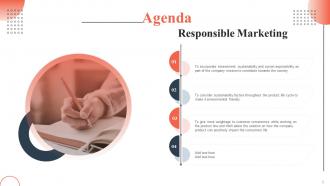
Slide 2: This slide states Agenda of the presentation.
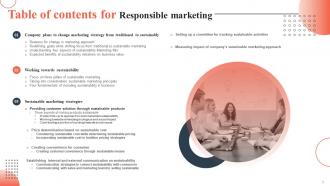
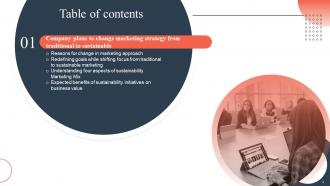
Slide 3: This slide shows Table of Content for the presentation.
Slide 4: This slide highlights title for topics that are to be covered next in the template.
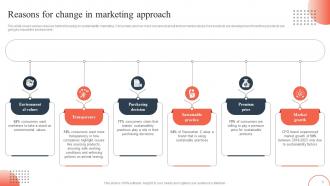
Slide 5: This slide covers various reasons behind focusing on sustainability marketing.
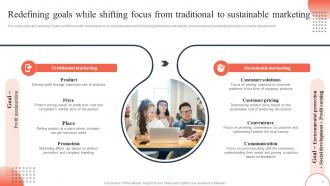
Slide 6: This slide covers the company’s plan to shift from profit maximization to an integrated approach of earning profit.
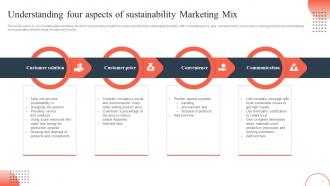
Slide 7: This slide covers 4 c’s of sustainable marketing mix which are providing solution to consumers.
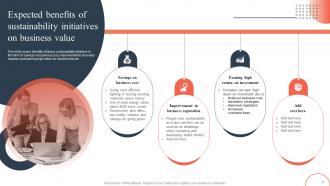
Slide 8: This slide covers benefits of taking sustainability initiatives in the form of savings on business cost, improvement in business repution.
Slide 9: This slide highlights title for topics that are to be covered next in the template.
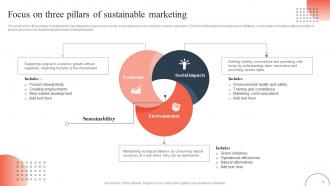
Slide 10: This slide covers three pillars of sustainable marketing which are environmental, social and economic impact of company operations.
Slide 11: This slide covers five principals of sustainable marketing.
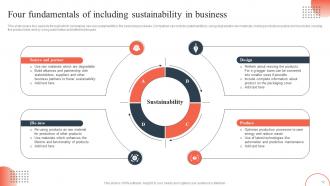
Slide 12: This slide covers four aspects through which companies can use sustainability in the business processes.
Slide 13: This slide highlights title for topics that are to be covered next in the template.
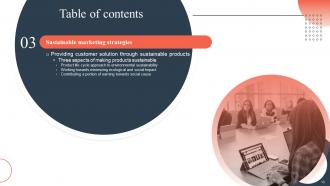
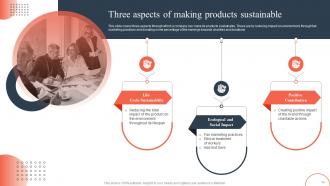
Slide 14: This slide covers three aspects through which a company can make its products sustainable.
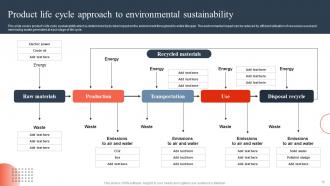
Slide 15: This slide covers product’s life cycle sustainability which is determined by its total impact on the environment throughout its entire lifespan.
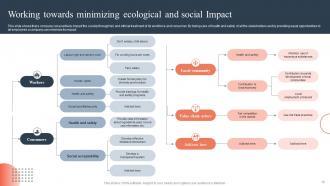
Slide 16: This slide shows that a company can positively impact the society through fair and ethical treatment of its workforce and consumer.
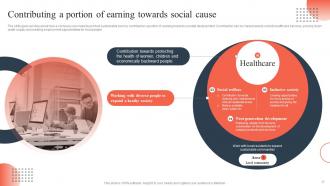
Slide 17: The slide gives an idea about how a company can make its product sustainable even by contribution a portion of earning towards societal development.
Slide 18: This slide highlights title for topics that are to be covered next in the template.
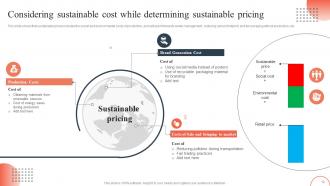
Slide 19: This slide shows that sustainable prices includes the social and environmental costs of production, amount spent towards waste management, reducing carbon footprint.
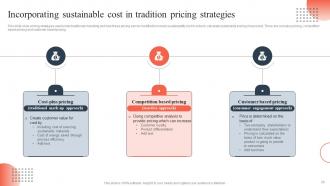
Slide 20: This slide cover pricing strategies used under traditional marketing and how these pricing can be modified.
Slide 21: This slide highlights title for topics that are to be covered next in the template.
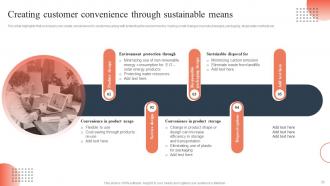
Slide 22: This slide highlights that a company can create convenience for customers along with protecting the environment.
Slide 23: This slide highlights title for topics that are to be covered next in the template.
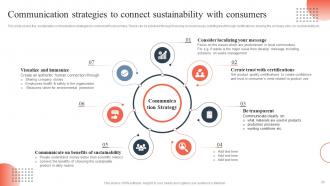
Slide 24: This slide covers five sustainable communication strategies to connect with consumers.
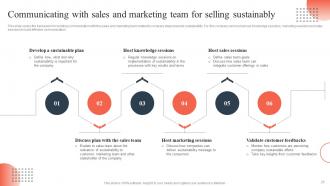
Slide 25: This slide covers the framework for building communication with the sales and marketing team related to company steps towards sustainability.
Slide 26: This slide highlights title for topics that are to be covered next in the template.
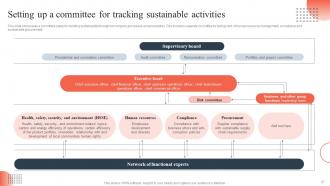
Slide 27: This slide showcases a committee setup for building sustainability throughout company processes and procedures.
Slide 28: This slide highlights title for topics that are to be covered next in the template.
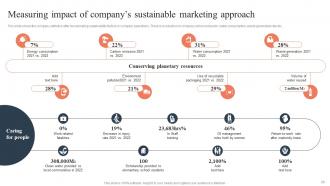
Slide 29: This slide shows the company statistics after incorporating sustainability factors in company operations.
Slide 30: This slide contains all the icons used in this presentation.
Slide 31: This slide is titled as Additional Slides for moving forward.
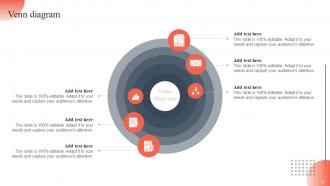
Slide 32: This slide depicts Venn diagram with text boxes.
Slide 33: This is Our Mission slide with related imagery and text.
Slide 34: This is a Timeline slide. Show data related to time intervals here.
Slide 35: This is About Us slide to show company specifications etc.
Slide 36: This slide presents Roadmap with additional textboxes.
Slide 37: This is an Idea Generation slide to state a new idea or highlight information, specifications etc.
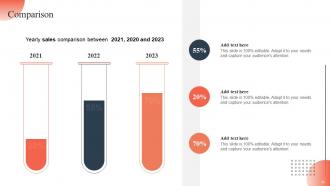
Slide 38: This is a Comparison slide to state comparison between commodities, entities etc.
Slide 39: This slide shows Post It Notes. Post your important notes here.
Slide 40: This is a Thank You slide with address, contact numbers and email address.
Responsible Marketing Powerpoint Presentation Slides with all 45 slides:
Use our Responsible Marketing Powerpoint Presentation Slides to effectively help you save your valuable time. They are readymade to fit into any presentation structure.
-
Responsible Marketing Powerpoint Presentation Slides
-
Responsible Marketing Powerpoint Presentation Slides
-
Responsible Marketing Powerpoint Presentation Slides
-
Responsible Marketing Powerpoint Presentation Slides
-
Responsible Marketing Powerpoint Presentation Slides
-
Responsible Marketing Powerpoint Presentation Slides
-
Responsible Marketing Powerpoint Presentation Slides
-
Responsible Marketing Powerpoint Presentation Slides
-
Responsible Marketing Powerpoint Presentation Slides
-
Responsible Marketing Powerpoint Presentation Slides
-

Responsible Marketing Powerpoint Presentation Slides
-
Responsible Marketing Powerpoint Presentation Slides
-
Responsible Marketing Powerpoint Presentation Slides
-
Responsible Marketing Powerpoint Presentation Slides
-
Responsible Marketing Powerpoint Presentation Slides
-
Responsible Marketing Powerpoint Presentation Slides
-
Responsible Marketing Powerpoint Presentation Slides
-
Responsible Marketing Powerpoint Presentation Slides
-
Responsible Marketing Powerpoint Presentation Slides
-
Responsible Marketing Powerpoint Presentation Slides
-
Responsible Marketing Powerpoint Presentation Slides
-
Responsible Marketing Powerpoint Presentation Slides
-
Responsible Marketing Powerpoint Presentation Slides
-
Responsible Marketing Powerpoint Presentation Slides
-
Responsible Marketing Powerpoint Presentation Slides
-
Responsible Marketing Powerpoint Presentation Slides
-
Responsible Marketing Powerpoint Presentation Slides
-
Responsible Marketing Powerpoint Presentation Slides
-
Responsible Marketing Powerpoint Presentation Slides
-
Responsible Marketing Powerpoint Presentation Slides
-
Responsible Marketing Powerpoint Presentation Slides
-
Responsible Marketing Powerpoint Presentation Slides
-
Responsible Marketing Powerpoint Presentation Slides
-

Responsible Marketing Powerpoint Presentation Slides
-
Responsible Marketing Powerpoint Presentation Slides
-

Responsible Marketing Powerpoint Presentation Slides
-

Responsible Marketing Powerpoint Presentation Slides
-
Responsible Marketing Powerpoint Presentation Slides
-

Responsible Marketing Powerpoint Presentation Slides
-

Responsible Marketing Powerpoint Presentation Slides
-

Responsible Marketing Powerpoint Presentation Slides
-

Responsible Marketing Powerpoint Presentation Slides
-

Responsible Marketing Powerpoint Presentation Slides
-

Responsible Marketing Powerpoint Presentation Slides
-

Responsible Marketing Powerpoint Presentation Slides
FAQs for Responsible Marketing
Dude, start with the basics - be transparent and honest about what your product actually does. No BS claims or sneaky fees that'll come back to haunt you. Target the right people too, and be extra careful with vulnerable groups like kids or older folks. Some companies are just shameless with this stuff, honestly. Back up your claims with real data. Oh, and make everything accessible to everyone - that's huge now. I'd say audit what you're doing currently against these ideas. You'll probably find some quick fixes that make a real difference.
Okay so first thing - just tell people exactly what your product does. Don't oversell or hide the downsides because honestly, people aren't stupid and they'll figure it out eventually. Back up everything with real proof like actual data or customer reviews. Have your legal people check it over (especially if you're making health claims or whatever). Oh and definitely test your copy on real customers first - sometimes what sounds clear to you is confusing to everyone else. My rule is pretty simple: if I wouldn't say it to my most skeptical friend, I don't put it in my marketing.
Dude, privacy isn't optional anymore - it's literally the baseline for any decent marketing. People will straight up boycott you if you're shady with their data (and honestly, they should). Be transparent about what you're tracking and actually get real consent, not that sneaky fine-print BS. When someone opts out, respect it. I'd start by looking at all the personal info you're collecting right now. Can you justify every piece? If not, cut it. Your customers expect control over their information these days, and the whole "ask forgiveness later" approach is dead.
Totally! Honestly, ethical marketing works way better long-term anyway. People can spot fake stuff instantly now - like, we're all basically scam detectors at this point. Focus on actually helping customers instead of just selling to them. Be real about what your product does (and doesn't do). Short-term profits from sketchy tactics? They never last. But when you're genuine and solve real problems, customers stick around and trust you. That's where the money actually is. I'd start by looking at your current stuff and asking yourself - would this annoy me if I got it? If yes, fix it.
Honestly, social media changes everything about responsible marketing. You're basically operating with zero filter now - customers see everything and expect real responses, not corporate BS. The cool part? You can actually show your values through behind-the-scenes stuff and partner with influencers who aren't just chasing a paycheck. But man, one bad post and you're trending for all the wrong reasons. I'd start by looking at your current posts - do they actually reflect what you stand for? Because your audience will call you out if there's a gap between what you say and do.
Dude, don't even think about greenwashing. Consumers are like bloodhounds now - they'll sniff out fake sustainability claims in seconds. Once you get caught (and you will), you're looking at angry boycotts, potential lawsuits, and regulatory fines breathing down your neck. Social media makes everything ten times worse too. The trust damage? Takes forever to fix. I've seen brands still trying to recover years later. Way smarter to just be upfront about where you actually are with green stuff and improve gradually. Nobody expects perfection, but they'll destroy you for lying about it.
Don't just say you're "eco-friendly" - people see right through that BS. Give them actual numbers instead, like "we cut packaging waste by 30%." Honestly? Customers respect you more when you admit you're still figuring things out. Share your setbacks too, not just the wins. Tell real stories about how your efforts actually make a difference - stuff people can picture and understand. Oh, and this should go without saying, but make sure you're actually doing what you claim across everything. That's where trust really comes from.
Look, inclusive marketing isn't just about doing the right thing - though that matters too. It's smart business. You'll reach way more people and build actual loyalty when customers see themselves in your stuff. Honestly? The opposite is a disaster waiting to happen. I've seen brands get absolutely roasted for tone-deaf campaigns. Quick reality check: look at your current ads and ask who might feel left out. Your visuals and messaging should actually reflect who's buying from you, not just one narrow slice. It's really that straightforward, but somehow companies still mess it up constantly.
Honestly, your data can show you if you're accidentally being a terrible person with your marketing. Track engagement patterns - are you unfairly hitting certain groups? Check sentiment analysis so you don't accidentally offend people (learned that one the hard way). Look at who's actually converting too. Like, don't push debt consolidation ads to people who are already drowning financially - that's just gross. Set up some automatic alerts for this stuff. Pull up your current targeting and see what's really happening. Your numbers will tell you if you're being ethical or not.
First, figure out who counts as vulnerable - elderly folks, kids, people with disabilities, anyone in financial trouble. Check your messaging for fear tactics or fake urgency. Those late-night debt relief ads? Total predatory move. The line gets fuzzy sometimes, so when in doubt, play it safe. Have a few people review campaigns before they go live. I always think - would I be okay with my grandma getting this ad when she's worried about money? That usually clears things up pretty fast.
Look, people trust you more when you're not hiding stuff from them. Be upfront about your pricing and what your product actually can't do - honestly, customers appreciate that way more than you'd think. Don't cherry-pick only 5-star reviews either. We've all dealt with sketchy companies before, so authenticity stands out. When you mess up (and you will), just own it. Real talk though - go through your current ads and ask if they'd annoy you as a customer. That's usually a dead giveaway if something feels off.
Honestly, the biggest thing is doing your homework upfront - dig into their content history and see if their audience actually matches yours. Don't just chase follower counts, that's rookie stuff. Make sure they're doing proper FTC disclosures (trust me, you don't want legal breathing down your neck). Give them guidelines but let them be creative within that framework. Keep an eye on how things are going and have a backup plan if drama happens. Oh, and focus on building ongoing relationships instead of random one-off posts. Way better ROI that way.
Oh man, you really can't just copy-paste campaigns across different markets. I made that mistake once in Southeast Asia and it was brutal - total disaster. Different cultures have completely different values, humor, even what colors mean things. Like, timing matters too because of holidays and religious stuff. Don't just translate your copy either, that's not enough. You need to actually adapt everything - the visuals, messaging, whole vibe. Honestly, get local consultants involved right from the start, before you even start brainstorming. They'll save you from looking like an idiot.
Honestly, certifications are like getting a stamp of approval from someone who actually matters. B Corp, Fair Trade, ISO standards - that stuff carries weight because people are so tired of companies just talking a big game. Don't go crazy plastering logos everywhere though, that looks desperate. The trick is working them into your actual story naturally. I'd start by figuring out which ones actually match what you stand for (not just what looks good), then use them to back up your claims. Consumers aren't stupid - they want proof you're not just greenwashing them.
So you'll want your normal metrics - engagement, conversions, brand sentiment. But also add some purpose-specific stuff like trust scores and how loyal customers actually become. Social listening is clutch because people will straight-up call you out if you're being fake. Survey customers directly about whether they think you're genuine or just virtue signaling (which honestly happens way too much). Pick maybe 2-3 metrics that actually matter to your goals. Don't overwhelm yourself with tracking everything. Consistency over time is what'll show you if it's working.
-
I am so thankful for all of the templates I've found on your site. They have saved me hours every week and helped make my presentations come alive. Keep up with these amazing product releases!
-
Excellent design and quick turnaround.