


Retail Banking Solution Architecture Using Salesforce Platform




Try Before you Buy Download Free Sample Product
 Impress Your
 Audience
 100%
100% Editable
 Save Hours
 of Time


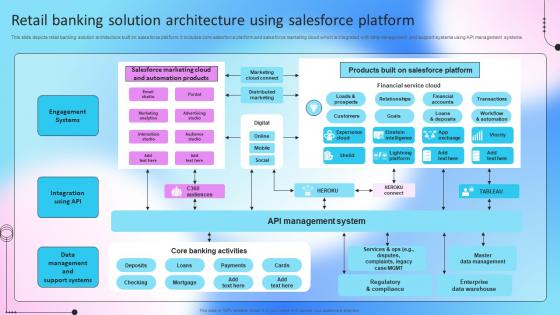
This slide depicts retail banking solution architecture built on salesforce platform. It includes core salesforce platform and salesforce marketing cloud which is integrated with data management and support systems using API management systems.
People who downloaded this PowerPoint presentation also viewed the following :
Retail Banking Solution Architecture Using Salesforce Platform with all 6 slides:
Use our Retail Banking Solution Architecture Using Salesforce Platform to effectively help you save your valuable time. They are readymade to fit into any presentation structure.






FAQs for Retail Banking Solution Architecture
So the biggest trends right now? Digital transformation is everywhere - banks are scrambling to keep up with fintech apps that actually work well. AI-powered personalization is getting pretty sophisticated too. There's also this weird flip happening where traditional banks want to act like startups, while fintechs are desperately trying to get banking licenses. Open banking lets people connect their accounts across different platforms, which is cool but still feels kinda new. Oh, and sustainability matters way more in lending now. Most branches are dying since everyone just uses their phone anyway. Honestly, if your bank isn't nailing mobile experience, they're already behind.
Banks have totally changed because of digital stuff. Customers want everything instantly now - photo check deposits, quick transfers, real-time alerts. Going to an actual branch feels weird these days, like using a payphone or something. Mobile apps are huge since people do everything on their phones. Twenty-four seven access is expected for things that used to mean standing in those awful bank lines. Oh, and if you're building anything customer-facing, mobile should be your main focus. Desktop feels like an afterthought now.
So fintech is basically forcing regular banks to get their act together or lose customers. Banks are scrambling to upgrade their apps with better features and faster transfers because honestly, people will just bounce to a startup that actually works well. Most traditional banks are either teaming up with fintech companies or desperately building their own tech - you know, instant account setup, AI financial advice, all that stuff. I mean, have you seen how much smoother banking apps have gotten lately? It's wild. Bottom line: banks that don't adapt are toast.
Honestly, you've gotta meet people where they actually are - which is on their phones most of the time. Use your data to predict what they need before they even know it themselves. The whole generic approach just doesn't work anymore, trust me. Make sure when someone uses your app, then walks into a branch, it feels like the same experience. Oh, and people actually want help managing their money better - not just another sales pitch. Financial wellness tools are huge right now. I'd start by looking at where customers get frustrated in your current system and fix those pain points first.
Oh man, the tech side is brutal - legacy systems that hate each other plus all those security headaches. Customers expect everything to work like Amazon too, which... fair enough but harder than it looks. That said, when banks actually pull it off? Game changer. You get customers who stick around longer, way better cross-selling, and costs drop since people can handle stuff themselves. My advice? Pick one simple customer journey first and show it works before you blow the whole budget on some massive overhaul.
Banks literally build their entire strategy around who their customers are. Age matters huge - millennials want everything digital and cheap, while boomers still prefer talking to actual humans. Gen Z? They're obsessed with budgeting tools (honestly makes me feel ancient). Your income decides what credit limits you get and whether you qualify for those fancy premium tiers. Location affects where they put branches too. High earners get pushed toward investment products, while students get basic checking accounts. It's pretty smart actually - figure out your customer segments first, then design products that fit how each group actually uses money.
Look, open banking forces banks to share customer data with third-party apps through APIs. Game changer. Now fintech startups can grab your banking info to build better budgeting tools, compare loans, whatever. Traditional banks are basically freaking out because they're not just competing with each other anymore - some random startup can swoop in and steal customers. But honestly? Smart banks will partner with these fintechs instead of fighting them. The trick is jumping on this early and building your own digital stuff before customers get hooked on someone else's app. It's adapt or die, really.
Honestly, you're sitting on a goldmine with all that customer data. Start by analyzing transaction patterns and demographics to predict loan defaults - way more accurate than traditional methods. Cross-selling becomes easier when you know someone's spending habits. Real-time fraud detection is huge too. Some banks are even using it for branch placement, which seems obvious but apparently wasn't happening much before. My advice? Don't try to tackle everything at once. Pick something concrete like speeding up loan approvals and see how it goes from there.
Ugh, digital compliance is such a nightmare for retail banks. GDPR, PCI DSS, SOX - there's like a million regulations that weren't built for how people actually bank now. Legacy systems can't handle the transaction volumes, and don't even get me started on trying to monitor everything in real time. Anti-money laundering gets super complex when you're dealing with new payment methods regulators barely understand yet. Honestly, the uncertainty is the worst part. You'll want to bake compliance right into your digital setup from the start - RegTech solutions are pricey but worth it. Way easier than trying to retrofit everything later.
Dude, cybersecurity in banking is EVERYTHING right now. People's entire life savings are on the line, so one hack basically kills your reputation forever. Most banks layer their defenses - encryption, multi-factor auth, fraud monitoring that runs 24/7, security audits. Oh and they drill employees constantly on phishing stuff because honestly, Karen from accounting clicking sketchy links is how half these breaches start. The mindset shift is key though: don't plan for IF you get attacked, plan for WHEN. Your response plan better be rock solid or you're toast.
Honestly, most banks suck at being proactive - they only call when something's already broken. You want to flip that completely. Reach out before issues happen and actually help customers hit their financial goals instead of just selling them stuff. Your app better work smoothly too because people will ditch you fast for clunky tech. Train your team to fix things on the first call - nobody wants to explain their problem three times. Oh, and map out where customers get frustrated most. Start fixing those spots first and watch your loyalty numbers climb. Personal touch plus effortless experience wins every time.
Honestly? Beat them at speed and customer experience. Your mobile app needs to actually work well - streamline everything and ditch the paperwork nightmare. I mean, who has time for that anymore? Legacy systems make this rough, but you've got stuff they don't: real branches for complicated issues, people trust you more, and you can offer better rates. The winning move is mixing digital convenience with actual human help when things get messy. Just start with whatever pisses off your customers most and fix that first.
Honestly, the payments world is wild right now. Digital wallets are everywhere - Apple Pay, Google Pay, you name it. Real-time transfers are becoming the norm instead of waiting forever for money to move. BNPL is literally taking over (I swear every checkout has Klarna now). What's really interesting is how random companies are building payment features right into their apps instead of sending you elsewhere. Even crypto payments are creeping in, though that's still pretty niche. Bottom line for your bank: people expect everything to work instantly and smoothly. If it takes more than a few taps, you're already behind.
Dude, branches are basically becoming ghost towns - it's wild how empty some feel now. Most people just use apps for deposits and transfers, so the smart banks are turning locations into advisory hubs instead. Think mortgage help, investment stuff, business banking - things you actually want to talk through in person. Cross-training tellers makes total sense right now. Oh and definitely shrink your footprint while beefing up the digital side. I walked into my local branch last week and there were literally three customers. Three! But they had this whole setup for financial planning sessions which seemed busy.
Most banks do a combo of digital stuff and in-person workshops. Interactive budgeting apps work great, plus savings calculators on your mobile platform. Face-to-face seminars are huge though - people still love that personal touch for big topics like buying homes or retirement planning. Your staff should explain products without all the jargon and spot those teachable moments during regular transactions. Meet customers where they're at. Younger folks want online tutorials, older clients prefer printed materials. Oh, and definitely survey what they actually want to learn first - saves you from creating content nobody cares about.
-
SlideTeam just saved my project! Thank you so much. The variety of templates helped me showcase multiple perspectives easily.
-
Superb! The innovative and inspiring template designs provide an edge to the presentation.