


Retail Management PowerPoint Presentation Slides





Try Before you Buy Download Free Sample Product
 Impress Your
 Audience
 100%
100% Editable
 Save Hours
 of Time


Our Retail Management PowerPoint Presentation Slides are topically designed to provide an attractive backdrop to any subject. Use them to look like a presentation pro.
People who downloaded this PowerPoint presentation also viewed the following :
Content of this Powerpoint Presentation
Why is the retail industry so dynamic and ever-changing? Because it is! At the core of every successful retail business is capable management that can navigate a wide range of challenges, from changing market demands to shifting consumer preferences. Retail management is more than just selling products; it is about providing an experience that attracts and retains customers, optimizing operations, and increasing profitability.
However, managing a retail business can feel like navigating a stormy sea. It entails not only understanding your customers but also managing inventory, optimizing store layouts, and training employees to be brand ambassadors. Without the proper tools and knowledge, this can be intimidating for small business owners and aspiring retail entrepreneurs alike.
This is where SlideTeam's retail management strategy template can help! Our PowerPoint is designed to guide you to generate better customer experience, reduced wastage, increased sales, employee training, and in branding in general.
The best part? Our templates are 100% customizable, allowing you to tailor each resource to your specific requirements. These user-friendly, content-ready tools are your blueprint for mastering the art of retail management.
Let’s explore!
Want a detailed retail management strategy for your business? Get it with a click here!
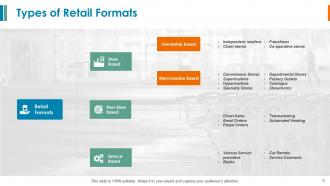
Template 1: Types of Retail Formats
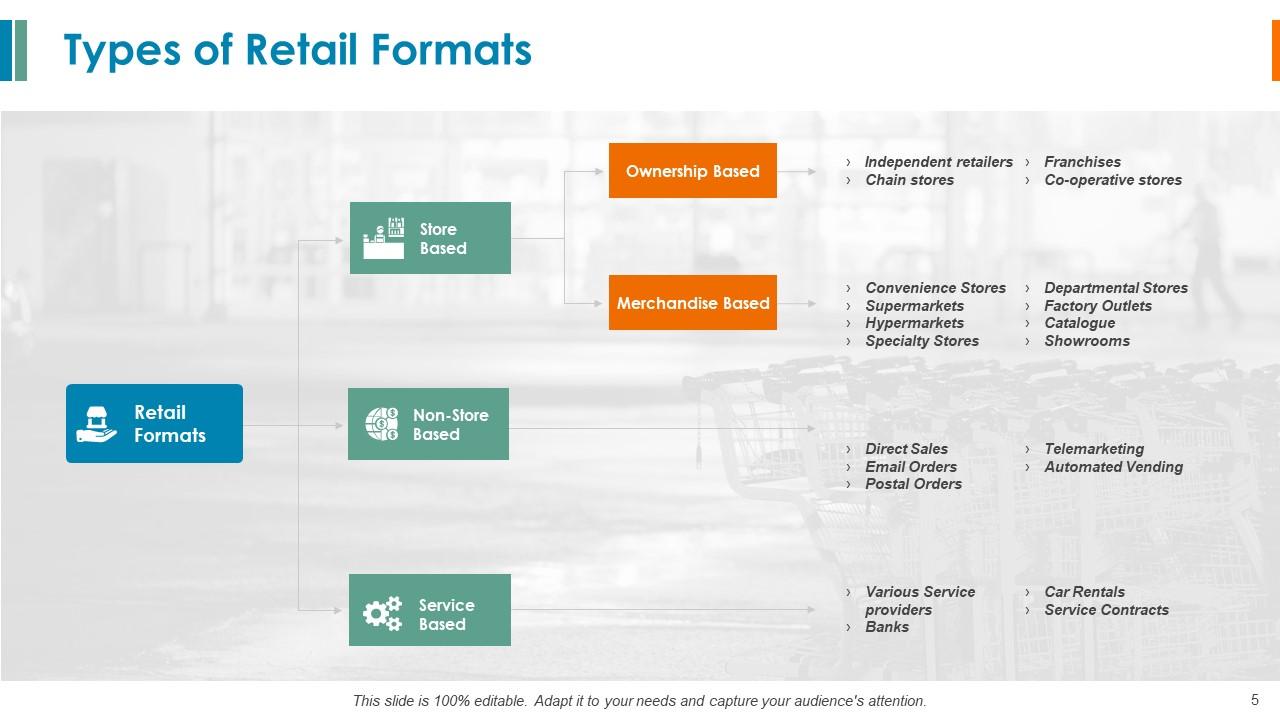
This PowerPoint Slide provides a comprehensive classification of retail formats divided into three categories: store-based, non-store-based, and service-based. Each category is further divided according to ownership and merchandise. The presentation slide describes various retail types, including independent retailers, chain stores, convenience stores, direct sales, and service providers such as banks and car rentals. This PPT Layout facilitates understanding of various retail structures and is useful for business strategy sessions and retail management discussions.
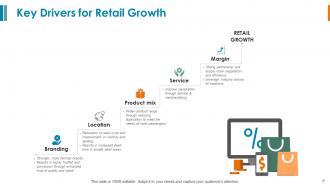
Template 2: Key Drivers for Retail Growth
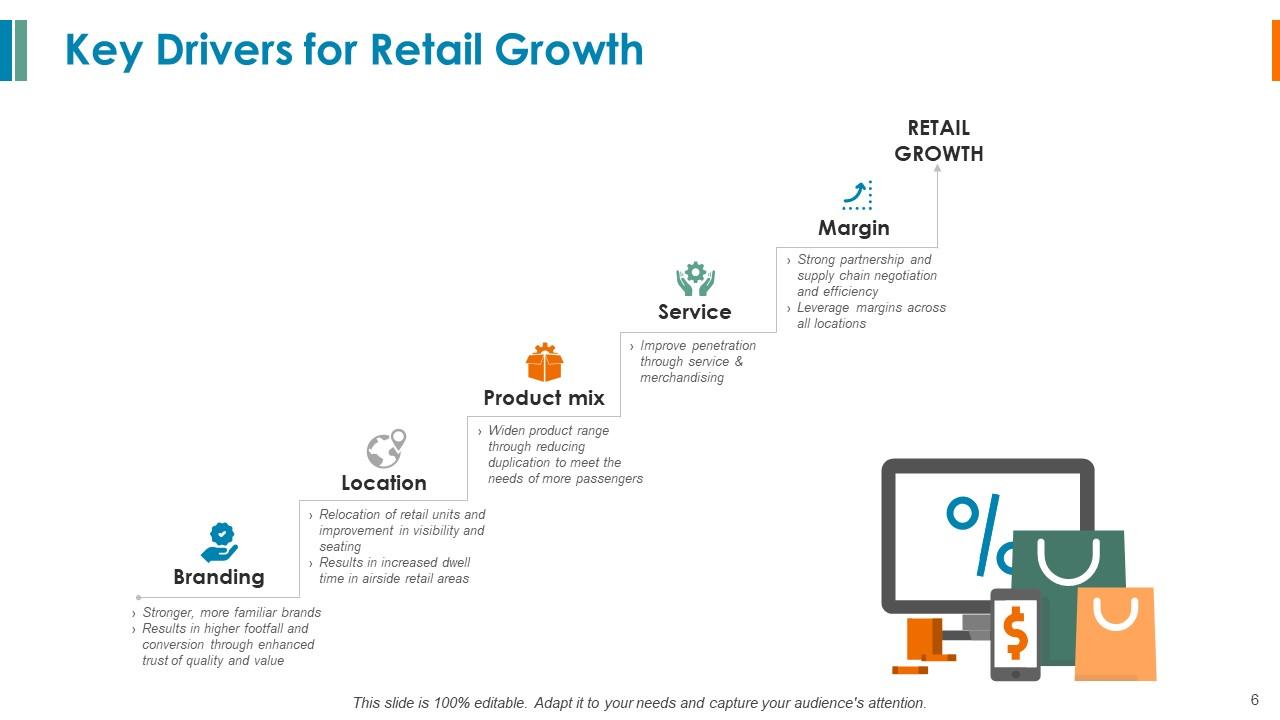
This PowerPoint Presentation lists the key drivers of retail growth, categorizing them as service, product mix, location, branding, and margin. It emphasizes the value of strong partnerships, efficient supply chain management, strategic location, brand strength, and a diverse product offering in increasing customer penetration and retail profitability. This presentation design is useful for business strategy meetings and training sessions because it includes editable content that allows you to tailor the presentation to your specific retail management and growth strategy needs.
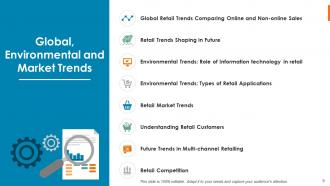
Template 3: Role of Information Technology in Retail
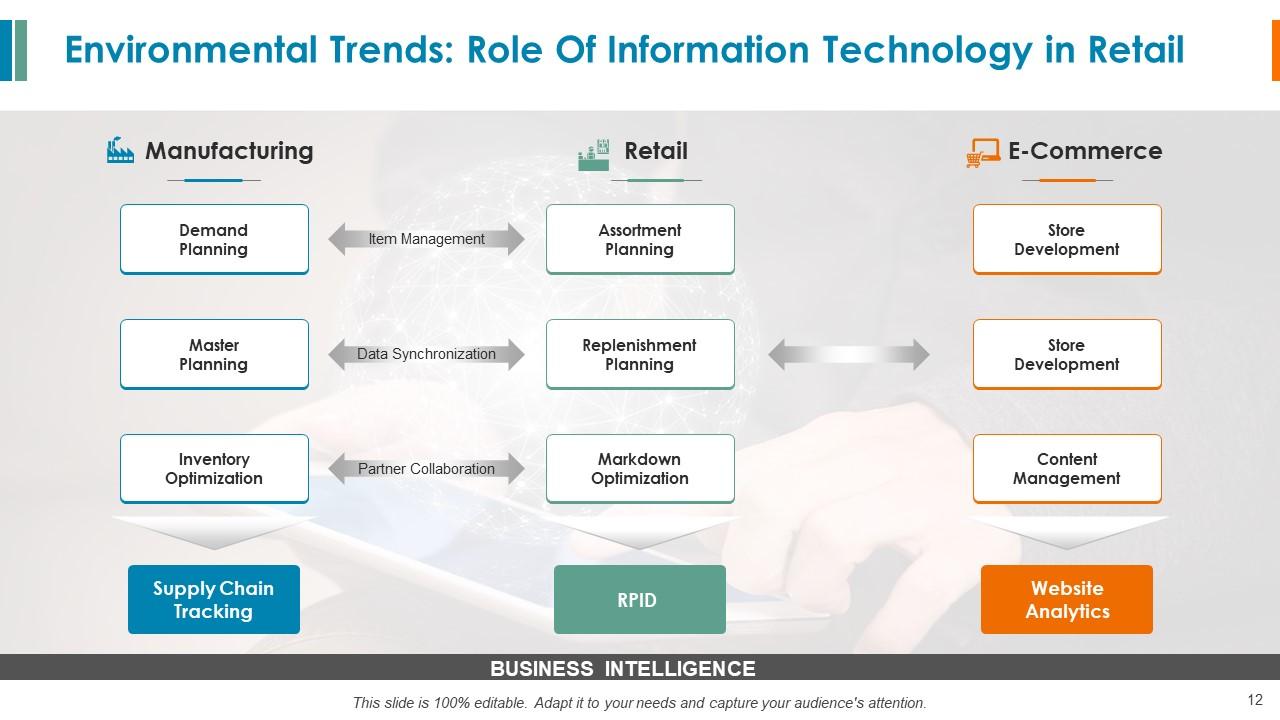
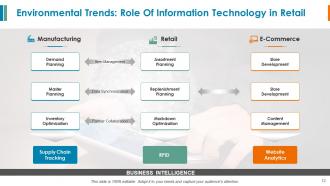
This PowerPoint Preset discusses the role of information technology in shaping environmental trends in various retail sectors, including manufacturing, retail, and e-commerce. Demand planning, item management, assortment planning, store development, and website analytics are detailed. This PPT Layout helps discuss how IT can optimize operations and increase efficiencies across the supply chain, making it useful for stakeholders looking to incorporate technology into their retail strategies.
Template 4: Types of Retail Applications
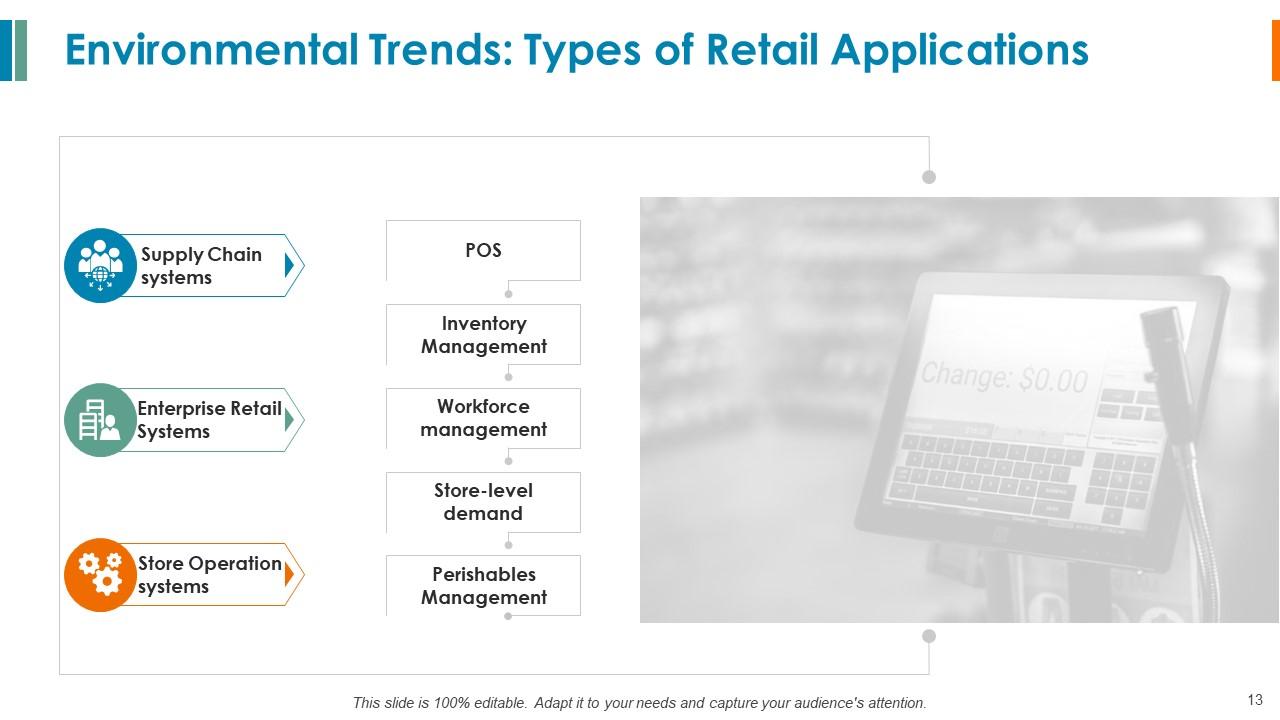
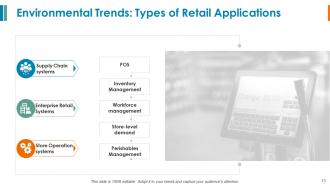
This PPT Setup provides an overview of environmental trend-driven retail applications, which are classified into three categories: Supply Chain Systems, Enterprise Retail Systems, and Store Operations Systems. It addresses specific applications such as POS, inventory management, and workforce management. The presentation template is intended to help retail professionals understand how these systems work together to improve operational efficiency. It is an essential tool for strategic presentations aimed at integrating technology into retail processes.
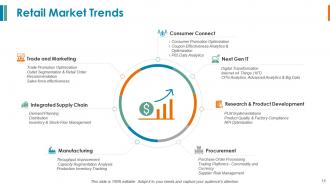
Template 5: Retail Market Trends
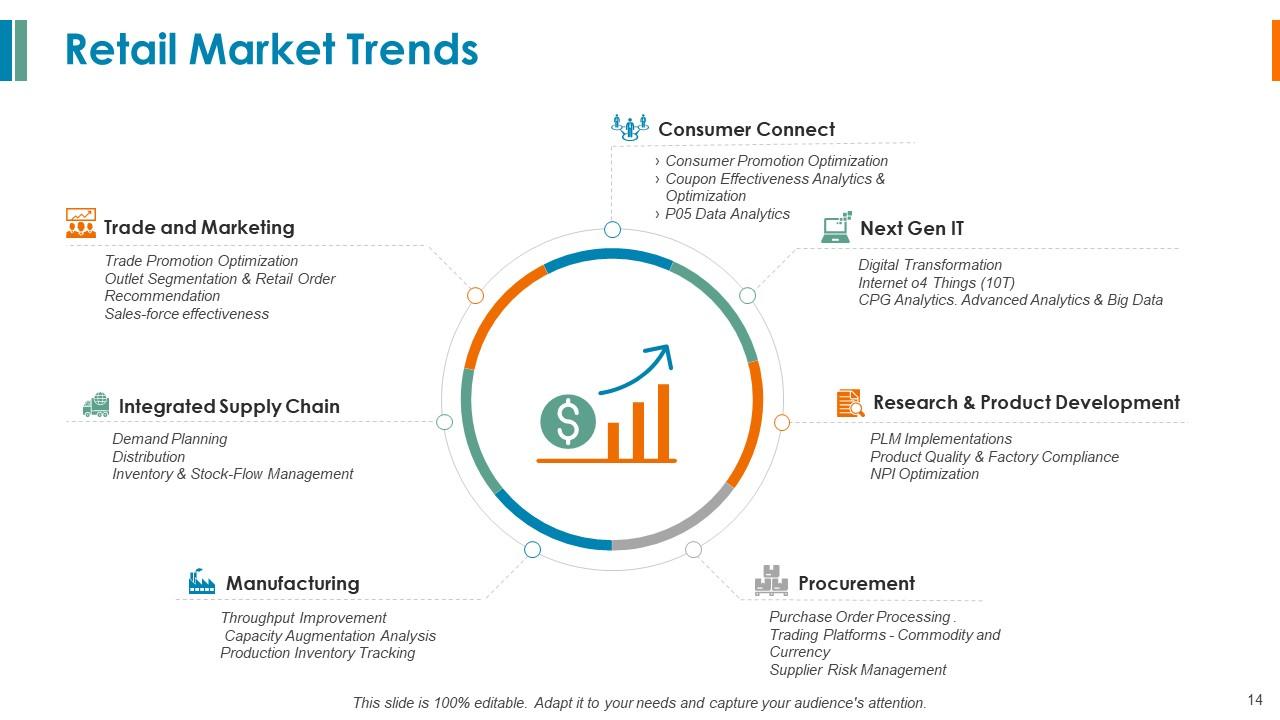
This PPT Template provides a detailed overview of current retail market trends, which are divided into several core areas: trade and marketing, integrated supply chain, manufacturing, consumer connect, next-generation information technology, research and product development, and procurement. Each segment digs into specific strategies, such as trade promotion optimization, digital transformation, and PLM implementations.
Template 6: Which Pricing Strategy to Adopt
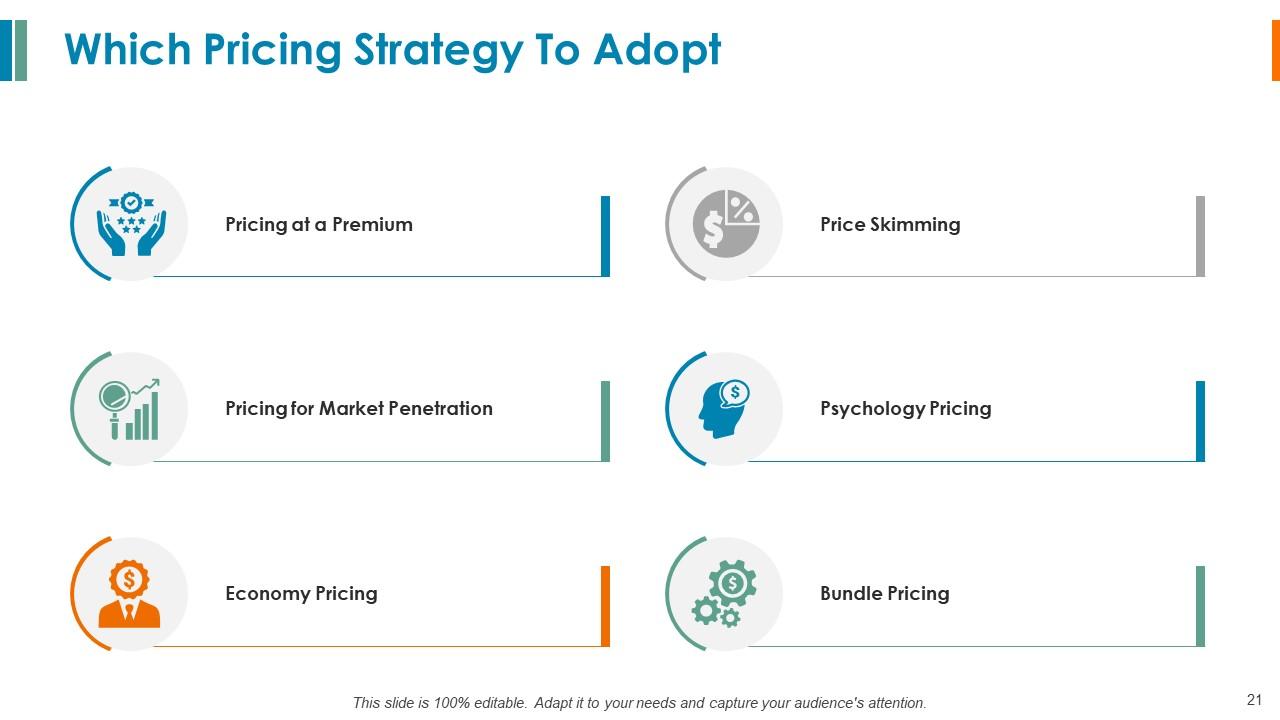
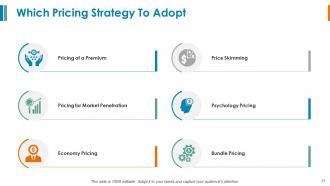
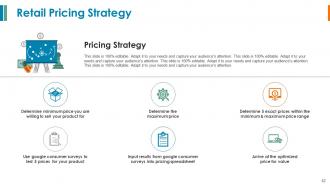
This PPT Theme covers pricing strategies that businesses can use, such as Pricing at a Premium, Price Skimming, Pricing for Market Penetration, Psychology Pricing, Economy Pricing, and Bundle Pricing. Each strategy is categorized, providing a clear overview for businesses to consider when pricing their products or services. This PPT Presentation is a relevant resource for marketing presentations or strategy meetings that aim to discuss the best pricing strategy to maximize market impact and profitability.
Template 7: Stages of Product Distribution in Retail
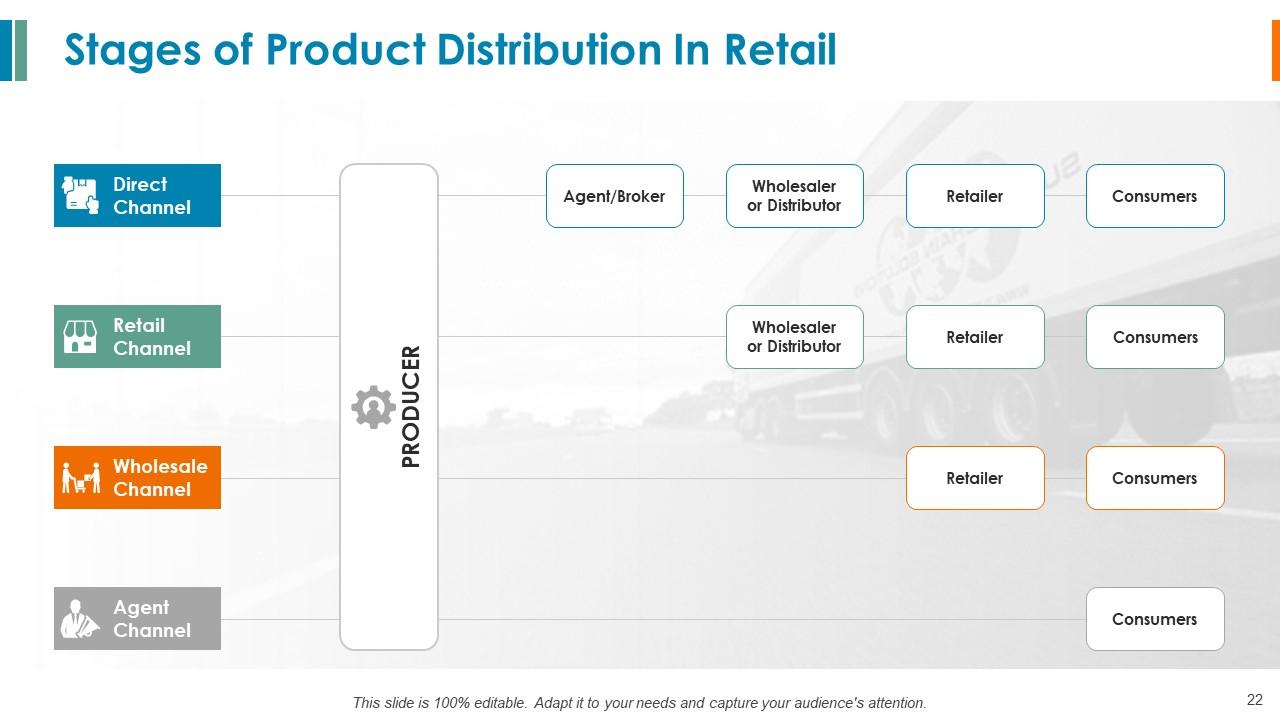
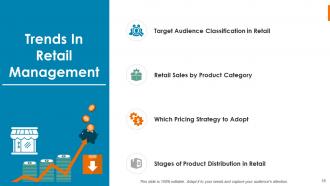
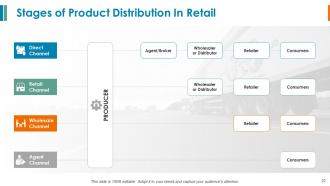
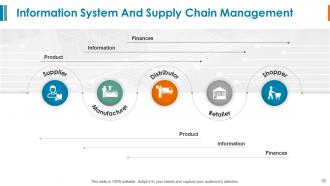
This PowerPoint Presentation provides a clear and organized overview of the various stages of product distribution in retail, divided into four primary channels: direct, retail, wholesale, and agent channels. This presentation layout depicts each channel's flow from producer to consumer, highlighting intermediary stages such as agents, brokers, wholesalers, and retailers. This slide is a relevant resource for explaining the complexities of retail distribution networks. It is appropriate for educational and business presentations on supply chain management and retail operations.
Template 8: Retail Market Strategy
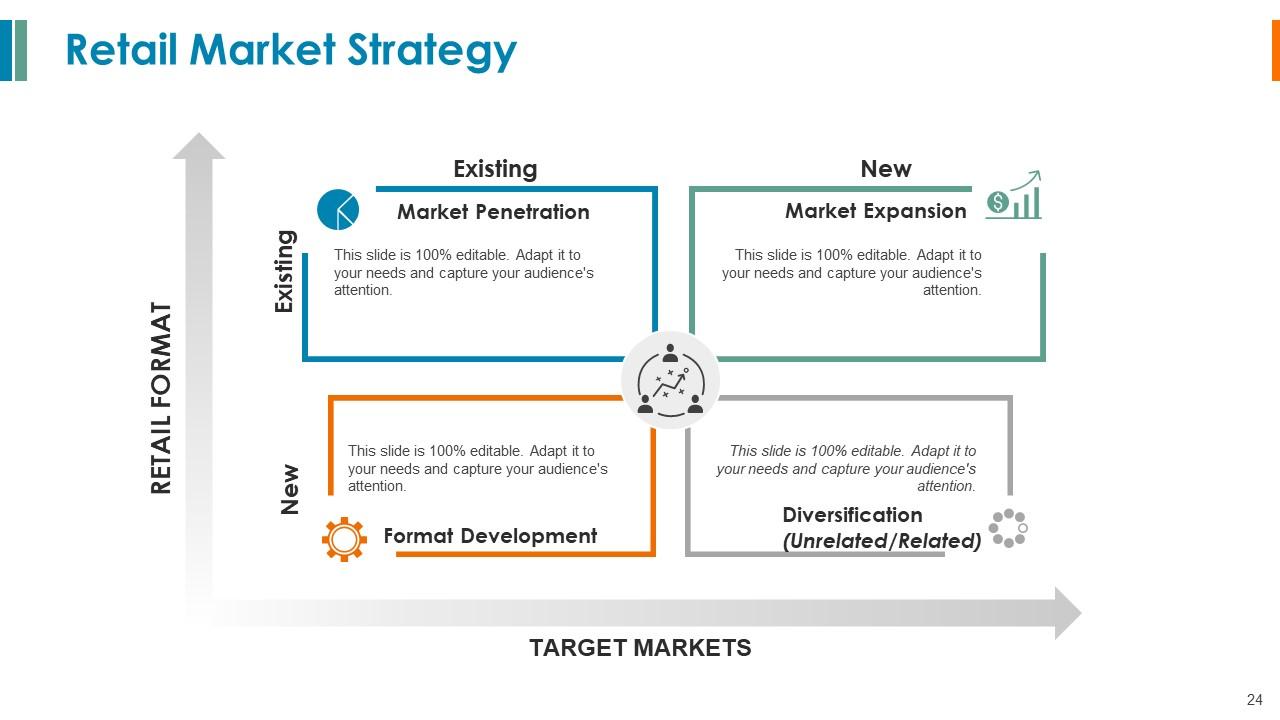
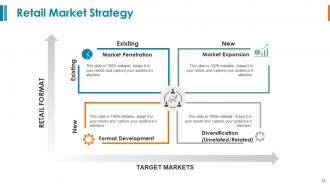
This PowerPoint Design shows the strategic paths for retail market development, which are divided into two axes: retail format and target markets. It outlines four major strategies: market penetration and format development for existing retail formats, as well as market expansion and diversification for new retail formats. This visual framework is an important tool for businesses to plan and discuss strategic growth initiatives in retail markets.
Template 9: Global Market Segmentation Strategy
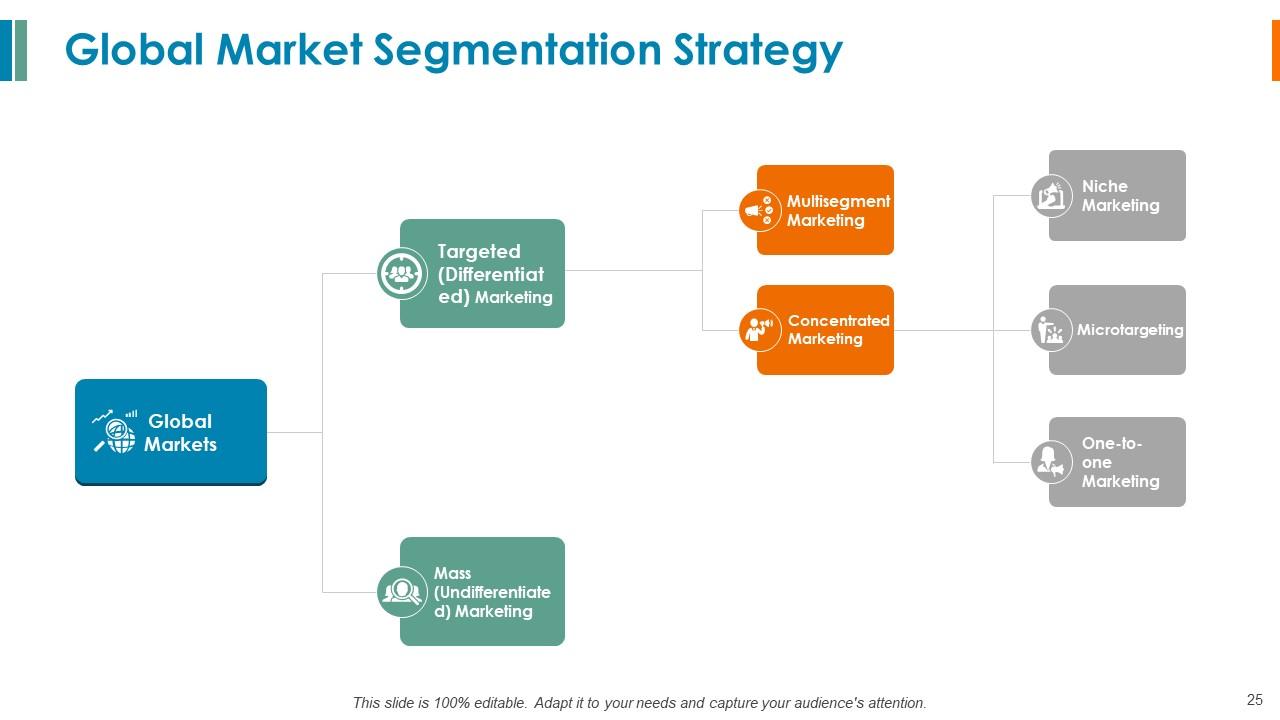
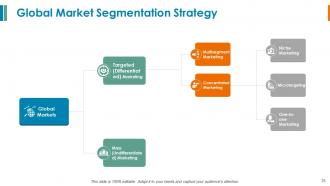
This PowerPoint Framework lays out a global market segmentation strategy, explaining how companies can use different marketing techniques to target different global markets. It presents a range of options from mass (undifferentiated) marketing to targeted (differentiated) marketing, multisegment marketing, concentrated marketing, niche marketing, micro-targeting, and one-to-one marketing, among other more targeted strategies. For strategists and marketers who intend to diversify their market approach globally, this slide is crucial as it ensures customized communication across various customer segments.
Template 10: Customer Loyalty Program Option
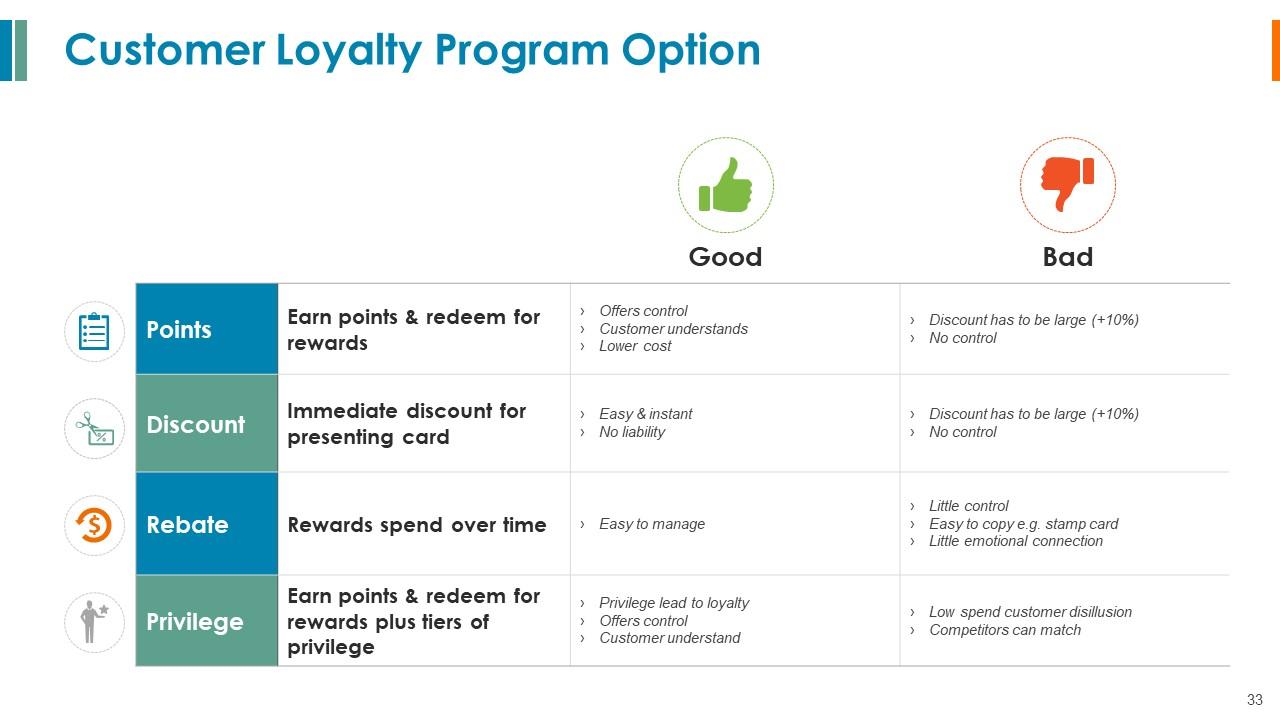
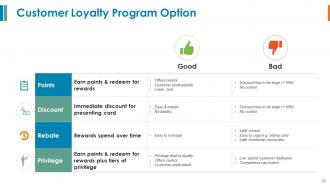
This PPT Layout examines customer loyalty program options, which are divided into four distinct categories: points, discounts, rebates, and privileges. Each program type is rated based on its benefits and drawbacks, with green thumbs up and red thumbs down indicating efficacy. The presentation preset shows the control, cost, management ease, and customer perception associated with each loyalty strategy. This makes it an invaluable tool for businesses seeking to improve customer retention and satisfaction through personalized loyalty programs.
Retail Revolution Toolkit
Ready to take your retail management to the next level? With SlideTeam's customizable presentation templates, you'll not only survive but thrive in retail. These tools are meant to assist you in tailoring your strategies, which range from improving customer experiences to streamlining operations. Why Wait? Explore our resources, tailor your approach, and watch your retail business grow stronger and more connected to your customers.
Retail Management PowerPoint Presentation Slides with all 67 slides:
Use our Retail Management PowerPoint Presentation Slides to effectively help you save your valuable time. They are readymade to fit into any presentation structure.

 Click here to view PDF
FAQs for Retail Management
Product mix and pricing are huge. Your staff needs to actually help people, not just stand there - I've walked out of places where nobody gave a damn. Layout matters more than you'd think too, confusing stores kill sales. Keep tight control over inventory so you're not always out of stuff people want. Oh and track everything - sales per square foot, how many browsers actually buy something, average sale amounts. Visual displays work because people really do shop with their eyes first. Seriously though, start measuring this stuff if you aren't already.
Honestly, there's so much cool stuff you can do now. Mobile POS is clutch - customers don't have to wait in those awful lines anymore. AR apps are pretty neat too, lets people see how furniture looks in their space or whatever. Oh and those recommendation systems that track what people buy? Total game changer for boosting sales. Analytics will show you exactly what's flying off the shelves. Self-checkout is obvious but works. Loyalty apps keep people coming back. Even chatbots handle the basic "where's the bathroom" questions. My advice? Pick like two things that fix your worst customer complaints first. Don't go crazy trying to do everything at once.
Your inventory system is basically what makes or breaks your whole retail game. Good management means having the right stuff when customers want it without your money sitting around in dead stock - trust me, I've watched businesses fail from both sides of this. Cash flow, customer happiness, profits - it all connects back to how well you track what's moving. Real-time data helps a ton these days, but honestly? Start simple. Look at your turnover rates first - that's where you'll spot the problem areas fast. Stockouts suck, but so does a warehouse full of junk nobody wants.
Dude, consumer behavior is like your retail roadmap. It shows you what to stock, how to price stuff, and where everything should go. You know how people always grab candy at checkout? That's not random - stores put it there because they've figured out our shopping patterns. Once you get why customers buy certain things and when they shop, you can totally redesign your approach. Your marketing, store layout, even when you schedule staff - all of it should match what your customers actually do. Honestly, just paying attention to the small stuff your customers do can unlock some pretty big wins. Start there.
Think of it like telling a visual story as customers walk around. Rule of three works great for displays, and definitely put your best stuff at eye level. I change mine up every few weeks so it doesn't get stale. Good lighting makes everything look better - can't stress that enough. Walk through like you're shopping and see what catches your eye first. Don't just randomly throw products together either, make sure they actually make sense as a group. Clear sight lines help too so people aren't bumping into stuff.
Honestly, start with your bestsellers - that's where you'll make the biggest difference. Track what competitors are charging and watch how your customers actually buy stuff. Some products can handle price bumps without people caring, others are crazy sensitive to even small changes. I'd look at your sales history to figure out which is which. There are tools that'll automatically adjust prices based on inventory and what everyone else is doing, which is pretty neat. The whole thing comes down to finding that balance where you're not pricing yourself out but also not leaving money on the table, you know?
Honestly, the inventory sync thing will drive you insane - selling stuff you don't actually have is the worst. Your pricing and branding gets all over the place too when you're juggling store, website, and app customers. Data becomes this nightmare mess since it's flowing in from everywhere, so good luck figuring out what customers actually want. Oh and your team? They need to learn how everything connects instead of just doing their own thing. I'd probably start with decent inventory software that can actually talk to all your channels - saves you from so many headaches later.
Honestly, it all comes down to making people feel like they actually matter to your business. Don't do those crappy loyalty programs where points disappear - give real rewards that customers want. Your staff needs to know what they're selling and genuinely care about helping, because fake energy is so obvious it hurts. Send offers based on what people actually buy, not random junk they'll ignore. Oh, and whatever you promise? Do it. Every time. I'd start by looking at where customers interact with you now and figure out what's broken. Those little fails add up fast.
Training makes a massive difference, trust me. Your team works way faster when they actually know the products and systems. Fewer screw-ups too. Customers pick up on it immediately - they can tell when someone knows their stuff vs. when they're just winging it. I've watched stores where poorly trained staff create these awful checkout lines because they can't figure out basic transactions. Meanwhile, trained employees handle everything smoothly, naturally suggest add-ons, fix problems on the spot. Honestly, the ROI happens pretty quick. Start with whoever talks to customers most and track your numbers before/after.
Instagram and TikTok are perfect for showing off your stuff - people want to see products in action, you know? Post some behind-the-scenes content and customer reviews to build trust. Facebook's solid for community building too. Here's the thing though - being consistent beats being perfect every time. Don't just push sales constantly. Respond to comments, share what customers post about you, maybe run some local ads. I'd honestly just pick one platform you actually like using first. Once you get the hang of it, then branch out. Way less overwhelming that way.
Honestly, omnichannel is where it's at - your customers want everything to flow smoothly between online, mobile, and in-store. AI personalization is getting crazy good at predicting what people want (sometimes it's actually creepy how accurate it is). Don't sleep on the sustainability thing either. People genuinely care about eco-packaging and ethical sourcing now. Social commerce through Instagram and TikTok is blowing up too. Oh, and flexible pickup options are basically table stakes at this point. I'd start by looking at your customer journey and fixing the most obvious pain points first.
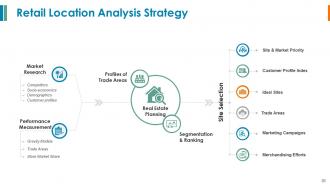
Honestly, location and layout can totally make or break your sales. High foot traffic gets people through the door, but then your layout decides if they'll actually buy stuff. You want to guide shoppers past your best profit items while keeping the basics easy to grab. Grocery stores are sneaky about this - they stick milk way in the back so you walk past everything else first. Where you put your checkout, how wide your aisles are, product placement - it all affects how long people stick around and spend money. I'd start by watching how customers move through your space right now and spot any dead areas that need better signs.
Honestly, just nail down these three things: labor practices, environmental stuff, and being upfront about everything. Check that your suppliers aren't pulling any sketchy moves with child labor or dangerous conditions - that kind of scandal spreads like wildfire these days. Environmental impact matters too, from how things are made to how they get shipped. Customers are pretty nosy now about where their stuff comes from. I'd start by actually auditing your main suppliers and getting solid ethical requirements written into contracts. It's obviously the right thing to do, but it'll also save your ass reputation-wise down the road.
Okay so there's basically three ways to tackle this - supply chain stuff, how you actually run the store, and getting customers involved. I'd start with something simple like switching to LED lights or finding suppliers who aren't terrible for the environment. Packaging waste is huge too. Then maybe try a recycling program or cut down plastic bags by like 50% this quarter? The energy savings actually pay for themselves pretty quickly which is nice. You could also do take-back programs or push more sustainable products. But seriously, don't try to do everything at once - that's a recipe for burnout. Pick one thing you can measure and go from there.
Honestly, customer feedback is like having a cheat sheet for your business. Why guess what people want when they'll straight up tell you? Track the complaints and reviews - patterns always emerge. Use that stuff to tweak your inventory, fix processes, maybe even get better deals with suppliers. Short complaints tell you more than long surveys sometimes. Set up multiple ways for people to give feedback, but here's the key part - you actually have to do something with it. Customers can tell when you're just collecting feedback to look good but ignoring it.
-
Very useful and perfect
-
Very unique and reliable designs.
-
Illustrative design with editable content. Exceptional value for money. Highly pleased with the product.
-
Unique research projects to present in meeting.
-
Attractive design and informative presentation.
-
Easy to edit slides with easy to understand instructions.