


Retail store visit ppt background




Try Before you Buy Download Free Sample Product
 Impress Your
 Audience
 100%
100% Editable
 Save Hours
 of Time


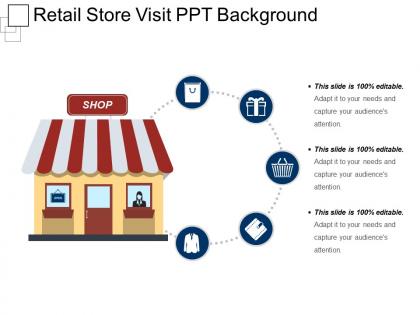
Enhance the growth opportunities for your retail model with our retail store visit PPT slide design. It will help in describing the roadmap of a consistent business growth. This retail management PPT diagram will help in bringing out the essential elements which helps in improving the customer satisfaction rate for your retail business. This retail workflow PowerPoint design will also help in providing you a streamline process which needs to be followed in your store so that to improve the customer experience. This retail operation PowerPoint diagram will help your business to identify opportunities to improve your retail process. It also results in enhancing your retail sales. You can also describe the different business components which help in showing an impact on the overall functionality of your retail processes. You can simply download this retail store PPT layout to also define the factors which may affect your business growth. Thus, click on the link option given now. Get them to contribute to group events with our Retail Store Visit Ppt Background. Be able to handle introverts.
People who downloaded this PowerPoint presentation also viewed the following :
Retail store visit ppt background with all 5 slides:
Our Retail Store Visit Ppt Background ensure you don't have to hedge your bets. They cut down the chances of failure.
FAQs for Retail store
**INPUT**: What unique elements of store design influence customer experience in retail? **OUTPUT**: Unique store design elements include strategic lighting, intuitive wayfinding systems, sensory branding through scent and music, flexible product displays, and seamless technology integration. These design approaches enhance customer engagement by creating memorable atmospheres, reducing shopping friction, and encouraging longer visits, with many retailers finding that thoughtful spatial design ultimately drives higher conversion rates and customer loyalty.
Retailers leverage technology to enhance in-store interactions through mobile apps, interactive displays, augmented reality experiences, smart mirrors, and personalized recommendation systems. These technologies streamline customer journeys by providing real-time product information, virtual try-ons, and tailored suggestions, while enabling staff to access customer preferences instantly, ultimately delivering faster service and more engaging shopping experiences.
Employee training significantly shapes customer perception by enhancing service quality, product knowledge, communication skills, and problem-solving abilities during store interactions. Well-trained retail staff streamline customer experiences through personalized recommendations, efficient checkout processes, and proactive assistance, with many retailers finding that comprehensive training programs ultimately deliver higher customer satisfaction, increased sales conversions, and stronger brand loyalty.
Sensory elements significantly influence shopping behavior by creating emotional connections, guiding customer movement, and encouraging longer store visits. Strategic lighting highlights products and creates ambiance, while carefully curated music affects purchasing pace and mood, with many retailers finding that optimized sensory experiences increase sales conversion rates and customer satisfaction.
Retailers can create seamless omni-channel experiences through unified inventory management, consistent pricing across platforms, integrated customer data systems, mobile app connectivity, and synchronized marketing campaigns. These strategies streamline operations by enabling real-time stock visibility, personalized recommendations, and flexible fulfillment options like buy-online-pickup-in-store, ultimately delivering enhanced customer satisfaction and increased sales conversion rates.
Visual merchandising techniques boost product visibility and sales by creating compelling product displays, optimizing store layouts, utilizing strategic lighting, implementing color psychology, and designing clear navigation pathways. Through strategic placement and eye-catching presentations, retailers enhance customer engagement, increase dwell time, and drive impulse purchases, with many retail chains finding that effective visual merchandising ultimately delivers higher conversion rates and competitive advantage.
Key factors determining retail foot traffic include location accessibility, store visibility, product assortment, pricing strategy, seasonal trends, marketing campaigns, and customer experience quality. These elements work synergistically, with shopping centers and department stores finding that strategic combinations of competitive pricing, targeted promotions, and enhanced in-store experiences significantly boost visitor numbers while driving sales conversions.
Retailers can utilize customer feedback to adapt in-store layouts by analyzing shopping pattern data, conducting surveys about product placement preferences, and implementing heat mapping technology to track high-traffic areas. Through strategic layout adjustments, stores enhance navigation flow, optimize product visibility, and reduce customer friction points, with many retailers finding that feedback-driven redesigns increase conversion rates and average transaction values significantly.
Seasonal displays significantly influence purchasing decisions by creating urgency, triggering emotional connections, and positioning products as timely necessities rather than optional purchases. Through strategic placement, vibrant themes, and limited-time messaging, retailers like Target and Macy's enhance impulse buying, increase average transaction values, and ultimately drive seasonal revenue spikes while building brand engagement.
Loyalty programs significantly enhance customer retention by offering personalized rewards, exclusive discounts, targeted promotions, and points-based incentives that encourage repeat visits. These strategic programs create emotional connections between customers and brands, with many retailers finding that loyalty members visit 35% more frequently and spend considerably more per transaction, ultimately delivering sustained revenue growth and competitive advantage.
Inventory best practices include real-time tracking systems, strategic product placement, automated reordering, demand forecasting, and maintaining optimal stock levels across high-traffic areas. These approaches streamline operations by reducing stockouts, minimizing overstock situations, and ensuring popular items remain accessible, with many retailers finding that integrated inventory management ultimately delivers faster restocking, improved customer satisfaction, and enhanced competitive advantage.
Retailers can effectively address customer complaints by listening actively, acknowledging concerns promptly, offering immediate solutions or alternatives, and following up to ensure satisfaction. Through trained staff empowered with decision-making authority, stores like Target and Best Buy resolve issues quickly, turning negative experiences into positive ones, ultimately enhancing customer loyalty and reducing complaint escalation.
Community engagement builds customer loyalty and drives foot traffic by creating emotional connections, hosting local events, supporting neighborhood causes, and establishing the store as a community hub. Retailers like local bookstores hosting author readings or grocery stores sponsoring youth sports teams find that these initiatives generate word-of-mouth marketing, increase repeat visits, and ultimately deliver stronger customer relationships and sustainable competitive advantage.
Storytelling enhances retail brand connection through immersive displays, product origin narratives, customer journey mapping, and interactive brand experiences that emotionally engage shoppers. Successful retailers like Patagonia and Nike integrate compelling narratives throughout their store layouts, creating memorable experiences that transform routine shopping into meaningful brand interactions, ultimately driving customer loyalty and increasing sales conversion rates.
Future trends transforming retail store visits include augmented reality shopping experiences, AI-powered personalization, contactless payment systems, smart inventory management, and integrated omnichannel services. These technologies streamline customer interactions by reducing wait times, enhancing product discovery, and delivering personalized recommendations, with many retailers finding that blending digital innovation with physical spaces creates competitive advantages and significantly improved customer satisfaction.
-
Editable templates with innovative design and color combination.
-
Wonderful templates design to use in business meetings.