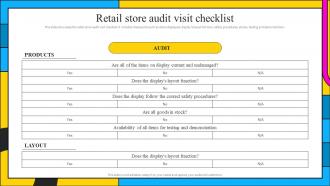
Retail Store Audit Visit Checklist
Try Before you Buy Download Free Sample Product
Audience
Editable
of Time
This slide showcases the retail store audit visit checklist.It includes checkpoints such as items displayed, displays layout function, safety procedures, stocks, testing and demonstration.
People who downloaded this PowerPoint presentation also viewed the following :
Retail Store Audit Visit Checklist with all 6 slides:
Use our Retail Store Audit Visit Checklist to effectively help you save your valuable time. They are readymade to fit into any presentation structure.
FAQs for Retail Store
Okay so for your retail audit checklist, definitely hit the basics first - inventory counts, pricing accuracy, visual displays looking decent. Staff compliance is huge too, along with safety stuff and keeping things clean (seriously, dirty stores turn people off so fast). Loss prevention checks are clutch, plus making sure your POS systems aren't being weird and promotional materials match what corporate sent. The trick is finding that sweet spot where it's thorough but won't make your team want to hide when audit time comes around. Maybe test it at just one store first? That way you can fix whatever doesn't work before rolling it out everywhere.
Honestly, these checklists are lifesavers because you'll definitely forget stuff otherwise. Like that one fire extinguisher in the back corner - I swear those things are invisible until inspection day. Having everything written down means you hit all the compliance boxes every time. Storage temps, safety gear, exit signs, all that jazz. Plus it shows regulators you're not just making it up as you go along, which they love. My advice? Grab a basic template and tweak it for whatever rules your area has. Oh, and actually stick to doing regular walk-throughs - sounds obvious but you'd be surprised.
Hey! So for your retail audit thing, definitely track your inventory turnover and how often you're running out of stuff. Shrinkage percentages are huge - theft adds up fast. I'd also look at carrying costs and days of inventory sitting around. The gross margin return per square foot is honestly my favorite metric because it shows what's actually making you money. Cycle count accuracy matters too, plus your supplier fill rates since empty shelves suck for everyone. Pull these monthly and set up alerts when things get weird so you can jump on problems quickly.
Yeah, customer service stuff should definitely be on your retail audit checklist - usually goes in the operational standards part. Check greeting protocols, how fast they respond, if staff actually knows the products, complaint handling, all that. Mystery shopper scores and customer feedback are gold for this. Bad service kills everything else you're doing right, honestly. Oh, and don't forget to look at both in-person interactions and whatever digital stuff you've got going on. Best approach? Watch real customer interactions during your audit, then compare what you saw against your written service standards.
Your visual merchandising can make or break sales, honestly. Check if displays highlight the right stuff and signage is actually readable - you know how some stores just slap up random signs everywhere? Look at your store flow too. Are promotional displays matching current campaigns? High-margin products better be in prime spots. Seasonal placement should make sense (don't ask me why I saw swimsuits next to winter coats last week). Take photos of everything that's working and what isn't. Trust me, your team will need those visual references later when you're trying to explain what needs fixing.
Honestly, going digital will save you so much headache with retail audits. Ditch those paper checklists and grab a mobile app or tablet instead. Everything syncs to the cloud automatically, and you can snap photos right there when you spot issues - way better than juggling a separate camera (or worse, forgetting to take pics entirely). Reports generate instantly too. The scheduling features are pretty slick - automated reminders mean stuff actually gets done. I'd say pick one tool and test it with your team next month. Compare it to your current paper mess and you'll see the difference immediately.
Don't rush into it without prepping first - you'll totally miss the big stuff. Actually understand what you're looking at instead of just going through the motions. People get tunnel vision on obvious problems but completely overlook the systemic issues that'll cost way more down the line. Avoid auditing when everyone's crazy busy, they won't have time for you anyway. Document everything with photos and notes because your memory sucks more than you think it does. Oh, and follow up within 48 hours while it's all still fresh in your head.
Honestly, I'd go with monthly for most places. High-traffic stores might need it every 2-3 weeks though. We tried quarterly once and wow, that was a mistake - missed some huge inventory issues that cost us big time. Weekly spot checks are solid for those problem areas you already know about. The main thing is staying consistent so your team knows audits aren't just punishment when stuff goes wrong. Keeps everyone on their toes, you know? Monthly's a good starting point, then tweak it based on what you're seeing.
So for your retail audit checklist, definitely hit customer service first - how they greet people, if they actually know the products, complaint handling. Sales stuff matters too like upselling and cross-selling. Cash handling accuracy is huge (nothing worse than a drawer that's constantly off). Store presentation and safety protocols, obviously. Oh and teamwork - I've seen stores with amazing individual workers but terrible team dynamics and it shows. Communication skills too. Just make sure you're checking things you can actually see during visits, not just stuff that looks impressive on a form but doesn't translate to real performance.
Look, retail audit checklists are basically your best friend for catching stuff before it costs you money. They help you spot broken cameras, unlocked storage rooms, sketchy inventory gaps - all the things thieves look for. Weekly walkthroughs are clutch. You'll check if your POS systems are locked down and make sure your team isn't getting sloppy with cash handling. Honestly, I'd probably start with a basic template and tweak it for your specific store. It's like having someone double-check your work, but for security vulnerabilities instead of math homework.
Check the basics first - lighting, temperature, how noisy it gets. Air circulation too because stuffy stores are the worst. Look for cleanliness issues, pest problems, and how they handle trash. Safety stuff is huge - wet floors, blocked exits, accessibility compliance. I swear half the stores I've been in have some obvious violation they just ignore. Space layout matters more than you'd think, especially when it gets crowded. Does foot traffic flow naturally or do people bunch up weird? Walk around like you're shopping and notice what feels off. Trust your gut - if something bothers you, other customers probably hate it too.
Honestly, call a quick team meeting instead of just firing off an email - way more effective. Walk through the main findings together and use real examples that connect to customer impact or sales numbers. Don't make anyone feel like they're getting called out though. Frame it as team improvement stuff, not individual failures. After that, put together a basic action plan with clear deadlines and responsibilities. The key thing is making sure everyone knows you're not playing the blame game here. You're all working toward the same goals anyway, so treat it like that.
Honestly, I'd start with role-specific checklists so everyone knows what auditors will actually be looking at. Mock audits every quarter work wonders - most people freak out just because they've never been through one. Your team needs to know the documentation system inside and out, plus where all the important records live. Don't just teach daily tasks; they need to understand WHY things work that way since auditors love asking those questions. Oh, and practice talking through processes out loud - it's harder than you think! Pick someone in each department to be the go-to person so auditors aren't hunting down managers constantly.
Basically, tailor your checklist to whatever type of store you're running. Grocery? Hit hard on food safety and expiration dates - that cold chain stuff is crucial. Fashion retailers need visual merchandising and size availability covered. Electronics stores should add product demo sections and warranty protocols. The real trick is figuring out what actually moves the needle for your business instead of copying some random template. Build your base checklist first, then throw in the industry-specific bits. Honestly, I'd run it for a few weeks and see what your team actually uses. You'll probably end up tweaking it based on their feedback anyway.
Look, skipping retail audits is basically setting money on fire. You're talking about 2-3% of your revenue just vanishing through theft, pricing screwups, and inventory mistakes. That adds up fast. Compliance violations are another nightmare - those fines hit hard when regulators come knocking. I've seen stores miss obvious promotional errors that either cost them sales or piss off customers. Monthly spot checks are your bare minimum, honestly. Track shrinkage patterns across locations too, because some spots are always worse than others. Trust me, catching problems early beats explaining missing profits later.
-
SlideTeam provides PPTs on every single topic. Their templates suit my job very well. I am very grateful!
-
Loved the fact that SlideTeam provides clean, high-definition, and professional PowerPoint products.Â