


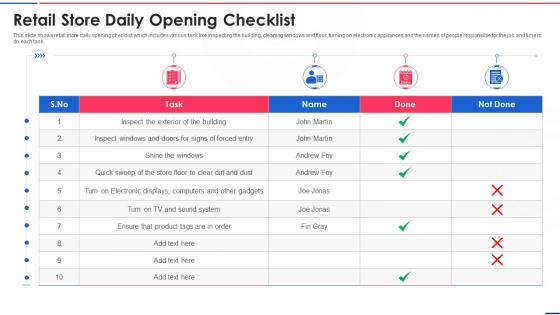
Retail Store Daily Opening Checklist




Try Before you Buy Download Free Sample Product
 Impress Your
 Audience
 100%
100% Editable
 Save Hours
 of Time


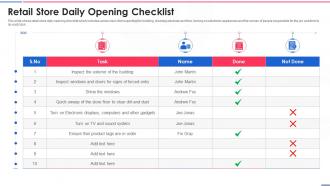
This slide shows retail store daily opening checklist which includes various task like inspecting the building, cleaning windows and floor, turning on electronic appliances and the names of people responsible for the job and time to do each task.
People who downloaded this PowerPoint presentation also viewed the following :
Retail Store Daily Opening Checklist with all 6 slides:
Use our Retail Store Daily Opening Checklist to effectively help you save your valuable time. They are readymade to fit into any presentation structure.





FAQs for Retail Store
Definitely include product names, SKU numbers, and how much you've got in stock. Reorder points and supplier details are clutch too. Oh, and item locations - seriously, this saves so much time when you're hunting for stuff. Purchase costs and selling prices should go on there, plus expiration dates if that applies to your products. I always throw in a notes section because weird stuff happens - damaged items, returns, random issues. The trick is making it detailed without being so complicated that nobody wants to use it. Keep it simple enough that your team will actually fill it out consistently.
Honestly, just weave safety stuff into your regular checklists instead of making it this whole separate thing. Check emergency exits weekly, test fire extinguishers monthly, keep tabs on first aid supplies. Document everything - trust me on this one. Monthly equipment inspections are huge too, plus getting those training sign-offs from your team. The real trick? Be super specific about what you're checking and when. Otherwise stuff gets forgotten when you're slammed (which is basically always). Make it routine now or you'll hate yourself later when something slips through.
Honestly, start with the obvious stuff - how fast do people get greeted, can customers actually find someone when they need help? Your staff should know the inventory cold so they're not doing that awkward "umm let me find my manager" dance. Check out times matter too. But here's what really separates good stores from mediocre ones - watch how they handle complaints or screw-ups. That's where you see if people actually care about their job or they're just clocking in. Oh, and definitely mystery shop your own place first. You might be surprised what you find.
Honestly, I'd do it monthly during crazy busy times like back-to-school or holidays - that's when everything changes fast. Quarterly works for the rest of the year though. Your summer checklist is probably all about AC and sunscreen displays, right? Winter's completely different with heating checks and holiday stuff everywhere. Look at your current checklist and figure out which things are season-specific. Then just set phone reminders to switch them out before each season hits. I learned this the hard way after scrambling last December when half my checklist didn't make sense anymore.
Track your daily sales revenue, conversion rates, and average transaction value - those are the basics. Customer traffic counts matter way more than people think, seriously. Inventory turnover and shrinkage percentages too. If you're collecting customer satisfaction scores, throw those in. Staff productivity and checkout wait times are worth watching since nobody likes standing in long lines. Oh, and check these weekly instead of monthly - you'll catch problems before they get messy. Monthly reviews are kinda useless when you could've fixed something three weeks ago.
Dude, you've gotta try going digital with those checklists. Mobile apps or tablets are game-changers - no more dealing with clipboards and paper that gets lost constantly. Managers can see updates in real-time, which is pretty sweet. You'll get automatic timestamps, can attach photos when stuff's broken, and the data helps you catch patterns. Oh, and push notifications for urgent tasks are clutch. I'm telling you, paper feels so clunky once you make the switch. Just grab a basic checklist app first and watch how much faster everything gets done.
So for your onboarding checklist, definitely include the employee handbook, POS tutorials, and product guides. Safety protocols too - can't skip those. Customer service standards are huge, and honestly loss prevention training will save you so many headaches down the road. Store layout maps help new people not look completely lost their first week. Don't forget opening/closing procedures and emergency contacts either. Oh, and keep everything in one digital folder or whatever works. Having it all organized means nothing gets forgotten when you're swamped with training someone new.
Honestly, just make yourself a simple checklist - windows, product spots, lighting, signs. Walk through weekly and actually rate stuff. Are people looking where you want them to? Can they move around easily? I'm weird but I love doing this right when we open - everything looks different with morning eyes. Check if displays make sense together and products aren't too high/low. Pricing should be obvious, colors consistent throughout (though sometimes I get lazy with this part). Keep track of your scores and match them to sales numbers. You'll figure out what changes actually make money pretty quick.
Check your HVAC, lighting, and floors first - those three make or break the customer experience. Plumbing's gotta work obviously, plus doors, windows, and all the outside stuff like sidewalks and signs. Don't skip security system tests either. Oh, and honestly? Keep your break rooms decent because miserable employees show it to customers. Storage areas too since nobody wants inventory falling on people. I learned that one the hard way at my old job. Schedule the safety stuff weekly, aesthetic things can wait monthly. Just prioritize what'll actually hurt business if it breaks.
Honestly, just make a basic checklist covering the obvious stuff - dust-free surfaces, products lined up right, clear price tags, no busted merchandise on display. Walk through like you're actually shopping there (you'll catch way more issues that way). Stock should be full, everything facing forward, zero clutter or weird empty gaps that scream unprofessional. The whole point is making it specific enough that whoever's working gets the same results. I'd do a quick pass daily and then really dig into it once a week. Trust me, customers notice this stuff more than you think.
Check your stock levels and reorder points regularly - honestly, most people wait way too long and then panic. Do an ABC analysis monthly so you're not wasting time on low-value stuff. Your receiving process probably has tiny errors that snowball, so audit that and your cycle counts. Weekly reports on best/worst performers will save you headaches later. Don't let slow-moving inventory just sit there either - have a clearance plan before it becomes dead weight. The whole point is catching problems early instead of scrambling to fix messes.
Honestly, a good checklist is a lifesaver for keeping everything running smooth. You know those days when something feels weird about the store but you can't figure out what? Usually it's because small stuff got missed - dirty fitting rooms, empty displays, outdated signs. The checklist catches that before customers do. Plus it's great for training newbies without you breathing down their necks constantly. I'd start with the obvious things: is everything clean, stocked, and are people positioned right? Then add whatever your customers actually gripe about most. Works way better than just winging it.
Okay so first things first - business license and permits, but honestly this varies so much depending where you are. Sales tax registration too if you're selling stuff. Got employees? Then you're dealing with employment law compliance. Make sure your lease is bulletproof because landlord drama is the worst. Liability insurance is a must, no question. Alcohol or tobacco? Whole different set of permits for that mess. I know it sounds like overkill, but seriously get a business lawyer to look everything over once. Way better than scrambling to fix legal issues when you're trying to actually run the place.
Just ask your team directly - they're doing the actual work every day. Quick surveys work, but honestly I get better info from casual conversations during shifts or team meetings. Find out what they think matters most and what gets forgotten constantly. What would make their day easier? Start simple with like 2-3 questions about their biggest headaches. When they help build the checklist, they'll actually use it instead of ignoring it. Trust me on this - there's stuff they deal with that you don't even see from the management side.
Definitely hit the big ones - Christmas, Easter, Back-to-School, Black Friday. Those are money makers for sure. But smaller stuff like Valentine's Day and Mother's Day can be surprisingly good too, plus any local events happening near you. Start planning everything about 6-8 weeks out: inventory, staffing, how you'll rearrange the store, all your signs and promos. Honestly, I learned this the hard way after scrambling last minute one too many times. Make a master calendar quarterly with prep deadlines, not just the actual dates. Trust me on this one.
-
The Designed Graphic are very professional and classic.
-
The way SlideTeam professionals work is exceptional. Thanks for being so helpful!