


Proposal For Retail Store Opening Feasibility Study Powerpoint Presentation Slides




Try Before you Buy Download Free Sample Product
 Impress Your
 Audience
 100%
100% Editable
 Save Hours
 of Time


Our Proposal For Retail Store Opening Feasibility Study Powerpoint Presentation Slides are topically designed to provide an attractive backdrop to any subject. Use them to look like a presentation pro.
People who downloaded this PowerPoint presentation also viewed the following :
Content of this Powerpoint Presentation
Slide 1: This slide introduces Proposal for Retail Store Opening Feasibility Study. State Client name, User assigned, Submission date.
Slide 2: This slide displays Cover Letter.
Slide 3: This slide displays Table of Contents of the presentation.
Slide 4: This slide displays Table of Contents with- Project Context and Objectives.
Slide 5: This slide describes Project Context and Objectives.
Slide 6: This slide displays Table of Contents contaning- Our Processes, Plan of Action, Scope of Services, Time Frame, Additional Services Offerings.
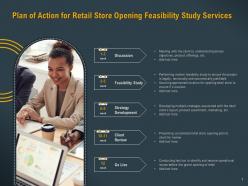
Slide 7: This slide showcases Plan of Action for Retail Store Opening Feasibility Study Services
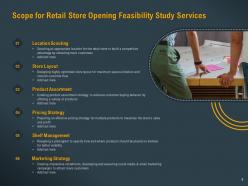
Slide 8: This slide describes Scope of Retail Store Opening Feasibility Study Services
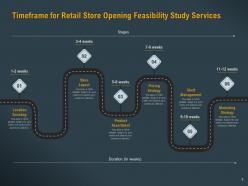
Slide 9: This slide showcases Timeframe for Retail Store Opening Feasibility Study Services
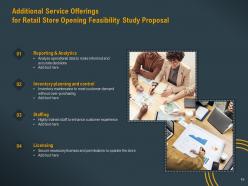
Slide 10: This slide showcases Additional Service Offerings for Retail Store Opening Feasibility Study Services
Slide 11: This slide displays Table of Contents
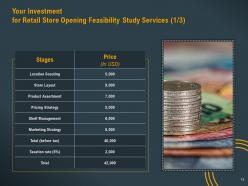
Slide 12: This slide depicts Investment details.
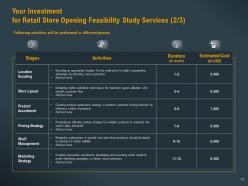
Slide 13: This slide depicts Investment details.
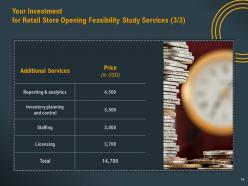
Slide 14: This slide depicts Investment details.
Slide 15: This slide shows Table of Contents.
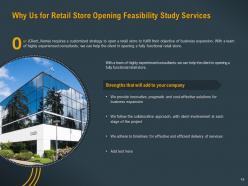
Slide 16: This slide explains Why Us for Retail Store Opening Feasibility Study Services.
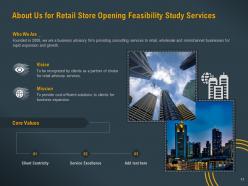
Slide 17: This is About Us slide to showcase Company specifications.
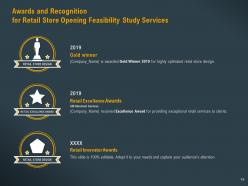
Slide 18: This slide displays Awards and Recognition.
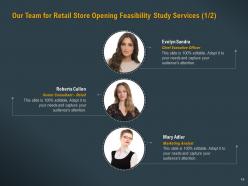
Slide 19: This is Our Team slide with Names and Designations.
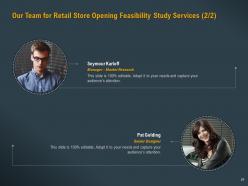
Slide 20: This is Our Team with Names and Designations.
Slide 21: This slide displays Table of Contents of the presentation.
Slide 22: This slide showcases Client Testimonials for Retail Store.
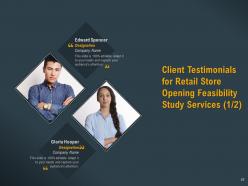
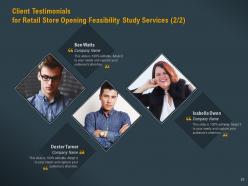
Slide 23: This slide displays Client Testimonials.
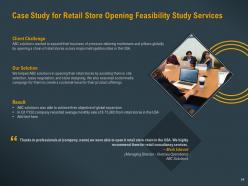
Slide 24: This slide displays Case Study.
Slide 25: This slide showcases Table of Contents.
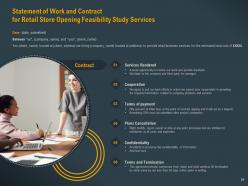
Slide 26: This slide showcases Statement of Work and Contract.
Slide 27: This slide displays Table of Contents.
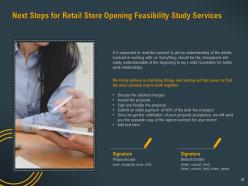
Slide 28: This slide showcases Next Steps.
Slide 29: This is Contact Us slide with Address, Email address and Contact number.
Slide 30: This is Icons Slide for Retail Store Opening Feasibility Study Proposal.
Slide 31: This slide is titled as Additional Slides for moving forward.
Slide 32: This is About Us slide to showcase Company specifications.
Slide 33: This slide displays Our Vision Mission and Goal.
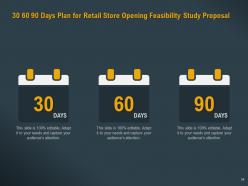
Slide 34: This is 30 60 90 Days Plan for Retail Store Opening Feasibility Study Proposal
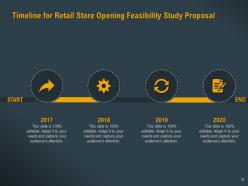
Slide 35: This slide depicts Timeline process.
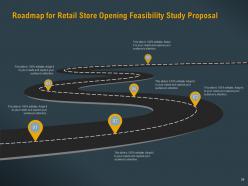
Slide 36: This slide displays Roadmap process.
Proposal For Retail Store Opening Feasibility Study Powerpoint Presentation Slides with all 36 slides:
Use our Proposal For Retail Store Opening Feasibility Study Powerpoint Presentation Slides to effectively help you save your valuable time. They are readymade to fit into any presentation structure.




FAQs for Proposal For Retail Store Opening Feasibility Study
Look, you don't want to blow your savings on a store that flops after three months - I've seen it happen and it's brutal. A feasibility study basically tells you if people actually want what you're selling and if your location makes sense. Plus it checks whether your money math is realistic or just wishful thinking. Honestly, going with pure gut instinct is how most retail businesses crash and burn. The study helps spot problems before they become expensive disasters. Use the data to make smart choices, not emotional ones.
Look, market trends will literally make or break your store before you even flip the sign to "open." Don't be the person opening a DVD rental shop when everyone's binge-watching Netflix - I've seen that disaster happen. Consumer habits shift constantly. Economic ups and downs change how people spend. Even seasonal stuff hits harder than you'd think (learned that one the hard way with a summer-focused business once). The tricky part? Figuring out what's just a fad versus something that's actually sticking around long-term. You'll want to position yourself to either capitalize on the trend or at least survive when it inevitably changes. Trust market data over your gut instincts here.
Honestly, start with income data - that's your biggest predictor right there. Age demographics matter tons too, plus household composition. Are we talking young professionals or families with teenagers? Education levels usually tie to spending patterns, which is super helpful. Population density affects foot traffic obviously. I'd grab census info for like a 3-5 mile radius first. Employment rates tell you about disposable income, and what industries run the area makes a difference too. Sometimes I think people overthink this stuff, but those basics will give you a solid picture of whether your location's gonna work.
Look at what your competitors are doing wrong - that's where you'll find your opening. Map out who's already hitting your target customers and check their pricing. I swear, half the time you can just read their reviews to see what people hate about them. Your location, inventory, even how you market should all come from this research. Don't just copy what everyone else is doing though. Find your angle - maybe it's better service or different products. Sometimes the most obvious gaps are right there staring at you.
Start with gross margin - that's profit after your product costs, and it's gotta cover rent plus everything else. Break-even is obvious but critical: know exactly how many units you need to move. Inventory turnover matters way more than people realize because dead stock just sits there burning cash. Sales per square foot will make or break you in retail. Oh, and working capital - you're basically fronting money for inventory that might not sell for weeks. I'd honestly run like 3-4 different scenarios with varying foot traffic before signing anything. Better to be paranoid now than screwed later.
Dude, check zoning first before you get excited about any location. Some spots only allow specific businesses or have weird restrictions on hours/signage. Commercial retail zoning is what you want - mixed-use *might* work but expect more paperwork (which honestly sucks). Oh, and certain retail types need special permits on top of basic zoning. I learned this the hard way when my cousin tried opening his bike shop. Call the planning department early. Trust me, you don't want to fall in love with a space just to find out you can't actually use it.
Location's everything, seriously. I've watched great stores tank because they picked awful spots while average ones killed it just by being in the right place. You gotta check foot traffic at different hours - actually go stand there and count people walking by. Look at what big stores are nearby pulling crowds. Can people easily see you from the main road? Parking decent? Don't get fooled by cheap rent either - there's usually a reason it's cheap. Oh, and check out your competition too. Honestly, spending time physically at the location beats any online research you'll find.
Honestly, it's all about designing your store around how people *actually* shop instead of guessing. The data tells you crazy stuff - like which products customers grab together, peak shopping times, how long they wander around. I've watched stores boost sales just by moving their best profit items to eye level after tracking customer habits. Pretty wild, right? You can fix your whole layout, pricing, even inventory based on real patterns. Plus you'll know what actually drives people to buy so you can create better promotions. It's basically your cheat sheet for making more money.
Honestly, the biggest things that could bite you are market saturation and location. Too many similar shops already? You're screwed. Wrong spot with zero foot traffic? Also screwed. Cash flow's another killer - retail has these brutal seasonal dips that'll drain your account fast. Operating costs always end up higher than you think too. Consumer tastes shift, supply chains get weird... there's a lot that can go sideways. Oh, and definitely dig into what your competitors are actually doing before you jump in. Really beat up those financial projections - like, be mean to them.
Honestly, start by mapping your whole supply chain - from who's making your stuff to how it gets to customers. Get real quotes for inventory, shipping, warehousing, all that. Figure out delivery times because people are impatient as hell these days. Look into local distribution and storage needs for whatever you're selling. Seasonal stuff will mess with your plans, so build in buffer time and backup options right from the start. Trust me, something will go wrong eventually and you don't want to be scrambling. Oh, and disruptions happen - learned that the hard way during COVID.
Honestly, I'd mix a few different methods to get a realistic forecast. Look at comparable stores first - similar size, location, that kind of thing. Use their numbers as your starting point. Traffic counting is pretty basic but works well - just count people walking by and apply realistic conversion rates. You can also do market penetration analysis to figure out what slice of your target market you'll actually grab. Seasonal stuff matters a ton in retail too, so factor that in. Don't put all your eggs in one basket though - combine these approaches instead of picking just one. Oh, and start collecting competitor data now if you haven't already.
Dude, marketing and branding hit your feasibility study in two big ways. First, you've got to budget for all that stuff - logo design, ads, social media, whatever. Those costs add up fast. But here's the thing - your marketing strategy also determines how many customers you'll actually get and how much they'll spend. I'd honestly look at what other retail stores around you are spending on marketing (usually like 3-8% of revenue or something). Then plug those numbers into both your expenses AND your sales forecasts. Way too many people just guess at this part and wonder why their projections are totally off later.
Rent and utilities will probably be your biggest monthly hits. Staff costs add up fast too - wages, benefits, all that payroll tax stuff. Insurance is pricier than most people expect, honestly. Marketing burns through cash like crazy your first year when nobody knows you exist yet. Then you've got inventory costs, storage, shrinkage (aka theft), restocking fees. Payment processing takes a cut of everything. Oh, and maintenance - stuff breaks constantly. I'd bump whatever numbers you come up with by at least 15% because there's always some expense you didn't think of.
Tech will literally make or break your retail idea - I can't stress this enough. Your startup costs get crazy when you factor in POS systems, inventory software, maybe an e-commerce site. Don't even get me started on AR stuff if you're going that route. Modern shoppers expect everything to work seamlessly across channels, so you can't really cheap out here. I'd map out what's absolutely essential versus the fancy extras first. Get real quotes early too - vendors love to lowball until you're committed. The whole tech stack adds up fast, but honestly? It's what keeps you from looking outdated next to competitors.
Dude, the two big ones are overestimating demand and totally lowballing your costs. Everyone thinks they'll get way more customers than they actually will - meanwhile you're forgetting about permits, insurance, all that boring stuff. Plus that brutal first month when nobody knows you exist yet. Go hang out at the location different times of day, not just weekends. Demographics on paper mean nothing if the area's dead at 2pm on a Tuesday, you know? I'd honestly knock like 20% off whatever revenue you're projecting and add buffer room everywhere else.
-
Excellent template with unique design.
-
The content is very helpful from business point of view.