

Retail marketing mix powerpoint presentation slides




Try Before you Buy Download Free Sample Product
 Impress Your
 Audience
 100%
100% Editable
 Save Hours
 of Time


Our Retail Marketing Mix Powerpoint Presentation Slides are topically designed to provide an attractive backdrop to any subject. Use them to look like a presentation pro.
People who downloaded this PowerPoint presentation also viewed the following :
Content of this Powerpoint Presentation
Slide 1: This slide displays title i.e. 'Retail Marketing Mix' and your Company Name.
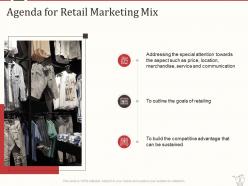
Slide 2: This slide presents agenda.
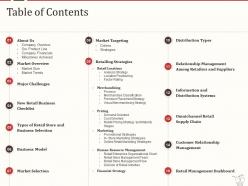
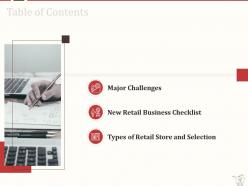
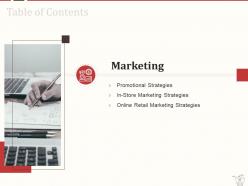
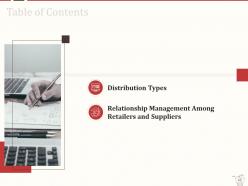
Slide 3: This slide exhibits table of contents.
Slide 4: This slide shows title for first four topics to be covered in the template.
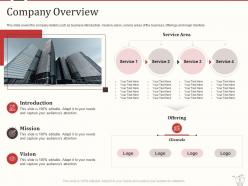
Slide 5: This slide covers the company details such as business introduction, mission, vision, etc.
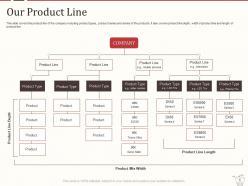
Slide 6: This slide covers the product line of the company including product types, product names and series of the products.
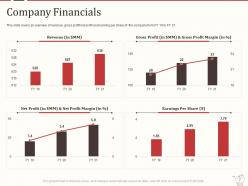
Slide 7: This slide covers an overview of revenue, gross profit net profit and earning per share of the company form FY 19 to FY 21.
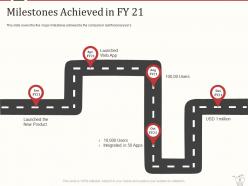
Slide 8: This slide covers the five major milestones achieved by the company in last financial year’s.
Slide 9: This slide depicts title for next two topics.
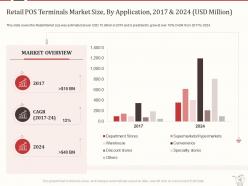
Slide 10: This slide covers the Retail Market size that was estimated at over USD 15 billion in 2016 and is predicted to grow at over 10% CAGR from 2017 to 2024.
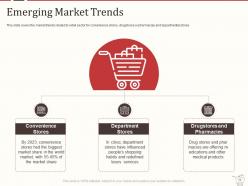
Slide 11: This slide covers the market trends related to retail sector for convenience stores, drugstores or pharmacies and departmental stores.
Slide 12: This slide displays title for next three topics to be covered.
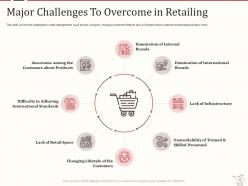
Slide 13: This slide covers the challenges in retail management such as lack of space, changing customer lifestyle, etc.
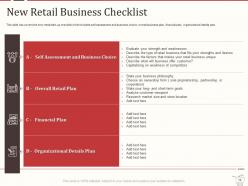
Slide 14: This slide has covers the new retail start-up checklist which includes self assessment and business choice, etc.
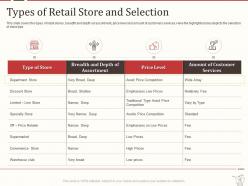
Slide 15: This slide covers the types of retail stores, breadth and depth od assortment, price level and amount of customers services.
Slide 16: This slide presents title for next two topics to be covered.
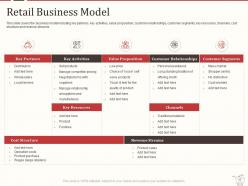
Slide 17: This slide covers the business model including key partners, key activities, value proposition, customer relationships, etc.
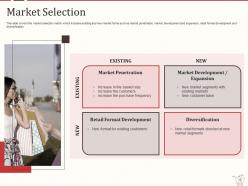
Slide 18: This slide covers the market selection matrix which includes existing and new market forms such as market penetration, etc.
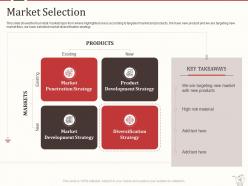
Slide 19: This slide shows the four retail markets type from where highlighted one is according to targeted market and products.
Slide 20: This slide exhibits title for next two topics.
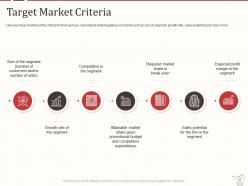
Slide 21: This slide explains criteria for that we have considered while targeting our market such as size of segment, growth rate, etc.
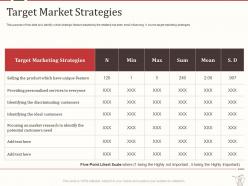
Slide 22: This slide covers target marketing strategies.
Slide 23: This slide shows title for next three topics to be covered.
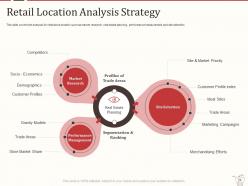
Slide 24: This slide covers the analysis for retail store location such as market research, real estate planning, etc.
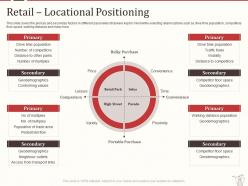
Slide 25: This slide covers the primary and secondary factors in different parameters that were kept in mind while selecting retail locations.
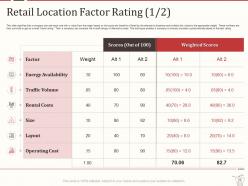
Slide 26: This slide signifies that a company can rate each site with a value from the range based on the costs and benefits offered.
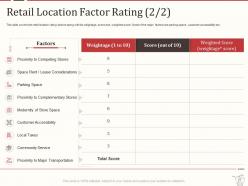
Slide 27: This slide covers the retail location rating factors along with its weightage, score and, weighted score.
Slide 28: This slide depicts title for next four topics to be covered.
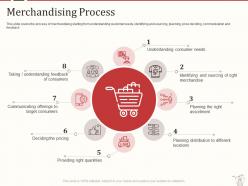
Slide 29: This slide covers the process of merchandising starting from understanding customer needs, identifying and sourcing, etc.
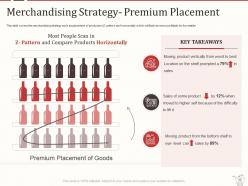
Slide 30: This slide covers the merchandising strategy such as placement of products in Z- pattern and horizontally.
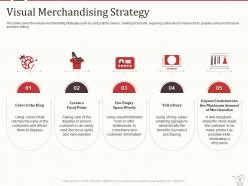
Slide 31: This slide covers the visual merchandising strategies such as using catchy colours, creating focal point, etc.
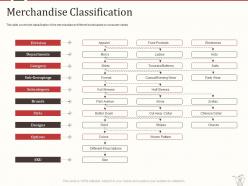
Slide 32: This slide covers the classification of the merchandise at different levels based on consumer needs.
Slide 33: This slide highlights title for next three topics to be covered.
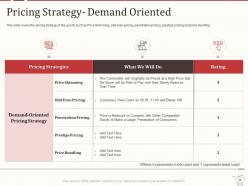
Slide 34: This slide covers the pricing strategy of the goods such as Price Skimming, odd even pricing, penetration pricing, etc.
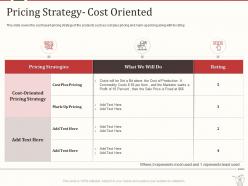
Slide 35: This slide covers the cost based pricing strategy of the products such as cost plus pricing and mark-up pricing.
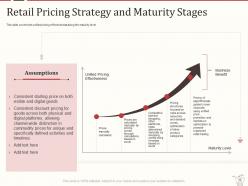
Slide 36: This slide covers the unified pricing effectiveness along the maturity level.
Slide 37: This slide displays title for next three topics.
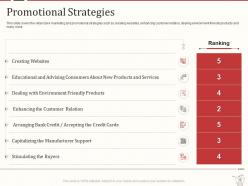
Slide 38: This slide covers the retail store marketing and promotional strategies such as creating websites, enhancing customer relation, etc.
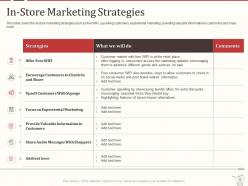
Slide 39: This slide covers the instore marketing strategies such as free WIFI, upselling customers, experiential marketing, etc.
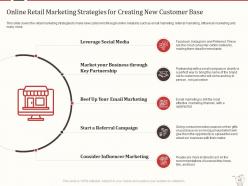
Slide 40: This slide covers the retail marketing strategies to make new customers through online mediums such as email marketing, referral marketing, etc.
Slide 41: This slide presents title for next four topics to be covered in the template.
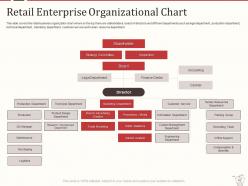
Slide 42: This slide covers the retail business organization chart where on the top there are stakeholders, etc.
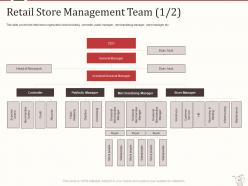
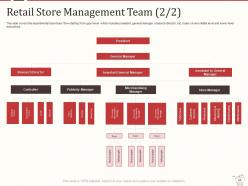
Slide 43: This slide covers the retail store organization chart including controller, public manager, merchandising manager, store manager etc.
Slide 44: This slide covers the departmental store team flow starting from upper level which includes president, general manager, etc.
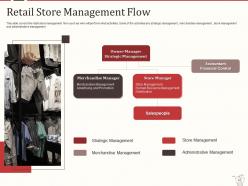
Slide 45: This slide covers the retail store management flow such as who will perform what activities.
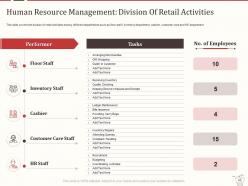
Slide 46: This slide covers the division of retail activities among different departments such as floor staff, inventory department, etc.
Slide 47: This slide exhibits title for 'Financial Strategy'.
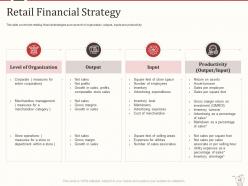
Slide 48: This slide covers the retailing financial strategies such as level of organization, outputs, inputs and productivity.
Slide 49: This slide shows title for next two topics to be covered.
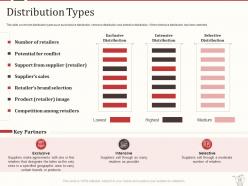
Slide 50: This slide covers the distribution types such as exclusive distribution, intensive distribution and selective distribution.
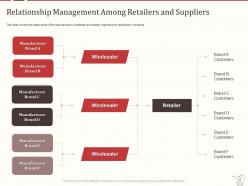
Slide 51: This slide covers the relationship of the manufacturer wholesaler and retailer regarding the distribution of brands.
Slide 52: This slide depicts title for next two topics to be covered.
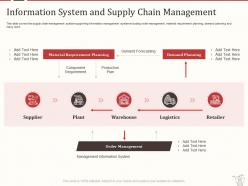
Slide 53: This slide covers the supply chain management system supporting information management system.
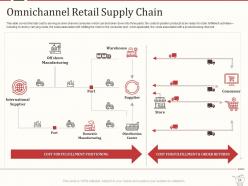
Slide 54: This slide covers the total cost to serving an omni-channel consumer which can be broken down into three parts.
Slide 55: This slide highlights title for next two topics to be covered.
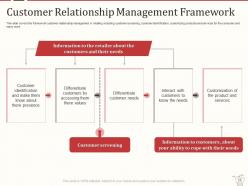
Slide 56: This slide covers the framework customer relationship management in retailing including customer screening, etc.
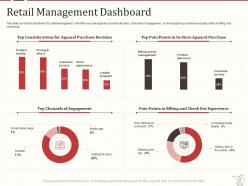
Slide 57: This slide covers the dashboard for retail management with KPIs such as apparel purchase decision, channels of engagement, etc.
Slide 58: This is the icons slide.
Slide 59: This slide presents title for additional slides.
Slide 60: This slide shows about your company, target audience and its client's values.
Slide 61: This slide exhibits yearly timeline.
Slide 62: This slide depicts 30-60-90 days plan for projects.
Slide 63: This slide shows magnifying glass.
Slide 64: This slide depicts posts for past experiences of clients.
Slide 65: This slide exhibits ideas generated.
Slide 66: This slide shows roadmap.
Slide 67: This is thank you slide & contains contact details of company like office address, phone no., etc.
Retail marketing mix powerpoint presentation slides with all 67 slides:
Use our Retail Marketing Mix Powerpoint Presentation Slides to effectively help you save your valuable time. They are readymade to fit into any presentation structure.
FAQs for Retail marketing mix
Okay so retail uses seven P's instead of the basic four - product, price, place, promotion, people, process, and physical evidence. Your product selection and pricing are pretty straightforward. Place covers where your store is and how it's laid out (honestly location can make or break you). Promotion is all your ads and sales stuff. Then people means your staff quality, process is how smooth checkout runs, and physical evidence is basically your vibe - store design, music, all that. I'd start by figuring out which areas you're killing it in versus where you're struggling.
Your product mix totally controls how people shop. Wide variety makes customers feel confident they'll find something good, so they stick around longer and buy more. But don't go crazy - too many choices actually freeze people up. I learned this the hard way at my old retail job! You want enough options to seem legit without making people's heads spin. Smart retailers use this to push customers toward the pricey stuff through clever placement. Pull your sales data first though - see which combos actually make people spend the most. That's your real goldmine right there.
Honestly, pricing can totally make or break you against competitors. Look at what they're charging first - that's your baseline. Then you've got options. Go low with penetration pricing if you want fast market grab, or price high to scream "premium quality." Dynamic pricing is clutch these days since you can adjust on the fly when competitors move. Don't sleep on the psychological stuff either - $9.99 hits different than $10, even though we all know it's basically the same thing. Bundling works great too. Just make sure whatever you pick actually fits your brand, otherwise you'll confuse people.
Honestly, placement can make or break your business. I've seen amazing products tank because nobody could find them. Like, would you seriously drive across town just to buy shampoo? Map out where your customers actually hang out first - that's your starting point. Then figure out if you need physical stores, a killer website, or maybe partner with existing retailers. The whole "if you build it, they will come" thing? Total myth. You've got to meet people where they already are, not expect them to come hunting for you.
Honestly, the trick is making your online and offline stuff work together instead of fighting each other. Your website should pull people into stores - like with "buy online, pick up in store" deals or local promotions. Then your physical stores become these cool showrooms where people can touch products and easily reorder them later online. Social media's huge for discovery too, that's where most people find new stuff these days. Keep your inventory and pricing the same everywhere though, otherwise customers get confused and annoyed. Oh, and don't try to do everything at once - pick one thing, test it properly, then expand from there.
Put your new stuff where people can't miss it - endcaps, eye level, busy aisles. Make sure your team actually knows what they're selling (you'd be surprised how often this doesn't happen). Big "NEW!" signs work because shoppers are basically walking around half-asleep. Bundle it with something popular or throw a discount on there to get people to try it. Reviews are huge, so chase down those first customers for feedback. Oh, and pairing with bestsellers is clutch. Make it obvious and easy to grab - that's really all it takes.
You gotta plan way ahead for seasonal stuff - like 3-6 months out or you'll be stressed. Product mix is obvious, right? Swimsuits in summer, winter coats when it's cold. But pricing changes too since demand goes crazy (Christmas is basically a gold mine). Your whole promo schedule shifts around holidays and when people actually shop. Distribution gets weird too - suddenly you need pop-ups for back-to-school or holiday rushes. Honestly, I learned this the hard way last year when I was scrambling in November. All four P's basically get flipped around, so just accept it and plan early.
Okay so first thing - fix your store layout because nothing's worse than confused customers wandering around aimlessly. Train staff to actually help instead of being annoying and pushy (you know the type). Lighting and music make a huge difference too, maybe even some subtle scents if that fits your vibe. Interactive displays are solid. QR codes work well for product info or quick checkout. Oh and here's what really works - walk through your own store like you're shopping there. You'll spot the annoying stuff immediately and can fix it before customers get frustrated.
Customer feedback is basically your cheat code for fixing the 4 P's. Product stuff is obvious - they'll tell you what features suck or what they actually want. Price complaints usually mention competitors, which is super helpful intel. Distribution feedback hits different though - like if your website is trash or they can't find you anywhere. Promotion-wise, you'll quickly learn which ads work and which ones make people want to unsubscribe immediately. The real problem? Most companies collect all this feedback then just... sit on it. You gotta actually review the patterns regularly and make changes based on what keeps coming up.
Dude, merchandising is like having a salesperson who never takes breaks. Get your displays right and customers automatically think your stuff is worth more. I've literally seen $200 products look like dollar store junk because of terrible placement. But flip it around - even cheap items can look premium with smart presentation. Eye-level is gold, keep things clean, and group stuff logically so people get it instantly. The numbers don't lie either - good merchandising bumps sales 15-30% just from being more visible and appealing. Worth the effort for sure.
Dude, branding is HUGE for retail. It's literally what separates Target from Walmart when they're selling basically the same stuff. Think about it - walking into those stores feels completely different, right? That's all branding. Your brand affects everything too - what products you carry, how you price them, where you put your store, the vibe you create. Even your ads need to match that brand voice. Honestly, without solid branding you're just stuck competing on price forever, and that sucks. Figure out your brand identity first, then make sure everything else backs it up.
So loyalty comes down to making customers feel special, right? Use their purchase history for personalized recommendations and offers. Your staff training matters way more than people think - they're literally your brand walking around. Pricing-wise, loyalty programs with points or exclusive discounts work great. Make your store layout (or website) super easy to navigate too. But honestly? Product quality trumps everything else. I've seen businesses nail the personal touch but then sell crap products - doesn't work. Start by looking at where customers interact with you most and figure out how to add more value there.
Dude, you absolutely cannot just copy your marketing strategy across different countries - it'll backfire hard. Products need to match local tastes, obviously. Pricing gets tricky because income levels and what people think is "worth it" varies so much between markets. Your ads and messaging? One wrong cultural reference and you've pissed off thousands of potential customers (learned that one the hard way). Distribution channels are weird too - like, what crushes it in Germany might totally bomb in Japan for reasons you'd never expect. Honestly, just do your homework on each market first. Way better than assuming everyone wants the same stuff.
Dude, tech is literally changing everything in retail right now. AI's doing personalization, prices are shifting automatically based on algorithms, and customers don't even care where they buy anymore - could be your website, an app, whatever. Social media completely flipped promotion on its head too. Like, I swear TikTok sells more stuff than regular commercials now. Everything's way more focused on data and what customers actually want. My advice? Don't try to do it all at once - pick one thing like basic personalization or test out that dynamic pricing stuff first. You can always expand later once you figure out what works.
Honestly, the best thing about data analytics is seeing exactly where your pricing hits that sweet spot. Track your conversion rates at different price points first - that's your quickest win. You'll start noticing patterns in customer behavior and when people get really price-sensitive. With promotions, bigger discounts don't always mean better results (learned that one the hard way). Sometimes a 15% off works better than 30% because it doesn't scream "desperate sale." Segment your customers too - way better than just blasting everyone with the same offer. Real-time competitor tracking helps, but don't obsess over it.
-
Easily Editable.
-
Really like the color and design of the presentation.
-
Awesome presentation, really professional and easy to edit.
-
Awesomely designed templates, Easy to understand.
-
Excellent Designs.