


Rfm Analysis Matrix For Customer Segmentation Customer Segmentation Targeting And Positioning Guide




Try Before you Buy Download Free Sample Product
 Impress Your
 Audience
 100%
100% Editable
 Save Hours
 of Time


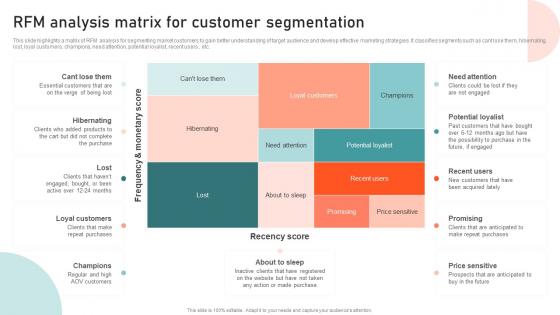
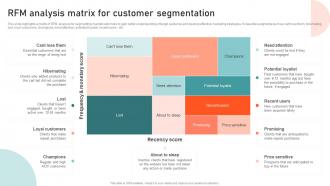
This slide highlights a matrix of RFM analysis for segmenting market customers to gain better understanding of target audience and develop effective marketing strategies. It classifies segments such as cant lose them, hibernating, lost, loyal customers, champions, need attention, potential loyalist, recent users , etc.
People who downloaded this PowerPoint presentation also viewed the following :
Rfm Analysis Matrix For Customer Segmentation Customer Segmentation Targeting And Positioning Guide with all 6 slides:
Use our Rfm Analysis Matrix For Customer Segmentation Customer Segmentation Targeting And Positioning Guide to effectively help you save your valuable time. They are readymade to fit into any presentation structure.





FAQs for Rfm Analysis Matrix For Customer Segmentation Customer Segmentation Targeting
So RFM Analysis is pretty straightforward - you score customers 1-5 on three things: how recently they bought something, how often they shop, and how much they spend. What's cool is you can quickly spot patterns. Maybe someone used to be a regular but went quiet - boom, send them a comeback offer. Or find your best customers who deserve VIP perks. Honestly beats trying to make sense of spreadsheets full of random purchase data. You end up with actual customer groups you can do something useful with instead of just... staring at numbers.
So basically you just use those RFM segments to set up different automated workflows in your CRM. Your best customers (Champions, Loyal ones) get the VIP treatment - exclusive deals, early access, that stuff. At-Risk people get win-back emails automatically. Just create tags based on their RFM scores and boom - targeted campaigns for each group. Way better than blasting everyone with the same generic message, which honestly never works anyway. Oh and set up different sales tasks too depending on the segment. Takes like an hour to configure but then it runs itself.
So RFM is basically three things rolled into one. Recency = when did they last buy something? Fresh customers usually come back. Then there's frequency - how often do they actually shop with you over like a year or whatever timeframe. Monetary is just how much they spend total or per order. Honestly, it sounds boring but it's crazy useful when you put it all together! Score each person 1-5 on all three things and boom - you'll spot your best customers, the ones about to ghost you, all that. Just grab your transaction data from the past year to get started.
So basically you score each customer 1-5 on R, F, and M, then group them into segments. I'd stick with maybe 6-8 categories tops - any more and your team will lose track. Call your high-scoring customers "Champions" and give them VIP treatment. The tricky ones are customers who used to spend big but went quiet - those "At Risk" folks need serious attention. Each segment should get totally different campaigns though, that's the whole point. Oh and definitely test with a small group first! Sometimes what looks good on paper doesn't actually work. The naming thing is actually pretty entertaining once you get going with it.
So you need three key things for each customer: when they last bought something, how often they shop, and what they spend. Transaction dates, frequency, monetary values - that's your RFM right there. Pull at least 12-18 months of transaction history from your CRM or wherever you store sales data. More data is definitely better if you've got it. Don't forget customer IDs to connect everything together. Demographic info helps too but isn't make-or-break. Honestly, most of this stuff should already be sitting in your e-commerce platform anyway, so start there.
Monthly is usually the sweet spot for most businesses. Quarterly can work too if your customers don't buy that often. Just pick one and stick with it - consistency matters way more than perfect timing. Weekly analysis? Total waste of time unless you're doing something super fast-paced like daily deals. Most of the time you're just looking at random noise anyway. The real trick is catching actual shifts in customer behavior without going crazy over every little blip. Set a calendar reminder and don't overthink it. You'll get a feel for the patterns once you've done it a few times.
Don't just trust RFM scores blindly - context matters way more than people think. A high-value customer buying something tiny might actually be about to churn. Also, those thresholds you set? They're not permanent. Customer behavior changes and you gotta adjust. Honestly, perfect segmentation is overrated anyway - use it to make decisions, not get stuck analyzing forever. Watch out for seasonal weirdness and those random bulk buyers who mess up your data. I'd manually check a few customers first to see if your segments actually make sense before launching anything major.
Oh RFM analysis is perfect for this! Basically you score customers on recency, frequency, and how much they spend. Then you can spot who's about to bail - like your big spenders who haven't bought anything lately or regular customers whose activity is dropping off. Way better than just sending random retention emails to everyone (which honestly annoys people anyway). Once you've got your segments, you can hit each group with targeted campaigns - maybe a special offer for the high-value ones or a "we miss you" email for the dormant customers. Just pull your transaction data and start scoring!
RFM crushes it for retail, e-commerce, subscriptions - basically anywhere customers come back regularly. SaaS companies are obsessed with it because they can see how users actually engage. Banking and hospitality use it tons too. But honestly? Skip it if you're selling houses or cars since people aren't buying multiple times. The frequency metric becomes useless. B2B can work but you'll need longer timeframes since those sales cycles drag on forever. I'd say map out how often your customers actually purchase first - that'll tell you if RFM makes sense for your situation.
So RFM Analysis basically scores customers on three things - when they last bought something (Recency), how often they shop (Frequency), and how much they typically spend (Monetary). Pretty straightforward stuff. What's cool is you can spot patterns you'd never notice otherwise. Like someone might drop serious cash but hasn't been back in months, or there's that person who buys constantly but only small stuff. Honestly, it beats the hell out of guessing who your best customers are. Start with people scoring high on all three - those are your goldmine for campaigns and upsells.
3D scatter plots are your best bet here - way more interesting than boring bar charts. Color-code everything so it's obvious (green for your best customers, red for the ones about to bail). Heat maps work well too if you want to show how segments are distributed. Executives eat this stuff up when they can actually see their customer base mapped out visually. Oh, and definitely keep your labels simple - nobody wants to decode complicated jargon. Here's what I'd do: highlight your key segments first, then show the full picture. Creates better storytelling flow. Just don't forget to include what each segment actually means somewhere on the slide.
Honestly, RFM is so much easier than other segmentation stuff. You're just tracking three basic things instead of getting lost in tons of behavioral data or demographics. Other methods need crazy statistical knowledge and like 20 variables - RFM you could literally build in Excel (don't tell anyone I said that lol). The cool part? It only looks at actual buying behavior, so you're segmenting based on who actually spends money. Those fancy clustering algorithms might group people who seem similar but spend completely different amounts. Plus your boss will actually understand what you're talking about when you explain the segments. Just start here and add the fancy demographic stuff later once you get this down.
Absolutely - you can't use the same RFM approach for both! Online shoppers are constantly making small purchases, so your recency window needs to be tight. Like 30-90 days instead of the 6-12 months you'd use for in-store customers. Frequency gets weird too since people will randomly buy a $5 thing online but drop $200 in your physical store. Honestly, I'd just run two separate models first. Way easier than trying to force them together. Once you see the patterns, then maybe think about combining them. The data will tell you pretty quickly if it makes sense or not.
So RFM shows you what customers are doing right now, while CLV tells you what they'll be worth down the road. Pretty cool combo actually. You can use those RFM segments to make way better CLV predictions - like, your frequent recent buyers are obviously gonna have higher lifetime values. Then instead of throwing equal money at all your "Champions," focus on the high-CLV ones first. Makes total sense for ROI. It's basically having your current customer snapshot plus knowing who's actually worth chasing long-term. Way smarter than just guessing where to spend your marketing budget.
So RFM analysis shows you what different customer types actually buy and how often. Champions probably go for the expensive stuff, while at-risk customers stick to budget items. Map your top products to each segment - you might discover your loyal customers keep rebuying the same thing just because there's no variety in that category. That's honestly where the real money-making insights hide. Look for gaps where certain groups want products you don't have yet. Then prioritize new launches or pricing changes based on that. I'd skip putting much effort into items that only low-value segments buy though.
-
Best Representation of topics, really appreciable.
-
Easy to use and customize templates. Helped me give a last minute presentation.