


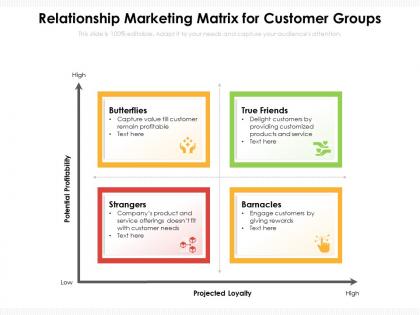
Relationship marketing matrix for customer groups




Try Before you Buy Download Free Sample Product
 Impress Your
 Audience
 100%
100% Editable
 Save Hours
 of Time


Our Relationship Marketing Matrix For Customer Groups are topically designed to provide an attractive backdrop to any subject. Use them to look like a presentation pro.
People who downloaded this PowerPoint presentation also viewed the following :
Relationship marketing matrix for customer groups with all 2 slides:
Use our Relationship Marketing Matrix For Customer Groups to effectively help you save your valuable time. They are readymade to fit into any presentation structure.
FAQs for Relationship marketing matrix
Honestly, it all comes down to actually knowing your customers and staying in touch regularly. Map out everywhere you currently interact with them first - that's your starting point. Personalization is everything though, you can't just blast generic messages and expect loyalty. Good customer service obviously matters, but I mean the kind that actually fixes things fast, not just scripted responses. Trust takes forever to build but it's worth it - be upfront about how things work and do what you say you will. Loyalty programs help too if they feel genuinely exclusive. Without good data on buying patterns, you're basically guessing.
Focus on metrics that show actual relationship strength, not just sales numbers. Customer lifetime value and retention rates are huge - they tell you if people actually stick around. Net Promoter Score is probably my favorite though, since it measures whether customers would recommend you to friends. That's honestly the best indicator of a real connection. Track how often they engage with your content and interact beyond just purchasing stuff. Oh, and repeat purchase frequency matters too. Basically, you want loyalty behaviors over transaction data. Set up a monthly dashboard to review all this.
Look, feedback is how you actually know if your relationship stuff is working. Without it, you're just guessing what customers want. It shows you what they love, what pisses them off, and where you're screwing up - which honestly happens more than we'd like to admit. When people see you actually listening and making changes based on what they said? That builds real trust. Set up ways to get feedback regularly, but here's the key part everyone misses - you gotta show them what you did with it. Otherwise they'll stop bothering to tell you anything.
Honestly, social media is a game-changer for connecting with customers on a personal level. You can actually have real conversations instead of just shouting into the void, you know? I'd start with one platform where your people hang out most - don't spread yourself too thin at first. Behind-the-scenes stuff works really well, and jumping into conversations using social listening tools helps too. The algorithms reward engagement, so it benefits everyone. Just be consistent and genuine about it. Oh, and definitely stay on top of your DMs - nothing kills the vibe like leaving someone hanging for days.
Resource constraints are the worst part honestly. Leadership wants quick results but relationship marketing takes forever to show ROI. Data's scattered everywhere too - sales, marketing, customer service all have different systems that don't talk to each other. Getting buy-in across teams? Good luck with that lol. Measuring success is super tricky since you can't directly tie relationship building to immediate sales. Oh and you'll need dedicated people plus budget when everyone's already stretched thin. Start with just one customer segment though, prove it works there first, then expand. Way easier than trying to boil the ocean from day one.
Think about it like this - when you personalize stuff, customers actually feel seen instead of just being another email address on your list. Use their name, suggest products based on what they've bought before, that kind of thing. It's honestly like having a bartender who remembers your drink order vs. one who acts like they've never met you. People love that feeling of being recognized. You don't need to get crazy complicated either - even small touches make customers feel way more valued and they'll keep coming back for it.
So data analytics basically turns relationship marketing from total guesswork into actually knowing what you're doing. You can see how customers behave, figure out who's about to bail, and personalize stuff without doing it all manually. Honestly the amount you can learn just from someone's purchase history is pretty crazy. Better audience segmentation, smarter timing on emails, plus you actually know what builds loyalty instead of just sending random stuff that feels right. Oh and don't go overboard with tracking everything - pick like two metrics that actually matter to your business first.
Honestly, being small is actually your secret weapon here. You can do stuff Amazon never could - like actually remembering Mrs. Johnson always buys the lavender soap, or following up personally when someone makes their first big purchase. Big companies are stuck sending the same generic emails to everyone. Meanwhile, you can build real relationships because... well, they literally are real. I know it sounds cheesy, but customers can tell the difference. Focus on those genuine connections - thank people by name, remember what they bought last time. That personal touch is impossible to fake at scale.
Honestly, it's all about staying in touch without being annoying about it. Check in regularly and actually listen when they give you feedback - then do something with it. Birthday messages, remembering what they like, sharing cool stuff they'd find useful. That personal touch matters way more than people think. I've watched businesses totally blow it by constantly pushing sales instead of just being helpful. Get a basic CRM to track conversations and set reminders. Oh, and solve their actual problems first - the rest follows naturally. Make them feel important, not just like wallet.
Dude, this is HUGE - what works in one place can totally bomb somewhere else. Japan? You'll be sitting through endless meetings building trust before anyone talks business. Germany though? They want you straight to the point, no fluff. I made this mistake once with a super casual email campaign that just died in formal cultures lol. Gift-giving rules are wild too - some places love it, others think you're bribing them. Hierarchy matters differently everywhere. Honestly, just research their business norms first because assumptions will bite you.
Start with a decent CRM - Salesforce if you've got budget, but honestly HubSpot or Pipedrive work just fine. Email marketing is huge too. Mailchimp's pretty solid for most people. Social media tools like Hootsuite save you so much time (trust me on this one). Analytics help you figure out what's actually moving the needle vs what's just busy work. But here's the thing - don't go crazy buying everything at once. Pick one good CRM first and get used to actually using it. Way better than having five tools you never touch.
Honestly, just stop trying to sell people stuff all the time. Create content that actually helps them – like tutorials, industry tips, or stories about other customers crushing it. People can smell a sales pitch from miles away, and it's annoying. Behind-the-scenes content works great too because it makes your brand feel more human. The trick is being consistent and genuinely useful. Ask your current customers what they'd want to read about (I know, revolutionary concept). Mix in some entertaining stuff that fits your vibe. Trust builds over time when you're not constantly pushing products down their throats.
So honestly, start with Customer Lifetime Value and repeat purchase rates - that's where the money actually shows up. Your Net Promoter Score matters too since it tells you if people would actually recommend you to friends. Churn rate's pretty crucial - basically who's bailing on you. Email opens and social engagement are solid indicators, though I feel like half the companies I know get obsessed with follower counts that don't translate to sales. Don't overthink it at first. Get these basics locked down, then you can always layer on fancier stuff later.
Honestly, engaged employees are like your secret weapon for customer relationships. They actually give a damn about helping people instead of just checking boxes. Your team remembers little details, follows up without being asked, gets creative with solutions. Customers can smell fake enthusiasm from a mile away - trust me on that one. Happy employees stick around longer too, so customers aren't constantly explaining their situation to new people. Really, if you make your team feel appreciated first, they'll naturally pass that energy onto customers. It's pretty straightforward.
Honestly, AI personalization is crushing it right now - companies can literally predict what you want before you know it yourself. Interactive stuff like polls and AR experiences are everywhere too. Brands are building these communities where customers chat with each other instead of just the company, which is pretty smart if you ask me. Oh and micro-influencers are way cheaper than celebrities and actually work better. The whole thing's shifted from just shouting at people to having real conversations. You could start with something simple like personalized emails and see how it goes.
No Reviews