

Risikomanagement-Heatmap-Beispiel





Try Before you Buy Download Free Sample Product
 Impress Your
Audience
 100%
Editable
 Save Hours
of Time


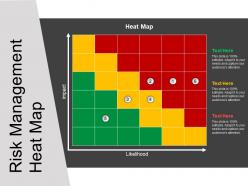
SlideTeam bietet Ihnen eines ihrer innovativsten Beispiele für ein Risikomanagement-Heatmap-PPT. Egal, ob Sie ein neues Produkt für Ihr Publikum einführen oder die mit Ihrem bestehenden Projekt verbundenen Risiken grafisch darstellen möchten, Sie können sicher sein, die richtige Vorlage für Ihr Unternehmen zu finden. Diese Vorlage für eine Risikobewertungs-Heatmap wurde von professionellen PPT-Designern entworfen und bietet Ihnen eine perfekte Möglichkeit, mögliche Kombinationen von Risikokonzepten zu demonstrieren. Das Designlayout verwendet einfach ein mehrfarbiges Diagramm, um die Schlüsselrisiken für Ihr Projekt hervorzuheben, wobei die rote Farbe die höchste Wahrscheinlichkeit, Gelb eine moderate und Grün die niedrigste Risikowahrscheinlichkeit anzeigt. Diese Kombination ist eine perfekte Art, Risiken mithilfe einer Risikolandkarte zu visualisieren. Geschäftsprofis, Betrugs- und Risikomanager sowie Qualitätssicherungsingenieure verwenden diese Designvorlage für Präsentationen zum Thema Risikobewertung und -management. Wenn alle Risiken auf eine gut organisierte Weise dargestellt werden, wird es für Sie einfach sein, die Risiken für jedes Programm oder Projekt zu managen. Laden Sie also diese Vorlage für eine Risikobewertungs-Heatmap herunter und verwenden Sie sie für das Unternehmensrisikomanagement und neue Risiken. Mit unserem Beispiel für ein Risikomanagement-Heatmap-PPT werden Ihre Chancen immer besser. Seien Sie sicher, den Vorteil zu gewinnen.
People who downloaded this PowerPoint presentation also viewed the following :
Inhalt dieser Powerpoint-Präsentation
Beschreibung:
Dieses Bild zeigt eine Risikomanagement-Heatmap, ein visuelles Instrument zur Veranschaulichung des Risikoniveaus verschiedener Ereignisse oder Bedingungen. Es kombiniert die Auswirkungen (vertikale Achse) und die Wahrscheinlichkeit (horizontale Achse) dieser Risiken. In dieser speziellen Heatmap werden Farbcodes verwendet, um die Schwere des Risikos anzuzeigen: Rot bedeutet hohes Risiko, Gelb moderates Risiko und Grün geringes Risiko. Jeder Farbbereich enthält nummerierte Platzhalter (1 bis 6), die dazu dienen, spezifische Risiken nach der Bewertung zu markieren.
Die Textelemente auf der rechten Seite der Heatmap bieten Platzhalter mit der Beschriftung "Text hier" und einen Hinweis, dass "Diese Folie zu 100% editierbar ist. Passen Sie sie Ihren Bedürfnissen an und fesseln Sie die Aufmerksamkeit Ihres Publikums." Diese Abschnitte sollen es den Benutzern ermöglichen, Beschreibungen der spezifischen Risiken entsprechend der nummerierten Positionen auf der Heatmap einzufügen oder möglicherweise Risikomanagementstrategien oder andere relevante Kommentare zu umreißen.
Anwendungsfälle:
Angesichts der Flexibilität und Bedeutung der Visualisierung von Risiken in verschiedenen organisatorischen Prozessen können Heatmaps wie diese in zahlreichen Branchen eingesetzt werden:
Risikomanagementsystem-Heatmap-Beispiel mit allen 5 Folien: Folie 1: Risikoidentifikation Folie 2: Risikoanalyse Folie 3: Risikobewertung Folie 4: Risikobewältigung Folie 5: Risikoüberwachung und -berichterstattung
Erhöhen Sie den Grad der Begeisterung.
FAQs for Risk management heat
Okay so basically you've got four main things to worry about: figuring out what could go wrong, how bad it'd be, what you're gonna do about it, and keeping tabs on everything. Start by just listing out the stuff that keeps you up at night - honestly the brainstorming part is kinda fun once you get into it. Then rank them by how likely they are and how screwed you'd be if they happened. After that, make actual plans for your worst ones. You can avoid some risks, minimize others, or just accept that certain things might happen. Don't go crazy trying to plan for every single scenario though - pick your top 5 and work from there.
So basically you assign numbers to stuff that could go wrong - probability (like 1-5) and how much it'd cost you. First figure out your main risk buckets: fraud, tech crashes, compliance headaches, whatever. Then score each one consistently. Monte Carlo simulations are a thing but honestly? Total overkill unless you're Goldman Sachs or something. The real win is tracking these scores month to month so you can see what's getting worse and decide where to throw your budget. Oh and don't overthink the methodology - just pick something and stick with it across all your risks.
Look, risk management is basically your built-in BS detector for big decisions. Before jumping into new markets or investments, you're forced to think about what could actually go wrong - not just the shiny potential wins. Sometimes it feels like you're killing the vibe, honestly. But you'll make way smarter choices when you're planning for both the upside AND the disasters. I learned this the hard way with a product launch that seemed bulletproof on paper. Now I treat risk analysis like my personal reality check. It tells you how much to invest, what safety nets you need, and sometimes whether to walk away entirely.
So yeah, tech is pretty much everything when it comes to managing risk these days. Machine learning can catch patterns way before we'd notice them - honestly it's kind of scary how good it's gotten. Real-time alerts are a lifesaver when things start going sideways. Data analytics let you put actual numbers on risks instead of just winging it, which my old boss would've loved. Automated reporting is clutch too (saves so much tedious work). Just make sure whatever tools you pick actually talk to each other. Nothing worse than having five different systems that don't play nice together.
Yeah, culture totally changes how teams view risk. Americans might think something's a smart calculated move, but your Japanese team sees it as way too aggressive. Works the other way too. Some cultures just hate uncertainty while others see it as a chance to win big. Here's what really gets tricky though - in super hierarchical places, junior people won't speak up about risks they'd totally flag in other countries. You gotta bake cultural awareness into how you assess risks. Maybe even tweak your escalation stuff by region so you're actually getting the real picture.
Honestly, most people get tunnel vision and only look at the obvious stuff. They miss how risks actually connect and domino through everything else. Plus everyone just looks at old data because it feels safe - but that won't catch new threats you've never dealt with. Don't treat each risk like it exists in a bubble either. They cascade and multiply in ways you wouldn't expect. Oh and here's the big one - people do these assessments once a year like it's taxes or something. Your business changes constantly, so your risk picture should too. Not just when someone reminds you it's "assessment season" again.
Honestly, you just gotta tailor whatever framework you pick to your industry's weird quirks. Healthcare? Patient safety and HIPAA stuff is gonna be huge. Manufacturing deals more with operational risks and supply chain headaches - totally different world. Finance is its own nightmare with market swings and regulations. I'd start with something like ISO 31000 as your base, then pile on the industry-specific stuff. Check what your competitors are doing (they've probably figured some of this out already). Industry associations usually have decent guidance too. Each sector really does have its own pain points you can't ignore.
Track incident frequency and how fast you catch/fix problems first. Risk register coverage matters too - are you finding new risks or just babysitting the same old ones? Financial stuff is obvious but near-miss reporting is actually gold. Shows if people trust the system enough to speak up. I'd focus on leading indicators like training completion over just lagging metrics. Vulnerability patch rates, that kind of thing. Pick maybe 3-5 metrics that'll actually change how people act. Nobody reads those massive dashboards anyway - learned that the hard way at my last job.
So compliance is basically part of your risk management - you're already managing risks, right? Just think of regulatory stuff as another risk category. I'd map out which regulations hit which parts of your business first. Missing compliance creates financial, operational, and rep damage (those fines are brutal, honestly). Don't treat compliance as separate from your regular risk assessments - way easier to just build the monitoring into what you're already doing. Short version: integrate it into your existing framework instead of creating some whole separate system.
Dude, the AI stuff for risk assessment is getting scary good - like, surprisingly accurate. Climate risk and ESG are huge now too, mostly because of all the regulatory pressure (and investors won't shut up about it). Most companies are ditching those old quarterly reports for real-time monitoring. Oh, and risk teams aren't just sitting in their own corner anymore - they're actually working with other departments, which is about time honestly. You should mess around with some AI risk tools now, even the basic ones will put you ahead of everyone else still doing spreadsheets.
Dude, you've got to weave risk talks into normal conversations, not just those boring quarterly meetings everyone zones out in. People need to feel safe calling out problems without getting blamed - otherwise they'll just keep quiet. I'd suggest having managers ask "what could go wrong?" during planning sessions. Actually share stories about times someone caught an issue early and saved everyone a massive headache. Team meetings are perfect for this stuff since it makes risk discussion feel normal. The key thing? Make sure people know they'll get credit for spotting problems, not thrown under the bus.
Honestly, most small businesses get stuck on the same three things with risk management. Money's always tight, so spending on "what if" scenarios feels impossible. Your expertise probably isn't in risk planning either - why would it be when you're already juggling everything else? But here's the real kicker: daily fires always feel way more urgent than preparing for potential ones. I get it completely. My advice? Just pick your top three scary scenarios and jot down some basic backup plans. Doesn't have to be fancy. Something's infinitely better than crossing your fingers and hoping nothing bad happens.
Dude, risk tolerance is all over the place depending on your industry. Healthcare and finance? Super cautious because, well, people's lives and money. Tech startups though - they're like "let's break everything and see what happens" since that's how you innovate. Manufacturing companies fall somewhere in between, trying to stay safe but efficient. Energy's weird - they roll with crazy market swings but won't mess around with operational safety. You really gotta know your sector's vibe and what regulators expect. What works for some Silicon Valley startup could absolutely destroy you in pharma, so definitely check what your competitors are doing first.
Think of it like playing out different "what if" games with your business plans. Pick your biggest weak spots first - maybe it's supply chain issues, cyber stuff, or losing key people. Then create 3-4 realistic scenarios around those. Honestly, it feels like overkill at first but you'll be surprised how much you learn. Get your team together and walk through each one. Figure out your response, what you'd actually need, and where your current setup would probably fail. The scenarios need to be realistic but tough enough to actually help - no point making them too easy, right?
Know your crowd first - executives just want bottom line impact, but project teams need all the details. Start with "so what does this mean for you?" Skip the jargon nobody understands anyway. Be honest about what you don't know - saying "maybe 30% chance" beats pretending you're psychic. Heat maps are clutch for quick visual impact, honestly way better than spreadsheets. Oh, and never just dump problems on people. Always bring solutions or at least your next steps. Otherwise you'll just stress everyone out for no reason.
-
Great designs, Easily Editable.
-
Great designs, really helpful.