


Scrum artifacts powerpoint presentation slides





Try Before you Buy Download Free Sample Product
 Impress Your
 Audience
 100%
100% Editable
 Save Hours
 of Time


Scrum Artifacts give insight into a sprints performance and help the team plan all future goals with defined plans. They are critical for organizations to set consistent expectations and enable core scrum attributes like inspection, transparency, adaption, etc. The majority of scrum tools focus on backlog grooming, sprints execution, utilize burndown reports and Kanban boards. Here is an efficiently designed template on Scrum Artifacts that discusses the Scrum process framework and provides critical information to stakeholders and scrum teams. It covers slides about user persona as scrum tool for better client understanding, user story mapping, scrum task board for user story presentation, sprint backlog as a task management tool, product backlog, impact mapping scrum tool, scrum release burndown chart. One will understand the significance of scrum artifacts by showcasing their goals, agile activities, elements, etc. The deck covers slides about velocity charts for cost estimation, squad health check model, product vision, lean coffee scrum tool, retrospective poker cards, task management tool, sprint goal, and comparative assessment of scrum tools. Talk to our expert team for all your queries and experience the best from our influential research analysts. Get access to the markets best 100 percent editable template on Scrum Artifacts and book a free demo for yourself. Download the template now.
People who downloaded this PowerPoint presentation also viewed the following :
Content of this Powerpoint Presentation
Slide 1: This slide introduces Scrum Artifacts. State Your Company Name and begin.
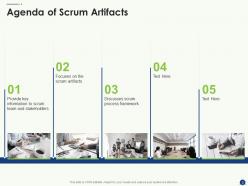
Slide 2: This is an Agenda slide. State your agendas here.
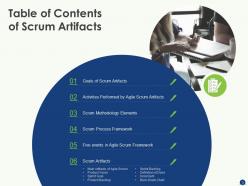
Slide 3: This slide shows Table of Content for the presentation.
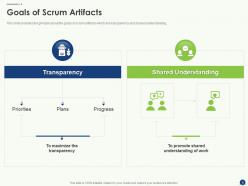
Slide 4: This slide presents the glimpse about the goals of scrum artifacts.
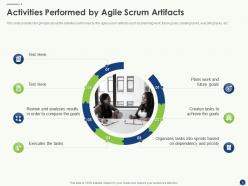
Slide 5: This slide displays the glimpse about the activities performed by the agile scrum artifacts.
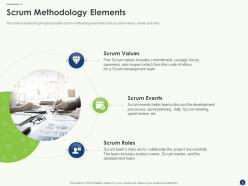
Slide 6: This slide represents the glimpse about the scrum methodology elements.
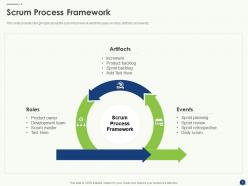
Slide 7: This slide provides the glimpse about the scrum framework which focuses on roles, artifacts and events.
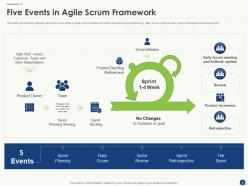
Slide 8: This slide shows five events in agile scrum framework.
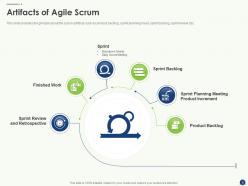
Slide 9: This slide presents scrum artifacts such as product backlog, sprint planning meet, sprint backlog, sprint review. etc.
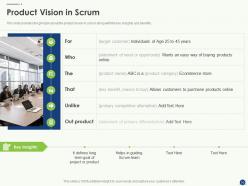
Slide 10: This slide displays product vision in scrum along with the key insights and benefits.
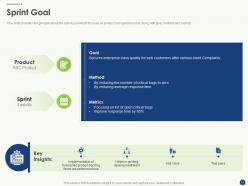
Slide 11: This slide represents sprint goal which focuses on product and sprint number along with goal, method and metrics.
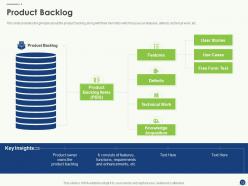
Slide 12: This slide showcases product backlog along with their item lists which focuses on features, defects, technical work, etc.
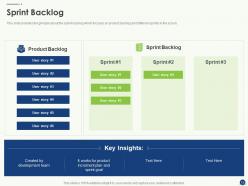
Slide 13: This slide shows sprint backlog which focuses on product backlog and different sprints in the scrum.
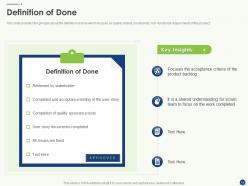
Slide 14: This slide presents definition of done which focuses on quality criteria, constraints, non- functional requirements of the product.
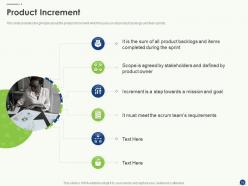
Slide 15: This slide displays the glimpse about the product increment which focuses on all product backlogs and their sprints.
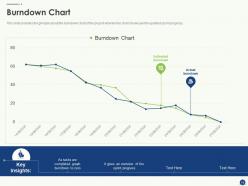
Slide 16: This slide represents the glimpse about the burndown chart of the project wherein the chart showcase the updated sprint progress.
Slide 17: This slide shows Icons for Scrum Artifacts.
Slide 18: This slide is titled as Additional Slides for moving forward.
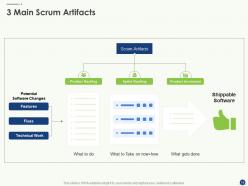
Slide 19: This slide shows 3 Main Scrum Artifacts.
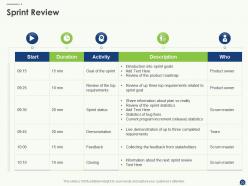
Slide 20: This slide presents Sprint Review with related imagery.
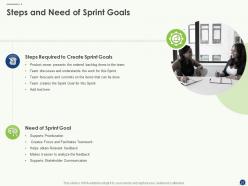
Slide 21: This slide displays Steps and Need of Sprint Goals.
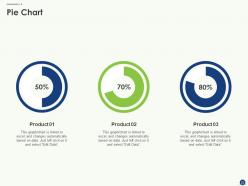
Slide 22: This slide represents Pie Chart with data in percentage.
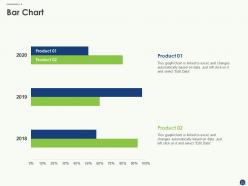
Slide 23: This slide shows Bar Chart with two products comparison.
Slide 24: This is Our Team slide with names and designation.
Slide 25: This slide shows Post It Notes. Post your important notes here.
Slide 26: This slide presents 30 60 90 Days Plan with text boxes.
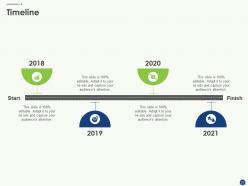
Slide 27: This is a Timeline slide. Show data related to time intervals here.
Slide 28: This slide shows Puzzle with related icons and text.
Slide 29: This is a Thank You slide with address, contact numbers and email address.
Scrum artifacts powerpoint presentation slides with all 29 slides:
Use our Scrum Artifacts Powerpoint Presentation Slides to effectively help you save your valuable time. They are readymade to fit into any presentation structure.






FAQs for Scrum artifacts
So there are three main Scrum artifacts you need to know about. First is the Product Backlog - basically your master wishlist of all the features and stuff that needs building, ranked by priority. Sprint Backlog is different - it's just the specific tasks your team's tackling this sprint. Then there's the Product Increment, which is whatever working piece of software you actually ship at the end. I know the names sound super corporate, but they're actually pretty useful for keeping everyone focused. Just don't let them get stale - update them regularly or your team'll be all over the place.
So basically, your Product Backlog is like every possible feature you might want someday - it's huge and constantly changing as new ideas pop up. Sprint Backlog? That's just the stuff your team actually promised to get done in the next few weeks. Product Owner controls the big wishlist, but once sprint planning wraps up, the dev team owns their smaller committed list. And honestly, if people keep messing with your Sprint Backlog halfway through, you've got some serious planning problems to sort out first.
Look at business value first - what'll make customers happy or bring in money fastest. Dependencies can mess you up though, so sometimes boring foundation work has to come first (ugh). Technical risks are huge too. If something might explode later, deal with it now while you can. Hard deadlines like compliance stuff? Those aren't negotiable. Balance what users actually want with what's realistic to build. Oh, and don't set priorities once then forget about them. Things shift constantly, so check in with your stakeholders regularly to make sure you're still on track.
So the Definition of Done is basically your quality checkpoint for all the Scrum stuff. When you're working on the Product Increment, it tells you if something's actually ready to ship or not. Your Sprint Backlog has to account for those DoD requirements when planning tasks - otherwise you'll be scrambling later (learned that the hard way). It stops those endless "wait, is this really done?" debates during reviews. Plus writing user stories becomes way easier when you already know what the finish line looks like. Oh, and definitely revisit your DoD next sprint planning - teams always discover new things that should be in there.
So the Increment is basically your proof that stuff actually got done - it's working, tested software you ship after each Sprint. Way better than those BS status reports that just throw around percentages, you know? You're tracking real functionality instead of just hours or tasks checked off. Each one builds on the last, so stakeholders can actually play with what you've built and see the value piling up. Makes it super clear where you stand. Oh and make sure each Increment is truly "done" and ready to demo - that's key.
Oh for sure! The Product Backlog changes constantly - you're always tweaking priorities based on what users actually want. Definition of Done gets beefier over time too. We started with basic "code works" but now it's like a whole checklist with security stuff, docs, the works. Sprint Goals get way more focused as your team figures out what actually matters. I'd say make these changes during retros though, not just randomly throughout sprints (learned that one the hard way). Your artifacts should totally grow with your team - otherwise you're just stuck doing the same thing forever.
Make your Product Backlog, Sprint Backlog, and Increment visible to everyone - like, actually visible, not buried in some folder nobody checks. Your Product Backlog needs clear user stories and priorities that stakeholders can understand without a translator. Sprint Backlog should show real-time progress because honestly, there's nothing worse than stale boards that haven't been touched in days. Get your Definition of Done super clear so nobody's confused about "complete." We use Jira but even a physical board works if people can see current status. The trick is updating everything regularly during standups - makes transparency automatic instead of something you remember at 5pm Friday.
Jira and Azure DevOps are solid for backlogs - really helps with prioritizing user stories. Monday.com works well for burndown charts, though honestly? Spreadsheets can do the trick too. Don't overthink it like some teams do (I've watched people waste weeks just setting up tools). Pick whatever your team already knows first. Trello's pretty user-friendly if you want something simple. The main thing is making sure everyone can actually see and update stuff in real-time. You can always upgrade later if you need fancier features, but start with what feels natural for your group.
Think of Scrum artifacts as your team's shared reality check. Product Backlog shows what needs building and why it matters. Sprint Backlog breaks down your current commitments - no more scope creep disasters. The Increment? That's your actual finished work stakeholders can play with. Honestly, they're lifesavers for avoiding those awkward "wait, what are we even doing?" moments. Everyone's looking at the same priorities instead of guessing. Keep them updated and visible somewhere - saves you from those soul-crushing status meetings where nothing gets decided.
Honestly, backlog refinement is a game changer - it saves you from those brutal 4-hour planning meetings where everyone's confused. Get stories broken down and estimated beforehand so your team actually knows what they're committing to. The best part? You catch all those annoying dependencies early instead of discovering mid-sprint that you need Bob's team to build something first (and Bob's booked for the next month). Make sure devs are involved so they can speak up about technical gotchas. I'd do short, regular sessions instead of one massive refinement marathon - your brain will thank you.
Honestly, most teams just use artifacts as checkbox exercises instead of actually keeping them useful. The Product Backlog becomes this massive dumping ground - seriously, every random brainstorm ends up there. Mid-sprint scope creep destroys your Sprint Backlogs too. And those Increments? Half the time they're not even properly "done done." I've seen so many teams treat this stuff like boring paperwork rather than tools that actually help make decisions. My advice? Don't save artifact updates for later - work them right into your standups and retros. Makes it way less painful.
Sprint Reviews are your best bet - stakeholders can actually see what you've built and give real feedback. I'd also bring them into backlog refinement sessions because honestly, they understand the business way better than we do. Just don't let them mess with your Sprint Backlog directly since that's what your team committed to. Regular check-ins work great too. The trick is making them feel like their input matters (because it does) while keeping your team's space to work. Their feedback should definitely shape future sprints though.
Yeah so team size totally changes how messy your Scrum stuff gets. Small teams (like 3-5 people) can get away with super simple backlogs since everyone knows what's going on. But once you hit bigger teams? Everything needs way more detail - your user stories, acceptance criteria, all of it. Daily standups drag on forever too, which honestly drives me nuts. The sprint tracking becomes this whole thing where you're trying to wrangle updates from everyone. I'd say if you're stuck with a big team, just accept you'll spend more time making sure your backlog items are detailed and your Definition of Done is bulletproof. Otherwise chaos.
Treat your Scrum artifacts like actual data instead of just checking boxes. Product backlog feedback tells you what's broken. Sprint backlogs show if your team's estimates are terrible (spoiler: they probably are). The increment? That's your real proof things are improving. Most teams create this stuff then ignore it completely. Big mistake. Track your velocity patterns and see how well you're sticking to your Definition of Done. Document what you notice in sprint reviews - those random observations end up being gold for tweaking your process later. The retrospective analysis is where you'll find the good stuff.
Honestly, the worst thing I see is teams treating all this stuff like boring paperwork instead of actual tools that help. Your backlog turns into a mess of random ideas nobody prioritizes. Sprint planning happens, then everyone forgets the Sprint Backlog exists. Half the teams don't even have Sprint Goals - or they're so vague they might as well say "do good work." Keep everything visible and actually update it. Your Product Owner needs to regularly clean up that backlog mess. Track real progress daily, not just meaningless checkboxes. And please - make your Definition of Done something you'll actually follow, then stick to it.
-
I was looking for an Scrum product for my presentation. And at the end when I find it on SlideTeam, I am really happy about that. Thank you for such an amazing product.
-
Informative presentations that are easily editable.
-
I discovered this website through a google search, the services matched my needs perfectly and the pricing was very reasonable. I was thrilled with the product and the customer service. I will definitely use their slides again for my presentations and recommend them to other colleagues.
-
Appreciate the research and its presentable format.