


SecOps Powerpoint Presentation Slides




Try Before you Buy Download Free Sample Product
 Impress Your
 Audience
 100%
100% Editable
 Save Hours
 of Time


Check out our professionally designed SecOps IT PowerPoint presentation, which provides a concise overview of SecOps, covering its introduction, benefits, driving trends, and a comparison with ITOps and DevOps. Firstly, The Security Operations PowerPoint module dives into the roles, responsibilities, required skills, critical functional areas, and outcomes managed by security operations teams. It showcases the architecture, model, and threat management process of SecOps, along with different implementation models like SOC as a Service, command SOC, multifunction, virtual, co-managed, and dedicated. Additionally, The Threat Operations Center PPT features various SecOps tools, software, and technologies, as well as a checklist, best practices, training program, and budget considerations for implementation. It offers methods to integrate SecOps in security operations, a RACI matrix, a timeline, and a roadmap. Furthermore, the Information Security Operations PPT template addresses challenges, solutions, and the impact of integrating security operations centers. Lastly, it also provides a vulnerability tracking dashboard and a pharmaceutical company case study. Download this fully editable and customizable template, compatible with Google Slides, for your convenience.
People who downloaded this PowerPoint presentation also viewed the following :
Content of this Powerpoint Presentation
Slide 1: This slide introduces SecOps. State your company name and begin.
Slide 2: This is an Agenda slide. State your agendas here.
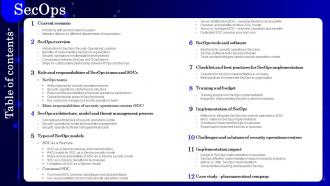
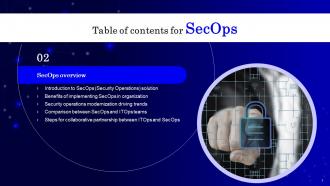
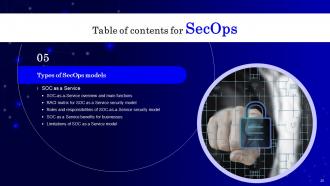
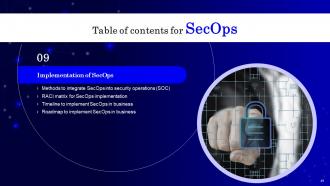
Slide 3: This slide shows Table of Content for the presentation.
Slide 4: This slide shows title for topics that are to be covered next in the template.
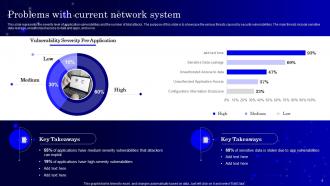
Slide 5: This slide represents the severity level of application vulnerabilities and the number of total attacks.
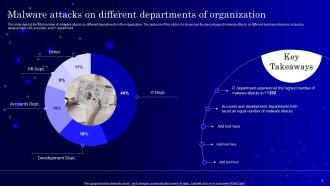
Slide 6: This slide depicts total number of malware attacks on different departments in the organization.
Slide 7: This slide shows title for topics that are to be covered next in the template.
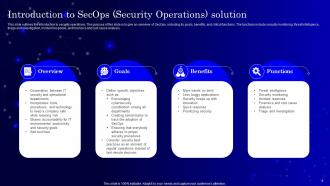
Slide 8: This slide outlines the introduction to security operations.
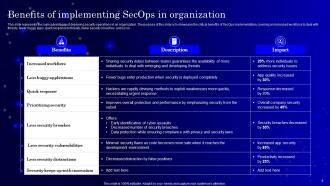
Slide 9: This slide presents the main advantages of deploying security operations in an organization.
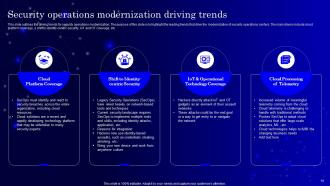
Slide 10: This slide outlines the driving trends for security operations modernization.
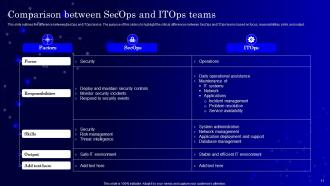
Slide 11: This slide describes the difference between SecOps and ITOps teams.
Slide 12: This slide outlines the various measures to enable collaborative partnerships between ITOps and SecOps teams.
Slide 13: This slide shows title for topics that are to be covered next in the template.
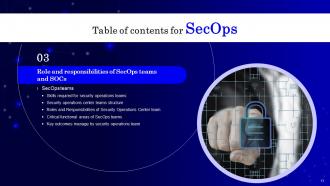
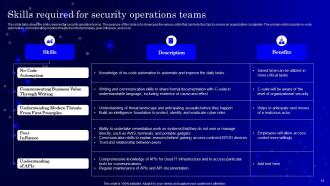
Slide 14: This slide presents the skills required for security operation teams.
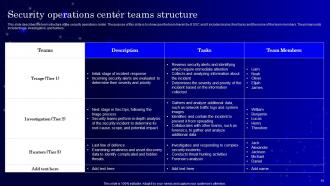
Slide 15: This slide describes the team structure of the security operations center.
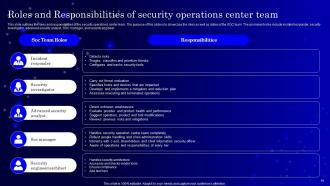
Slide 16: This slide outlines the roles and responsibilities of the security operations center team.
Slide 17: This slide describes the critical functions of security operations.
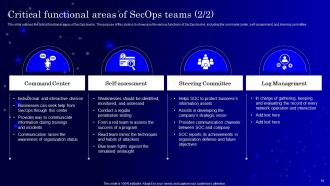
Slide 18: This slide also describes the critical functional areas of SecOps teams.
Slide 19: This slide outlines the critical outcomes that are handled by the security operations team.
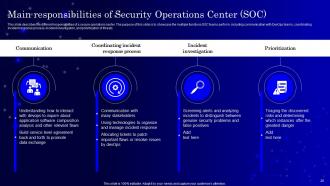
Slide 20: This slide describes the different responsibilities of a secure operations center.
Slide 21: This slide shows title for topics that are to be covered next in the template.
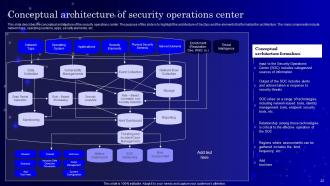
Slide 22: This slide describes the conceptual architecture of the security operations center.
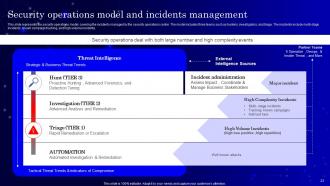
Slide 23: This slide represents the security operations model, covering the incidents managed by the security operations center.
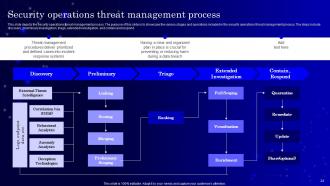
Slide 24: This slide depicts the security operations threat management process.
Slide 25: This slide shows title for topics that are to be covered next in the template.
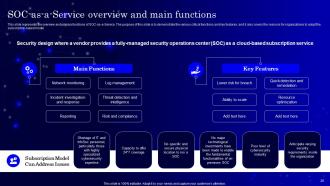
Slide 26: This slide presents the overview and primary functions of SOC-as-a-Service.
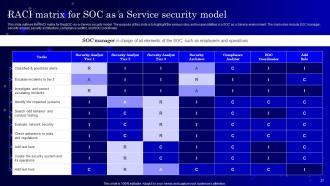
Slide 27: This slide describes the RACI matrix for the SOC-as-a-Service security model.
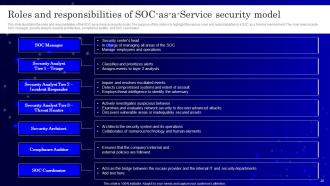
Slide 28: This slide illustrates the roles and responsibilities of the SOC-as-a-Service security model.
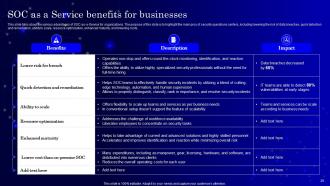
Slide 29: This slide presents various advantages of SOC-as-a-Service for organizations.
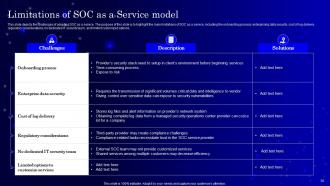
Slide 30: This slide depicts the challenges of adopting SOC as a service.
Slide 31: This slide shows title for topics that are to be covered next in the template.
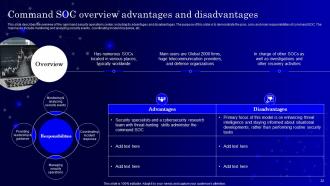
Slide 32: This slide describes the overview of the command security operations center, including its advantages and disadvantages.
Slide 33: This slide depicts the main tasks of the command security operations center.
Slide 34: This slide shows title for topics that are to be covered next in the template.
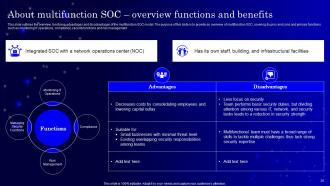
Slide 35: This slide outlines the overview, functions, advantages and disadvantages of the multifunction SOC model.
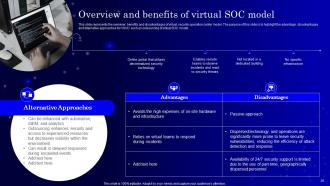
Slide 36: This slide presents the overview, benefits and disadvantages of virtual security operation center model.
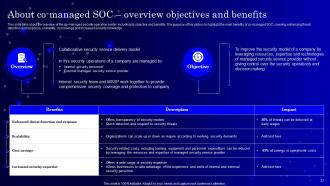
Slide 37: This slide showcases the overview of the co-managed security operation center, including its objective and benefits.
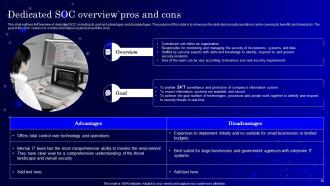
Slide 38: This slide outlines the overview of dedicated SOC, including its goal and advantages and disadvantages.
Slide 39: This slide shows title for topics that are to be covered next in the template.
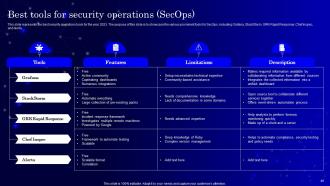
Slide 40: This slide presents the best security operations tools for the year 2023.
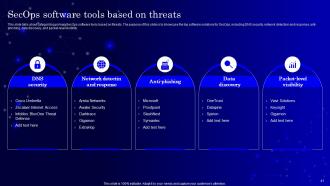
Slide 41: This slide describes categorizing primary SecOps software tools based on threats.
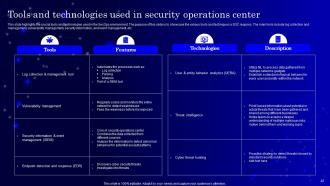
Slide 42: This slide highlights the crucial tools and technologies used in the SecOps environment.
Slide 43: This slide shows title for topics that are to be covered next in the template.
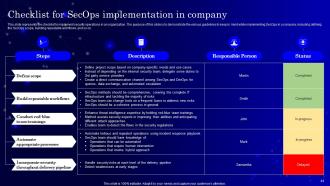
Slide 44: This slide presents the checklist to implement security operations in an organization.
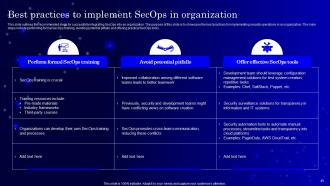
Slide 45: This slide outlines the recommended steps for successfully integrating SecOps into an organization.
Slide 46: This slide shows title for topics that are to be covered next in the template.
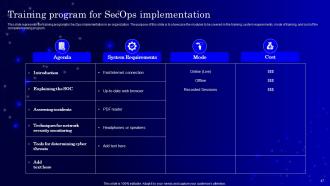
Slide 47: This slide represents the training program for SecOps implementation in an organization.
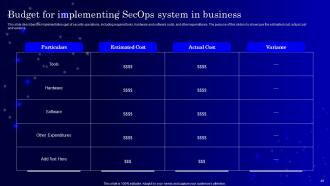
Slide 48: This slide describes the implementation cost of security operations, including required tools, hardware and software costs, and other expenditures.
Slide 49: This slide shows title for topics that are to be covered next in the template.
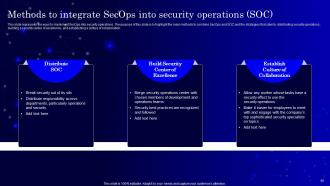
Slide 50: This slide presents the ways to implement SecOps into security operations.
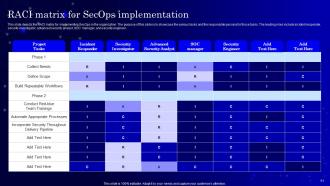
Slide 51: This slide depicts the RACI matrix for implementing SecOps in the organization.
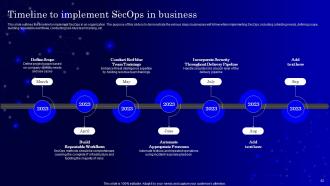
Slide 52: This slide displays the timeline to implement SecOps in an organization.
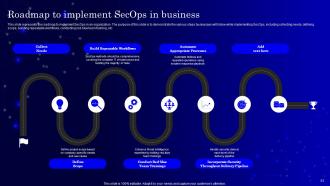
Slide 53: This slide presents the roadmap to implement SecOps in an organization.
Slide 54: This slide shows title for topics that are to be covered next in the template.
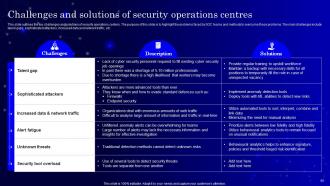
Slide 55: This slide outlines the key challenges and solutions of security operations centers.
Slide 56: This slide shows title for topics that are to be covered next in the template.
Slide 57: This slide presents the impact of implementing security operations in an organization.
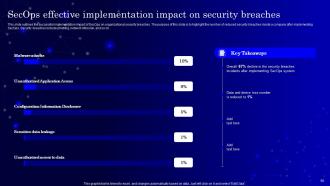
Slide 58: This slide outlines the successful implementation impact of SecOps on organizational security breaches.
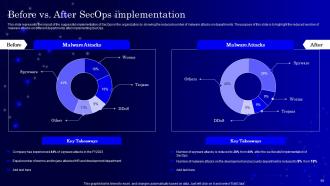
Slide 59: This slide presents the impact of the successful implementation of SecOps in the organization by showing the reduced number of malware attacks on departments.
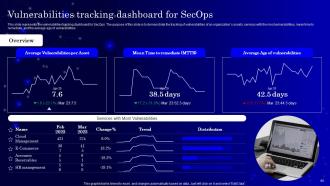
Slide 60: This slide presents the vulnerabilities tracking dashboard for SecOps.
Slide 61: This slide shows title for topics that are to be covered next in the template.
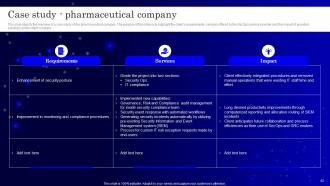
Slide 62: This slide depicts the overview of a case study of the pharmaceutical company.
Slide 63: This slide shows all the icons included in the presentation.
Slide 64: This slide is titled as Additional Slides for moving forward.
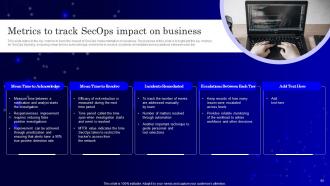
Slide 65: This slide presents key metrics to track the impact of SecOps implementation on business.
Slide 66: This slide describes the main steps to developing a security operations center.
Slide 67: This slide presents the comparison between the security operations center and DevOps.
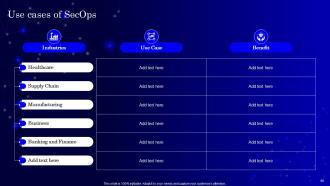
Slide 68: This slide describes Use cases of SecOps.
Slide 69: This is About Us slide to show company specifications etc.
Slide 70: This is an Idea Generation slide to state a new idea or highlight information, specifications etc.
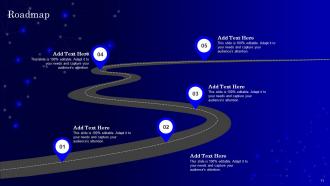
Slide 71: This slide presents Roadmap with additional textboxes.
Slide 72: This slide contains Puzzle with related icons and text.
Slide 73: This is a Timeline slide. Show data related to time intervals here.
Slide 74: This slide shows Post It Notes. Post your important notes here.
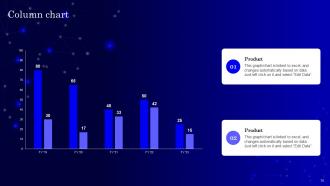
Slide 75: This slide displays Column chart with two products comparison.
Slide 76: This is a Thank You slide with address, contact numbers and email address.
SecOps Powerpoint Presentation Slides with all 81 slides:
Use our SecOps Powerpoint Presentation Slides to effectively help you save your valuable time. They are readymade to fit into any presentation structure.



















FAQs for SecOps
Here's what I'd focus on for SecOps: get full visibility across everything first - that's where most places screw up royally. You need automated threat detection that actually talks to your monitoring tools, plus clear incident response steps everyone knows by heart. Strong collab between security and ops teams is huge too. Track metrics like how fast you detect and respond to stuff. Oh, and map out what tools you're already using - you'll probably find weird gaps in visibility or places where teams aren't talking to each other. Start there.
So SecOps is basically moving security way earlier in your dev process instead of checking it at the very end. You bake security scans right into your CI/CD - vulnerability checks, security tests during builds, that whole thing. Honestly, it's pretty sweet once you nail it down. Your security and dev teams actually work together from the start, same tools and everything. Way faster deployments and fewer security headaches in production. Oh, and if you're just getting started? Add one security scan to your current pipeline first - easiest place to begin.
Honestly, automation is a game-changer for scaling SecOps without your team wanting to quit. All that mind-numbing stuff like alert triage and log collection? Let the bots handle it. You'll actually have time for the interesting threats that need real thinking. Speed's a huge factor too - manually going through every alert is just brutal. What I love most is the consistency though. Your automated playbooks won't mess up because they're tired or hungover on a Tuesday. Start with the boring, repetitive tasks first, then expand from there once you get the hang of it.
Track three main things: how fast you spot threats, response times, and whether attacks are actually getting stopped. MTTD and MTTR are the standard metrics everyone uses - boring acronyms but they work. False positives matter too since nobody wants their team drowning in useless alerts. Get your baseline numbers first, then check trends monthly. Oh, and here's the thing that really matters - showing your boss that quicker responses mean less damage to the business. That's when you'll actually get budget approval for better tools.
Honestly, the toughest part is getting security and ops teams to stop fighting each other. Security wants everything locked down tight, but ops just needs stuff to work fast. Cultural nightmare right there. Plus you'll end up with like 10 different security tools that hate each other - integration becomes this whole mess. Oh and good luck finding people who actually know both sides well. That talent pool is tiny. Start with just one workflow though, show some quick wins to get people on board, then cross-train the hell out of everyone.
Threat intel feeds are a game-changer for your security team, honestly. You get real-time context on what attackers are doing instead of just blindly responding to alerts. IOCs, TTPs, emerging threats - all that stuff hits your radar before it becomes your problem. Your analysts can prioritize incidents way better and tune detection rules that actually matter. Plus the proactive threat hunting becomes so much easier. We started by plugging feeds into our SIEM first (probably the smartest move), and now our team connects suspicious activity dots in like half the time. It's pretty wild how much clearer everything becomes.
Look, incident response plans are huge in SecOps - they're literally your playbook when shit hits the fan. Your team knows exactly who does what instead of running around like headless chickens. Downtime gets cut way shorter, and honestly? Everyone's stress levels drop because there's actual structure. Most compliance stuff requires them anyway, so you're killing two birds with one stone there. But here's the thing - test that plan regularly. I've seen too many teams with these perfect documents sitting in some folder that nobody's touched in years. Totally useless when you actually need it.
So SecOps is like having a compliance watchdog running 24/7, monitoring everything and keeping those audit trails that regulators actually want to see. Instead of panicking when audit season rolls around, you're already collecting evidence of your security stuff automatically. Real-time incident detection helps you hit those crazy tight reporting deadlines for SOX, GDPR, whatever. Honestly, the standardized processes make it so much easier to show compliance across different regs. I'd start by just mapping what SecOps activities you're already doing to your compliance needs - bet you're covering more ground than you think.
Start with a SIEM like Splunk or Elastic - that's your foundation right there. From there, grab vulnerability scanners (Nessus, OpenVAS), endpoint detection stuff like CrowdStrike, and network monitoring tools. Wireshark's great for that, or Nagios. Oh, and incident response tools - TheHive works well. Don't sleep on the basics either: password managers, secure comms. Honestly, Splunk can be a pain to set up but it's worth it. My advice? Pick one tool per category first. Rolling out everything at once just overwhelms people and nothing gets used properly.
So with SecOps you're constantly monitoring everything instead of just running weekly scans and hoping for the best. Your security and ops people actually talk to each other - crazy concept, right? Real-time alerts pop up and teams jump on threats immediately rather than finding out about breaches three months later. Traditional setups are more like "check the locks once a week" while SecOps is having security guards patrol 24/7. You catch problems early instead of playing cleanup after hackers already grabbed your data. Way less stressful weekends.
For SecOps you'll want the usual technical stuff - network security, SIEM tools, incident response, maybe some Python or PowerShell scripting. Threat hunting's pretty hot right now too. But here's the thing - communication skills are almost more important because you're always dealing with different teams during incidents. Fast thinking under pressure is crucial. Oh, and stay curious about new threats since everything changes constantly. I'd start by getting your hands dirty with actual security tools, then practice explaining the technical stuff to people who aren't tech-savvy. That combo will set you up well.
Cloud computing flips SecOps on its head - you get amazing scalability but your attack surface blows up everywhere. Traditional perimeter security? Forget about it. Your stuff's now scattered across regions and constantly changing. Zero-trust architecture becomes your new best friend, along with infrastructure-as-code (which honestly took me forever to get used to). The shared responsibility thing is tricky - cloud providers handle some security, but you're still stuck with apps and data. Map out who's responsible for what first. That'll save you headaches later when something inevitably goes sideways.
Honestly, get your security people into dev standups and ops meetings from the start. Don't wait until everything's on fire to bring them in - I've watched that disaster movie too many times. Set up shared dashboards so everyone can see what's happening, and create clear escalation paths that actually make sense. Regular cross-team meetings help tons, plus you'll want joint incident response playbooks. Oh, and run tabletop exercises together - sounds boring but you'll be grateful when real chaos hits and people aren't scrambling to figure out roles. Security shouldn't feel like the fun police showing up to ruin everyone's day.
Honestly, ML/AI is pretty solid for threat detection stuff. It'll churn through tons of log data and catch weird patterns you'd probably miss. The pattern recognition thing is where it really shines - spotting sketchy user behavior, flagging potential attacks, even handling some incident response automatically. Models actually get better over time too, which is cool. My advice? Don't go overboard right away. Pick something specific like malware detection first instead of trying to automate your entire security stack. Way easier to manage that way.
Look at four main areas to track your SecOps maturity. Detection and response times are huge - how fast you're spotting threats and shutting them down. Also measure incident resolution rates plus mean time to recovery. Automation coverage matters too (what percentage of routine stuff runs automatically vs manual work). Don't forget threat intelligence integration and how well teams actually share context. Honestly though? The trends beat raw numbers every time. Get your baseline measurements first, then check progress quarterly. That's how you'll see real maturity instead of just... spinning your wheels.
-
A big thanks to SlideTeam! An incredible and diverse library of templates helped me with my business project presentation.
-
Very unique, user-friendly presentation interface.