


Self presentation employment history timeline good ppt example




Try Before you Buy Download Free Sample Product
 Impress Your
 Audience
 100%
100% Editable
 Save Hours
 of Time


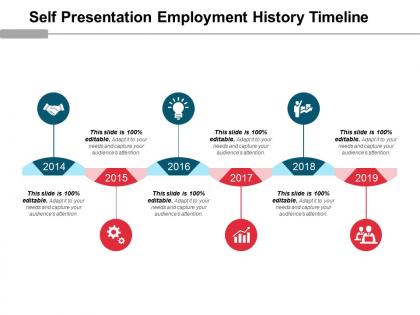
Presenting a professionally designed presentation template on Self Presentation Employment History Timeline Good PPT Example. This is a professionally designed self introduction PPT template which shows the career path and the goals one wants to achieve in a particular span of time.The creatively designed template shows the years as a timeline and the target to be fulfilled in a given time period.The colorful representation of the template enhances its aesthetics.This PPT can help you develop a personal development plan and can help you analyse your personal growth from time to time. This ready to use template just requires the text to be changed according to the requirement and it can be used in interviews to tell the interviewer about how you plan your career growth and where you see yourself in the coming years. It can also be used by employees at corporate levels. So, use this innovatively designed self presentation employment history timeline and increase your self productivity. Download the link and use an effective way to plan your business goals. Figure out the intricacies with our Self Presentation Employment History Timeline Good Ppt Example. Get fully conversant with the job.
People who downloaded this PowerPoint presentation also viewed the following :
Self presentation employment history timeline good ppt example with all 5 slides:
Lead on with our Self Presentation Employment History Timeline Good Ppt Example. Let your team know thatyou are the chief.

FAQs for Self presentation employment history timeline
Honestly, don't overthink it too much. Match your workplace vibe - dress code, communication style, all that. Be reliable and speak up confidently in meetings. Good eye contact and a decent handshake still matter (I know, sounds old school but whatever). The trick is staying authentic while reading the room. Watch what successful people do at your company first, then adapt gradually. Sometimes I think we stress about this stuff when really it's just about being consistent with how you present yourself. You've got this - just be genuinely you, but like, the professional version.
You gotta know who you're talking to first - that's everything. Executives want the big picture stuff, keep it short. Technical people? They actually want the nitty-gritty details. I totally crashed and burned once giving finance people way too much tech speak, so embarrassing. Clients are different too - they care about what's in it for them, not all the fancy features. Actually, here's what I do now: before any presentation, I literally ask myself "what does this group actually give a shit about?" Then I build everything around that. Works way better.
Keep your slides super clean - one main point each, readable fonts, decent images that actually relate to what you're talking about. I swear, nothing ruins a presentation faster than slides crammed with text nobody can see past row two. Charts are great but make them simple. Oh, and pick colors that don't look like a rainbow exploded. Stick with 2-3 max. Your slides should back up what you're saying, not distract from it. Also - this might be obvious but always test your tech beforehand. Murphy's law hits hard during presentations.
Dude, body language is everything when you're trying to make a good impression. Your posture and eye contact say way more about you than whatever comes out of your mouth sometimes. If you're slouching or staring at the floor, people won't take you seriously even if your ideas are brilliant. Stand up straight, make eye contact – it makes you look way more confident and credible. I learned this the hard way in college presentations lol. Pro tip: film yourself practicing sometime. You'll cringe at your own habits but it actually helps tons.
Honestly, stories are way better than just rattling off facts about yourself. Like instead of "I'm a problem-solver," tell them about that one crazy deadline you had to hit. People actually remember narratives - our brains are weird that way. Generic stuff gets forgotten instantly. Stories let your personality come through naturally too, which is huge. Oh, and they're way less awkward than listing your strengths like you're reading a resume. For interviews or networking, pick maybe 2-3 short stories that show off what you're good at. Practice telling them like you're just chatting.
Ugh, the worst thing people do is dump their entire life story in like 2 minutes. So awkward. Then there's the opposite problem - being way too humble or totally overselling yourself. Both are cringe. Your body language matters more than you think too. I've seen people nail what they're saying but they're slouched over avoiding eye contact the whole time. Practice some kind of elevator pitch beforehand, but don't make it sound robotic. You want that sweet spot where you're confident but still actually sound like yourself, you know?
Oh man, this is so true! What comes off as confident here might make you look like a total show-off somewhere else. Americans are all about hyping up their own achievements and being vocal about strengths. But in places that value the group more? You'd better emphasize team wins and stay humble. Body language gets tricky too - eye contact shows confidence in the West but can be super disrespectful in other cultures. Honestly, just watch how people around you present themselves and copy that vibe instead of assuming your usual approach will work everywhere.
Know your stuff inside out first - that's like 80% of confidence right there. I always practice in front of my mirror or whoever will listen lol. Do some deep breathing before you go on too. Those butterflies? They never really go away, but try thinking of them as excitement instead of panic. Focus on helping your audience rather than what they think of you. Honestly, most people want you to succeed anyway. If you stumble over words or forget something, just say "sorry, let me back up" and keep going. Nobody cares as much as you think they do.
Get feedback from different people - coworkers, friends, maybe even record yourself practicing. But here's the thing: ask specific stuff like "did I look nervous?" instead of just "how was it?" Generic feedback is basically worthless. Don't get all defensive when they tell you things either. I keep a little note in my phone tracking what people say - if everyone mentions you say "um" too much, that's probably true. The whole point is taking what they notice and actually practicing to fix it.
Honestly, the biggest thing is just keeping people awake and actually thinking. I always throw in questions - even if they're rhetorical, it gets their brains working. Stories beat boring facts every single time, trust me on this one. Don't just stand there like a statue either - move around, make eye contact with different people. When you hit a big point, pause for a sec and let it land. Oh, and if someone looks totally lost, just call it out and help them catch up. Hook them hard in the first 30 seconds, then wrap up with something concrete they can actually do next.
So personal branding is just figuring out your "vibe" and sticking to it everywhere. Pick 3-4 things you want people to think when they hear your name - maybe you're the reliable problem-solver or the creative one who asks good questions. Then actually BE that person consistently. Your emails, how you dress, what you post online - it all should feel like the same person. Way better than scrambling to reinvent yourself every meeting (so draining honestly). I used to overthink this stuff, but really it's just about knowing who you are and not hiding it. Makes everything feel more natural.
Okay so first things first - get your lighting and audio sorted because that's where you'll see the biggest difference. I use Camo to turn my phone into a decent webcam, and honestly? Game changer. Krisp is amazing for killing background noise too. A simple ring light will make you look way more professional than you'd expect. For presentations, mmhmm is pretty cool - adds backgrounds without looking cheesy. Oh and Grammarly saves me from embarrassing typos all the time. Calendly makes scheduling super smooth too. But yeah, start with lighting and sound - everything else is just bonus points.
Honestly, virtual meetings let you control everything - lighting, camera angles, your background. You're basically directing your own little movie lol. Chat features are great too since you can actually think before typing instead of just blurting stuff out. But in-person? That's where people see the real you through body language and those random reactions you can't really fake. I mean, you can't exactly pause and edit yourself in real life. Both have their perks though. Just be intentional about how you're showing up while still being yourself.
Look, the more you practice this stuff, the less awkward it gets. You'll start reading rooms better and actually know how to talk to different types of people. It's honestly just like learning to drive - at first you're overthinking every little thing, but eventually it becomes automatic. Then you can focus on what you're actually saying instead of panicking about sounding weird. I'd say try practicing for like 10 minutes a week? Just talk to yourself about your job or hobbies like you're explaining it to your mom vs. your boss. Trust me, even those cringey moments won't throw you off as much once you've done this more.
Honestly, just think about three things: were people actually engaged, did your points make sense, and how confident did you feel? Like, were they asking questions or just staring blankly? I always know I bombed when people look confused lol. Also check if you rambled - happens to the best of us. Your energy matters too because people can tell when you're nervous even if you think you're hiding it well. Jot down what went right and wrong while it's still fresh. Then pick one thing to work on next time instead of trying to fix everything at once.
-
Wonderful templates design to use in business meetings.
-
Very well designed and informative templates.