


Sell Side Merger And Acquisition Pitchbook With Deal Overview Ppt Template





Try Before you Buy Download Free Sample Product
 Impress Your
 Audience
 100%
100% Editable
 Save Hours
 of Time


Sell-Side M and A Pitchbook is created when a client is approaching an investment bank looking for prospective buyers. The main purpose of our Sell Side Merger and Acquisition Pitchbook with Deal Overview is to persuade the client that they should choose an investment bank to handle the deal. It provides details regarding company overview, products, and services, management structure, geographical presence, investment banking fee structure, most successful investment banking deals, etc. Also, this PPT covers market overviews such as market trends, competitor comparisons, product differentiation, comparisons based on key financials, etc. Our sell-side investment module also highlights details regarding the deal overview, such as market valuation summary, key points of the deal, operational forecasts, income statement projections, revenue forecast, etc. At last, this deck presents a list of potentially interested companies, a business overview of the target company, post-selling plans of the selling company, pro forma condensed combined statement of operations, etc. Download this template now.
People who downloaded this PowerPoint presentation also viewed the following :
Content of this Powerpoint Presentation
Slide 1: This slide introduces Sell Side Merger and Acquisition Pitchbook with Deal Overview. State your company name and begin.
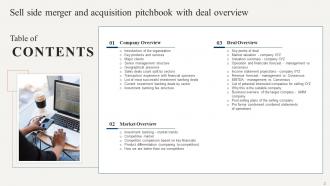
Slide 2: This slide shows Table of Content for the presentation.
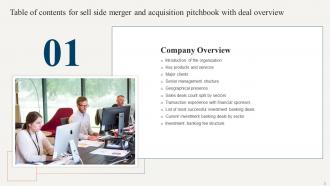
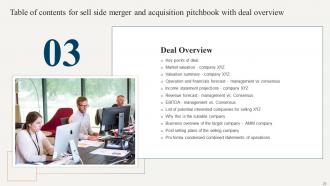
Slide 3: This slide highlights title for topics that are to be covered next in the template.
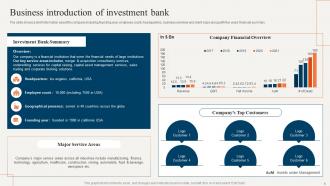
Slide 4: The slide shows a brief information about the company.
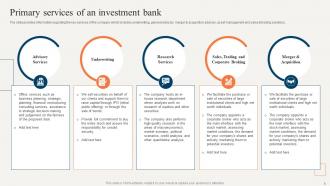
Slide 5: The slide provides information regarding the key services of the company.
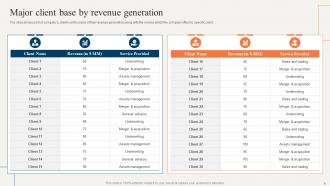
Slide 6: The slide shows a list of company’s clients on the basis of their revenue generation along with the service which the company offers to specific client.
Slide 7: The slide provides the name and designation of the key management team members along with the Experience of the executives.
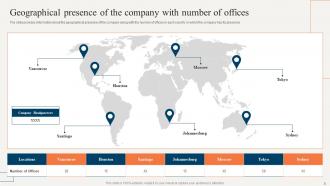
Slide 8: The slide provides information about the geographical presence of the company along with the number of offices in each country.
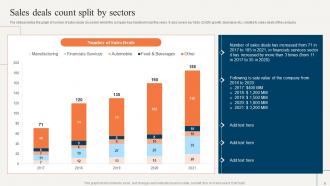
Slide 9: The slide provides the graph of number of sales deals (by sector) which the company has handled in last five years.
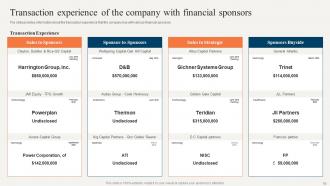
Slide 10: The slide provides information about the transaction experience that the company has with various financial sponsors.
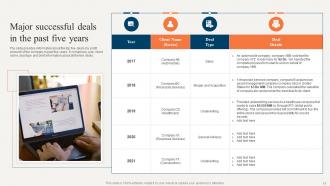
Slide 11: The slide provides information about the top five deals (by profit amount) of the company in past five years.
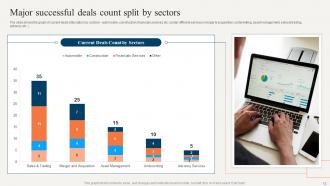
Slide 12: The slide shows the graph of current deals bifurcation under different services.
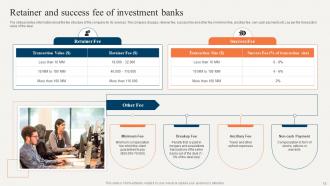
Slide 13: The slide provides information about the fee structure of the company for its services.
Slide 14: This slide highlights title for topics that are to be covered next in the template.
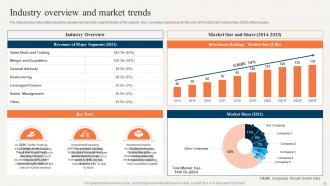
Slide 15: The slide provides information about the overview and key facts (market trends) of the industry.
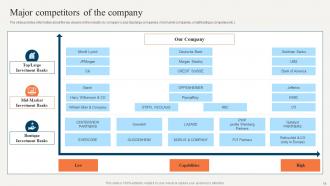
Slide 16: The slide provides information about the key players in the industry by company’s size.
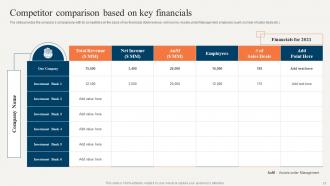
Slide 17: The slide provides the company’s comparisons with its competitors on the basis of key financials.
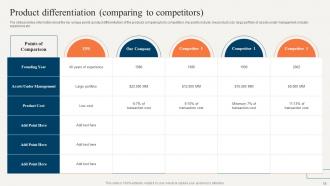
Slide 18: The slide provides information about the key unique points (product differentiation) of the products comparing to its competitors.
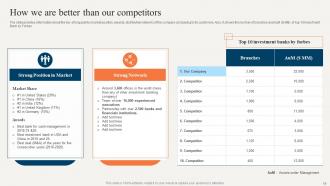
Slide 19: The slide provides information about the key strong points (market position, awards, distribution network) of the company comparing to its customers.
Slide 20: This slide highlights title for topics that are to be covered next in the template.
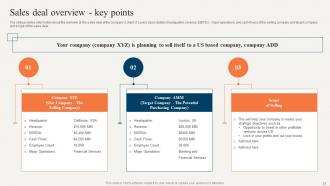
Slide 21: The slide provides information about the overview of the sales deal of the company’s client.
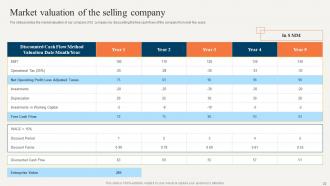
Slide 22: The slide provides the market valuation of our company (XYZ company) by discounting the free cash flows of the company from next five years.
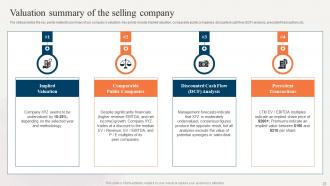
Slide 23: The slide provides the key points related to summary of our company’s valuation.
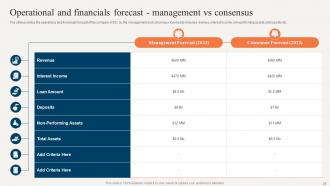
Slide 24: The slide provides the operations and financials forecast of the company (XYZ) by the management and consensus.
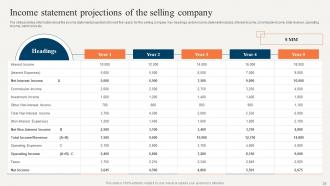
Slide 25: The slide provides information about the income statement projections (for next five years) for the selling company.
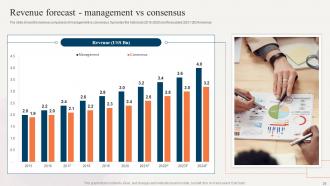
Slide 26: The slide shows the revenue comparison of management vs consensus.
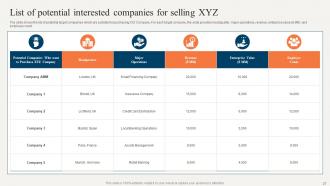
Slide 27: The slide shows the list of potential target companies which are suitable for purchasing XYZ Company.
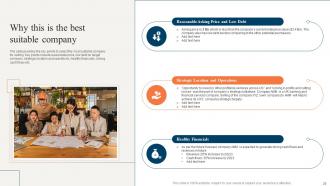
Slide 28: The slide provides the key points to select the most suitable company for selling.
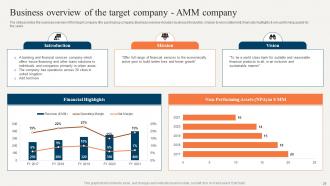
Slide 29: The slide provides the business overview of the target company (the purchasing company).
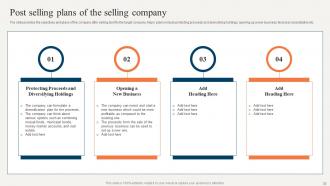
Slide 30: The slide provides the objectives and plans of the company after selling itself to the target company.
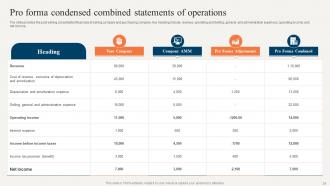
Slide 31: The slide provides the post selling consolidated financials of selling company and purchasing company.
Slide 32: This slide contains all the icons used in this presentation.
Slide 33: This slide is titled as Additional Slides for moving forward.
Slide 34: This is About Us slide to show company specifications etc.
Slide 35: This is Our Mission slide with related imagery and text.
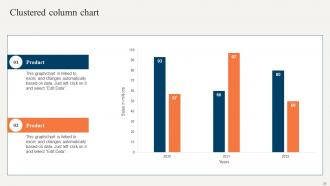
Slide 36: This slide provides Clustered Column chart with two products comparison.
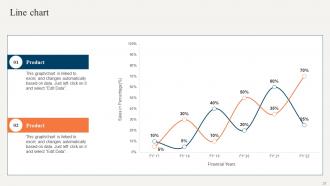
Slide 37: This slide describes Line chart with two products comparison.
Slide 38: This is Our Team slide with names and designation.
Slide 39: This slide shows Post It Notes. Post your important notes here.
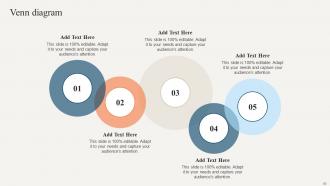
Slide 40: This slide depicts Venn diagram with text boxes.
Slide 41: This slide contains Puzzle with related icons and text.
Slide 42: This is a Thank You slide with address, contact numbers and email address.
Sell Side Merger And Acquisition Pitchbook With Deal Overview Ppt Template with all 47 slides:
Use our Sell Side Merger And Acquisition Pitchbook With Deal Overview Ppt Template to effectively help you save your valuable time. They are readymade to fit into any presentation structure.














FAQs for Sell Side Merger And Acquisition Pitchbook With Deal
Key components include executive summary, company overview, financial analysis, market positioning, strategic rationale, and valuation methodologies. These elements work together by showcasing the target's strengths, growth potential, and competitive advantages, with investment banks finding that comprehensive pitchbooks streamline buyer engagement and ultimately maximize transaction value.
Tailoring a pitchbook to attract specific buyer types involves emphasizing relevant synergies, strategic rationales, and value propositions that align with each buyer's acquisition criteria and business model. Strategic buyers require focus on operational synergies and market expansion opportunities, while financial buyers prioritize cash flow predictability, growth potential, and clear exit strategies, with many investment banks finding that customized financial projections and comparable transaction analyses significantly enhance buyer engagement and competitive bidding processes.
Market analysis forms the foundation of an effective sell-side M&A pitchbook by providing industry context, competitive positioning, valuation benchmarks, and growth trajectory insights that validate the target company's strategic value. This comprehensive analysis enables investment bankers to craft compelling narratives around market opportunities, justify premium valuations through comparable transactions, and demonstrate scalability potential to prospective buyers, ultimately enhancing deal attractiveness and negotiating power.
Visuals enhance sell-side M&A pitchbooks by transforming complex financial data into compelling narratives through strategic charts, infographics, and comparative analyses that highlight growth trajectories and competitive positioning. These visual elements streamline investor comprehension, accelerate decision-making processes, and ultimately strengthen valuation arguments, with many investment banks finding that well-designed presentations significantly improve client engagement and deal momentum.
Common pitchbook mistakes include generic messaging that doesn't highlight unique differentiators, outdated financial data, poor visual hierarchy, insufficient market research, and weak comparable analysis. These oversights often result in unconvincing valuations and missed strategic positioning opportunities, with many investment banks finding that customized, data-driven presentations significantly enhance client engagement and deal success rates.
Present financial projections through detailed revenue models, conservative assumptions, comprehensive scenario analysis, and robust valuation methodologies that demonstrate clear growth trajectories. These projections gain credibility by incorporating industry benchmarks, management guidance, and sensitivity analyses, with many investment banks finding that transparent assumption documentation and multiple validation approaches ultimately deliver buyer confidence and support premium valuations.
Competitive landscape information should include market positioning analysis, key player profiles with financial metrics, recent transaction comparables, market share data, and competitive differentiation factors. These elements enable potential buyers to understand the target's strategic advantages, competitive threats, and market dynamics, ultimately helping them assess acquisition premiums and integration opportunities in an increasingly consolidated marketplace.
Addressing potential risks in a sell-side pitchbook requires transparent acknowledgment of key challenges, mitigation strategies, and market positioning that demonstrates management's proactive approach. Strategic presentation involves framing risks within industry context, showcasing competitive advantages, and highlighting operational resilience, while ensuring buyers understand risk-reward profiles, ultimately building credibility and facilitating informed decision-making throughout the transaction process.
**INPUT**: What strategies can be employed to differentiate your pitchbook from competitors? **OUTPUT**: Effective differentiation strategies include showcasing unique industry expertise, presenting compelling comparable transactions, developing innovative valuation methodologies, creating customized strategic narratives, and demonstrating proven execution capabilities. These approaches enable investment banks to stand out by delivering tailored insights, comprehensive market analysis, and strategic positioning that resonates with sellers, ultimately enhancing deal success rates and client relationships.
The executive summary is critically important in sell-side M&A pitchbooks, serving as the primary hook that captures buyer attention, summarizes key value propositions, highlights financial performance, and establishes strategic rationale for acquisition. This section ultimately determines whether potential acquirers proceed to detailed due diligence, with many investment bankers finding that compelling executive summaries significantly accelerate buyer engagement and competitive bidding processes.
Financial metrics most persuasive to buyers include revenue growth rates, EBITDA margins, cash conversion ratios, market share data, and customer retention statistics. These indicators demonstrate scalability and profitability, with strategic buyers particularly focused on synergy potential and operational efficiency gains, ultimately enabling faster due diligence decisions and competitive valuations.
Strategic fit is conveyed through detailed buyer profiling, competitive positioning analysis, synergy identification, and clear value proposition alignment that demonstrates how the target enhances the buyer's existing operations. This involves mapping the business's capabilities against buyer strategic priorities, highlighting complementary assets, geographic expansion opportunities, and operational efficiencies, ultimately delivering compelling acquisition rationales that resonate with each prospective buyer's growth objectives.
A company's pitchbook should highlight founding milestones, key acquisitions, strategic pivots, product launches, and significant growth phases that demonstrate resilience and market adaptability. These historical elements showcase operational evolution, management capability, and competitive positioning, with investment banks finding that well-documented corporate narratives enhance valuation credibility and buyer confidence during M&A processes.
Storytelling in M&A pitchbooks integrates through compelling company narratives, market positioning stories, and strategic vision frameworks that highlight growth trajectories, competitive advantages, and future potential. Investment banks increasingly craft emotional connections by presenting acquisition targets as transformation opportunities rather than mere financial assets, with many buyers finding that narrative-driven pitchbooks deliver stronger valuations and faster deal momentum.
Current M&A landscape trends include digital transformation acceleration, ESG integration requirements, supply chain resilience focus, regulatory scrutiny increases, and cross-border transaction complexities. These factors reshape deal structures by influencing valuation methodologies, due diligence processes, and strategic buyer priorities, with investment banks increasingly emphasizing sector-specific expertise and comprehensive risk assessment frameworks to deliver competitive positioning advantages.
-
Such amazing slides with easy editable options. A perfect time-saver.
-
SlideTeam is a great place for PPT templates. They have many templates on a single topic. It has made my life a lot easier.