


Seven customer lifecycle infinity loop strategies




Try Before you Buy Download Free Sample Product
 Impress Your
 Audience
 100%
100% Editable
 Save Hours
 of Time


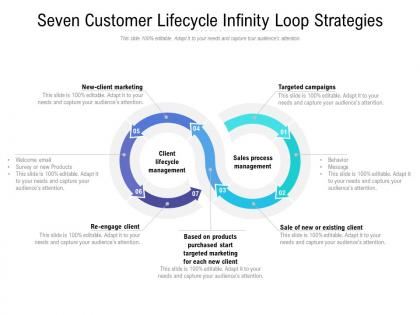
Create conditions conducive to friendly exchange with our Seven Customer Lifecycle Infinity Loop Strategies. Enhance the degree of informality existing.
People who downloaded this PowerPoint presentation also viewed the following :
Seven customer lifecycle infinity loop strategies with all 2 slides:
Handle informal events with our Seven Customer Lifecycle Infinity Loop Strategies. Encourage indulgence in friendly banter.

FAQs for Seven customer lifecycle
Okay so think of it like dating but with spreadsheets - there's five stages customers go through. Awareness is where they first hear about you (broad content works here). Then consideration - that's demo time. Purchase needs smooth checkout, obviously. After that comes retention with good onboarding and support. Finally advocacy where they refer friends. Here's the thing though - you can't skip steps. Someone who just found your brand isn't ready for "hey tell your friends!" yet. Map your tactics to where people actually are mentally. Track how many move between each stage too, that data's gold for fixing bottlenecks.
First thing - grab Google Analytics or Mixpanel to track what's actually happening. Map your metrics to each stage: where people come from, if they finish onboarding, how often they come back, when they bail. Most companies screw this up by obsessing over page views instead of stuff that matters. Cohort analysis is your friend here - shows you how different groups behave over time. Heat maps too, since people are weird and don't always do what you expect. Don't go crazy though. Pick 2-3 solid metrics per stage and build dashboards around those. You can always add more later.
Think of customer segmentation as your cheat sheet for not annoying people. Your enterprise clients don't want the same cutesy emails you'd send to small businesses - they'll unsubscribe so fast. Map out maybe 3-4 main groups based on what they actually spend and need. Then customize everything: onboarding flows, retention tactics, even how you pitch upgrades. Honestly, it's wild how much better your conversion rates get when you stop treating a Fortune 500 buyer like someone running a food truck. Start small though - pick your biggest segment first and nail that experience before moving on.
So automation tools are pretty game-changing - they let you send the right stuff to people without you having to micromanage everything. Set up email sequences for new customers, recommend products based on what they've bought before, that kind of thing. Chatbots can deal with the basic questions around the clock while you handle the tricky customer issues. Honestly, the segmentation part is where it gets really powerful - different workflows for different types of people. My advice? Don't go crazy right away. Pick something simple like your onboarding process, automate that first, then build from there once you've got the hang of it.
Look, each stage needs different metrics since you're measuring totally different stuff. Early on - track cost per lead, conversion rates, where your traffic's coming from. Onboarding is huge (most people screw this up) - watch your activation rates and how long it takes users to get their first win. Retention's about churn, satisfaction scores, how often people actually use your product. Growth stage gets into the good stuff - expansion revenue, upsell rates, lifetime value. Honestly though? Don't go crazy. Pick like 2-3 key ones per stage max or you'll drown in data and never actually do anything with it.
Honestly, just don't be that company that disappears after someone buys from you. Send them useful stuff - tutorials, tips, whatever helps them actually use what they bought. I set up automated messages at 30, 60, 90 days because timing matters. Quick surveys are fine but keep them stupidly short or people won't bother. The trick is anticipating what they'll need before they even know it themselves. Always make support easy to find too. Oh, and proactive check-ins work way better than being reactive. You want them thinking "damn, I'm glad I chose these guys" every time you reach out.
So you gotta think about where people are in their buying process, right? Early on, they need educational stuff - blog posts that actually help with their problems, not pitches. Then when they're comparing options, that's where most brands totally blow it - give them case studies, demos, real comparisons. Decision time? Show pricing upfront, testimonials, free trials. Don't forget the after part though - onboarding content and success stories keep people around longer. Honestly just listen to what questions customers ask at each step and create content that answers those instead of whatever your marketing team thinks sounds cool.
Look, customer feedback is basically your cheat sheet for figuring out what's actually happening vs what you *think* is happening. Real talk - too many people just wing it instead of asking customers directly. You'll spot where people bail out, which messages hit different, and what parts of your process suck. Pain points become super obvious when customers tell you about onboarding disasters or why they're hesitant to renew. Oh, and set up those feedback checkpoints at major moments - then actually do something with what they tell you. Otherwise you're just collecting complaints for fun.
Honestly, those old-school customer journey maps are pretty much dead now. People don't follow neat little steps anymore - they'll find you on TikTok, research on Reddit, then buy from a competitor but still hype you up online. Weird, right? Subscriptions and social media made everything cyclical instead of linear. Your customers might bounce out and circle back months later from some random touchpoint you weren't even tracking. You've got to watch multiple channels and stay ready to catch people whenever they decide to re-engage.
So predictive analytics can literally tell you which customers are gonna bail before they even realize they're unhappy - it's wild. Machine learning automates personalization at scale too. Real-time data means no more outdated customer info floating around your systems. The CDP market is honestly kind of overwhelming right now with all the options. But here's the thing - pick tools that actually integrate well together. I'd start by looking at what you're already using and figure out where the gaps are. Don't overcomplicate it though.
Honestly, start with getting both teams on the same CRM - sounds basic but you'd be shocked how many places don't do this. Weekly meetings between sales and support (yeah, people will complain at first but whatever). The real game-changer is switching to shared metrics around customer lifetime value instead of having each team chase their own numbers. Oh, and definitely create some kind of handoff checklist so nothing falls through the cracks when accounts move between teams. I'd test it with just one customer first though - work out the bugs before you roll it out everywhere. Trust me on that one.
Ugh, most companies just blast everyone with the same generic stuff instead of actually thinking about where each customer is in their journey. Teams never talk to each other either - like marketing does their thing, sales does theirs, support's off somewhere else. It's messy. Plus they obsess over getting new customers but totally ignore keeping the ones they have. Oh, and don't get me started on tracking - half the time their data's everywhere and they can't even see what's happening. My advice? Map out where people actually interact with you first, then figure out where they're bailing.
Okay so culture totally changes how customers want to be treated at every step. Japanese customers? They want relationship-building and detailed onboarding. Germans just want you to get to the point fast. Some places love constant check-ins, others think you're being annoying. We actually had our "friendly" follow-ups marked as spam in Europe once - whoops! Customer support expectations are completely different too depending on where you are. You'll need to adjust your messaging frequency and whole approach for each market. Honestly, what works in one place can backfire spectacularly somewhere else.
So personalized marketing is just meeting people where they're at in their journey with your brand. When they're first discovering you, show them content that actually hits their pain points. Once they're considering buying, highlight the features that match what they've been looking at on your site. For current customers? Don't just push your latest shiny product - upsell stuff that makes sense based on how they actually use what they already have. And honestly, win-back campaigns work way better when you offer something they'd genuinely want, not just a generic 20% off. It's all about using their data to make every interaction feel personal instead of like mass spam.
Dude, knowing your customer lifecycle is like having a cheat sheet for when people actually want to spend money. Right after they successfully onboard or renew? That's your golden window - they're feeling good about your company and way more open to buying extras. Instead of randomly throwing offers at everyone, you can hit them at exactly the right moments. Happy, engaged customers are obviously your best targets for upsells. Meanwhile, if someone's clearly struggling with what they already have, maybe hold off on pitching them more stuff (seems kinda obvious but you'd be surprised). Map out those perfect timing moments and have your sales team ready to jump on them.
No Reviews