

Six Common Types Of Cyber Attacks




Try Before you Buy Download Free Sample Product
 Impress Your
 Audience
 100%
100% Editable
 Save Hours
 of Time


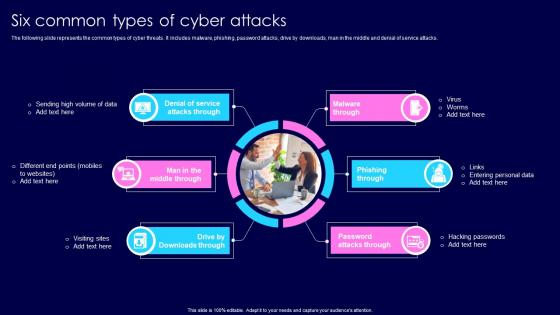
The following slide represents the common types of cyber threats. It includes malware, phishing, password attacks, drive by downloads, man in the middle and denial of service attacks.
People who downloaded this PowerPoint presentation also viewed the following :
Six Common Types Of Cyber Attacks with all 6 slides:
Use our Six Common Types Of Cyber Attacks to effectively help you save your valuable time. They are readymade to fit into any presentation structure.






FAQs for Six Common Types
Phishing emails are still the biggest pain - you know, those sketchy messages trying to steal login info or trick people into clicking bad links. Ransomware's probably the scariest though, locks up all your files until you pay up. There's also regular malware that gets in through downloads or sketchy websites. DDoS attacks happen too, where they basically spam your servers until everything crashes. Honestly feels like hackers come up with new stuff constantly. Oh, and definitely train your people to spot suspicious emails - like 90% of breaches start there.
Dude, it's crazy how much this stuff has changed. Used to be random kids showing off, now it's basically organized crime and entire governments going after valuable targets. Healthcare, power grids, even mom-and-pop shops get hit since everything's online these days. These aren't basement dwellers anymore - we're talking professional operations with real money behind them. Supply chain attacks, AI doing the social engineering (honestly terrifying), ransomware groups that literally have HR departments. Wild times. Your biggest threat isn't some script kiddie, it's patient criminals with serious resources.
Honestly, people are the weak link - like 95% of cyber attacks succeed because someone screwed up. Yeah, there's the obvious stuff like phishing emails and terrible passwords. But employees also get tricked by social engineering or download random attachments. Your IT guys aren't immune either - they leave systems unpatched or forget to close ports. What's annoying is hackers know this, so they target human psychology instead of just hammering away at firewalls. Oh, and don't just train your tech team. Everyone needs regular security training or you're basically asking for trouble.
Dude, cyber attacks are seriously expensive - we're talking millions potentially. You'll get hit with immediate costs like forensics, legal stuff, and fixing everything. But honestly? The ongoing damage is worse. Lost revenue, fines, downtime - it adds up fast. Some smaller businesses literally never bounce back from it, which is pretty scary when you think about it. Your reputation takes a beating too, and that hurts sales for years. Oh, and definitely check your cyber insurance policy because most have tons of sneaky gaps you wouldn't expect.
Honestly, start with vulnerability assessments and pen testing - that's where you'll see what's actually broken. I'd track stuff like how fast you catch threats, patch critical vulnerabilities, and respond to incidents. NIST or ISO 27001 frameworks help with benchmarking, though they're kind of a pain at first. Also run phishing simulations to see if your team's actually paying attention (spoiler: they're probably not). The main thing is staying consistent with measurements so you can spot patterns and figure out if you're wasting money or not.
Look out for your network acting weird - slow speeds, random data moving around. Suspicious emails are obvious but users also complain about pop-ups they've never seen or files suddenly locked. Programs launching by themselves? That's never good. Oh, and login attempts from random cities freak me out more than anything else honestly. New accounts appearing that nobody created is another big one. Your antivirus going crazy with alerts means something's definitely up. System settings getting changed without you doing it. I'd set up some basic monitoring so you're not finding out about problems three weeks later when everything's already toast.
Oh man, yeah cyber attacks have gotten way worse since everyone started working from home. Home wifi is basically a joke security-wise compared to office networks. Attackers are having a field day with Zoom and Slack vulnerabilities, plus they're sending out these COVID phishing emails that honestly fool even smart people. The worst part? When you're isolated at home, you can't just pop over to ask IT if that sketchy email is legit. Social engineering works so much better now. Make sure you've got a decent VPN, keep your antivirus updated, and train everyone to pause before clicking links. It's wild how much the landscape changed.
Monthly phishing tests work way better than those boring annual sessions everyone sleeps through. Make them short and actually relevant to what your team does daily. Follow up with quick sessions on passwords, social engineering tricks, that sort of thing. Interactive stuff with real scenarios they'd face keeps people engaged. Honestly, rewarding folks who report sketchy emails makes a huge difference - creates this culture where security becomes everyone's thing, not just IT's headache. Oh, and keep sessions under 30 minutes or you'll lose them completely.
Think of incident response plans like fire drills for your network - except way more stressful and the damage is real. When hackers hit, you don't want to be scrambling around wondering what the hell to do first. These plans give you a clear playbook: isolate the infected systems, save evidence, start damage control. Quick response stops attackers from spreading through your whole network while you're still figuring things out. Honestly, half the battle is just not panicking when everything's going wrong. Make sure everyone knows their role and has contact info handy - chaos isn't fun for anyone.
Honestly, AI and machine learning are crushing it right now for threat detection. They catch patterns way faster than old-school signature tools ever could. Behavioral analytics are getting really good too - they learn what normal traffic looks like on your network. Zero-trust is everywhere now, which makes sense since it assumes everything's sketchy from the start. XDR platforms are solid because they mash together data from all your security tools. The threat landscape moves so damn fast though. I'd probably start with AI-powered SIEM solutions first - best return on investment you'll get.
Dude, cyber attacks will absolutely wreck your reputation - like, overnight kind of damage. About 60% of people just bail on companies after a big breach, which honestly makes total sense. I'd probably do the same thing if my data got stolen. The whole thing spreads like wildfire on social media too. Recovery takes forever, sometimes years to get customers back. Your best bet? Be upfront when stuff goes wrong and invest in decent security from the start. Way easier than trying to fix a PR nightmare later. Prevention beats damage control every single time.
Dude, data breaches are a total nightmare legally. First off, you've got 72 hours to notify regulators and customers - GDPR, CCPA, all those laws don't mess around. The fines? Absolutely brutal if they think you screwed up your security. Class action lawsuits will probably follow, plus regulatory investigations breathing down your neck. In really bad cases, there's even criminal charges to worry about. Honestly, the whole thing makes me paranoid about our own systems sometimes. Get an incident response plan sorted now and definitely spring for cyber insurance - trust me, you'll need it for the legal bills.
So AI is basically this double-edged sword in cybersecurity right now. Bad actors are using it to create super realistic phishing emails and deepfakes that honestly fool way too many people. They're also automating vulnerability scans at crazy speeds. But the flip side is that security teams are hitting back with AI that can detect weird patterns and predict attacks before they even happen. Your IT department probably has some of this stuff running already without making a big deal about it. Bottom line - if you're not investing in AI security tools, you're basically bringing a knife to a gunfight at this point.
So basically you share attack info with other companies and everyone gets stronger together. Your org sends out malware signatures or breach data, others do the same - now you're all warned before threats actually hit you. Pretty smart tbh. Industry groups and platforms like STIX/TAXII are good starting points (though the acronyms sound ridiculous). More people contributing data means faster detection for everyone. It's neighborhood watch for hackers really. The collective approach works way better than going solo since threats spread so fast nowadays.
Honestly, cyber retaliation is a bad idea for so many reasons. You could end up hitting the wrong people entirely - attribution is super tricky online, so you might be going after some random company instead of the actual attackers. That's awkward. Plus you're probably breaking laws left and right, and things will likely just escalate from there. Innocent businesses or civilians could get caught in the crossfire too. Way better to beef up your security, call the authorities, and maybe connect with other companies who've dealt with similar stuff. Trust me on this one.
-
This PowerPoint layout is very helpful from a business point of view, and it's visually stunning too! I'm so happy with this product because it has helped me understand and deliver great presentations.
-
“I really like the convenient operation and professionalism I saw on the SlideTeam website. I want to express my regards and appreciation to the team.”