


Cyber Threat Intelligence Life Cycle




Try Before you Buy Download Free Sample Product
 Impress Your
 Audience
 100%
100% Editable
 Save Hours
 of Time


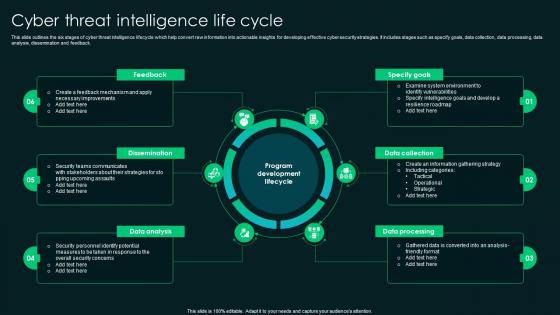
This slide outlines the six stages of cyber threat intelligence lifecycle which help convert raw information into actionable insights for developing effective cyber security strategies.It includes stages such as specify goals, data collection, data processing, data analysis, dissemination and feedback.
People who downloaded this PowerPoint presentation also viewed the following :
Cyber Threat Intelligence Life Cycle with all 6 slides:
Use our Cyber Threat Intelligence Life Cycle to effectively help you save your valuable time. They are readymade to fit into any presentation structure.





FAQs for Cyber Threat
So you'll need good data collection from different sources first. Get analysts who actually know how to make sense of all that info - not just collect it. Automation tools are a must because doing this stuff manually will absolutely destroy your team (learned that one the hard way). Focus on threat hunting, helping with incidents, and longer-term planning. Oh and storage - you're gonna have SO much data to deal with. Start by figuring out what threats actually matter to your company. Then build everything around those priorities. Make sure you have clear ways to get intel to the right people when they need it.
So tactical intel is like the urgent stuff - malware signatures, sketchy IP addresses you gotta block right now. Operational intel covers more ground, showing you attack patterns over weeks or months so your SOC can spot campaigns. Strategic intel? That's the executive-level view. Geopolitical risks, industry trends, basically the stuff that'll shape your security budget next year. Honestly, most people mix these up constantly. The trick is just matching what type of intel you're sharing with who actually needs it and when they need it.
So threat intelligence is basically giving your incident response team the backstory when stuff hits the fan. You're not just staring at "weird network traffic" anymore - you actually know who's probably behind it, what they usually do, and what they're hunting for. It's like having cheat codes for the attackers' playbook, which honestly makes everything so much faster. You can figure out what needs your attention RIGHT NOW, know how to investigate properly, and make containment calls without second-guessing yourself. Oh and it makes your defenses better for next time too. Definitely get those threat feeds into your SIEM first.
OSINT is pretty solid for tracking mentions of your company across social media, forums, even dark web stuff. Google alerts are free and work great for basic monitoring. Maltego's more advanced if you want to get fancy with it. I'd honestly start with just Twitter and Reddit feeds for your industry - attackers overshare like crazy on these platforms, it's almost embarrassing how much they reveal. You'll catch early warning signs about vulnerabilities or leaked credentials way before they hit your radar otherwise. Security blogs are worth following too. Don't overwhelm yourself though - pick maybe 2-3 sources and expand from there.
Track both the day-to-day stuff and big picture metrics. Are you catching threats faster? Fewer false positives? How quick is incident response now? The strategic side matters too - does your intel actually help with security decisions and investments? But honestly, I'd focus on whether people are even reading what you produce. Dead reports collecting dust tell you everything. My take? Don't overcomplicate it right off the bat. Pick maybe 3-4 metrics that match your goals and stick with those. Way better than drowning in data you'll never analyze properly anyway.
Don't just blindly trust threat intel feeds - I learned this the hard way when our "premium" source fed us garbage data for weeks. Check your sources' track records first. How accurate have they been? Cross-reference everything across multiple feeds because even reliable sources mess up sometimes. We set up quick validation processes to test indicators against our own environment and known-good databases. Short story: one feed kept flagging legitimate CDN traffic as malicious. Regular reviews help too - dump the unreliable sources and put that budget toward better ones. Trust but verify, basically.
Ugh, the data format mess is probably your worst nightmare - SIEM speaks one language, threat feeds come in like five others. False positives will drive your analysts absolutely insane, trust me on this one. Getting tools to actually communicate? Good luck with that. You'll spend forever figuring out which intel sources even matter for your setup. Oh, and alert fatigue is real - drowning in garbage indicators that mean nothing. Start with standardizing how you ingest data first. Then tune those correlation rules to cut the noise down, otherwise you're just creating more headaches for everyone.
Look, sharing threat intel is basically like having a heads up system for cyber attacks. When companies share what they're seeing, everyone benefits from knowing what's coming down the pipeline. Your security tools can actually block stuff before it hits instead of scrambling after you're already breached. Think of it as a neighborhood watch for hackers - sounds cheesy but it genuinely works. You'll get early warnings about attacks targeting your specific industry or area. I'd start with joining some industry sharing groups or check out platforms like MISP. Even contributing small bits gets you access to really solid intelligence from other orgs.
ThreatConnect and Anomali are pretty decent for CTI stuff. MISP won't cost you anything since it's open source - honestly can't go wrong there if budget's tight. Recorded Future's solid but pricey. YARA rules will save your life for malware analysis. Maltego's great for OSINT hunting too, though the interface takes some getting used to. Pick whatever plays nice with your current tools - nobody wants another data island. I'd start with one platform first, learn it inside and out, then see what you're still missing. Way better than trying to juggle multiple systems from day one.
So threat intelligence is like having a heads up on what hackers are planning before they hit you. You'll see new attack methods, which vulnerabilities they're going after, stuff like that. Honestly way better than just reacting after you get breached. Use it to patch holes early and update your defenses. Also helps train your team on the latest phishing tricks - some of them are getting scary good tbh. Start with a couple solid threat feeds and actually read them weekly. Don't just subscribe and forget about it like I did at first lol.
Honestly, this stuff gets tricky fast. You've gotta walk that line between gathering intel and not being creepy about people's privacy. Stick to actual threats - don't just hoover up data on random folks. Legal methods only, obviously. Be super careful who you share sensitive info with too. I've seen teams accidentally help the bad guys by revealing too much about how their detection works. That's embarrassing. Also think about how your threat reports might mess with organizations or communities. Set up some ethical rules for your team and actually check if you need all that data you're collecting.
So ML and AI can really help with threat intel - they're crazy good at crunching through tons of data from different sources way faster than people can. Pattern recognition becomes automatic, spotting new threats and attack signatures without you babysitting it. Plus you get predictive stuff that forecasts attack vectors based on current trends. Honestly, the biggest win might be cutting down false positives - I hate getting buried in useless alerts. The models keep learning from new threat data too, so detection actually gets better over time. I'd start with whatever your biggest data headache is and test something there first.
Look, geopolitical stuff directly affects who's gonna come after your company and why. Critical infrastructure, defense, tech companies? State-sponsored hackers from hostile countries will definitely target you for spying or sabotage. But honestly, even random businesses get hit - like when sanctions piss off certain nations and they lash out with cyber attacks. Regional conflicts have this annoying habit of spilling into cyberspace too. Nation-state actors are way more persistent than regular cybercriminals who just jump on political bandwagons. You'll want to keep tabs on major world events and think about how they might affect your threat profile.
So threat modeling is basically your game plan for making CTI actually work for you. Map out your critical assets first - that's where I'd start anyway. Then figure out which bad actors would realistically come after your stuff instead of getting lost in those generic threat feeds (ugh, been there). You'll waste way less time this way. It connects your actual vulnerabilities to real threat data, so you're not just hoarding intelligence because someone said you should. Work backwards from what matters most to your environment and focus your collection on attack vectors that actually pose a risk to you specifically.
Start with role-specific stuff - your SOC team needs totally different intel than the C-suite. Tabletop exercises using actual threat scenarios work so much better than death-by-PowerPoint (learned that one the hard way). Regular threat briefings help teams talk through what's hitting your industry right now. But here's the thing - people need to know how to actually use the intelligence, not just read reports. Simple playbooks that link threat indicators to real actions are clutch. Oh, and make it relevant to what they do every day or they'll just zone out completely.
-
Their templates are super easy to edit and use even for the one like me who is not familiar with PowerPoint. Great customer support.
-
My team has been relying on SlideTeam’s professional PPT designs for a while now. It has greatly sped up quality work at my organization. So thanks!