Cyber Intelligence Risk Assessment Dashboard With Heat Map

Rating:
100%
Cyber Intelligence Risk Assessment Dashboard With Heat Map
Slide 1 of 7
Favourites Favourites

Try Before you Buy Download Free Sample Product

Audience Impress Your
Audience
Editable 100%
Editable
Time Save Hours
of Time
The Biggest Sale is ending soon in
0
0
:
0
0
:
0
0
Rating:
100%
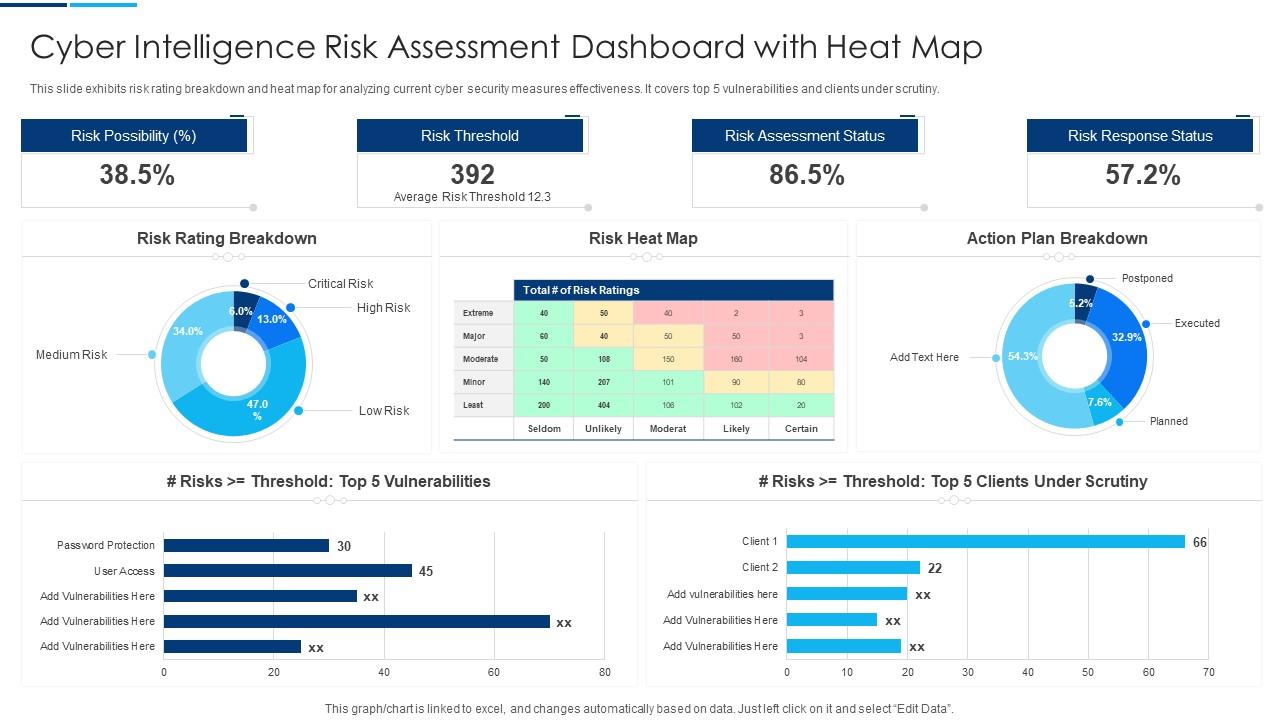
This slide exhibits risk rating breakdown and heat map for analyzing current cyber security measures effectiveness. It covers top 5 vulnerabilities and clients under scrutiny. Introducing our Cyber Intelligence Risk Assessment Dashboard With Heat Map set of slides. The topics discussed in these slides are Risk Possibility, Risk Threshold, Risk Assessment Status. This is an immediately available PowerPoint presentation that can be conveniently customized. Download it and convince your audience.

FAQs for Cyber Intelligence Risk Assessment Dashboard

You need threat intel feeds and collection tools, obviously. But honestly, getting executive buy-in is like 80% of winning this battle upfront. Skilled analysts are huge too - they turn all that raw data into stuff you can actually act on. Make sure whatever you pick plays nice with your current security setup. I'd start by figuring out your biggest threat vectors first, then build collection around those. Clear processes for sharing intel across teams matter more than people think. The real magic? It's when your tech and human expertise actually work together to make sense of what threats mean for YOUR specific environment.

So basically, threat intel lets you know what bad guys are up to before they mess with your stuff. Set up feeds to auto-block sketchy IPs, domains, and file hashes. Hook it into your SIEM and firewalls so everything updates automatically. Different industries get hit differently, so pick feeds that match your sector. I'd start with 2-3 solid sources and see how much better your detection gets. It's honestly one of the easier wins in security - like getting a heads up on what's coming your way instead of always playing defense.

OSINT tools are your go-to for gathering intel from public sources without anyone knowing you're looking. Shodan, Maltego, theHarvester - these let you map networks, spot vulnerabilities, and track bad actors across social platforms. You can even find leaked credentials on the dark web, which is honestly pretty scary how much stuff just sits there exposed. They help you see your attack surface the way hackers do. Definitely automate the collection part though - doing it manually will drive you nuts. It's crazy what people leave publicly accessible.

So you'll want to start with automating your threat detection and pattern recognition - ML is crazy good at spotting weird network traffic and malware signatures. The algorithms can pull indicators from tons of different sources and actually connect the dots. What's really nice is how AI speeds up incident response by auto-categorizing threats and giving you remediation suggestions. Saves your analysts from burning out honestly. I'd begin small though - maybe an AI-powered SIEM tool or threat hunting platform first? Then you can work up to the predictive stuff for getting ahead of attacks.

Honestly, I'd focus on three main areas: detection effectiveness, response times, and impact prevention. Track how many real threats your intel helps catch vs false alarms, plus how fast you go from spotting something to delivering useful info. Most teams totally skip measuring prevented incidents and cost savings - big mistake there. Also check if stakeholders actually find your reports helpful for making decisions. Mix technical stuff like mean time to detection with business impact numbers. But here's the thing - don't try measuring everything right away. Pick 2-3 metrics you can consistently track and build from there.

So basically nation-states are doing digital espionage now - way easier than the old spy stuff. They're after government secrets, military intel, economic data, you name it. Defense contractors get hit constantly. Critical infrastructure too, which honestly is pretty terrifying when you think about it. They map out vulnerabilities for future attacks or just straight-up steal whatever they can get their hands on. Plus they collect data for disinformation campaigns. If you work anywhere remotely sensitive, they're probably already poking around your networks. Better assume you're being watched and beef up security accordingly.

Honestly, the biggest headaches are gonna be consent, proportionality, and not screwing over innocent people. You're basically walking this tightrope between legitimate security stuff and privacy rights. The really tricky bit? Making sure you don't accidentally grab regular users' data when you're going after the actual bad guys. Different countries have different laws too, which makes it messier. Oh, and definitely document why you made certain calls - your legal team will thank you later. I'd also sit down with ethics folks regularly to review what you're doing.

Don't trust single sources - that's how teams get screwed over by false positives. Cross-check everything against multiple intel feeds and set up automated verification that flags stuff against known threat indicators. Honestly, I've watched too many analysts chase ghosts because they didn't verify first. Rate your sources for credibility and build in human checkpoints for the big alerts. Keep audit trails so you know where data's coming from. Test your detection accuracy regularly - and this part's crucial - create feedback loops so your team can mark bad intel and actually improve the filtering process over time.

Honestly, data overload is gonna be your biggest headache - your team gets buried under alerts they can't even process properly. Finding talent is brutal too since everyone's fighting over the same tiny group of people who actually get threat intel. Oh, and good luck integrating new tools without creating even more disconnected systems. I'd say start with just one or two things that really matter. Automate whatever you can. Training your existing people is worth way more than constantly hiring - way cheaper too. Don't try to boil the ocean right away.

So sharing threat intel is basically like having a neighborhood watch for cyber stuff. Company A gets hit with some new malware? They share those indicators so you can block it before it even touches your network. Pretty smart, right? The more orgs that participate, the faster everyone spots emerging threats. You'll get way better visibility into what's actually happening out there than trying to go it alone - which honestly feels impossible these days. Start with industry-specific sharing groups or check out STIX/TAXII platforms. It's crowdsourced defense that actually works.

So basically AI and machine learning are game-changers for processing huge amounts of threat data - way faster than doing it manually. You can automate the boring monitoring stuff and focus on actual investigations. Cloud platforms give you tons of processing power, though they're also creating new vulnerabilities you'll need to watch. IoT is making everything worse honestly, just expanding attack surfaces everywhere. The tricky part? Attackers are using these same tools against you. I'd start by figuring out which automation can help your current workflows first. Then build from there.

Set clear boundaries from day one and be upfront about what data you're collecting. Stick to public info, threat feeds, and network monitoring - avoid getting into personal employee stuff since that's where the legal headaches start. Nobody wants to be the creepy company watching everyone's every move, right? Document your current setup first and spot any privacy gaps. You'll need solid data retention policies and proper consent forms. Oh, and audit what you're actually doing with all that intel regularly. Focus on real security threats, not micromanaging people.

So strategic cyber intel is like the big picture stuff - what nation-states are up to, industry trends, long-term threats that'll shape how you think about security. Operational intel? That's more about active campaigns hitting your sector right now, understanding how these threat actors actually work and their timelines. Tactical is the immediate stuff you can act on today - IOCs, signatures, malware samples to block. Honestly, it's kinda like weather forecasting. Strategic = climate patterns, operational = this week's storm system, tactical = "grab an umbrella because it's raining." Figure out which one your team desperately needs first.

Dude, ransomware hits are actually super valuable for intel work. You get to see exactly how attackers operate - their tools, methods, the whole playbook. Every incident drops IOCs and behavioral patterns you can use to spot them next time. Failed attacks are gold too, honestly maybe even more useful since you see where they screwed up. The cool part is watching how they adapt their techniques over time - shows you gaps in your defenses before they exploit them again. Just make sure you're documenting everything and feeding it back into your detection rules. It's like reverse engineering their strategy.

So you're gonna need the tech stuff first - network security, malware analysis, threat hunting tools. Python or PowerShell too. But honestly? The analytical side is what separates good analysts from great ones. Pattern recognition, critical thinking, connecting random dots from tons of data. Don't sleep on communication skills either since you'll be explaining complex threats to executives who barely know what phishing is. Oh, and stay curious - threats change literally every day. If you're just starting out, mess around with SIEM tools and threat intel platforms to get your feet wet.

Ratings and Reviews

100% of 100
Review Form
Write a review
Most Relevant Reviews
  1. 100%

    by Clarence Mendoza

    I loved the hassle-free signup process. A few minutes and, I had this giant collection of beautiful designs.
  2. 100%

    by Donte Duncan

    I faced no difficulty while searching for the slide I wanted. Honestly, the website’s interface is easy to use and can be navigated easily!

2 Item(s)

per page: