

Smart Agriculture Dashboard With Smart Agriculture Using IoT System IoT SS V





Try Before you Buy Download Free Sample Product
 Impress Your
Audience
 100%
Editable
 Save Hours
of Time


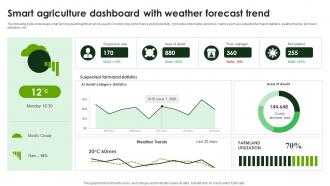
The following slide showcases smart farming dashboard that can be used to monitor crop performance and productivity. It provides information about key metrics such as suspected farmland statistics, weather trends, farmland utilization, etc.
People who downloaded this PowerPoint presentation also viewed the following :
Smart Agriculture Dashboard With Smart Agriculture Using IoT System IoT SS V with all 10 slides:
Use our Smart Agriculture Dashboard With Smart Agriculture Using IoT System IoT SS V to effectively help you save your valuable time. They are readymade to fit into any presentation structure.









FAQs for Smart Agriculture Dashboard With Smart Agriculture Using IoT System
Real-time data is where IoT shines - you'll get soil moisture, temps, crop health, weather patterns, all that stuff. Irrigation systems run themselves now. Predicting pest problems becomes way easier too. What I love most is you can ditch the guessing game with fertilizers and actually see what your soil needs. Water savings are insane, honestly. Disease detection happens early through sensors, plus livestock monitoring runs 24/7 now. ROI hits pretty fast with less waste and better yields. My advice? Test it small first - throw some soil sensors in one field and see how it goes.
Dude, soil sensors are a game changer - they track moisture, temp, pH, all that stuff in real time. No more wandering around your fields playing guessing games. The data feeds into models that can actually predict your yield, which honestly feels like cheating sometimes. You'll know exactly when to water, fertilize, whatever. I'd start with basic moisture sensors if you're just getting into this tech stuff. They're not expensive and you'll immediately see where you've been screwing up your watering schedule. It's crazy how much you miss just eyeballing everything.
So data analytics takes all those sensor readings and actually makes sense of them for you. Like, your soil sensors are constantly measuring moisture, but the analytics can spot patterns - maybe it figures out plants get stressed 2 days before the sensors even catch it by looking at weather data. Pretty cool stuff honestly. You'll get automatic alerts when something's off, better watering schedules, even predictions about your harvest. Oh and definitely start with just one section of your farm first - don't try to do everything at once or you'll go crazy with all the data.
So you stick these IoT sensors in your soil and they'll track moisture levels constantly. When plants actually need water, the irrigation kicks in automatically - no more guessing games. Weather conditions, plant stress, all that gets monitored too. Honestly, the learning aspect is pretty cool since it picks up on your crops' specific patterns over time. Your phone controls the whole thing remotely, which is handy. I'd say test it on just one section first though. No point going all-in until you see how it works for your setup.
Honestly, connectivity's gonna be your biggest headache - rural internet is still pretty awful in most places. Power's sketchy too. The upfront costs hit hard, especially for smaller operations. Most farmers aren't super techy but they're smarter than people give them credit for. Weather destroys equipment constantly, which gets expensive fast. I'd start with something small to show it actually works and pays off. Maybe team up with whoever does internet in that area? And seriously, make the interface dead simple - nobody wants to learn complicated software when they're already working 12-hour days.
So basically you stick IoT sensors around your fields and they tell you everything - soil moisture, temps, nutrient levels, crop health, the works. Super detailed stuff too, like you'll know this corner needs water while that section is already soaked. Game changer, honestly. Instead of dumping fertilizer and pesticides everywhere, you only hit the spots that actually need it. Way less waste, better yields because each plant gets what it needs. I'd start with just soil moisture sensors in one field though - you'll see the difference in your water costs right away.
Soil sensors are probably your best bet to start - they track moisture and nutrients without much hassle. Weather stations and automated irrigation are solid too, give you that instant payback. Drones are everywhere now for crop monitoring, which honestly makes sense given how much ground they cover. My buddy also swears by his livestock trackers and smart greenhouse setup. Field cameras are decent if you need remote monitoring, though I think they're kinda overrated. Most people jump straight into soil sensors and irrigation because the ROI hits fast. Start there, then add whatever fits your crops later.
So basically these IoT sensors track where your animals are, how active they're being, temperature, heart rate - all that stuff in real time. Makes it way easier to spot problems early instead of dealing with expensive vet bills later. They'll even tell you when cows are in heat for breeding, which is honestly pretty wild if you think about it. Oh and the feeding optimization based on each animal's needs is solid too. I'd probably start with just a few sensors on your best livestock first - see how useful the data actually is before you go crazy and sensor up the whole herd.
Dude, weather data is a game changer for farming decisions. Instead of crossing your fingers with yesterday's forecast, you get real-time info that actually matters. Perfect timing for irrigation, spotting pest problems early, knowing exactly when to harvest. It's wild how much guesswork disappears. You'll avoid watering right before it rains (been there), nail the humidity levels for treatments, and catch frost before it ruins everything. Start simple though - just get basic sensors for soil moisture and temp. My cousin started there and now he's obsessed with all the data.
Dude, IoT sensors are a total game-changer for sustainable farming. You get real-time data on soil moisture, nutrients, weather - the whole deal. No more overdoing it with water and fertilizers because you're flying blind. Plus you'll spot pest problems before they get crazy and need tons of pesticides. My cousin started with just soil sensors and honestly? The waste reduction alone blew his mind. Better yields, healthier soil, way less environmental damage. I mean, who doesn't want that combo? Start small though - soil monitoring is probably your best bet to test the waters first.
Dude, your farm IoT stuff is basically hacker candy if you're not careful. Most devices ship with terrible default passwords that nobody changes. Data gets transmitted without encryption, which is insane honestly. Security updates? Good luck - manufacturers barely push them out. Soil sensors sitting in remote fields make perfect targets since you won't spot weird activity for weeks. The whole industry prioritizes cool features over actually securing anything. Change those default logins ASAP and definitely keep your farm network separate from everything else. Trust me on this one.
Honestly, IoT sensors are game-changers for supply chains. You'll get live updates on everything - crop health, when stuff's ready to harvest, quality data. Makes predicting yields so much easier instead of just guessing. Temperature and humidity tracking during shipping keeps your products from going bad (learned that one the hard way). The documentation gets automated too, which saves tons of headache time. Start small though - figure out what's driving you crazy in your current process. Then see what sensors could actually fix those specific problems. Way better than trying to do everything at once.
Look, the ROI is actually pretty solid from what I've seen. John Deere's GPS systems cut seed waste by like 15-20%, which adds up fast. Netafim did something crazy in Israel - boosted yields 30% while using half the water. Cargill prevents tons of grain spoilage with their storage sensors, saves them millions. Honestly though, don't go crazy with the tech right away. Start basic with soil moisture sensors or a weather station. See what data you'll actually use before dropping serious cash on the fancy stuff. Most farmers I know wish they'd done it that way.
First thing - change those ridiculous default passwords right away. Admin/password123 is basically rolling out the welcome mat for hackers. Keep firmware updated too, which honestly is a pain but whatever. Put your smart devices on their own network so they can't mess with your main stuff if something goes wrong. Two-factor authentication is your friend - turn it on everywhere you can. Pick vendors who don't suck at security updates (you'd be surprised how many do). Monitor for weird network activity regularly. Make yourself a checklist and go through it every few months. Trust me, it beats dealing with cyberattacks during harvest.
Dude, the IoT stuff in farming is getting wild. Your sensors won't just collect data anymore - they'll actually make decisions right there in the field with AI integration. We're talking about managing individual plants instead of entire fields, which is nuts when you think about it. Drones and satellites are becoming ridiculously accurate too. Oh, and sustainability tracking is about to explode since everyone's freaking out about carbon footprints now. The biggest headache right now? All these platforms don't talk to each other, but that's finally changing. You'll want to think about scalable infrastructure sooner rather than later.
-
The templates you provide are great! They have saved me tons of time and made my presentations come alive. Thank you for this awesome product. Keep up the good work!
-
SlideTeam is a great place for PPT templates. They have many templates on a single topic. It has made my life a lot easier.