


Sourcing company powerpoint presentation slides




Try Before you Buy Download Free Sample Product
 Impress Your
 Audience
 100%
100% Editable
 Save Hours
 of Time


Sourcing usually refers to the final act of buying, which is crucial for businesses before deciding. The profile ensures that all the services and items are acquired efficiently, making processes proceed successfully. Check out our professionally designed Sourcing Company template that focuses on the company profile. An overview of the organization covers our company, company credentials, mission vision, milestones, and our management team. Services offered by the company include sourcing intelligence, global sourcing and outsourcing services, features and benefits, service model to address market needs, sourcing process, mapping management process, costs and sourcing tools, management structure, and reason for choosing our company. The sourcing management process covers the stages, flowchart, cycle, and process evaluation. The proposal aims to understand the companys sourcing process flow, which is considered smooth. Firms can present the data for becoming leading Sourcing Services Providers in sourcing the market. One can even showcase all the companys costs and sourcing tools and the process for the valuable customer base. Get access now.
People who downloaded this PowerPoint presentation also viewed the following :
Content of this Powerpoint Presentation
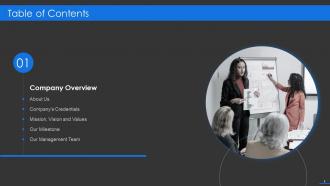
Slide 1: This slide introduces Sourcing Company. State Your Company Name and begin.
Slide 2: This slide shows Agenda of Procurement Company.
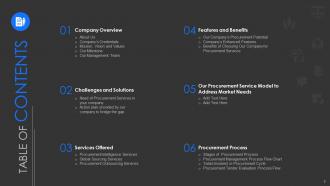
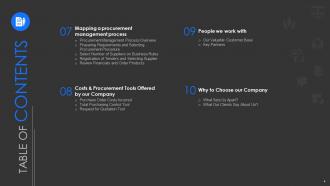
Slide 3: This slide presents Table of Content for the presentation.
Slide 4: This is another slide continuing Table of Content for the presentation.
Slide 5: This slide highlights title for topics that are to be covered next in the template.
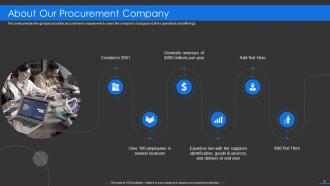
Slide 6: This slide provides the glimpse about the procurement company which covers the company’s background, etc.
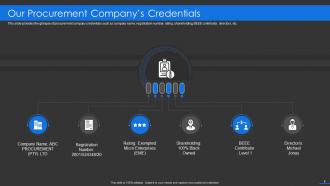
Slide 7: This slide provides the glimpse of procurement company credentials such as company name, etc.
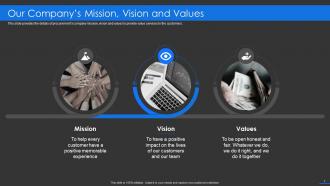
Slide 8: This slide provides the details of procurement’s company mission, vision and values to provide value services to the customers.
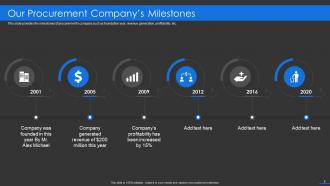
Slide 9: This slide provides the milestones of procurement’s company such as foundation year, revenue generation, profitability, etc.
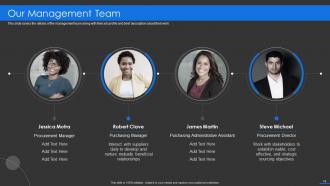
Slide 10: This slide covers the details of the management team along with their job profile and brief description about their work.
Slide 11: This slide depicts title for 'Challenges & solutions'.
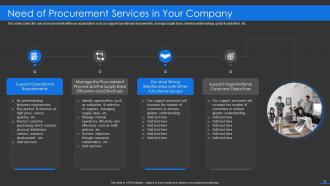
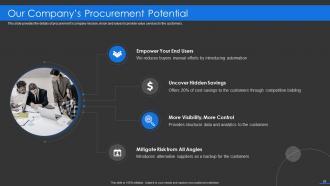
Slide 12: This slide covers the role of procurement within an organization such as support operational requirements, etc.
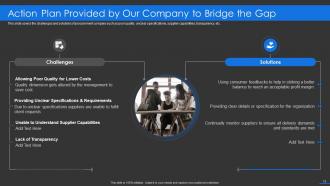
Slide 13: This slide covers the challenges and solutions of procurement company such as poor quality, etc.
Slide 14: This slide highlights title for 'Services offered'.
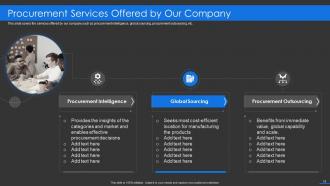
Slide 15: This slide covers the services offered by our company such as procurement intelligence, etc.
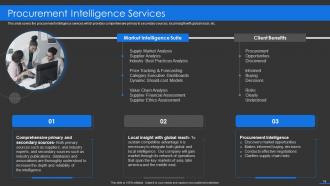
Slide 16: This slide covers the procurement intelligence services which provides local insight with global reach, etc.
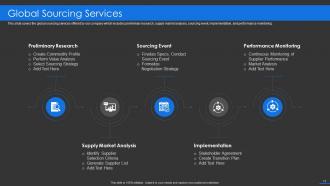
Slide 17: This slide covers the global sourcing services offered by our company which includes preliminary research, etc.
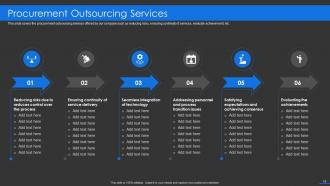
Slide 18: This slide covers the procurement outsourcing services offered by our company such as reducing risks, etc.
Slide 19: This slide displays title for 'Features & benefits'.
Slide 20: This slide provides the details of procurement’s company mission, vision, etc.
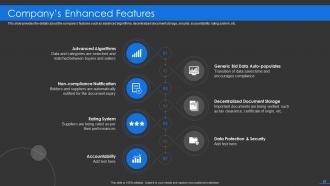
Slide 21: This slide provides the details about the company’s features such as advanced algorithms, etc.
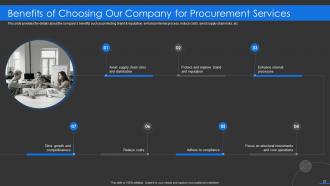
Slide 22: This slide provides the details about the company’s benefits such as protecting brand & reputation, etc.
Slide 23: This slide presents title for 'Procurement service model to address market needs'.
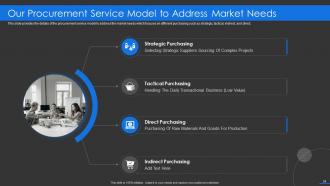
Slide 24: This slide provides the details of the procurement service model to address the market needs.
Slide 25: This slide exhibits title for 'Procurement Process'.
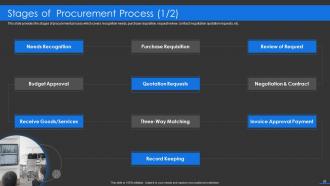
Slide 26: This slide provides the stages of procurement process which covers recognition needs, purchase requisition, etc.
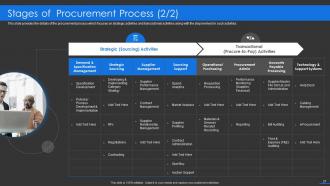
Slide 27: This slide provides the details of the procurement process which focuses on strategic and transactional activities, etc.
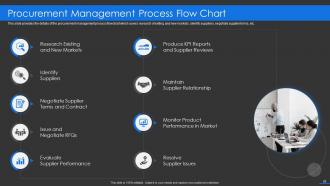
Slide 28: This slide provides the details of the procurement management process flowchart.
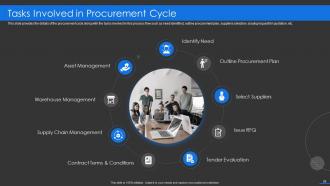
Slide 29: This slide provides the details of the procurement cycle along with the tasks involved in this process flow.
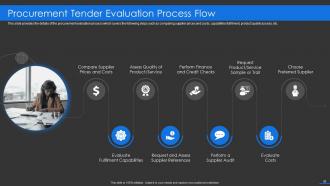
Slide 30: This slide provides the details of the procurement evaluation process which covers the following steps.
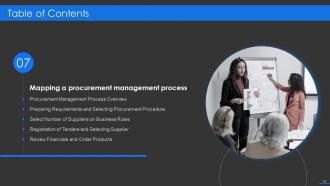
Slide 31: This slide depicts title for 'Mapping a procurement management process'.
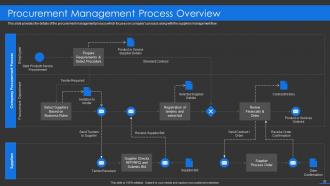
Slide 32: This slide provides the details of the procurement management process which focuses on company’s process.
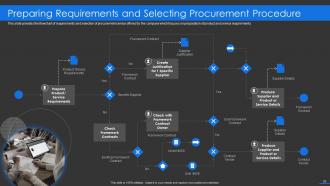
Slide 33: This slide provides the flowchart of requirements and selection of procurement service offered by the company.
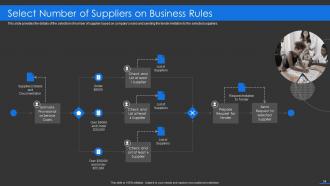
Slide 34: This slide provides the details of the selection of number of supplier based on company’s rules.
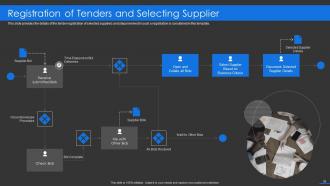
Slide 35: This slide provides the details of the tender registration of selected suppliers and steps involved.
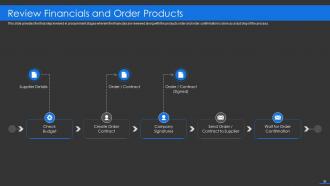
Slide 36: This slide provides the final step involved in procurement stages wherein the financials are reviewed.
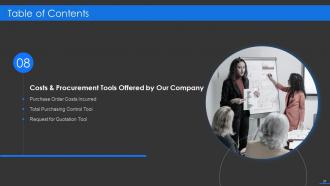
Slide 37: This slide highlights title for 'Costs & Procurement Tools Offered by Our Company'.
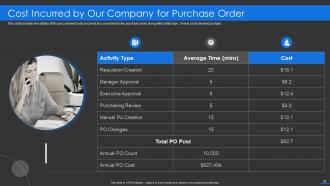
Slide 38: This slide provides the details of the procurement costs incurred by a company for the purchase order.
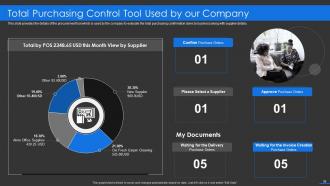
Slide 39: This slide provides the details of the procurement tool which is used by the company to evaluate the total purchasing confirmation.
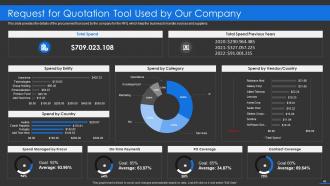
Slide 40: This slide provides the details of the procurement tool used by the company for the RFQ which help the business to handle sources and suppliers.
Slide 41: This slide illustrates title for 'People we work with'.
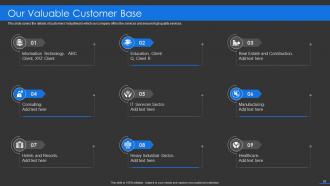
Slide 42: This slide covers the details of customers’ industries to which our company offers the services and ensure high quality services.
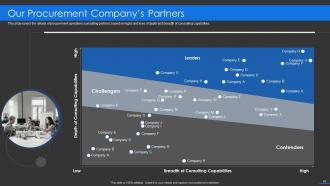
Slide 43: This slide covers the details of procurement operations consulting partners based on highs and lows of depth and breadth of consulting capabilities.
Slide 44: This slide displays title for 'Why to Choose Our Company'.
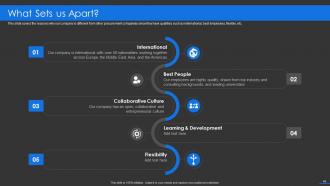
Slide 45: This slide covers the reasons why our company is different from other procurement companies.
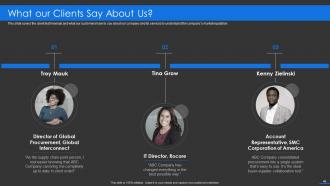
Slide 46: This slide covers the client testimonials and what our customers have to say about our company.
Slide 47: This slide displays Icons Slide for Sourcing Company.
Slide 48: This slide is titled as Additional Slides for moving forward.
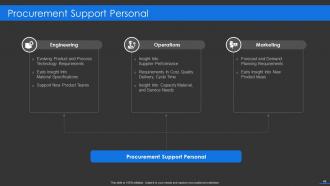
Slide 49: This slide showcases Procurement Support Personnel.
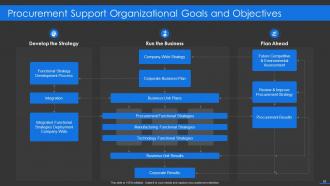
Slide 50: This slide presents Procurement Support Organizational Goal Objective.
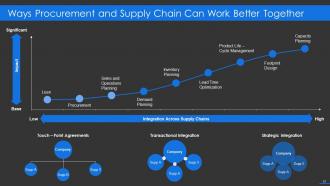
Slide 51: This slide displays Ways Procurement and Supply Chain Can Work Better Together.
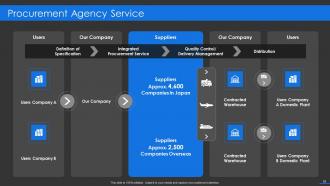
Slide 52: This slide represents Procurement Agency Service.
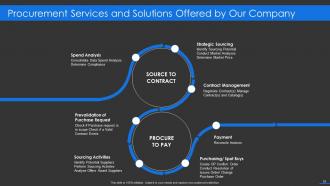
Slide 53: This slide showcases Procurement Services and Solutions Offered by Our Company.
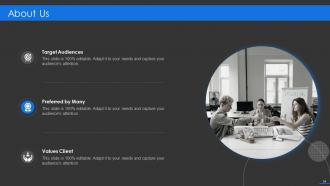
Slide 54: This is About Us slide to show company specifications etc.
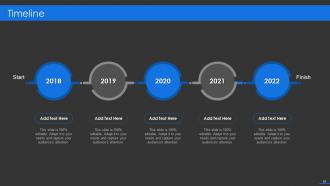
Slide 55: This is a Timeline slide. Show data related to time intervals here.
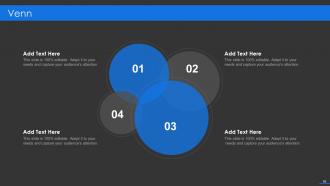
Slide 56: This slide depicts Venn diagram with text boxes.
Slide 57: This slide presents Roadmap with additional textboxes.
Slide 58: This is Our Mission slide with related imagery and text.
Slide 59: This slide contains Puzzle with related icons and text.
Slide 60: This is an Idea Generation slide to state a new idea or highlight information, specifications etc.
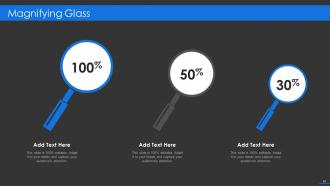
Slide 61: This slide showcases Magnifying Glass to highlight information, specifications etc
Slide 62: This is Our Target slide. State your targets here.
Slide 63: This is a Thank You slide with address, contact numbers and email address.
Sourcing company powerpoint presentation slides with all 68 slides:
Use our Sourcing Company Powerpoint Presentation Slides to effectively help you save your valuable time. They are readymade to fit into any presentation structure.






FAQs for Sourcing company
Check their track record first - what industries have they worked with? Get client references too. Communication is massive since you'll be going back and forth constantly. Their quality control better be solid because defective stuff showing up is a nightmare (trust me on this one). Location affects shipping costs and timing, obviously. Financial stability matters so they don't bail halfway through your project. I'd also look into their supplier relationships and what they can actually manufacture. Honestly, get quotes from 3-4 companies and ask lots of questions upfront.
So basically, sourcing companies handle all your procurement stuff way better than you could in-house. They've got supplier connections, buying power, and teams that actually know negotiation tactics. Honestly, most companies I've seen try to do this themselves just end up overpaying. You'll get better prices, your team won't waste time on vendor calls, and they handle quality checks too. I'd start by figuring out what's causing you the biggest headaches right now - maybe just outsource those specific things first and see how it goes financially.
Honestly, tech has completely changed the sourcing game. AI can now hunt down suppliers, handle your RFPs, and even spot risks before they blow up. The data side is probably the biggest win though - you'll actually know which suppliers are crushing it and where you're bleeding money instead of just guessing. Everything connects now too, so no more bouncing between a million spreadsheets (thank god). Some platforms can literally negotiate contracts for you, which still feels weird to me. Start by looking at what manual stuff is driving you crazy right now and work backwards from there.
So good sourcing companies basically do a bunch of things at once. First they vet suppliers hard - like checking certifications, auditing facilities, all that stuff. During production they're doing inspections constantly, not waiting till the end. Quality requirements get written into contracts with penalties if things go wrong. The really good ones are kind of crazy about tracking everything (honestly sometimes feels like overkill but whatever). They keep backup suppliers too so you won't get screwed if one falls through. My advice? Ask them upfront exactly how they handle quality control - their answer will tell you a lot.
Honestly, the biggest screwup is jumping in without researching their track record first. Be super specific about what you need - vague requirements kill projects fast. Also set up regular check-ins from the start, trust me on this one. Don't skip the boring stuff like verifying their supplier network and quality processes either. Call their references, visit facilities if you can swing it. Oh and nail down your KPIs right away so everyone knows what success looks like. Sounds like a lot but it'll save you major headaches later.
They basically become your guide through all the import/export nightmare stuff - tariff codes, compliance rules, documentation. Trust me, trying to figure out certificates of origin on your own is brutal. These companies know which product classifications save you money and keep you legal. Plus they actually stay on top of changing trade laws (which happens more than you'd think). Short sentences work. But flowing ones do too when they feel natural. Find someone who specializes in whatever you're importing though. Generic sourcing companies won't know the weird specific rules for your stuff.
Track your cost savings first - that's probably why you hired them in the first place. Supplier quality stuff is key too, like defect rates and whether they actually deliver on time. How fast do they respond when something goes wrong? That can make or break you. Oh, and if your company cares about supplier diversity, definitely measure that. Contract compliance matters for protecting your ass long-term, honestly. I'd set up monthly scorecards with all this data. Makes it way easier to catch problems early instead of scrambling later when everything's on fire.
Start by mapping out who you're currently buying from and score them on sustainability stuff - you'll spot the problems fast. Prioritize vendors with real certifications like Fair Trade or B-Corp. Build actual relationships instead of just going for whoever's cheapest. Transparency matters huge now, clients totally expect it. Support local suppliers when you can (cuts down shipping emissions too). Set clear guidelines covering labor practices, environmental standards, fair wages - the whole deal. Honestly, supplier audits are kind of a pain but they're worth it.
Honestly, it's mostly about the money and connections they already have. These sourcing companies know suppliers you've never heard of and can get way better deals since they're buying for tons of clients. Your team would be starting from zero - and let's be real, procurement isn't exactly exciting work for most people. You'll save time and probably enough cash to cover their fees anyway. I'd grab quotes from maybe 3-4 companies first though, see what kind of numbers they're throwing around for your situation.
Good sourcing companies don't put all their eggs in one basket - they spread suppliers across different regions and keep tabs on market trends. When consumer tastes shift, they'll quickly switch focus or find new manufacturers. The really savvy ones build wiggle room into their contracts from day one. Market research is huge for these companies, plus they maintain connections everywhere, not just wherever's cheapest (which honestly makes sense if you think about it). You'll want partners who can actually show proof they've rolled with recent changes in your space. Flexibility beats rock-bottom pricing every time.
Okay so first thing - be upfront about your budget and timeline from the start. Nobody likes surprises later. Pay your invoices on time too (I know it sounds obvious but apparently some companies are terrible at this). Get to know their actual team members, not just whoever's trying to sell you stuff. Check in regularly even when things are going fine - builds way better relationships. Give them honest feedback on how they're doing and try to give realistic forecasts for what you'll need. Oh and here's the big one: treat them like an actual partner. Share where your company's heading so they can help you plan ahead instead of just reacting to problems.
So these companies basically do all the boring homework you don't want to do - checking if suppliers are legit, financially stable, won't screw you over with quality issues. They've got backup options ready too, which is clutch because suppliers flake out way more than you'd think. Plus they track all the political drama and trade rule changes that could tank your supply chain. Honestly, I learned this the hard way last year. Point is, they spread your risk around instead of betting everything on one supplier. Way smarter than going solo.
Honestly? Time to bail when they keep missing deadlines or you're getting the same quality issues over and over. Communication shouldn't feel like pulling teeth. Their pricing went through the roof? Red flag. Can't handle your growth? Another red flag. I learned this the hard way - if they brush off your feedback or won't explain their process, they don't respect you as a client. That constant stress about whether they'll actually deliver isn't worth it. Start hunting for alternatives now, not when everything's on fire. Switching takes forever and you don't want to be stuck scrambling at the last minute.
Honestly, sourcing companies are pretty clutch for a few reasons. They've got connections you'd never find yourself - took them years to build those relationships. Cost savings are huge since they can negotiate better volumes than you ever could alone. Time-to-market speeds up too because you're not spending months researching suppliers (been there, it's painful). Quality control is another big win - they already know which suppliers are solid and which ones will screw you over. Frees up your team to actually work on important stuff instead of vendor hunting. I'd figure out what's your biggest sourcing headache right now and see if they can tackle that first.
Manufacturing and retail companies see the biggest wins with sourcing services - they're always hunting for suppliers and juggling costs. Tech companies are major users too since finding the right components at scale is honestly a pain. Fashion, automotive, and food industries rely on them heavily because margins are so tight and they need super specific suppliers. Actually, pretty much any business spending serious money on materials benefits. Oh, and here's a rough rule I've heard: if you're spending over 30% of revenue on sourcing, it's probably worth looking into.
-
Designs have enough space to add content.
-
I discovered this website through a google search, the services matched my needs perfectly and the pricing was very reasonable. I was thrilled with the product and the customer service. I will definitely use their slides again for my presentations and recommend them to other colleagues.