


Sports Proposal Powerpoint Presentation Slides




Try Before you Buy Download Free Sample Product
 Impress Your
 Audience
 100%
100% Editable
 Save Hours
 of Time


Sport is a wide field that consists of various activities and games like football, basketball, cricket, baseball, shot put, volleyball, badminton, tennis, hockey, and many more. Sports have a very positive impact on players’ bodies as it keeps them physically and mentally fit. Sports communities are responsible for organizing various tournaments and competitions for players on a district, city, national and international levels. These clubs also provide them a platform to practice and improve their skills and abilities. Sports communities need sponsors to invest in tournaments, and it might be difficult to convince them to sponsor your tournaments. However, with the assistance of our innovatively-built Sports Proposal PowerPoint Presentation Slides, you can convince your potential customers by mentioning your expert services and benefits. With the help of our aesthetically-appealing cover letter, introduce the strategic plans of your proposal. In addition, you can also provide a complete overview of your proposal by mentioning the table of contents pointwise by incorporating our topic-specific games club PPT theme. Explain the details of your proposal explicitly and elucidate the advantages by incorporating our workout center PowerPoint template. Showcase various sponsorship packages that entail gold sponsors, silver sponsors, and platinum sponsor packages concisely using our ready-to-use PowerPoint fitness center PPT slideshow. Depict the price details for each package so customers can choose the most cost-effective. Talk about the competitions entered and past club achievements to prove your worth to your customers. Exhibit your company’s vision, mission, and core values distinctively and write about the experiences of past clients by adopting our athletic club PPT design. Inform your audience about the terms and conditions of your proposal proficiently by employing our reliable exercise club PowerPoint presentation. Provide contact information at the end so they can directly get in touch with you to discuss the further process. Download our visually-engaging sports activity club PowerPoint template and impress your audience with your creative proposal.
People who downloaded this PowerPoint presentation also viewed the following :
Content of this Powerpoint Presentation
Slide 1: This slide introduces Sports Proposal. Mention Sponsership Opportunities, Event Organizer, Event Year, Event Name.
Slide 2: This slide displays Cover Letter for Sports Proposal
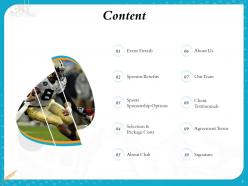
Slide 3: This slide displays Content of the presentation.
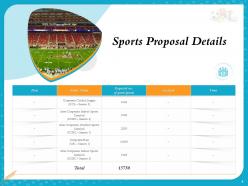
Slide 4: This slide presents Sports Proposal Details.
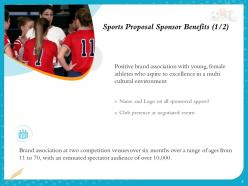
Slide 5: This slide presents Sports Proposal Sponsor Benefits.
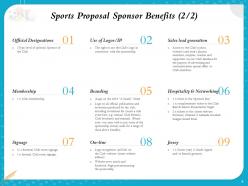
Slide 6: This slide shows Sports Proposal Sponsor Benefits.
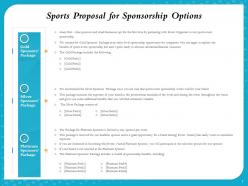
Slide 7: This slide represents Sports Proposal for Sponsorship Options.
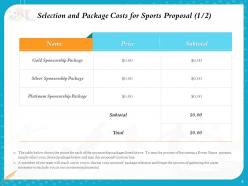
Slide 8: This slide showcases Selection and Package Costs for Sports Proposal. The table below shows the prices for each of the sponsorship packages listed above.
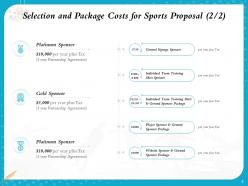
Slide 9: This slide showcases Selection and Package Costs for Sports Proposal.
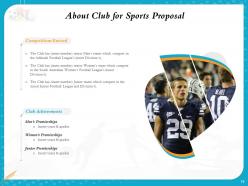
Slide 10: This slide presents Club specifications.
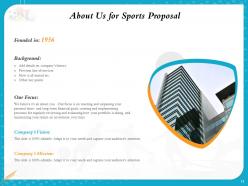
Slide 11: This is About Us slide to showcase Company specifications.
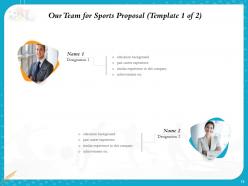
Slide 12: This is Our Team slide with Names and Designations.
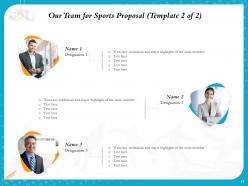
Slide 13: This is Our Team slide with Names and Designations. Write key credentials and major highlights of the team member.
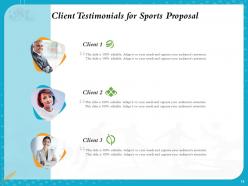
Slide 14: This slide displays Client Testimonials for Sports Proposal.
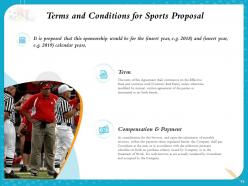
Slide 15: This slide showcases Terms and Conditions for Sports Proposal.
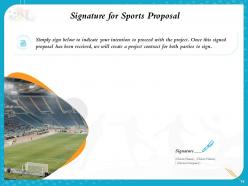
Slide 16: This slide presents Signature for Sports Proposal. Simply sign below to indicate your intention to proceed with the project. Once this signed proposal has been received, we will create a project contract for both parties to sign.
Slide 17: This is Contact Us slide with Address, Contact number and Email address.
Slide 18: This is Icons Slide for Sports Proposal.
Slide 19: This slide is titled as Additional Slides for moving forward.
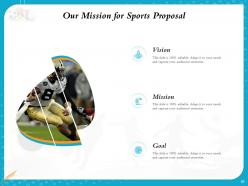
Slide 20: This is Our Mission slide to displays Vision, Mission and Goal.
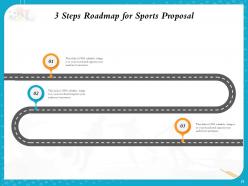
Slide 21: This slide displays 3 Steps Roadmap for Sports Proposal.
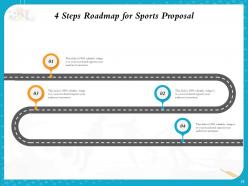
Slide 22: This slide displays 4 Steps Roadmap for Sports Proposal.
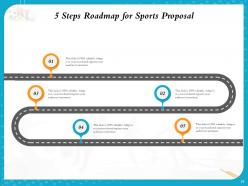
Slide 23: This slide showcases 5 Steps Roadmap for Sports Proposal.
Slide 24: This slide showcases 6 Steps Roadmap for Sports Proposal.
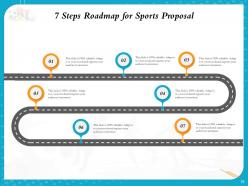
Slide 25: This slide displays 7 Steps Roadmap process.
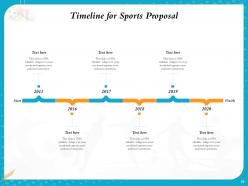
Slide 26: This slide depicts Timeline process.
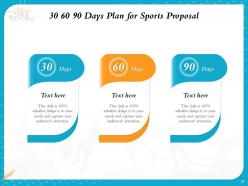
Slide 27: This is 30 60 90 Days Plan slide.
Sports Proposal Powerpoint Presentation Slides with all 27 slides:
Use our Sports Proposal Powerpoint Presentation Slides to effectively help you save your valuable time. They are readymade to fit into any presentation structure.

FAQs for Sports Proposal
Your sports proposal needs clear objectives and budget breakdown - those are non-negotiables. Start with a hook that grabs attention, like compelling stats or a problem worth solving. Don't skip the target audience analysis either. Timeline, expected outcomes, methodology - all important stuff. Honestly, visuals make or break these presentations, so throw in some charts or mockups. Budget questions always come up, so know your numbers inside out. Oh, and if there's competition in your space, address that head-on. End with concrete next steps and a strong call-to-action. You've got this!
Look, nobody wants to wade through a boring data dump when they're reviewing proposals. What you need is a good story that actually connects with people - like showing how this partnership creates amazing fan experiences or builds real community pride. Sure, numbers are important, but honestly? Stories stick way longer than spreadsheets ever will. Paint them a picture of success so they can see exactly what's in it for them and how everything plays out. I'd start building that story early and just weave your main points right through it. Makes all the difference.
Look, you need the basics first - age, income, location, gender split. Income's probably your biggest selling point since sponsors want customers who can actually buy their stuff. Geographic data is clutch for local businesses who want to see where their ad dollars are going. If it's media-related, throw in viewing patterns and engagement numbers. Honestly, go deeper if you can - jobs, hobbies, shopping habits, whatever you've got. The key is matching your data to what each sponsor actually cares about, not just dumping a spreadsheet on them.
Look at the hard numbers first - attendance, revenue, fan engagement, media buzz. Compare before and after your thing launches. Some teams go absolutely wild with analytics, which honestly makes my head spin sometimes. But the squishy stuff matters too. What are people actually saying? Did your idea fix what it was supposed to? Brand perception changes are huge. Here's the thing though - you've gotta set your baseline metrics before you even pitch anything. Otherwise when the bosses come asking for proof it worked, you're screwed and just guessing at impact.
Honestly, design can totally make or break your proposal before they even crack it open. Sports are visual by nature, so yours better look the part. Clean layouts, good graphics, maybe some infographics for the boring data stuff. Don't go crazy with colors - match whatever team or league you're pitching to. White space is your friend here, nobody wants to stare at a wall of text. I learned this the hard way once. If you can't design well yourself, find someone who can. A messy proposal basically tells them you'll handle their project the same way.
Definitely dig through old winning proposals - they're goldmines for structure and arguments that actually worked. Check out how they pitched their value and what numbers they used to sell it. Most successful ones hit this sweet spot between pulling heartstrings and showing solid ROI. Honestly, once you spot the pattern it's kinda obvious. Focus hard on executive summaries and budget sections since those usually make or break everything. The budget justification part trips up so many people but it's crucial. Build yourself a template from what works, then just tweak it for your specific project.
Honestly, you're gonna need three main chunks of data. Market stuff first - who's your audience, how many people actually play locally, what competition looks like. Then crunch the numbers on money - revenue sources, what it'll cost to run, when you'll break even (that part's always fun to calculate). Venue availability and staffing needs are huge too, plus all the permit nonsense. Such a pain but you can't skip it. Got any pilot programs or similar data? Throw in those engagement numbers. The whole point is proving people want this AND you can actually pull it off. Start collecting early though - some of this takes forever.
Look, you gotta be real about what could go wrong - budget issues, crappy weather, equipment breaking down, nobody showing up. Seriously, I've watched so many proposals tank because people made everything sound perfect. Plan for the disasters ahead of time. Got a main venue? Pick a backup. Revenue looking shaky? Think of other ways to make money. When stakeholders see you've actually thought through the nightmare scenarios, they'll trust you way more. Oh, and pad your timeline and budget from the start - things always take longer than you think.
Okay so first thing - don't go crazy with overly optimistic numbers that look like total wishful thinking. Break down your revenue streams (tickets, sponsors, concessions, whatever) and show three scenarios: conservative, realistic, optimistic. I've literally seen proposals die because the financials looked like someone's fantasy league predictions lol. Show your math and assumptions so people get how you landed on those numbers. Charts work way better than huge blocks of text - nobody wants to read that mess. Then connect each projection to actual strategies that prove you can hit those targets. Make it believable, basically.
Dude, community engagement can totally make or break this thing. Local people need to be on board since your project's gonna impact their neighborhood - think traffic, taxes, all that fun stuff. I've watched solid proposals crash and burn because they ignored this part (trust me on that one). Get residents involved early and you'll score useful feedback plus actual supporters who'll back you up. Decision-makers always want to know if the community's behind it. Oh and start with town halls or surveys ASAP - don't wait until you're already pitching to officials.
Canva's honestly your best bet here - crazy amount of sports templates and super easy to use. PowerPoint works too if you make master templates with your colors/logos already set up. I literally spent 3 hours last week messing with fonts instead of just picking a template like an idiot. Google Slides is solid for the same reason. Adobe InDesign's there if you want to get fancy with design stuff, but might be overkill? Start with Canva and tweak from there. You'll thank me later when you're not staying up till 2am formatting slides.
Here's what works for me - tell a story, don't just dump facts on them. Open with a problem they actually care about, something that hits emotionally. Then your proposal becomes the solution that saves the day. I picked this up from binge-watching way too many sports docs, but honestly it's gold. Real testimonials are huge - find success stories from similar projects and let those do the talking. Data's important but don't lead with spreadsheets. Create that classic arc where stakeholders can picture the transformation. Make them the heroes of your story, not just observers.
Track the obvious stuff first - attendance, social media buzz, revenue vs what you projected. Participant feedback is critical because pissed off athletes will tank your reputation fast. Media impressions matter too if you're trying to build brand awareness. Here's the thing though - you need baseline numbers before launching or you're just guessing later. Maybe set up a simple weekly tracker for your top 5 metrics? Then do a deeper dive 30-60 days after to see the real impact. Numbers don't lie, but they take time to tell the full story.
Biggest mistake? Being vague about budget and timeline - they hate having to guess that stuff. Also don't send some generic template that could work for literally any team. Research what they're actually working on right now and tailor it to their specific goals. I made this mistake once, but never promise unrealistic deadlines just to sound impressive. Skip the industry jargon too. Always include concrete metrics they can measure success with. Honestly, the teams that respond best are when you clearly show you've done your homework on their recent projects first.
Definitely put the green stuff front and center - sustainability is everything right now. Solar venues, zero-waste food stands, partnering with public transit. Digital tickets instead of paper ones. Water refill stations are clutch too, honestly people eat that up more than you'd expect. Don't forget carbon offsets for travel and maybe team up with some local environmental groups? Oh and compostable packaging - that's pretty standard now. Just be super specific about what you're actually doing, not just vague "eco-friendly" promises. You'll need to track and report on it all anyway.
-
Excellent products for quick understanding.