


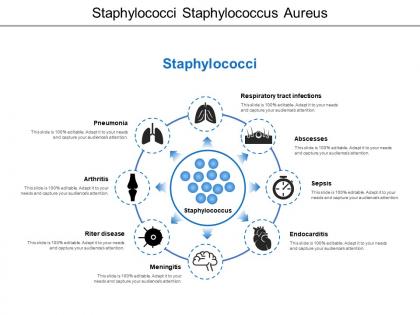
Staphylococci staphylococcus aureus




Try Before you Buy Download Free Sample Product
 Impress Your
 Audience
 100%
100% Editable
 Save Hours
 of Time


Give them a defining experience with our Staphylococci Staphylococcus Aureus. Allow them a glimpse of your essential brand.
People who downloaded this PowerPoint presentation also viewed the following :
Staphylococci staphylococcus aureus with all 5 slides:
Your efforts have got you the advantage. Our Staphylococci Staphylococcus Aureus ensure it won't fritter away.




FAQs for
So S. aureus is basically a nightmare because it hits you three ways. First, it cranks out toxins - hemolysins that wreck your cells, plus those enterotoxins if you're unlucky enough to get food poisoning. Then it's got these enzymes like coagulase and hyaluronidase that help it bulldoze through your tissues. But here's the really annoying part: it actually tricks your immune system. Protein A makes your antibodies bind backwards (how ridiculous is that?) and it builds these protective biofilms. The whole combo makes treatment way trickier, especially when infections won't quit.
So basically MRSA happens when S. aureus picks up this mecA gene from other bacteria - it's like horizontal gene transfer. The gene makes PBP2a, which is this altered protein that methicillin just can't bind to properly. Pretty sneaky if you ask me. Once it gets into a healthcare setting, it spreads like wildfire because the resistant bugs have a huge advantage when everyone's getting beta-lactams. Hand hygiene is your best friend here. Contact precautions too. Oh and don't forget environmental cleaning - that stuff lives on surfaces way longer than you'd think.
So superantigens are basically how S. aureus completely screws with your immune system. They skip normal antigen processing and directly bind to MHC class II molecules and T-cell receptors. This activates like 20% of your T-cells at once instead of the usual 0.01% - which is honestly terrifying when you think about it. All those activated T-cells dump cytokines everywhere (IL-2, TNF-α, the whole gang), creating a massive inflammatory storm. TSST-1 causes toxic shock syndrome, while enterotoxins give you brutal food poisoning. Heat won't destroy them either, so cooking doesn't always save you. Rapid shock or severe GI symptoms? Think superantigens and start supportive care ASAP.
The coagulase test is your go-to here - S. aureus comes back positive while the other staph species are usually negative. Don't bother with catalase since all staph are positive anyway (unlike strep, but that's a different story). Look for the golden color on blood agar too, though honestly it's not super reliable. Clinically, S. aureus is way nastier - think abscesses, deeper infections, patients who look actually sick. Compare that to something like S. epidermidis which just kind of sits there causing low-grade trouble. Seriously though, just run the coagulase test and you'll have your answer.
Staph aureus is everywhere, honestly. Skin infections are the big ones - cellulitis, abscesses, wound stuff, impetigo. But it gets nasty with bacteremia, endocarditis, pneumonia, bone infections. Food poisoning happens a ton because those toxins don't break down with heat (seriously, potato salad at picnics is dangerous). MRSA makes everything harder to treat obviously. Here's the thing though - staph doesn't discriminate. Any body part can get infected. If you see pus or someone's looking septic, staph's always on the differential. It's just one of those bugs you can't ignore.
So basically S. aureus forms these gross slimy layers called biofilms on medical stuff like implants and catheters. Think of it like bacteria building themselves a protective fort - antibiotics can't get through, and your immune system just gives up trying. The bacteria grow super slowly in there too, which somehow makes them even harder to kill. That's why some infections around medical devices are such a pain to treat, even with strong antibiotics. My cousin dealt with this with her knee replacement - took forever to clear up.
Oh man, S. aureus is nasty stuff. It makes toxins that don't break down even when you cook food properly - which is honestly pretty terrifying if you think about it. You'll get sick within like 1-6 hours of eating contaminated food. Most people actually carry this bacteria on their skin and in their nose, so it spreads through crappy hand washing. Dairy, meat, and anything left out too long are the usual suspects. Just wash your hands well, don't leave food sitting around, and get leftovers in the fridge fast.
So basically, your immune response decides if this stays a small skin thing or becomes serious. Neutrophils jump in first, but S. aureus is a real pain - it makes toxins that literally kill your immune cells or make them attack your own tissue. Crazy, right? When adaptive immunity works well, infection clears faster. But sometimes your immune system goes overboard and causes more damage than the actual bacteria. That's what happens with toxic shock syndrome - total nightmare scenario. Just watch patients who have weak immunity or way more systemic inflammation than the infection site would suggest.
So there's actually some cool stuff happening with S. aureus vaccines right now. Pfizer just finished Phase II trials with their four-component vaccine, and there are other candidates targeting surface proteins plus toxins. Multi-antigen approaches seem way more promising than the single-target ones we tried before. Iron-regulated surface determinant vaccines are showing decent immune responses too. Honestly, we really need this - I'm so tired of watching MRSA infections get harder to treat. The Pfizer results should be interesting to watch, especially if you're dealing with high-risk patients. Finally feels like we might have better options than just more antibiotics.
So basically S. aureus spreads through direct contact - infected patients, contaminated surfaces, whatever. Your hands are literally the main culprit here. Healthcare workers accidentally carry it patient to patient on hands, scrubs, equipment. Hand hygiene is huge - wash well or use sanitizer before and after every single patient. Gowns and gloves for MRSA cases obviously. Clean everything religiously since this stuff lives on surfaces for weeks (which is honestly gross when you think about it). Just assume every patient interaction could spread something and you'll cut transmission way down.
Look, the long-term stuff can get pretty gnarly. MRSA especially - that one's a pain because your treatment options suck. Weeks or even months later, you might see endocarditis, bone infections, or these deep abscesses that just won't quit. Some people end up with chronic infections that keep coming back no matter what you throw at them. Mortality's still sitting around 15-25% which honestly isn't great. Make sure you're doing those follow-up cultures though. Watch for any weird cardiac symptoms or bone pain - that's usually when things are going sideways.
Okay so temperature and humidity are the big ones that affect how long S. aureus sticks around. It loves body temp but can actually survive for weeks on dry surfaces - which is honestly pretty disgusting when you think about it. Humidity helps it last longer too. UV light kills it though, same with extreme temps. You'll see way more transmission in places like hospitals or gyms where it's warm and crowded. Oh and people are constantly touching stuff. For your lab work, just stay on top of disinfecting surfaces and maybe control the temp/humidity where you're storing things. That'll cut down contamination risk big time.
So the main thing you're looking for is mobile genetic elements with toxin genes. PVL is a big one - Panton-Valentine leukocidin. Also toxic shock syndrome toxin and enterotoxins that hang out on bacteriophages or plasmids. Virulent strains usually have beefed-up adhesin genes plus regulatory systems like *agr* that control when virulence factors get expressed. MRSA has the SCCmec cassette but that's more resistance than virulence really. The crazy part? These elements jump between strains like nobody's business. For surveillance work, I'd focus on detecting PVL and the major enterotoxin genes - they're your best bet for flagging the really nasty clinical isolates.
Yeah, staph skin infections usually clear up pretty well with the right meds. MSSA is the easy one - clindamycin or cephalexin work great, honestly most cases just disappear without much fuss. MRSA's more annoying though. You'll need doxycycline, clindamycin, or sometimes they have to do IV vancomycin if it's really bad. Oh and definitely get culture testing done first, especially if the person isn't getting better after like 2-3 days of treatment. That's when you know something's up.
Honestly, it's such a pain because S. aureus loves to hide behind whatever's already going wrong with these patients. Diabetics are the worst - their wounds already look sketchy and heal terribly, so you might totally miss an actual infection brewing. With immunocompromised folks, forget about seeing that classic angry red inflammation you'd normally expect. Their bodies just don't fight back the same way. Oh, and all their meds mess with lab results too, which doesn't help. My advice? Be paranoid and culture everything, even if it seems minor. Blood cultures especially - I've been surprised before by seemingly mild cases that turned nasty.
-
Unique research projects to present in meeting.
-
Nice and innovative design.