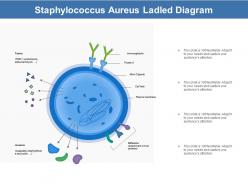
Staphylococcus aureus ladled diagram
Try Before you Buy Download Free Sample Product
Audience
Editable
of Time
Create a hunger for your ideas with our Staphylococcus Aureus Ladled Diagram. It is a feast for the eyes.
People who downloaded this PowerPoint presentation also viewed the following :
Staphylococcus aureus ladled diagram with all 5 slides:
Folks feel encouraged to give you a hearing due to our Staphylococcus Aureus Ladled Diagram. Your ideas are certain to draw attention.
FAQs for Staphylococcus
Okay so S. aureus is honestly terrifying - it's got hemolysins that literally punch holes in your cells and leukocidins targeting your immune system. The sneaky part? It forms biofilms on medical devices, making infections super persistent. Coagulase helps it hide in protective clots too. Some strains dump out enterotoxins (hello food poisoning) or TSST-1 for toxic shock syndrome. But here's what'll really mess with treatment - antibiotic resistance, especially MRSA. Once you're dealing with that, your whole approach changes. Makes me paranoid about hospital visits tbh.
MRSA basically kills your usual antibiotic options - no more methicillin or oxacillin, which used to be the standard picks. Now you're stuck with vancomycin, linezolid, or daptomycin instead. Here's the scary part though: some MRSA is getting vancomycin-resistant too (VRSA). Honestly makes me glad I don't work in the ICU anymore. You really can't wing it with empirical therapy - gotta wait for those culture results to see what'll actually work. Always grab cultures first before starting anything. Trust me, it's way better than guessing and having your patient not respond.
So S. aureus basically builds these protective slime fortresses called biofilms - think of it like bacteria cities with walls. Makes them crazy resistant to antibiotics and immune cells can't really touch them. They stick to medical devices, wounds, whatever, and just hang out way longer than they should. Pretty wild how clever bacteria can be, honestly. That's why chronic staph infections are such a pain to treat - regular antibiotics just bounce right off. You'll probably need combo therapy or something that actually breaks down the biofilm itself. Classic mistake is just throwing more standard antibiotics at it.
Okay so first thing - isolate anyone you suspect right away. Don't mess around with that. Get your hand hygiene monitoring tight and start the deep cleaning with proper disinfectants. Try to keep the same nurses with the same patients if you can swing it, helps prevent spread. Screen anyone who had close contact and maybe look into decolonization if it's MRSA. Honestly, the surveillance cultures are your best friend for catching this early. Get your outbreak investigation rolling within 24 hours and loop in infection control immediately. Basic precautions are everything here - can't slack on those.
So the latest S. aureus vaccine stuff is pretty interesting - researchers are finally going multi-target instead of trying to nail it with just one antigen. They're combining PVL, alpha-toxin, and capsular polysaccharides which makes way more sense honestly. NDV-3A did okay in Phase 2 trials (it's mostly for Candida but has some staph benefits too). The real action though? SA4Ag and those multi-component trials. Staph's just ridiculously good at dodging immune responses - always has been. That's why single-target vaccines kept failing. I'd keep an eye on those multi-component approaches if you're tracking this space.
So basically, healthy people can fight off staph pretty well - their white blood cells jump on it, they make antibodies, the whole immune system kicks into gear. But immunocompromised folks? Their defenses are just... not there. White cells don't work right, antibodies are weak, everything's slow to respond. Makes me think of my cousin who's on chemo - doctors are super paranoid about infections for good reason. These patients can get really sick from staph that wouldn't even bother you or me. Bacteremia, heart infections, the works. Prevention and jumping on treatment early is huge for them.
Staph aureus is honestly pretty scary - it can cause tons of different infections. Skin stuff like cellulitis and abscesses are common, but it also does serious invasive disease. Think bacteremia, endocarditis, pneumonia, bone infections. The tricky part? Sometimes it's the toxins causing problems, not the actual infection site. Toxic shock syndrome and food poisoning can totally throw you off since they don't look like typical staph at first. Blood cultures are your friend here. And yeah, always consider MRSA coverage if you're thinking invasive disease - better safe than sorry with this bug.
Honestly, coagulase test is your best bet - S. aureus is the only staph that's positive. All staphs are catalase positive anyway, so that won't help you differentiate. DNase works too since S. aureus makes thermostable DNase. You could try mannitol salt agar (S. aureus ferments it and turns yellow), but I'd stick with coagulase. If you need something quick, latex agglutination detects clumping factor and protein A. Oh, and use tube coagulase over slide - way more reliable for confirmation.
Honestly, staph loves crowded, sweaty places - gyms are basically perfect for it. Schools and daycare centers too since everyone's touching the same stuff constantly. The bacteria can hang out on surfaces for weeks (gross, right?), so door handles and shared equipment are major culprits. Warm, humid spots like locker rooms make it even worse. Poor ventilation doesn't help either. Your best bet is staying on top of cleaning routines and washing hands regularly, especially in those high-risk community spots.
Okay so S. aureus is basically this sneaky little bastard that's figured out multiple ways to mess with your immune system. It makes this protein A thing that grabs onto antibodies but flips them around so they can't do their job. Then it pumps out enzymes like catalase that neutralize those oxygen radicals your neutrophils throw at it. The really annoying part? It'll actually hide inside your own cells where antibodies can't even reach it. Plus these bugs build biofilms - think of them like tiny bacterial fortresses. That's exactly why MRSA won't go away easily and you need combo treatments that can actually get through all those defenses.
Oh man, S. aureus is nasty stuff. It makes these toxins that won't break down even when you cook food properly - so annoying! You'll get sick super fast too, like within a few hours of eating it. Most people carry staph bacteria on their hands and in their nose without knowing it, which is honestly kind of gross when you think about it. Dairy and meat are the usual suspects. Just keep stuff cold, don't leave food sitting out, and wash your hands a lot. Hot foods need to stay actually hot.
So basically molecular typing is like fingerprinting for bacteria - you can trace S. aureus strains back to where they came from and see how they're spreading. PFGE, MLST, and spa typing are the main techniques. MLST used to be the go-to method but honestly WGS is pretty much taking over everywhere now (way more detailed). The biggest thing is you can tell if your cases are actually related or just random coincidence, which completely changes how you handle infection control. Pick your method based on what you're trying to figure out and what you can actually afford to do.
Ugh, S. aureus is such a pain because it develops resistance crazy fast - MRSA strains basically just shrug off methicillin and other beta-lactams. Then there's the whole biofilm thing where they build these protective shields that make them almost untouchable. The bacteria also has all these sneaky virulence factors that mess with your immune system. It's honestly like that annoying game where you hit one and two more pop up. Oh, and combination therapy works better than single drugs. Keeping track of resistance patterns through surveillance helps too, but it's still frustrating to deal with.
Ugh, S. aureus is such a pain for surgery. It jacks up your infection risk big time - we're talking wound problems, deeper tissue infections, the whole mess. Recovery gets way more complicated. MRSA is the worst because your antibiotic choices become super limited. In orthopedic cases, if it reaches bone you might deal with osteomyelitis which honestly nobody wants. Some patients can even go septic if they're already vulnerable. If it shows up in preop screening, definitely push for decolonization protocols. Also ramp up the antibiotic prophylaxis - better safe than sorry with this bug.
So the big stuff right now - new antibiotics for MRSA and actually getting a decent S. aureus vaccine (seriously, how do we not have one yet?). Phage therapy's getting interesting, plus they're working on ways to break up biofilms. Immunotherapy could help your immune system fight back better. Oh, and combination treatments are promising too. The diagnostic tools they're developing are pretty cool - way faster detection. Honestly though, I'd watch the vaccine trials most closely. That and whatever new compounds they're testing. Those will probably change everything in like 10 years.
-
Innovative and Colorful designs.
-
Easily Editable.