


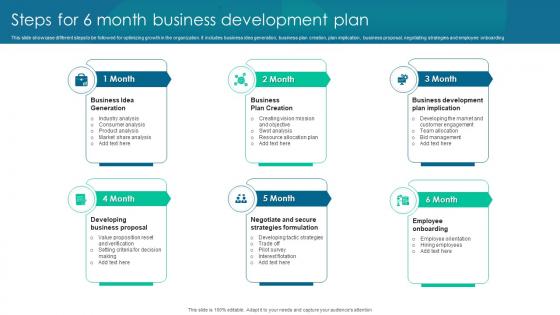
Steps For 6 Month Business Development Plan




Try Before you Buy Download Free Sample Product
 Impress Your
 Audience
 100%
100% Editable
 Save Hours
 of Time


This slide showcase different steps to be followed for optimizing growth in the organization. It includes business idea generation, business plan creation, plan implication, business proposal, negotiating strategies and employee onboarding
People who downloaded this PowerPoint presentation also viewed the following :
Steps For 6 Month Business Development Plan with all 6 slides:
Use our Steps For 6 Month Business Development Plan to effectively help you save your valuable time. They are readymade to fit into any presentation structure.





FAQs for Steps For 6 Month
Start with your target customer - seriously, this is where most people mess up. Map out who you're actually selling to and why they'd care. Set revenue goals that aren't totally unrealistic, figure out how you stack up against competitors, then get specific about lead generation tactics. Oh and partnerships too if that makes sense for your thing. You'll need measurable KPIs to track if it's working. Don't forget the boring stuff like budget and who's doing what. The whole point is making something you can actually execute, not some fancy document that sits in a drawer.
Look, market research saves you from making expensive mistakes based on hunches. Talk to your actual customers first - find out what's bugging them and what gaps your competitors aren't filling. I've watched so many startups skip this and then act shocked when nobody wants their product. Even quick surveys or casual conversations can uncover stuff you'd never think of. The insights help you figure out which opportunities are worth chasing and how to talk about your solution in ways that actually click with people. Honestly, it's way better than throwing money at ideas that sound good in theory but bomb in reality.
Dude, competitive analysis is like your sanity check before diving into any business plan. Look at your top 5-7 competitors first - what they're charging, how they position themselves, all that stuff. Without this you're basically flying blind and setting fantasy revenue goals. I've watched so many people crash because they thought they were special snowflakes in an empty market (spoiler: they weren't). It shows you where the real opportunities are. Plus you'll spot potential partners and figure out what actually makes you different. Trust me, this step saves you from looking like an idiot later.
Start by digging into your customer data - who's buying the most, spending big, staying engaged. Research each segment's market size and competition too. Honestly, going after everything at once is a waste of time and money. Focus on where you actually have advantages and can realistically compete. Make a simple scoring system for things like revenue potential and how ready each market is. Oh, and consider what resources you'll need to break in. Once you rank them all, pick your top 2-3 segments and go hard on those. Way better than spreading yourself thin across ten different markets.
Honestly, I'd stick to like 5-7 metrics tops or you'll go crazy tracking everything. Revenue growth and customer acquisition cost are obvious ones. Conversion rates from leads to actual deals too. Pipeline velocity is super useful - basically how fast stuff moves through your sales process. Partnership ROI matters if you're doing that. Oh, and don't ignore the fuzzy stuff like relationship quality even though it's annoying to measure. Market share growth is good if you can actually get decent data on it. The trick is picking ones that actually connect to what you're trying to accomplish, then check them monthly so you can pivot when things aren't working.
Dude, partnerships are seriously underrated for growing without going broke. Find companies that hit your same customers but aren't competing with you directly. Then pitch something concrete where you both win - maybe cross-promoting, sharing marketing costs, or teaming up on bigger projects. I mean, why reinvent the wheel when you can just borrow someone else's customer base? The trick is keeping it balanced though. Nobody sticks around if they're doing all the work while you reap the benefits. Start small with one solid collaboration and see how it goes.
Honestly, start by figuring out what could actually tank your business - market changes, competitors, money running out, whatever. Make backup plans for the scary stuff. Don't rely on just one revenue source either, that's asking for trouble. Track your key numbers every week, not just when you're panicking. I learned the hard way that we're all way too optimistic about timelines, so stress-test everything you think you know. Keep some emergency cash around and build buffer time into your schedule from the start. Catching problems early beats scrambling later.
Dude, you NEED a CRM for business development - I can't stress this enough. It's like your mission control for tracking prospects and clients. Without one? You'll lose leads like crazy (seriously, I've watched good salespeople fail just because of this). Track every interaction, watch your pipeline, figure out what's working and what isn't. Your whole team stays on the same page too, which is huge. Just find one that doesn't make you want to pull your hair out and actually stick with it. Otherwise you're basically throwing money away on your business development efforts.
Honestly, the worst mistake is being ridiculously optimistic about timelines and money - I've definitely done this before. Also don't make your plan so generic it's worthless. On the flip side, some people get obsessed with tiny details and never actually start anything. Research your competitors properly because that's where a lot of people get lazy. Make sure you're solving something people actually want to pay for, not just what you think is cool. Oh, and build in time to review everything regularly since stuff will change way more than you expect.
Dude, get a CRM first - it tracks everything so you don't forget to follow up with people. Game changer. Then maybe add some automation for emails and scheduling, which honestly saves me like 2 hours a day. Analytics tools are clutch too because they show you who's actually gonna buy vs who's just wasting your time. I used to try every new app that came out (shiny object syndrome is real) but now I stick to maybe 3 tools max that fix my actual problems. Social media schedulers are solid too if you're trying to stay visible without posting all day.
Look, when your biz dev isn't aligned with corporate strategy, you're basically chasing shiny objects that don't matter. Your corporate strategy is the roadmap - business development gets you there. Without alignment? You'll close deals that sound impressive but don't actually move anything forward. Worse, you might waste resources on stuff that doesn't fit the bigger picture. I've seen this happen way too often honestly. Getting aligned makes it so much easier to get leadership buy-in when you need budget or headcount. Start by matching your BD targets with whatever your company's actual priorities are.
Dude, your team needs to stay sharp or they'll get left behind. Training helps them catch new trends and sales tactics faster. Honestly? People who feel invested in actually stick around - shocking, I know. When strategies bomb (and they will), trained teams have backup plans ready to go. Your BD numbers will thank you when everyone feels confident instead of winging it. Don't overthink it though - start with monthly skill sessions or maybe quarterly updates on industry stuff. Even small training makes a huge difference in client relationships and spotting opportunities.
Honestly, networking is everything for business development. Without it, you're basically just cold-calling forever which sucks. The relationships you build become your best source of referrals and leads - way better than any marketing campaign. People trust recommendations from friends, you know? I learned this the hard way when I spent months perfecting my pitch but had nobody to pitch to. Now I spend like 30% of my time just meeting people and staying in touch. Not those weird corporate mixer things though - I mean actual relationship building. Your network also gives you insider info about what's happening in your market that you'd never find online.
Honestly, build flexibility right into your plan from day one - like, actual pivot points instead of those rigid milestones everyone loves. Do quarterly check-ins where you're really looking at market shifts and what customers are saying, not just ticking boxes. I swear, teams will stick to terrible plans just because they spent forever making them! Keep some budget unallocated for quick moves. Track stuff like customer sentiment changes, not just the usual metrics everyone obsesses over. Oh and have backup scenarios ready to go. Your plan should be more like a living document that actually changes with reality.
Start with the story - what problem are you actually solving and why should they care? Visuals and data are clutch, but don't just throw spreadsheets at people. I've sat through way too many presentations where everyone's checking their phones halfway through. Hit ROI, timeline, and risks right up front since that's literally all they're thinking about anyway. Oh, and practice beforehand - sounds obvious but you'd be surprised how many people wing it. Prepare for the inevitable "but what if..." questions. Most importantly? Be crystal clear about what you need from them. Don't make them guess.
-
Understandable and informative presentation.
-
SlideTeam’s readymade presentations have landed my unique images with my bosses in the past and it continues to reward me.