

Strategisches Management Powerpoint-Präsentationsfolien






Try Before you Buy Download Free Sample Product
 Impress Your
Audience
 100%
Editable
 Save Hours
of Time


Strategisches Management PowerPoint-Präsentationsfolien bieten zuverlässige Lösungen für eine systematische Unternehmensführung. Die Befolgung von PowerPoint-Designs beinhaltet die Formulierung und Umsetzung der wichtigsten Ziele und Initiativen des Top-Managements eines Verbandes. Gut recherchierte Themen mit ansprechenden Grafiken wurden hier für eine Bewertung der internen und externen Umgebungen, in denen die Organisation arbeitet, geschrieben. Die hier enthaltenen Themen sind: Executive Summary, Mission Vision Werte, Management Board Organigramm, Ziele für das nächste Geschäftsquartal, Aufstellen eines Wertversprechens, Aufstellen eines Wertversprechens, Ziel des Marketingplans, Identifizierung neuer Marktkanäle, Markenförderungsstrategien für Engagement, Fokus Schauen Sie sich in Ihrer Stärke Ihre Konkurrenz, den Vergleich von Produktmerkmalen, die Jahresübersicht, die Umsatzfinanzübersicht, das Verkaufs- und Leistungs-Dashboard und die Finanzprognosen an. Diese Überschriften sind für eine ständige Planung, Überwachung, Analyse und Bewertung geschrieben, damit eine Organisation ihre Ziele erreichen kann. Weitere Finanzierung, Personaldienstleistungen und Entscheidungsteams für den Operationsplan initiiert und Strategien PPT-Folien sind auch mit Diagrammblättern, Zeitleistenüberprüfung, Balken und Diagrammen PPT-Design für einen umfassenden Ansatz enthalten. Unsere PowerPoint-Präsentationsfolien für strategisches Management werden mit Ihnen wachsen. Sie werden sie bestimmt mögen.
People who downloaded this PowerPoint presentation also viewed the following :
Inhalt dieser Powerpoint-Präsentation
Folie 1 : Diese Folie stellt strategisches Management mit einer Bildsprache vor. Geben Sie Ihren Firmennamen an und beginnen Sie.
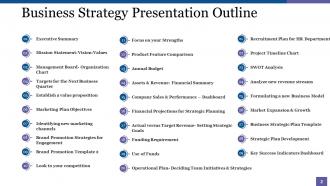
Folie 2 : Diese Folie präsentiert die Gliederung der Geschäftsstrategie mit den folgenden Punkten – Zusammenfassung, Leitbild – Vision – Werte, Vorstand – Organigramm, Ziele für das nächste Geschäftsquartal, Aufstellen eines Wertversprechens, Ziele des Marketingplans, Identifizieren von neuem Marketing Kanäle, Markenwerbungsstrategien für Engagement, Markenwerbungsvorlage 2, Blick auf Ihre Konkurrenz, Konzentration auf Ihre Stärken, Vergleich von Produktmerkmalen, Jahresbudget, Vermögenswerte und Einnahmen: Finanzübersicht, Unternehmensumsatz und -leistung – Dashboard, Finanzprognosen für die strategische Planung, Tatsächlicher Umsatz im Vergleich zum Zielumsatz – Festlegung strategischer Ziele, Finanzierungsbedarf, Mittelverwendung, operativer Plan – Entscheidung über Teaminitiativen und -strategien, Einstellungsplan für die Personalabteilung, Projektzeitplan, SWOT-Analyse, Analyse neuer Einnahmequellen, Formulierung eines neuen Geschäftsmodells, Markt Expansion und Wachstum, Vorlage für einen strategischen Geschäftsplan, Entwicklung eines strategischen Plans, Schlüsselerfolgsindikator atoren-Dashboard.
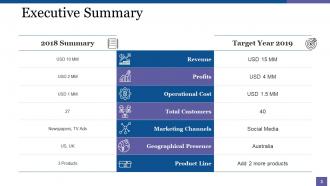
Folie 3 : Diese Folie enthält eine Zusammenfassung.
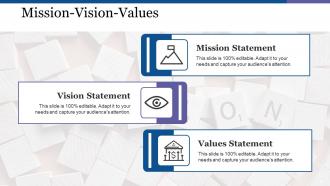
Folie 4 : Dies ist eine Mission-Vision-Values-Folie. Geben Sie sie hier an.
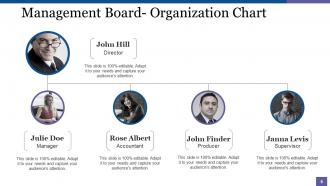
Folie 5 : Dies ist die Folie des Vorstands-Organigramms mit Name, Bezeichnung und passendem Bildfeld.
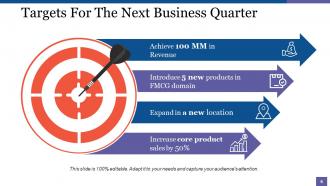
Folie 6 : Dies ist eine Folie mit den Zielen für das nächste Geschäftsquartal, um Ziele, Ziele usw.
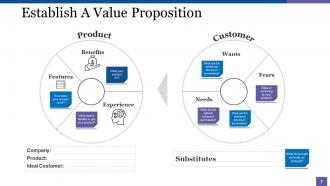
Folie 7 : Diese Folie präsentiert ein Wertversprechen für den Kunden (Wünsche, Ängste, Bedürfnisse) Produkt (Was macht Ihr Produkt?) Vorteile (Wie funktioniert Ihr Produkt?) Funktionen (Wie fühlt es sich an, Ihr Produkt zu verwenden?) Erfahrung (Was machen die Leute derzeit stattdessen?)
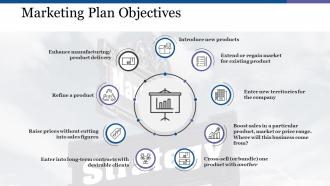
Folie 8 : Diese Folie zeigt die Ziele des Marketingplans an, wie z. B. neue Produkte einführen, Markt für bestehende Produkte erweitern oder zurückgewinnen, neue Gebiete für das Unternehmen erschließen, Verkäufe in einem bestimmten Produkt, Markt oder Preisbereich steigern. Woher soll dieses Geschäft kommen? Cross-Selling (oder Bündelung) eines Produkts mit einem anderen, Abschluss langfristiger Verträge mit begehrten Kunden, Preiserhöhung ohne Einbußen bei den Verkaufszahlen, Verfeinerung eines Produkts, Verbesserung der Herstellung/Produktlieferung.
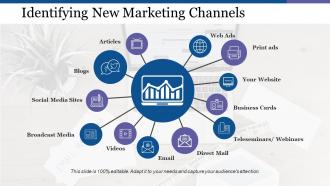
Folie 9 : Diese Folie zeigt das Identifizieren neuer Marketingkanäle wie Web-Werbung, Print-Werbung, Ihre Website, Visitenkarten, Teleseminare/Webinare, Direktmailing, E-Mail, Videos, Artikel, Social-Media-Sites, Blogs, Broadcast-Medien.
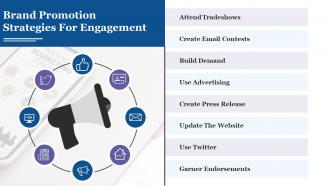
Folie 10 : Diese Folie zeigt Strategien zur Markenförderung für Engagement, wie z. B. Messen besuchen, E-Mail-Wettbewerbe erstellen, Nachfrage aufbauen, Werbung verwenden, Pressemitteilungen erstellen, die Website aktualisieren, Twitter verwenden, Empfehlungen sammeln.
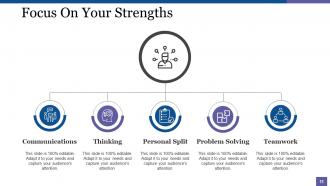
Folie 11 : Diese Folie zeigt Fokus auf Ihre Stärken für bessere Marktergebnisse. Die Schwerpunkte sind Kommunikation, Denken, persönliche Spaltung, Problemlösung, Teamwork.
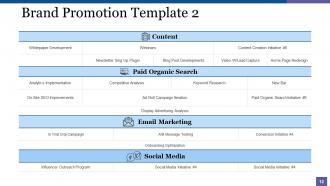
Folie 12 : Diese Folie zeigt eine Vorlage für die Markenwerbung.
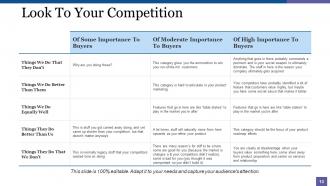
Folie 13 : Diese Folie präsentiert Look To Your Competition in tabellarischer Form.
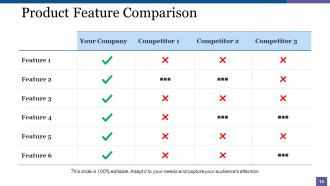
Folie 14 : Diese Folie zeigt eine Tabelle zum Vergleich der Produkteigenschaften.
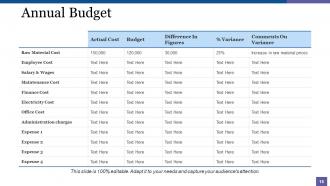
Folie 15 : Diese Folie zeigt das Jahresbudget für die Planung.
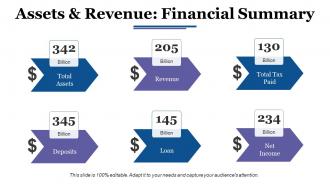
Folie 16 : Diese Folie zeigt Vermögenswerte und Einnahmen: Finanzielle Zusammenfassung mit den folgenden Punkten: Gesamtvermögen, Einnahmen, Gesamtsteuerzahl, Einlagen, Darlehen, Nettoeinkommen.
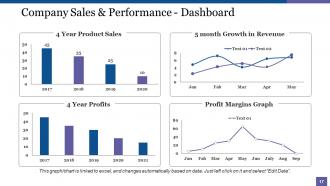
Folie 17 : Diese Folie präsentiert Unternehmensverkäufe und -leistung – Dashboard mit Gewinnmargen-Diagramm, Produktverkäufen, Umsatz- und Gewinnwachstum.
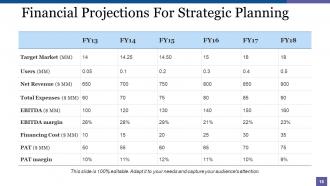
Folie 18 : Diese Folie präsentiert Finanzprognosen für die strategische Planung in Tabellenform.
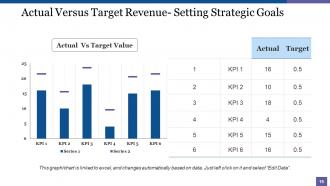
Folie 19 : Diese Folie zeigt den tatsächlichen im Vergleich zum Zielumsatz – das Setzen strategischer Ziele in Form eines Diagramms.
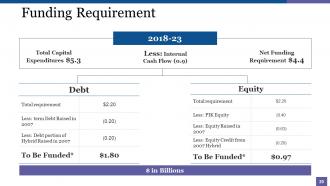
Folie 20 : Diese Folie zeigt den Finanzierungsbedarf mit den folgenden Punkten – Gesamtinvestitionskosten, abzüglich: Interner Cashflow, Nettofinanzierungsbedarf.
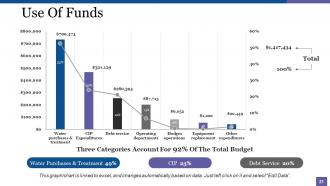
Folie 21 : Diese Folie zeigt die Mittelverwendung in Form eines Diagramms.
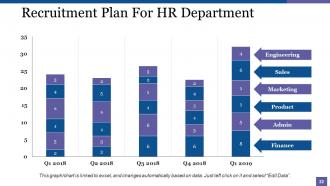
Folie 22 : Diese Folie präsentiert den Einstellungsplan für die Personalabteilung, bestehend aus den Abteilungen Technik, Finanzen, Verwaltung, Produkt, Marketing und Vertrieb.
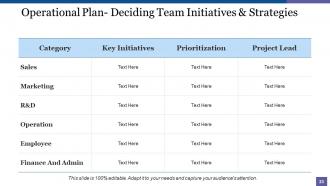
Folie 23 : Diese Folie zeigt einen Betriebsplan – Entscheidungen über Teaminitiativen und -strategien in tabellarischer Form.
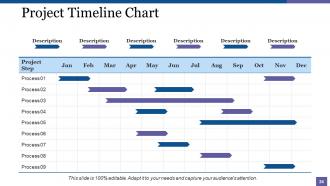
Folie 24 : Diese Folie zeigt ein Projekt-Zeitleisten-Diagramm. Präsentieren Sie hier Meilensteine, Hervorhebungsfaktoren etc.
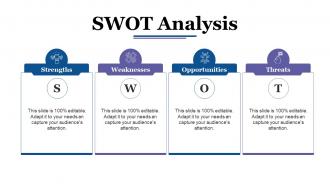
Folie 25 : Dies ist eine SWOT-Analysefolie.
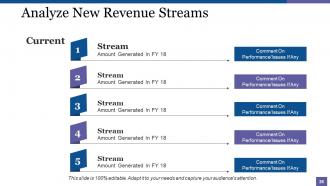
Folie 26 : Diese Folie zeigt Analysieren neuer Einnahmequellen mit Streams und Kommentaren.
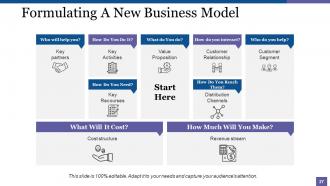
Folie 27 : Diese Folie zeigt die Formulierung eines neuen Geschäftsmodells mit den folgenden Punkten: Wie viel werden Sie verdienen? Einnahmequelle Was wird es kosten? Kostenstruktur Wer hilft Ihnen? Schlüsselpartner Wie machen Sie es? Schlüsselaktivitäten Wie interagieren Sie? Kundenbeziehung Wem helfen Sie? Kundensegment Wie erreichen Sie sie? Vertriebskanäle Wie brauchen Sie? Wichtige Ressourcen Was tun Sie? Wertversprechen.
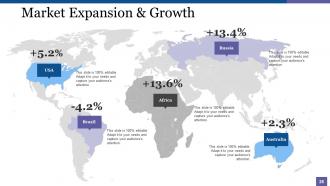
Folie 28 : Diese Folie präsentiert Marktexpansion und -wachstum auf einem Weltkartenbild, um globale Spezifikationen anzugeben.
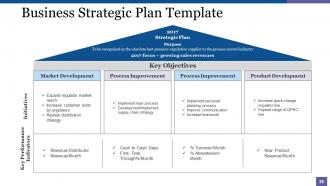
Folie 29 : Diese Folie zeigt eine Vorlage für einen strategischen Geschäftsplan mit: Strategischer Plan, Zweck, Schlüsselziele, Marktentwicklung, Prozessverbesserung, Prozessverbesserung, Produktentwicklung.
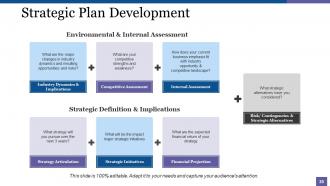
Folie 30 : Diese Folie zeigt die strategische Planentwicklung mit den Unterüberschriften – Umwelt- und interne Bewertung: (Branchendynamik und Auswirkungen Was sind die wichtigsten Veränderungen in der Branchendynamik und die daraus resultierenden Chancen und Risiken? Wettbewerbsbewertung Was sind Ihre Wettbewerbsstärken und -schwächen? Interne Bewertung Wie Passt Ihr derzeitiger Geschäftsschwerpunkt zu den Chancen der Branche und der Wettbewerbslandschaft?) Strategische Definition und Implikationen: (Strategieartikulation Welche Strategie verfolgen Sie in den nächsten 3 Jahren? Strategische Initiativen Welche Auswirkungen werden die wichtigsten strategischen Initiativen haben? Rückkehr Ihrer Strategie Risiko/ Eventualitäten & Strategische Alternativen Welche strategischen Alternativen haben Sie in Betracht gezogen?)
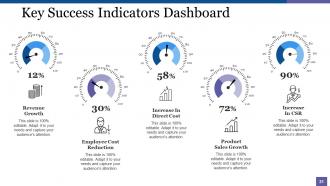
Folie 31 : Diese Folie zeigt das Dashboard mit den wichtigsten Erfolgsindikatoren, das Umsatzwachstum, Erhöhung der direkten Kosten, Produkt, Umsatzwachstum, Reduzierung der Mitarbeiterkosten, Erhöhung der CSR anzeigt.
Folie 32 : Dies ist eine Folie mit strategischen Managementsymbolen. Verwenden Sie die Symbole nach Bedarf.
Folie 33 : Dies ist eine Kaffeepause-Folie zum Anhalten. Sie können den Folieninhalt nach Bedarf ändern.
Folie 34 : Diese Folie trägt den Titel Charts & Graphs for forward. Sie können den Folieninhalt nach Bedarf ändern.
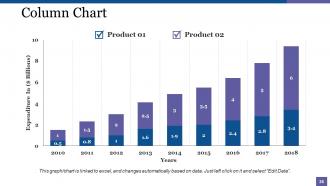
Folie 35 : Dies ist eine Säulendiagrammfolie zum Vergleich von Produkten/Einheiten, Spezifikationen usw.
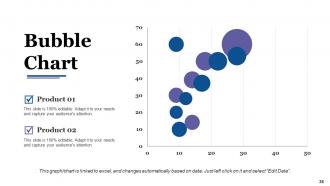
Folie 36 : Dies ist eine Blasendiagramm-Folie zum Vergleich von Produkten/Einheiten, Spezifikationen usw.
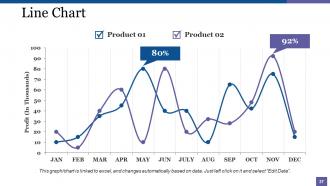
Folie 37 : Dies ist eine Liniendiagrammfolie zum Vergleich von Produkten/Einheiten, Spezifikationen usw.
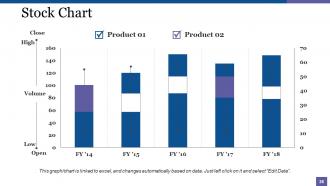
Folie 38 : Dies ist eine Aktiendiagrammfolie zum Vergleich von Produkten/Einheiten, Spezifikationen usw.
Folie 39 : Diese Folie trägt den Titel Zusätzliche Folien, um vorwärts zu gehen. Sie können den Folieninhalt nach Bedarf ändern.
Folie 40 : Dies ist unsere Missionsfolie mit Mission, Vision und Zielen. Geben Sie sie hier an.
Folie 41 : Dies ist eine Über uns-Folie. Geben Sie hier die Firmen-/Teamspezifikationen an.
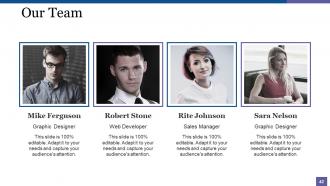
Folie 42 : Dies ist die Folie unseres Teams mit Name, Bezeichnung und Bildfeld zum Ausfüllen der erforderlichen Informationen.
Folie 43 : Dies ist unsere Zielfolie, um Ziele, Ziele usw.
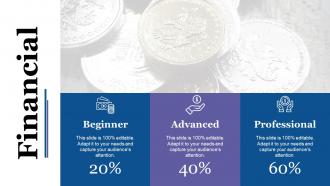
Folie 44 : Dies ist eine Folie zur Finanzbewertung, in der finanzielle Aspekte usw. angegeben werden.
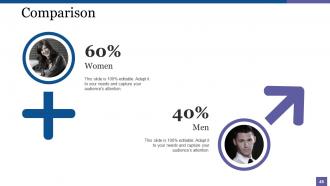
Folie 45 : Dies ist eine Vergleichsfolie für Männer und Frauen. Zustandsvergleich, Spezifikationen etc. hier.
Folie 46 : Dies ist eine Post-It-Folie, um wichtige Informationen, Veranstaltungen usw. anzuzeigen. Pinne deine Informationen hier.
Folie 47 : Dies ist eine Mind Map-Bildfolie, die Segmentierung, Informationen, Spezifikationen usw. zeigt.
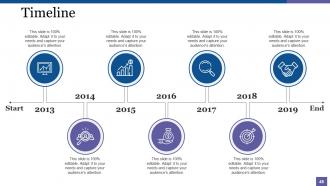
Folie 48 : Diese Folie zeigt eine Zeitleiste, um Meilensteine, wichtige Highlights usw.
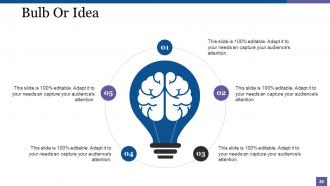
Folie 49 : Dies ist eine Glühbirnen- oder Ideen-Bildfolie, um Ideen, innovative Informationen usw. zu zeigen.
Folie 50 : Dies ist eine Dankesfolie mit Adresse# Hausnummer, Stadt, Bundesland, Kontaktnummern, E-Mail-Adresse.
Strategisches Management Powerpoint-Präsentationsfolien mit allen 50 Folien:
Reduzieren Sie die Auswirkungen der Veranstaltung mit unseren Powerpoint-Präsentationsfolien für strategisches Management. Es hilft, den Ruck abzufedern.






FAQs for Strategic Management
Honestly, most of it comes down to having clear vision/mission statements and really understanding what's happening around you - both inside your company and in the market. Companies screw this up constantly because they only look at their own stuff. Once you've got that down, you need solid strategy planning and execution. And man, execution is where so many good ideas go to die. Leadership has to be all-in and actually communicate what's happening. I'd start by figuring out where you are right now, then work through each piece step by step. The evaluation part at the end is huge too - you can't just set it and forget it.
So basically you take your mission statement and work backwards - what would actually prove you're doing what you say? Break those big ideas into quarterly goals with real numbers you can track. Here's the thing though - every single objective should connect back to your mission somehow. If it doesn't? You're probably chasing random stuff that looks cool but won't move the needle. Most companies do a gut check on this during their annual planning (some do it more often). The whole point is staying focused instead of getting distracted by every new opportunity that pops up.
So SWOT analysis is basically like taking inventory before making any big moves - you map out your strengths, weaknesses, opportunities, and threats to see where you actually stand. Think of it as your reality check before diving into strategy. The magic happens when you connect the dots between what you're good at and the opportunities out there, or figure out which weaknesses might bite you later. Honestly, most people skip this step and wonder why their plans fall apart. Just be brutally honest when you do yours - sugarcoating won't help anyone.
Track your key metrics monthly - quarterly is too slow honestly. Pick 5-7 indicators that actually matter for your goals: revenue, customer satisfaction, market share, whatever. Dashboard format works best. I'm a big fan of balanced scorecards since they cover financial stuff plus customer feedback and internal processes. Just don't overthink it at first. Someone needs to own each metric though, or they'll get ignored. Stick with the same ones for at least a year before switching things up. Oh, and start simple - you can always add complexity later once you've got the rhythm down.
Honestly, getting people on board is the hardest part. Everyone's used to doing things their way, and suddenly you're asking them to follow some new framework - they'll push back hard. Money and time are always tight too, which makes everything harder. Plus the message gets totally mangled by the time it reaches the actual workers doing the job. I'd say start with small test runs first. Get a few wins under your belt before you try to change everything at once. People need to see it actually works, you know?
Don't just tell people what you've already decided - actually get them involved from the start. Map out who really matters: customers, suppliers, even community groups, not just the usual internal suspects. Run workshops, send surveys, do coffee chats. Make it genuinely two-way where their feedback actually changes things. Honestly, I've watched so many "engagement" sessions that were just PowerPoint dog-and-pony shows! Build in feedback loops throughout and be upfront about how you used their input. People can smell fake consultation from a mile away. Give them real ways to contribute that matter.
Look, market analysis is your reality check before you blow money on something stupid. Without it, you're basically guessing what customers want and hoping competitors don't steamroll you. I've seen too many "brilliant" ideas tank because someone skipped this step. You need real data - both numbers and actual customer feedback - to test if your strategy makes sense. Think of it as your GPS for business decisions. Sure, it takes time upfront, but way better than discovering you're wrong after spending thousands. Trust me on this one.
Ugh, economic shifts are the worst - they mess with everything constantly. Your customers have less money when inflation hits. Interest rates change and suddenly your whole competitive landscape looks different. I swear, keeping up with all this stuff is like a full-time job on top of your actual job! You can't just make a plan and stick to it anymore. Build in flexibility from the start. Check economic indicators regularly, watch how people are spending, stay alert for industry changes. Honestly, I'd do quarterly reviews just focused on what's happening outside your company.
Honestly, there are a few ways to go about this. Being the cheapest option can work if you've got your operations dialed in. Or flip it and make something so unique people will pay extra for it. Personally, I think focusing on a specific niche is underrated - way better than trying to please everyone. You could also make it a pain for customers to switch to competitors, or build something where it gets more valuable as more people join (like social media). The real trick? Pick one approach and stick with it. Companies that keep changing strategies usually just confuse themselves and their customers.
Oh totally, culture can torpedo your whole strategy if they're not aligned. Like, you'll be swimming upstream the entire time. When people's values actually match what you're trying to do, everything flows so much better - they get excited instead of dragging their feet. But misaligned culture? Forget it. Try getting your team pumped about digital transformation when they're still married to the old ways of doing everything. The pushback will be brutal. Honestly, I'd check if your culture's on board before launching anything big, or you might need to work on that first.
So basically, reactive management is when you're scrambling to fix stuff after it breaks. Proactive is getting ahead of problems before they blow up in your face. Think of it this way - reactive managers are always putting out fires. They wait for the crisis, then panic. Proactive ones? They're already three steps ahead, spotting trouble early and dealing with it quietly. Honestly, most people default to reactive mode because it feels easier day-to-day. But you end up way more stressed that way. My advice? Block out time each week to actually think about what could go wrong. Sounds paranoid but it'll save your sanity later.
Honestly, you can't just slap tech onto your strategy afterward - it has to be baked in from day one. Start by figuring out what's missing between where you are now and where you want to go. Set aside actual budgets for innovation (not just leftover scraps) and get your leadership up to speed on what's happening in tech. Partner with some startups or tech companies if you can swing it. I've watched way too many businesses get completely caught off guard because they treated this stuff like some side project the IT team handles. Which reminds me, did you see what happened to Blockbuster? Anyway, make innovation a real priority, not an afterthought.
So basically you create 3-4 different "what if" stories about where your industry might head, then see how your business would handle each one. Think of it as stress-testing your strategy against multiple futures instead of just crossing your fingers on one prediction. The goal isn't nailing the future perfectly - that's impossible anyway. What you're really doing is finding moves that'll work across most scenarios and catching blind spots before they bite you. I'd start with your biggest 2-3 uncertainties and build from there. It's honestly like having backup plans for your backup plans.
Dude, going global is insane compared to staying local. MNCs are basically playing whack-a-mole with different regulations, currencies going nuts, cultural stuff that doesn't translate, political drama - the whole nine yards. Meanwhile local companies just focus on their backyard and perfect that. The tricky part? You need to stay flexible for each market but somehow keep your brand consistent. I swear it's like herding cats across continents. My old roommate worked for a company that tried expanding too fast without thinking this through - total disaster. Bottom line: if you're planning to go international, build flexibility into everything from the start.
Honestly, you've gotta hit this from every angle or it'll just fizzle out. Get your leadership team aligned first - seriously, if they're not unified, you're screwed from the start. Then mix it up: town halls, team meetings, emails, whatever works for different people. The real trick? Connect the strategy to what everyone actually does daily. People tune out when they can't see how it affects their job. Oh, and don't just announce it once and move on - I've watched so many good strategies die that way. Set up regular check-ins to keep reinforcing the message and answer questions. It takes way more repetition than you think.
-
Great product with effective design. Helped a lot in our corporate presentations. Easy to edit and stunning visuals.
-
Presentation Design is very nice, good work with the content as well.