


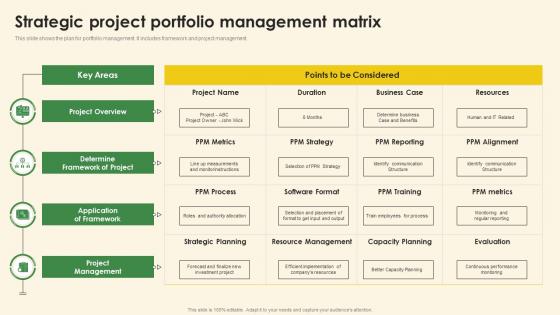
Strategic Project Portfolio Management Matrix




Try Before you Buy Download Free Sample Product
 Impress Your
 Audience
 100%
100% Editable
 Save Hours
 of Time


This slide shows the plan for portfolio management. It includes framework and project management.
People who downloaded this PowerPoint presentation also viewed the following :
Strategic Project Portfolio Management Matrix with all 6 slides:
Use our Strategic Project Portfolio Management Matrix to effectively help you save your valuable time. They are readymade to fit into any presentation structure.





FAQs for Strategic Project
Okay so the big three things: diversify your stuff, figure out your risk tolerance, and rebalance regularly. Spread everything across different sectors and countries - don't put all your eggs in one basket, you know? I'd say rebalance maybe every 3-6 months to keep your target allocations on track. The hardest part is honestly figuring out how much volatility you can stomach without freaking out and selling everything. Oh, and set clear goals from the start! Otherwise you'll just end up chasing whatever's hot that month. I learned that one the hard way lol. Once you get the basics down it's not as scary as it seems.
Diversification is basically that whole "eggs in different baskets" concept. You spread money across different stocks, sectors, maybe some international stuff too. Here's the thing - when one investment crashes, others might stay steady or even go up. Nothing moves together perfectly, which works in your favor. Yeah, you could miss out on huge gains if you went all-in on the right pick, but honestly? Most people aren't that lucky. The flip side is you won't lose everything either. It's about finding what you can actually sleep with at night while still growing your money.
Look, asset allocation is honestly way more crucial than stressing over which stocks to buy. Diversifying across stocks, bonds, real estate - that's what actually protects you. Different assets crush it at different times, so you're covered either way. There's this wild stat that like 90% of your returns come from how you split between asset classes, not picking the "perfect" investment. I learned that the hard way lol. First step? Figure out how much risk you can stomach and your timeline. Then build everything around that. It's boring but it works.
Honestly, the right tech tools will save you so much time on portfolio stuff. Real-time monitoring beats checking spreadsheets constantly, and automated rebalancing alerts are a game changer. Risk analytics become way more accurate too - I still remember the days of trying to calculate everything manually, what a nightmare. The dashboard visualizations actually help when you're explaining performance to clients (makes you look more professional tbh). Start small though. Pick whatever's eating most of your time right now - reporting or risk assessment usually - then find one tool for that specific thing first.
Look at your total return obviously, but Sharpe ratio is huge - tells you if the risk you're taking is actually worth it. Alpha and beta compare you to benchmarks, which honestly can be brutal when you realize you're not as good as you thought lol. Maximum drawdown shows your worst losing streaks too. I'd calculate this stuff monthly so you can spot patterns. Oh and don't get too caught up in short-term numbers - they'll drive you crazy.
Volatile markets mess with your portfolio balance way faster than usual. Your 60/40 split can turn into 70/30 in like two weeks instead of months - it's wild how quick things shift. Honestly, I stopped doing the whole "rebalance every quarter" thing because it felt so random. Now I just watch for when anything drifts 5% off target. Works way better than arbitrary calendar dates. During that crazy March 2020 drop, some people's allocations got completely wrecked because they weren't paying attention. Don't be that person.
Honestly, just stick to three basics and you'll be fine. Mix your investments based on how long until you retire - like 70% stocks, 30% bonds in your 40s. Then each decade, bump up the bond percentage. That old "your age in bonds" thing is kinda outdated since we're all living forever now, but whatever, the idea still works. Rebalance every quarter or when things get 5% off track. Oh, and automate as much as possible because you don't want to be that person panic-selling when the market tanks. Trust me on that one.
Here's the thing about behavioral finance - it's basically psychology for your money. Most of us get way too attached to what we paid for stocks (anchoring bias is real). Set up automatic investing so you don't try timing the market badly. Diversify beyond just companies you know well - overconfidence kills returns. Systematic rebalancing helps fight that urge to hold losers too long. Honestly, figure out your worst 2-3 biases first, then build habits around them. If you're managing money for others, understanding this stuff helps design portfolios people won't panic-sell during crashes. It's wild how much emotions drive "logical" investment decisions.
So active management is when fund managers are constantly trading, trying to beat the market with research and hunches. Passive just tracks an index like the S&P 500 - way less work. Here's the thing though: active funds charge crazy fees (like 1-2% vs 0.1% for passive) and most don't even beat the market long-term anyway. Kinda defeats the purpose, right? Passive is dirt cheap and simple, but you're stuck with market returns. I'd say start with a solid passive base, then maybe throw in some active picks if you're feeling adventurous. That's what I do anyway.
Start with the basic screens - exclude stuff like tobacco or weapons if that matters to you. Then flip it and look for companies actually doing good things. Honestly, the ESG ETFs make this so much easier than researching every single company (who has time for that?). You can also vote your shares on environmental issues if you're into that. Main thing is figuring out your approach first. Some people use ESG as a hard filter, others just factor it into their decisions. There's no wrong way really. Pick funds and tools that match whatever level you're comfortable with.
Honestly, currency swings are what'll probably mess with you the most - your investments could do great but exchange rates tank your actual returns. Political stuff is another nightmare to watch for. Policy changes, sanctions, random economic meltdowns can destroy entire markets overnight. Then there's all the different accounting rules and liquidity issues that vary by country, which honestly gets confusing fast. I'd hedge your major currency bets and spread things across regions instead of dumping everything into one place. Way too risky otherwise.
Your brain is basically your portfolio's worst enemy. We all buy when everything looks amazing (aka expensive) and panic-sell during crashes. FOMO drives you into whatever's trending, while you'll cling to losers forever because nobody wants to admit they screwed up. Plus overconfidence makes you think you don't need to diversify - been there myself. Best defense? Set up automatic systems that ignore your feelings. Schedule regular rebalancing and decide your exit points ahead of time. Takes the emotion out of it completely.
Honestly, you should check your portfolio regularly or you'll wake up one day with everything out of whack. Markets move around and suddenly your careful allocation is 70% tech stocks or whatever. I do it quarterly - any less and you're basically flying blind. Life changes too, right? Got a promotion or bought a house? Time for another look. The biggest thing though is it keeps you from freaking out when the market tanks. You've got a plan instead of just panic-selling everything. Oh, and dump anything that's been consistently terrible for you.
So macro indicators are basically your crystal ball for where the economy's headed. Rising inflation? Maybe shift into commodities or TIPS. GDP growth helps you pick between growth and value stocks. Employment numbers tell you if people actually have money to spend - pretty crucial stuff. Interest rates mess with everything though, from bonds to which sectors do well. Honestly, parsing Fed speak is an art form sometimes, those guys are so cryptic. The key is getting ahead of market moves instead of scrambling after they happen.
Think of liquidity like having cash on hand versus money tied up in stuff that's harder to sell. Your emergency fund? Keep that super accessible. But retirement money sitting there for 20+ years can go into less liquid investments that usually pay better returns. The trick is layering things so you don't get stuck selling your long-term stuff at crappy prices just because you suddenly need cash. Different goals need different levels of "how fast can I get to this money" - honestly, most people don't think about this enough until they actually need the cash.
-
Great product, helpful indeed!
-
Thank you for offering such fantastic custom design services. The team is really helpful and innovative. In a very short time, I received my personalized template.