


Strategical planning for opening a cafeteria powerpoint presentation slides




Try Before you Buy Download Free Sample Product
 Impress Your
 Audience
 100%
100% Editable
 Save Hours
 of Time


Before opening a cafeteria, you must first create a strategic business plan. This module helps your business achieve a maximum customer base in its initial years. Here is a competently designed Strategical Planning for Opening A Cafeteria template that includes the executive summary of the cafe business, including a business overview, mission, customer focus, and other information. This business plan for opening a cafe includes various slides which have coffee shop business challenges and show the solutions to overcome the challenges such as stiff competition, poor inventory management, lack of equipment, etc. This cafeteria strategical plan PPT will highlight the unique selling propositions, etc. Elucidate the customer segmentation details, competitive analysis information, and competitive advantages with the help of the presentation. Also, this strategic plan presentation helps to identify the marketing plan with promotional strategy, SWOT analysis, operational plan with functional roles, key milestones, and many more. It also lists the personnel plan for the next three years, break-even analysis, funding requirement details, financial plan, and startup expenses. Get access now.
People who downloaded this PowerPoint presentation also viewed the following :
Content of this Powerpoint Presentation
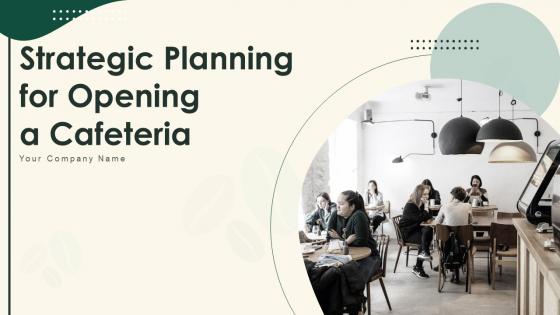
Slide 1: This slide introduces Strategic Planning for Opening a Cafeteria. State Your Company Name and begin.
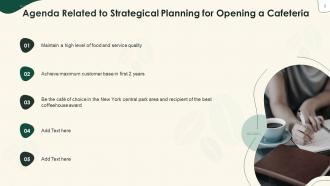
Slide 2: This slide shows Agenda Related to Strategical Planning for Opening a Cafeteria.
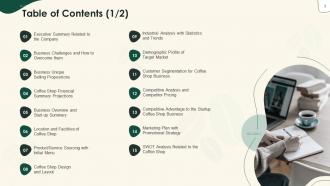
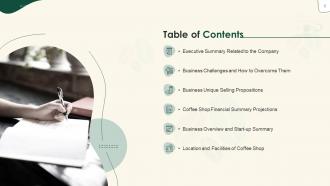
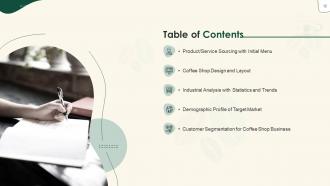
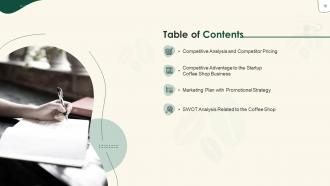
Slide 3: This slide presents Table of Content for the presentation.
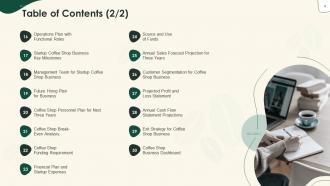
Slide 4: This is another slide continuing Table of Content for the presentation.
Slide 5: This slide shows title for topics that are to be covered next in the template.
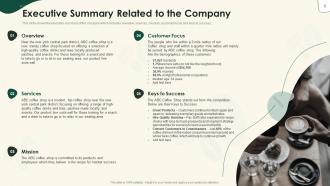
Slide 6: This slide displays executive summary of the company which includes overview, services, mission, etc.
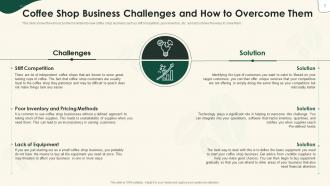
Slide 7: This slide represents Coffee Shop Business Challenges and How to Overcome Them.
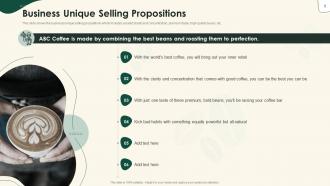
Slide 8: This slide showcases business unique selling propositions which includes created clarity and concentration.
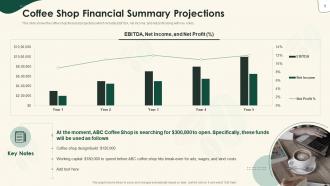
Slide 9: This slide presents coffee shop financial projections which includes EBITDA, net income, and net profit.
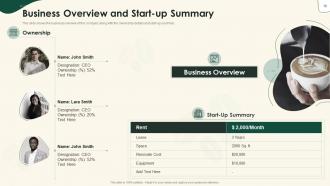
Slide 10: This slide displays business overview of the company along with the ownership details and start-up summary.
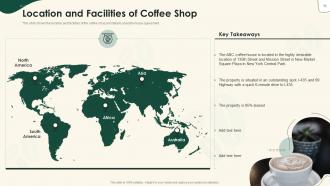
Slide 11: This slide represents location and facilities of the coffee shop and details about the lease agreement.
Slide 12: This slide shows title for topics that are to be covered next in the template.
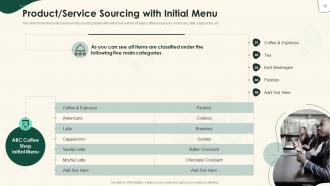
Slide 13: This slide presents product and services sourcing details with initial menu.
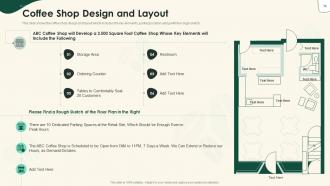
Slide 14: This slide displays coffee shop design and layout which includes the key elements, parking location along with the rough sketch.
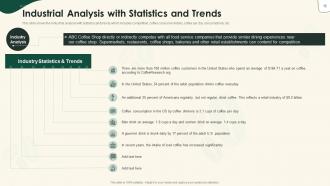
Slide 15: This slide represents industrial analysis with statistics and trends which includes competition, coffee consumer details, coffee per day consumptions, etc.
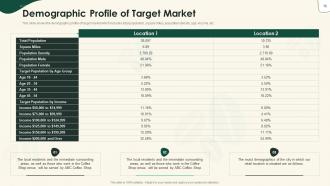
Slide 16: This slide showcases demographic profile of target market which includes total population, square miles, population density, etc.
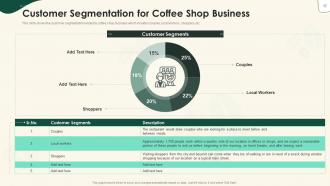
Slide 17: This slide presents customer segmentation related to coffee shop business.
Slide 18: This slide shows title for topics that are to be covered next in the template.
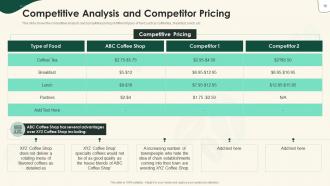
Slide 19: This slide presents competitive analysis and competitive pricing of different types of food.
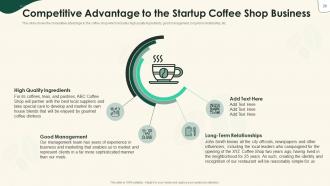
Slide 20: This slide displays Competitive Advantage to the Startup Coffee Shop Business.
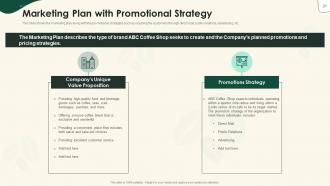
Slide 21: This slide represents marketing plan along with the promotional strategies.
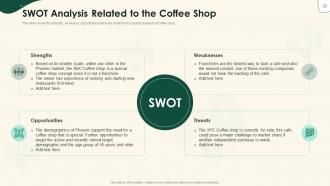
Slide 22: This slide shows the strength , weakness, opportunity and threats related to the startup business of coffee shop.
Slide 23: This slide shows title for topics that are to be covered next in the template.
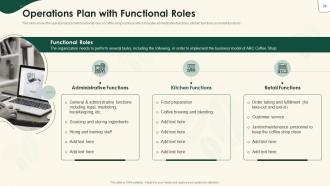
Slide 24: This slide presents operational plan with functional roles in coffee shop business.
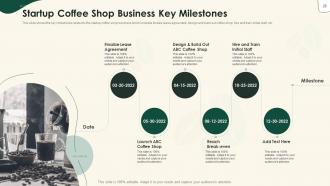
Slide 25: This slide displays key milestones related to the startup coffee shop business.
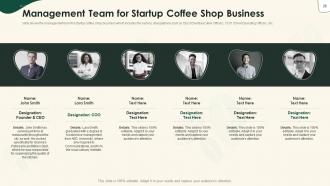
Slide 26: This slide represents Management Team for Startup Coffee Shop Business.
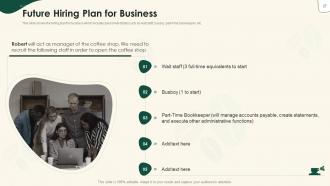
Slide 27: This slide showcases hiring plan for business which includes personnel details.
Slide 28: This slide shows title for topics that are to be covered next in the template.
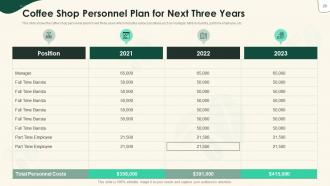
Slide 29: This slide presents Coffee Shop Personnel Plan for Next Three Years.
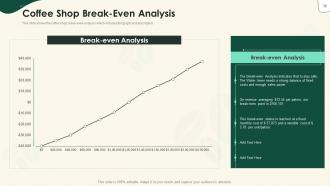
Slide 30: This slide displays coffee shop break-even analysis which includes the graph and description.
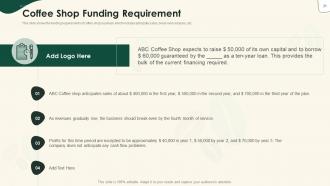
Slide 31: This slide represents funding requirements of coffee shop business.
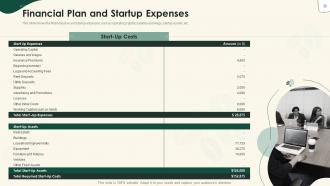
Slide 32: This slide showcases financial plan and startup expenses such as operating capital, salaries and wages.
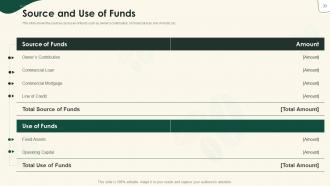
Slide 33: This slide presents sources and uses of funds such as owner’s contribution, commercial loan, line of credit, etc.
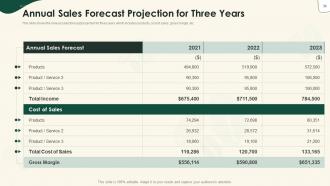
Slide 34: This slide displays Annual Sales Forecast Projection for Three Years.
Slide 35: This slide shows title for topics that are to be covered next in the template.
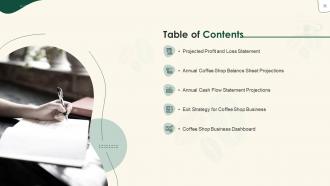
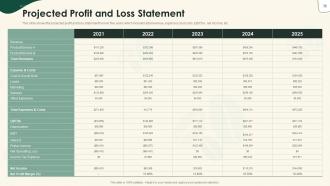
Slide 36: This slide presents projected profit and loss statement for next five years.
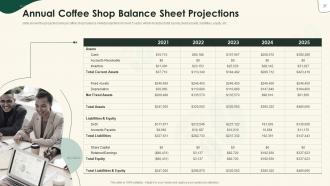
Slide 37: This slide displays Annual Coffee Shop Balance Sheet Projections.
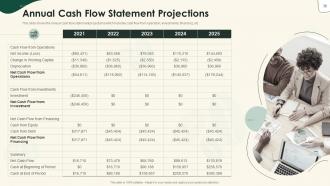
Slide 38: This slide represents annual cash flow statement projections which includes cash flow from operation, investments, financing, etc.
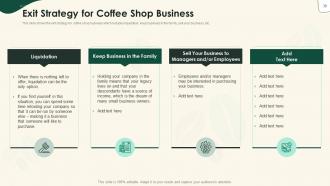
Slide 39: This slide showcases exit strategy for coffee shop business which includes liquidation, keep business in the family, sell your business, etc.
Slide 40: This slide displays Icons for Strategical Planning for Opening a Cafeteria.
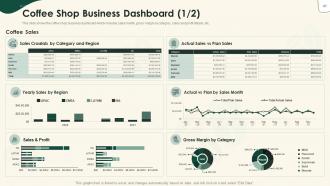
Slide 41: This slide presents coffee shop business dashboard which includes sales month, gross margin by category, sales and profit details.
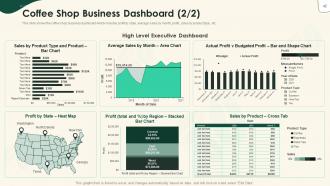
Slide 42: This is another slide continuing Coffee Shop Business Dashboard.
Slide 43: This slide is titled as Additional Slides for moving forward.
Slide 44: This is Our Mission slide with related imagery and text.
Slide 45: This is About Us slide to show company specifications etc.
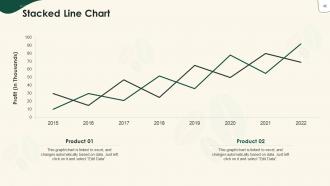
Slide 46: This slide represents Stacked line chart with two products comparison.
Slide 47: This is Our Team slide with names and designation.
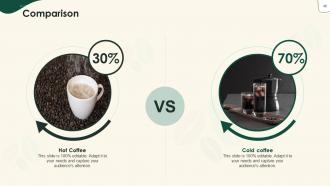
Slide 48: This is a Comparison slide to state comparison between commodities, entities etc.
Slide 49: This slide provides 30 60 90 Days Plan with text boxes.
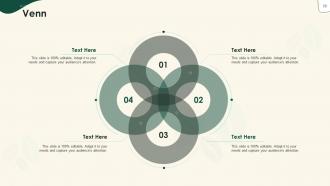
Slide 50: This slide depicts Venn diagram with text boxes.
Slide 51: This is an Idea Generation slide to state a new idea or highlight information, specifications etc.
Slide 52: This is a Timeline slide. Show data related to time intervals here.
Slide 53: This is a Thank You slide with address, contact numbers and email address.
Strategical planning for opening a cafeteria powerpoint presentation slides with all 58 slides:
Use our Strategical Planning For Opening A Cafeteria Powerpoint Presentation Slides to effectively help you save your valuable time. They are readymade to fit into any presentation structure.





FAQs for Strategical planning for opening a cafeteria
Start with the money stuff - revenue, profit margins, cost per meal. Customer feedback scores matter a lot, plus repeat customers and wait times (people hate waiting, honestly). Menu performance is key too - what's selling, what you're wasting, running out of the good stuff. Staff productivity and how well your equipment's working. Oh, and I'd probably look at the last 6 months of data to see patterns. Peak hours are usually where things fall apart if they're gonna.
Honestly, start collecting feedback everywhere - surveys, comment boxes, just chatting with customers. We totally bombed our "healthy menu" last year because nobody told us it sucked until too late lol. Don't get stuck on individual complaints though. Look for patterns instead and group similar comments together. That's where the real insights are. Pick changes based on what comes up most and what you can actually fix. Oh, and definitely tell people when you've made changes because of their feedback - they love that stuff. Monthly team reviews help too so you don't forget about it.
Look, diversifying your menu is honestly the smartest move you can make. You'll pull in vegetarians, health nuts, people craving ethnic food - basically everyone. Only serving burgers? You're losing tons of customers who want salads or dietary-specific stuff. My coworker was so picky but even she started eating at our cafeteria once they added Mediterranean bowls (those things are actually amazing). Don't just throw one random healthy option on there though. Give each group something they'd genuinely want to order, not some afterthought salad nobody touches.
Dude, tech can totally transform your cafeteria situation. Mobile ordering through POS systems is clutch - no more crazy lines and way fewer screwed up orders. Digital menu boards are a game changer too, you can update everything instantly instead of reprinting menus constantly (seriously, the printing costs add up fast). Kitchen display systems help your crew stay organized and get food out quicker. Oh, and self-service kiosks are perfect for handling basic stuff while your team actually focuses on cooking. Honestly though, just pick whatever fixes your biggest headache first, then add more tech gradually.
Track revenue per customer and food costs - that's your money stuff. Customer satisfaction and wait times show how the experience actually is. Employee turnover's huge too since miserable staff = miserable customers, and hiring constantly drains cash. Daily foot traffic and how smoothly you handle rush hours matter a ton. Honestly, peak times are where restaurants either shine or completely fall apart. Set up some basic tracking system and check monthly so you can fix problems before they get worse.
Honestly, it's all about being consistent and actually caring about your customers. Don't change your hours randomly or let food quality slip - that stuff kills trust fast. Your staff needs to not look dead inside when people walk in (I swear some places hire people who hate humans). Set up a loyalty program or weekly specials so people have a reason to pick you over that new trendy spot down the street. Here's the thing though - actually ask your regulars what they want. Like, survey them about menu ideas. Pick one suggestion and try it out. Way better than guessing what'll work.
Start tracking what actually sells so you're not over-ordering in the first place. Use veggie scraps for stocks, turn stale bread into breadcrumbs - that whole root-to-stem thing works. Smaller plates and serving spoons help too since people waste way less when portions look normal-sized. Partner with local farms or food banks for donations before stuff goes bad. Composting's decent as backup but won't fix the real problem. Oh, and put up signs about your waste efforts - people get weirdly competitive about it once they know you're paying attention. Staff too, honestly.
Start by checking out local suppliers and comparing their prices - there's usually more room to negotiate than you think. I'd focus on high-volume stuff that doesn't spoil quickly first since that's where you'll see the biggest savings. Honestly, local produce is where it's really worth it anyway because customers can actually taste the difference. Maybe aim for like 20-30% local sourcing at first? Find 2-3 solid local suppliers who can handle growing with you. Oh, and definitely track your food costs monthly alongside customer feedback so you're not just guessing if it's working.
Look, you've got some serious advantages here that outside vendors can't touch. Your location is super convenient, you already know your customers, and you can turn orders around way faster than restaurants. Plus you're cheaper than those food trucks everyone's obsessed with. Health-focused stuff is really taking off - people want to eat better at work but don't always have options. Here's what I'd do: survey your people about what they actually want versus what you're serving now. That gap? That's where you make your money. You understand their dietary needs and preferences better than any random vendor ever could.
Dude, partnering with local spots is honestly a game-changer for your cafeteria. You can't compete on scale with the big chains, but you can totally beat them on community connection. Source ingredients from nearby farms, team up with that cute bakery down the street, or work with local coffee roasters. People eat this stuff up - literally. It saves you money too, plus you get exclusive menu items they can't copy. The cross-promotion is huge since you're sharing customers. I'd start small though - maybe reach out to 2 or 3 businesses that match your vibe and suggest a simple trial run. Way better than trying to compete dollar-for-dollar with corporate cafeterias.
OK so definitely do table tents and update your digital boards like a week out. Email your regulars too - they're usually down to try new stuff. Social media is obvious but works. Here's what people forget though: your staff is huge for this. Get them hyping the specials when they're taking orders. Samples during busy times are clutch for seasonal items. Create that "limited time" vibe, you know? Oh and set up some way to track what's actually working so you're not just guessing next time. Word of mouth still beats everything else honestly.
Look, good training is basically the secret sauce for hitting your goals. Your staff get better at food safety, customer service, cooking - whatever you need. Quality goes up, customers are happier, everything runs smoother. Confident employees make such a difference too, like you can literally see it in how they interact with people. The retention thing is huge because constantly training newbies is exhausting and expensive. I'd honestly start by figuring out what skills you're missing that are holding back your biggest priorities, then focus your training there first.
Three main things to watch: food costs, labor, and equipment stuff. Aim for 30-35% of revenue on food - seriously, track your waste because that's where money just vanishes. Labor's another 25-30%, so figure out your busy times and maybe look into self-service options. Equipment replacements and renovations will hit you eventually, so plan for those. The whole balancing act is keeping quality up without pricing out your customers, which honestly gets tricky. I'd say audit your numbers every quarter - you'll catch problems before they get ugly. Peak hours staffing is where most places mess up their labor costs.
Figure out what makes your cafeteria actually special first - farm-fresh stuff, comfort food, healthy grab-and-go, whatever. Then make everything match that vibe. Your menu design, Instagram posts, even the music should tell the same story. I've literally watched places completely turn around just by getting their messaging straight! Staff uniforms matter too (sounds weird but trust me). Don't try to be everything to everyone - pick like 2-3 main themes and stick with them. It's about the whole experience people remember, not just whether the food was decent.
Honestly, community engagement makes or breaks cafeterias. Get people involved in planning and you'll actually learn what they want - dietary stuff, cultural foods, the works. Those same people become your biggest supporters when budget cuts roll around (which they always do). Regular feedback sessions help tons. Coffee chats work too if formal meetings feel weird. You'll catch trends early and build real loyalty. Otherwise people just pack lunches from home. It's way better than guessing what'll work and hoping for the best.
-
Wonderful templates design to use in business meetings.
-
Unique research projects to present in meeting.