

Synergies Diapositives de présentation PowerPoint




Try Before you Buy Download Free Sample Product
 Impress Your
Audience
 100%
Editable
 Save Hours
of Time


Ouvrez la voie à des synergies positives en utilisant nos diapositives de présentation PowerPoint Synergy. Présentez un aperçu de l'entreprise et des projections financières à l'aide de diagrammes tabulaires fournis dans cette présentation PowerPoint de synergies d'entreprise. Notre présentation PowerPoint sur la fusion de synergies vous aide à présenter non seulement le plan de synergies, mais aussi l'évaluation avant et après la synergies. Représentez le processus de fusion, la cible, le cadre, le coût et les délais à l'aide de ce jeu de diapositives PowerPoint de synergies opérationnelles créé de manière professionnelle. Notre thème de présentation PowerPoint d'acquisition d'entreprise vous aide à évaluer les opportunités de synergies dans les catégories stratégiques de croissance, d'amélioration de la rentabilité et de position stratégique. Grâce à cette présentation PowerPoint de fusions et acquisitions, vous pouvez démontrer l'objectif de synergies d'une année sur l'autre capturé à l'aide d'un graphique linéaire simple et informatif. Des icônes statistiques audacieuses vous aident à présenter les performances de synergies de fusions et acquisitions en pourcentage à l'aide de nos diapositives de présentation PowerPoint d'acquisition d'entreprise. Vous pouvez également tirer parti des cartes mentales et des diagrammes de tableau de bord inclus dans ce modèle de présentation PowerPoint de consolidation d'entreprise. Donc, téléchargez cette présentation PowerPoint de synergies visuellement saine pour illustrer votre modèle de fusions et acquisitions.
People who downloaded this PowerPoint presentation also viewed the following :
Contenu de cette présentation Powerpoint
Diapositive 1 : Cette diapositive présente Synergy. Énoncez le nom de votre entreprise et commencez.
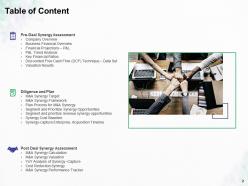
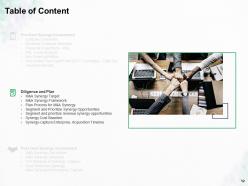
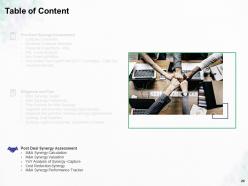
Diapositive 2 : Cette diapositive affiche la table des matières de la présentation.
Diapositive 3 : Cette diapositive affiche la table des matières de la présentation.
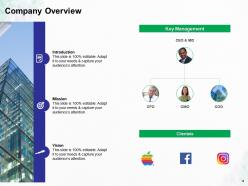
Diapositive 4 : Cette diapositive représente l'aperçu de l'entreprise.
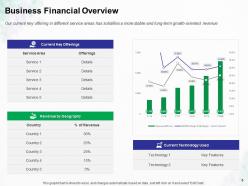
Diapositive 5 : Cette diapositive affiche l'aperçu financier des activités.
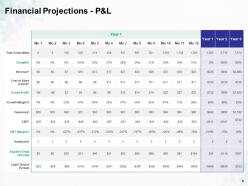
Diapositive 6 : Cette diapositive présente les projections financières - Compte de résultat.
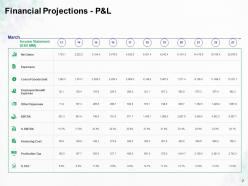
Diapositive 7 : Cette diapositive représente les projections financières - Compte de résultat.
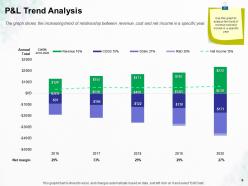
Diapositive 8 : Cette diapositive affiche l'analyse des tendances du compte de résultat.
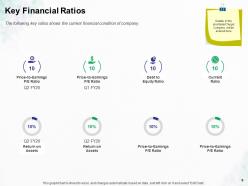
Diapositive 9 : Cette diapositive représente les ratios financiers clés.
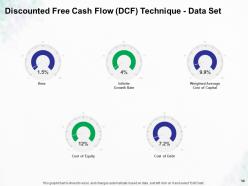
Diapositive 10 : Cette diapositive présente la technique des flux de trésorerie disponibles actualisés (DCF) - Ensemble de données.
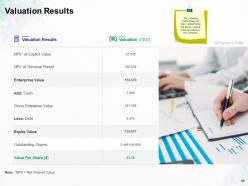
Diapositive 11 : Cette diapositive affiche les résultats de l'évaluation.
Diapositive 12 : Cette diapositive affiche la table des matières.
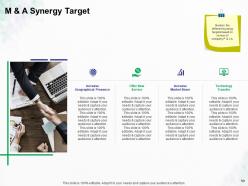
Diapositive 13 : Cette diapositive présente la cible de synergie de fusion et acquisition. Mentionnez les différentes cibles de synergie basées sur l'examen des comptes de résultat de l'entreprise.
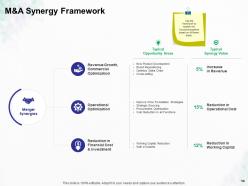
Diapositive 14 : Cette diapositive représente le cadre de synergie de fusion et acquisition.
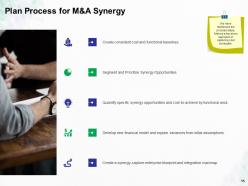
Diapositive 15 : Cette diapositive affiche le processus de planification pour la synergie de fusion et acquisition.
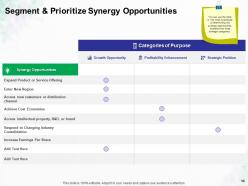
Diapositive 16 : Cette diapositive présente la segmentation et la priorisation des opportunités de synergie.
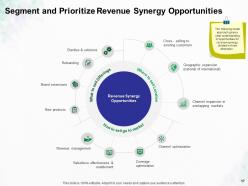
Diapositive 17 : Cette diapositive présente la segmentation et la priorisation des opportunités de synergie de revenus.
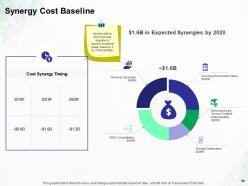
Diapositive 18 : Cette diapositive affiche le calendrier de synergie des coûts.
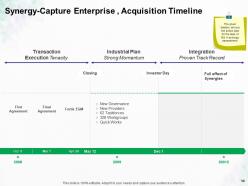
Diapositive 19 : Cette diapositive représente le calendrier d'acquisition de l'entreprise de capture de synergie.
Diapositive 20 : Cette diapositive affiche la table des matières de la présentation.
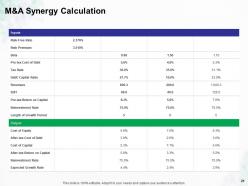
Diapositive 21 : Cette diapositive décrit le calcul de la synergie de fusion et acquisition.
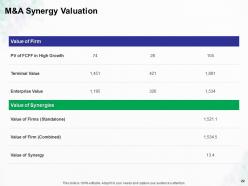
Diapositive 22 : Cette diapositive montre l'évaluation de la synergie de fusion et acquisition.
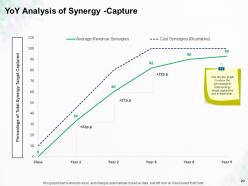
Diapositive 23 : Cette diapositive représente l'analyse annuelle de la capture de synergie.
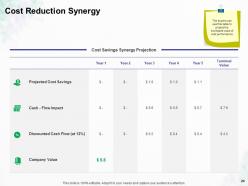
Diapositive 24 : Cette diapositive présente la synergie de réduction des coûts.
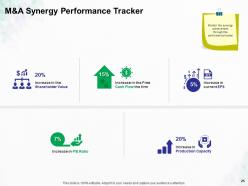
Diapositive 25 : Cette diapositive présente le suivi des performances de la synergie de fusion et acquisition. Surveillez la réalisation de la synergie à travers ce tableau de bord.
Diapositive 26 : Ceci est la diapositive des icônes de synergie.
Diapositive 27 : Cette diapositive est intitulée Diapositives supplémentaires pour aller de l'avant.
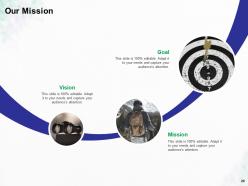
Diapositive 28 : Ceci est la diapositive Notre mission avec la mission de l'entreprise.
Diapositive 29 : Ceci est la diapositive À propos de nous pour présenter les spécifications de l'entreprise.
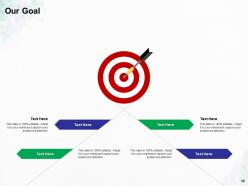
Diapositive 30 : Ceci est la diapositive Notre objectif. Énoncez les objectifs de votre entreprise.
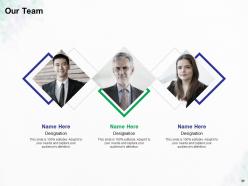
Diapositive 31 : Ceci est la diapositive Notre équipe avec les noms et les désignations.
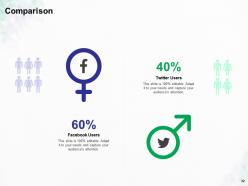
Diapositive 32 : Ceci est la diapositive de comparaison présentant une comparaison entre les utilisateurs de Facebook et de Twitter.
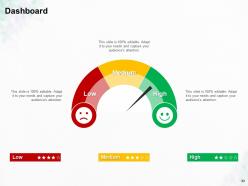
Diapositive 33 : Cette diapositive présente un tableau de bord avec des pourcentages.
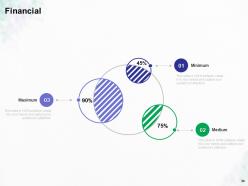
Diapositive 34 : Ceci est la diapositive financière pour présenter les éléments liés aux finances.
Diapositive 35 : Ceci est la diapositive des citations pour transmettre un message, des croyances, etc.
Diapositive 36 : Ceci est la diapositive Puzzle avec des icônes et des zones de texte.
Diapositive 37 : Ceci est la diapositive Cible. Présentez les cibles de votre entreprise.
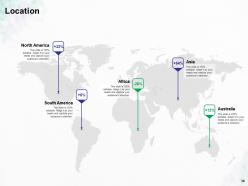
Diapositive 38 : Cette diapositive représente l'emplacement.
Diapositive 39 : Ceci est la diapositive circulaire.
Diapositive 40 : Ceci est la diapositive Venn.
Diapositive 41 : Ceci est la diapositive de la carte heuristique pour représenter les entités.
Diapositive 42 : Cette diapositive affiche des silhouettes.
Diapositive 43 : Cette diapositive présente une loupe pour mettre en évidence un contenu important.
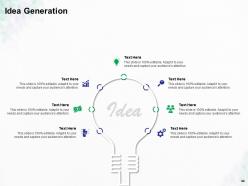
Diapositive 44 : Ceci est la diapositive de génération d'idées pour mettre en évidence des faits et des informations importants, etc.
Diapositive 45 : Ceci est la diapositive de remerciement avec l'adresse, le numéro de contact et l'adresse e-mail.
Présentation PowerPoint Synergy avec les 45 diapositives
Utilisez nos diapositives de présentation PowerPoint Synergy pour vous aider à gagner un temps précieux. Elles sont prêtes à s'intégrer dans n'importe quelle structure de présentation.

FAQs for Synergy
Honestly, it all comes down to trust and making sure people can actually talk to each other without drama. You want that vibe where everyone feels safe throwing out ideas, even weird ones. Communication has to flow naturally - none of that formal meeting BS all the time. Oh, and don't hire a bunch of clones! Get people with different skills that actually work well together. I've watched teams crash because they're all basically the same person. Set clear goals everyone buys into. When it clicks, you'll see that whole "team is stronger than individuals" thing actually happen. Map out what everyone's good at first - the partnerships usually become pretty obvious.
Honestly, most companies just assume teamwork = better results without actually proving it. Compare what your teams accomplish together vs. what they'd do solo - look at stuff like cost savings, faster launches, revenue bumps. Don't forget the softer metrics either: are people actually learning from each other? Any cool breakthrough ideas happening? The baseline thing is crucial but boring, so tons of orgs skip it (big mistake). Survey your people about cross-team knowledge sharing. Do regular pulse checks to see if you're really getting that magic where the whole exceeds its parts. Sometimes the synergy just... isn't there, and that's okay too.
Honestly, communication makes or breaks team synergy. Without it you're basically just doing individual work side by side - which is pretty pointless if you ask me. The magic happens when people actually talk openly about their strengths and bounce ideas off each other. Half the teams I've worked with mess this up because nobody feels safe sharing rough ideas or giving real feedback. You need regular check-ins, sure, but more importantly create that vibe where people aren't afraid to speak up. That's when you'll see individual efforts actually turn into something bigger.
Dude, your leadership style basically makes or breaks team synergy. When you're collaborative and let people actually talk, you get way better ideas than micromanaging everything. Autocratic leaders? They crush synergy because nobody wants to share when they'll just get shot down - I mean, would you? But facilitate instead of dictating. Ask solid questions and really listen to different viewpoints. That's where good stuff happens. Oh, and try letting different people run your meetings sometimes. You'd be surprised what comes out of it.
So first thing - set up ground rules where nobody can shoot down ideas at the start. Go with "yes, and..." instead of shutting people down with "but." I'd do timed rounds where everyone throws out ideas before you even start discussing them. Mind maps and sticky notes are honestly your best friends here - way better than those fancy digital tools half the time. Switch up who's running the session too, keeps things fresh. Main thing is people need to feel safe being weird with their ideas. Oh, and definitely end by grouping similar stuff together and see which combos got everyone excited.
Totally! Remote teams can actually click better than in-person ones if you get the setup right. Tools like Miro and Figma are great for building ideas together in real-time. Loom's perfect for sharing updates without another Zoom call (honestly, we've all had enough of those). Slack keeps everything organized, though those threads get messy fast. The main thing? Pick one collaborative tool everyone actually uses consistently. Don't overthink it - just create shared spaces where people can jump in naturally and contribute.
Oh man, communication breakdowns are the worst - people just talk past each other constantly. Then you've got the ego thing where everyone's protecting their little corner instead of actually working together. Half the time nobody even knows who's supposed to do what, so you get three people doing the same task or everyone assuming it's handled. And honestly? Some folks are just super set in their ways, which drives me crazy. Different work styles clash hard. But if you can nail down clear communication rules from day one and help people see how they fit into the big picture, you'll dodge most of the drama.
Dude, mixing different skill sets is where the magic happens. Your data person catches patterns while the creative sees wild applications nobody else would think of. Pretty amazing how that works. The trick? Don't let people just nod along - you actually want some healthy disagreement. Different approaches should push against each other, that's the whole point. Oh, and next time you're stuck on something complicated, grab people from totally different backgrounds. Give them room to argue a bit. Trust me, the solution you land on will be way better than anything one person could've figured out alone.
Honestly, the magic happens when you smash different people together who normally don't talk. A designer will look at an engineering problem and be like "wait, what if we tried this completely weird approach?" That friction creates the best ideas. Teams solve stuff faster too since everyone's attacking it from their own angle. My old company used to do these random coffee meetups between departments - sounds cheesy but it actually worked. You need those spaces where people can just bounce ideas around without it being some formal meeting. Even something simple like mixed lunch tables can spark those "oh shit, I never thought of it that way" moments.
Here's my take - teams that stick to their own departments definitely get tight and efficient. But honestly? Cross-functional teams blow them out of the water. You've got product people, engineers, and designers all catching each other's blind spots before they become real problems. The best solutions happen when completely different skill sets collide - like, in a good way. I've seen it work so many times. Sure, traditional teams have their place, but if you're going for something that actually moves the needle, you'll want people from different departments working together. That's where the real breakthroughs happen.
Okay so Apple's teams are actually brilliant at this - their designers, engineers and marketers work together from the start instead of passing stuff down the line. Emergency rooms do it too, which is wild when you think about it. Doctors and nurses just flow between tasks based on who's best at what. Google used to have that 20% time thing (not sure if they killed it or what). But the real trick isn't just splitting up work - it's when people actually build off each other's ideas. You should try switching roles in your next project or doing those quick daily check-ins where everyone says what they need.
Honestly, you've gotta tear down those department walls first. Mix people up on projects - different skills bouncing off each other is where cool stuff happens. Regular cross-team meetings help, but make them actually useful, not just another boring check-in. Drop those individual competition metrics too, they're toxic. Team goals work way better since everyone has to work together to win. Oh, and this might sound weird but create spaces where people randomly run into each other. Coffee stations, whatever. Sometimes the best ideas come from those unplanned conversations.
Honestly, the worst trap is everyone getting so obsessed with playing nice that nobody speaks up with real ideas. Like, dissenting voices are where the magic happens - but people clam up because they don't want to seem difficult. You end up with groupthink where terrible decisions sail through unchallenged. Also some stuff just works better when people tackle it solo instead of forcing everything into a team effort. Create room for actual debate and let individuals shine too, not just endless consensus-building. Trust me, a little friction beats fake harmony every time.
Honestly, synergy is like magic for employee satisfaction. When people see their unique skills actually matter and contribute to something bigger, they feel valued. You've probably experienced this - that moment when a project just clicks and everyone's strengths fit together perfectly? That's when people get genuinely engaged. Nobody wants to work in boring silos where their work doesn't connect to anything meaningful. Your team members feel way more invested when they watch their contributions amplify what others are doing. So instead of just splitting tasks evenly, try mixing people's different strengths together on projects.
Honestly, synergy can totally make or break projects. When teams actually work together well, you get faster delivery and way better quality - plus solutions no one person could've thought of alone. Different perspectives catch issues early and lead to more creative approaches. Projects like this usually beat their targets too. Your business sees better efficiency, employees are more engaged, and you stay ahead of competitors. The trick is making collaboration feel natural instead of forced. Nobody wants another pointless cross-functional meeting, you know? Create spaces where people genuinely want to work together.
-
Good research work and creative work done on every template.