System integration approaches example of ppt presentation
Try Before you Buy Download Free Sample Product
Audience
Editable
of Time
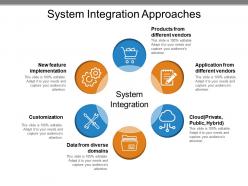
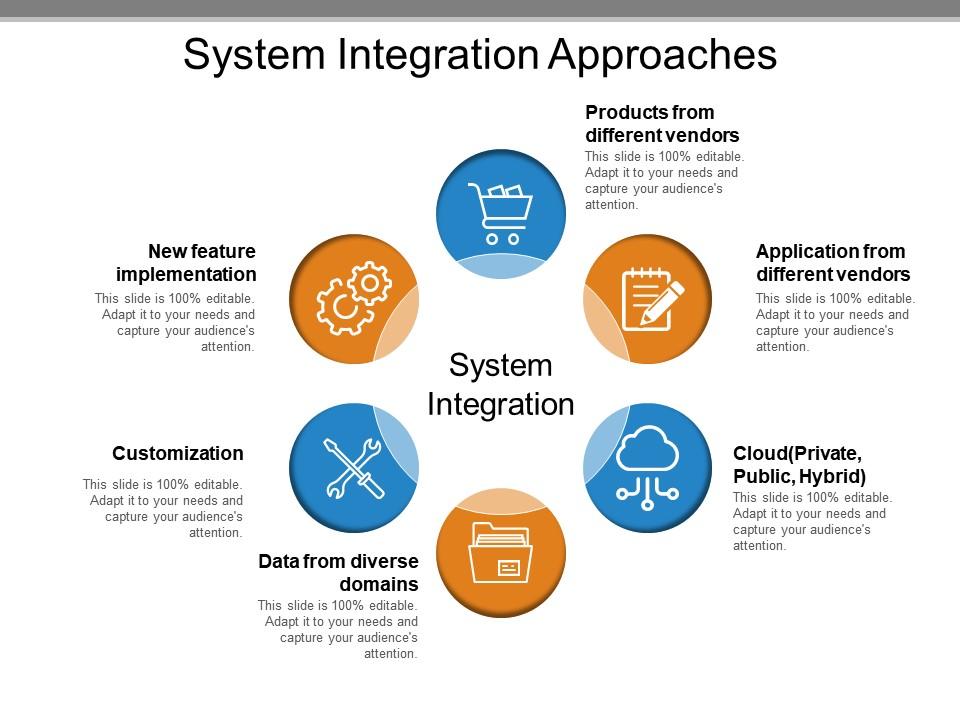
Everyday thousands of corporate employees search for presentation template to highlight effective methods for software and system integration, that will make their audience understand the importance of critical business factors. Taking this into account, we are presenting system integration approaches example of PPT presentation template let you do it adequately. System approach PPT design is extremely useful to display system integration and architecture. Your audience will find this system integration architecture diagram more informative as it will convey methods for software and system integration to be more effective in project development. Different approaches for system integration and build management e.g. application from different vendors, customization, new feature implementation can easily be highlighted with this system approach PPT diagram. PPT is mainly used for project planning and implementation, other engineering tasks such as system design, software design, development, implementation and integration. So, don’t wait, simply download this system integration architecture diagram and use it in your future presentations. Get firmly back on your feet with our System Integration Approaches Example Of Ppt Presentation. Awaken to a fresh and exciting dawn.
People who downloaded this PowerPoint presentation also viewed the following :
System integration approaches example of ppt presentation with all 5 slides:
Go beyond gut feelings with our System Integration Approaches Example Of Ppt Presentation. Arm yourself with factual data.
FAQs for System integration approaches example
So point-to-point basically connects every system straight to each other - no middleman, which is fast but becomes a total mess when you're juggling tons of connections. Hub-and-spoke runs everything through one central spot instead. Sure, it's slower and you've got that bottleneck risk, but honestly? Way easier to manage and troubleshoot. I learned this the hard way at my last job. Once you hit like 4-5 systems that need to talk, just go hub-and-spoke. Trust me, you'll thank yourself later when you're not dealing with connection spaghetti.
So basically middleware is like having a universal translator for all your different systems. You don't have to build separate connections between every single app - it just handles all that routing and data conversion stuff automatically. Honestly, it's way less of a headache than dealing with a bunch of individual APIs. When you want to add something new, you just plug it into the middleware instead of rebuilding everything from scratch. The monitoring gets way better too since everything's flowing through one central hub. It's kind of like having one remote that works with your entire entertainment system, if that makes sense.
So APIs are basically how you get different systems to talk to each other without losing your mind rebuilding everything. They're like translators for your apps - data goes in one format, comes out in another that actually works. You'll probably deal with REST APIs most of the time, though GraphQL is pretty hot right now too. Honestly, map out what needs to connect first before you do anything else. Then check if there's already an API you can use - way easier than building from scratch. Works great for connecting cloud stuff, old legacy systems, whatever third-party tools you're stuck with.
Honestly, cloud platforms are pretty sweet for getting integrations up fast - we're talking hours vs weeks. Those pre-built connectors for Salesforce and SAP? Total game changer. But here's the thing - you're basically trusting some third party with all your data flowing through their servers, which makes security folks nervous. Plus subscription costs pile up over time, and good luck switching platforms later without major headaches. Oh, and complex integrations might bump into the platform's limits. I'd definitely run a small pilot first to see how it handles your actual data loads before diving in headfirst.
Honestly, event-driven architecture is a game changer for integration headaches. Your systems stop talking directly to each other and start using events instead. So System A does something, throws an event out there, and System B picks it up when it's ready - no more waiting around. The decoupling alone will save your sanity. Plus you get way better scalability since nothing's blocking on responses. Even if one service crashes, the others keep chugging along processing queued events. I'd look at your worst integration points first - probably some janky API calls that break constantly? Those are perfect candidates for switching to events.
Authentication and data encryption should be your starting points - can't stress this enough. All inputs between systems need validation, plus you'll want secure APIs with solid token management. Honestly, access controls make or break these setups. Give each system only what it absolutely needs, nothing extra. Log everything for audit trails (seriously saved my butt once when our payment gateway went sideways). Each integration point? Treat it like a potential security hole. Map out your data flows first, then work through securing every handoff systematically. Takes time but worth it.
So for real-time data stuff, Kafka is probably your best bet - seriously handles crazy amounts of data without breaking a sweat. You'd pair it with Spark Streaming or Flink for the actual processing. CDC tools like Debezium are clutch for syncing databases. RabbitMQ works fine if you're dealing with smaller volumes. Cloud services like Kinesis or Azure Event Hubs are decent too if you don't want to manage everything yourself. Oh, and definitely figure out your data sources and how much volume you're expecting first - saves you a headache later when picking tools.
First thing - get one single source of truth set up, otherwise you'll go crazy. Real-time sync between your systems is key, plus solid data validation at every integration point. APIs or middleware help keep transformations consistent. Master data management honestly makes the biggest difference for keeping customer/product info standardized everywhere. I'd start by mapping your critical data flows first, then build checkpoints at each handoff. Automated monitoring catches issues fast (and yeah, there will be issues). Oh and regular audits - boring but they'll save your sanity later.
API wrappers are your best bet if you can swing it - lets your new stuff talk to legacy systems without the headache. Middleware like ESBs can handle the protocol translation when APIs aren't doable. Database integration is honestly a pain (get ready for some ugly data mapping), but sometimes you're stuck with it. Message queues are solid for async stuff between systems. Here's the thing though - don't bite off more than you can chew. Phase it out, test each piece properly. Master one integration pattern before jumping to the next, or you'll just create a bigger mess.
So microservices basically force you to build things that don't depend on each other too much. You can't just share databases anymore - gotta think about where one service ends and another begins. This means way more REST APIs and message queues, which honestly gets messy pretty quick. But here's the thing: you can swap out pieces without breaking your whole app. The tricky part becomes keeping data in sync across everything. Oh, and definitely map out your service boundaries first before you start building all the connection stuff - learned that one the hard way.
Oh man, the usual suspects are gonna be poor planning and totally underestimating how messy data mapping gets. Testing always gets rushed too. Plus stakeholders will 100% hit you with scope creep - they see one cool integration and suddenly want fifteen more. Document your current system first because I guarantee you'll find bizarre dependencies nobody remembered existed. Don't skip staging environments that actually match production. Integration testing is non-negotiable even when deadlines are breathing down your neck. Get security and ops involved from day one. Waiting until the end is just asking for everything to blow up and start over.
So basically you want to connect all your different software so they actually talk to each other. Like your CRM automatically updates your inventory system - saves tons of time on data entry. No more switching between a million platforms or waiting around for info from other departments. Everything syncs up in real time, which honestly makes decision-making way less stressful. You'll catch errors before they become problems too. I'd start by figuring out where your biggest headaches are right now - probably wherever you're doing the most manual work between systems.
Honestly, your integration choice is gonna bite you later if you mess it up. Tight coupling? You'll spend forever hunting down why System A broke when you touched System B. APIs and message queues are way better - gives you room to breathe when stuff needs updates. Event-driven is cool until you're debugging across five services at 2am (been there). Point-to-point looks easy but becomes a total mess once you scale. Just pick whatever your team can actually document properly, cause that's half the battle right there.
Track both the techy stuff and business impact. System uptime, response times, error rates - yeah, all that matters. But also check if processes actually got faster and whether people are using it. Honestly, I've watched teams get obsessed with 99.9% uptime while users absolutely hate the new workflow. Don't be those guys. Measure how quickly you can fix integration problems and if you're still doing manual workarounds. Cost savings matter too, obviously. Start with maybe 3-4 metrics your stakeholders care about most, then add more later once you've got the basics down.
Get mixed teams going right away - pull people from both IT and business sides. Regular check-ins are crucial, not just crisis meetings when everything's on fire. Shared dashboards help tons so nobody's wondering what's actually happening. Half these projects fail because people who should be talking just... aren't. Build in quick decision paths too, because waiting around kills momentum. Both groups need to feel like they own this thing, not like they're just giving feedback on someone else's baby. Oh, and start small - early wins make everyone way more cooperative later.
-
Designs have enough space to add content.
-
Appreciate the research and its presentable format.