


Target achievement result analysis ppt icons graphics




Try Before you Buy Download Free Sample Product
 Impress Your
 Audience
 100%
100% Editable
 Save Hours
 of Time


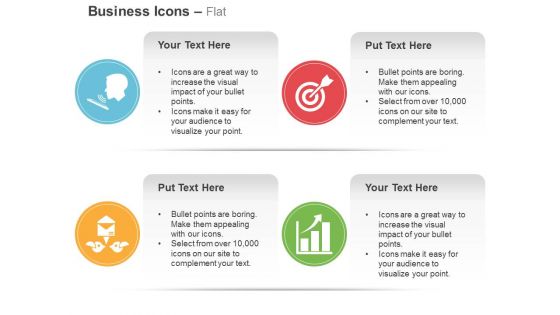
We feel privileged to present before you our target achievement result analysis icons graphics PowerPoint Presentation. This business template is the house of business and management related presentations. You can use this slideshow in displaying presentations regarding business and management using the bar graphs and pie charts. Our exports have taken care of the concept of result analysis and target achievement to be displayed in this PowerPoint template. This PPT presentation template contains the graphic of target board and bar graph. The presentations related to finance can also be presented using this PPT. Our PowerPoint template will attract a large number of your viewers due to its outstanding design and all the animations used. The presentation can help you and your organisation achieve your organisational goals by making your audience grown. Achievement of your organisational goals means earning higher profits and a good market share. These both factors as a result, will lead to the overall growth of the organisation. Cut acrossany resistance with our Target Achievement Result Analysis Ppt Icons Graphics. Get your point across straight to the audience.
People who downloaded this PowerPoint presentation also viewed the following :
Target achievement result analysis ppt icons graphics with all 4 slides:
Funnel your thoughts accurately with our Target Achievement Result Analysis Ppt Icons Graphics. They will flow along the correct channel.
FAQs for Target achievement result analysis
Write down what success actually looks like first - that's huge. Be super specific too, like "increase sales by 15%" instead of vague stuff like "do better." Honestly, most people mess up the timeline part. Don't set yourself up to fail by being unrealistic about how long things take. I'd break big goals into smaller chunks so you can see if you're on track. Also consider what resources you actually have right now. Buffer time is your friend because stuff always goes wrong. Track everything and be ready to pivot if needed.
Dude, visual templates are such a game changer! Your brain just clicks with them differently than boring text lists. Progress bars and milestone charts make everything feel way more real and doable. I swear they're like 10x more motivating than regular bullet points. You can track multiple things at once and actually spot what's working vs what's not. Makes sharing with friends or teammates super easy too - nobody wants to read through paragraphs of goals, right? Start simple with a basic progress tracker and tweak it however works for you.
Honestly, motivation is like your internal battery - it's what pushes you through when everything sucks and you want to quit. Most people think it's just about getting hyped up, but really it's about staying consistent day after day. That's the hard part. You've gotta connect your goals to stuff you genuinely care about, not what sounds good on paper. When setbacks hit (and they will), you'll bounce back faster if there's real meaning behind what you're doing. Otherwise you'll just make excuses and bail when it gets uncomfortable.
Yeah, so you really need both types of metrics. Leading indicators are like your early warning system - stuff happening right now that'll affect future results. Think daily activities, pipeline health, whatever. Lagging indicators? Those are your actual results after the fact. I used to be obsessed with just the final numbers and couldn't figure out why I kept falling short. Now I do weekly check-ins (sometimes monthly if it's a longer project). Simple spreadsheet works fine - nothing fancy. The whole point is spotting issues while you can still fix them, not when it's game over.
Honestly, the worst thing you can do is set crazy unrealistic deadlines - you'll just burn yourself out. Break everything down into smaller chunks instead. I've watched so many people get tunnel vision on their end goal and completely ignore red flags along the way. Like, they'll spend months going in totally the wrong direction because they won't listen to feedback. Also, track your stuff regularly or you won't even know when things start falling apart. Maybe set up 2-3 checkpoints between now and your deadline? Then just check in weekly to see how it's going.
So basically, you need someone or something watching you - sounds harsh but it works. When you have to update your boss or a coworker about your progress, you can't just ghost your goals. Find an accountability buddy at work and check in weekly. Public goal-sharing helps too, or even just a simple dashboard where people can see your numbers. Honestly, I've seen people crush their targets just because they didn't want to look bad in front of their team. It's like peer pressure but productive. Regular check-ins are everything.
Honestly, how you present goals makes or breaks whether people actually pay attention. Skip the boring bullet points - nobody wants that. Charts and progress trackers are way better for keeping folks engaged. I'd go interactive too... like breakout groups or quick polls instead of just talking at everyone. Dense slides are the worst, people check out immediately. But here's what really works - tell stories about your wins and failures. Makes it feel real, you know? Oh and don't do the whole thing in one shot. Mix it up halfway through with team discussions or just ask for their input.
Honestly, there's a bunch of ways to do this. Asana, Monday.com, or Trello are solid for visual tracking with dashboards. I still use Google Sheets sometimes - yeah it's more manual but whatever works, right? Sales stuff? CRMs like Salesforce or HubSpot are your best bet. If you need fancy charts for the bosses, Tableau makes everything look impressive. My take is start with whatever tool your team already knows. You can always get fancier later if needed. Don't overcomplicate it from day one.
Honestly, goal-setting as a team is a game changer. People actually care about hitting targets when they help create them - weird how that works, but it's so true. You'll get way better ideas too since everyone brings different angles to the table. I've noticed it catches problems early that you'd totally miss otherwise. The accountability piece is huge - nobody wants to let their teammates down on something they committed to in front of everyone. Next time you're starting a project, try getting the whole team together to hash out both what you're aiming for and how you'll get there.
Honestly, deadlines are the only thing standing between your goals and that pile of "I'll get to it eventually" stuff we all have. You know how it is - without a real date looming, everything just becomes a someday project. I've found that working backwards from when you actually need something done really helps. Break the big scary thing into smaller pieces with mini-deadlines along the way. Just don't make them impossible or you'll burn out. And definitely pad in some extra time because something always goes sideways. The pressure actually forces you to figure out what's truly important versus just keeping busy.
First thing - dig into what your company actually cares about beyond the obvious stuff. I mean the real strategic priorities, not just what's on the website. Once you've got that figured out, think about where your own goals might overlap. It's kinda like dating honestly - you want that sweet spot where what excites you also helps your team win. Talk to your manager about it too. Don't be shy about asking where you could stretch yourself. The best projects are ones that make you better at stuff you want to get good at anyway.
Honestly, mindset is everything when it comes to hitting your goals. Do you actually believe you can do it, or are you just crossing your fingers? Your confidence in your own abilities - that's what pushes you through the tough stuff. Oh, and motivation from within beats outside pressure every single time. I can't stress this enough though - vague goals kill dreams. Like, so many people I know set these fuzzy targets then wonder why they're stuck. Being able to handle stress matters too. Start by getting super specific about what you want, then connect it to something that actually means something to you personally.
Honestly, just set up weekly check-ins with yourself to see how you're doing. Compare where you actually are vs where you wanted to be. Don't lie to yourself about the numbers - that's where most people mess up. If something isn't working, switch it up or move resources around. Sometimes you might even need to change your targets if life happens, which is totally fine. Track the small stuff that leads to your big goals, not just the end result. That way you'll catch problems early. Oh, and if you can automate some kind of dashboard thing, do it - makes everything way easier to monitor.
Honestly, just take a breath first - don't spiral into panic mode. Figure out what actually went wrong, but like, don't be brutal to yourself about it. Setbacks happen and they're basically just info you didn't have before. Break whatever's left into tiny chunks so you can actually see progress again. That momentum thing is real. Maybe there's help you haven't thought of asking for yet? The main thing is jumping back in somehow, even baby steps count. Oh and write down what caused this mess - I swear similar stuff always pops up again later.
Honestly, charts and graphs are game-changers for explaining your targets. Nobody wants to stare at spreadsheets full of numbers - instant eye glaze. Visual stuff like timelines or progress bars makes it super obvious how you're getting from where you are now to your goal. I swear, half the meetings I sit through are just people reading data off slides. So boring. Try throwing together a simple flowchart next time you're presenting targets. People get it way faster, and you'll actually see heads nodding instead of phones coming out. Makes spotting problems easier too.
-
Content of slide is easy to understand and edit.
-
Great quality product.