


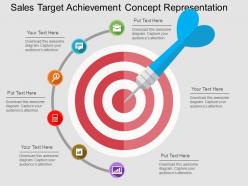
Sales target achievement concept representation flat powerpoint design





Try Before you Buy Download Free Sample Product
 Impress Your
 Audience
 100%
100% Editable
 Save Hours
 of Time


Sales Target Achievement Concept Representation helps with sales training, process development, adoption and compliance of a holistic strategy. The PowerPoint presentation helps in attaining specific, attainable, measurable, time framed and relevant business objective so that all the available skills and efficiencies are incorporated well into slide. In order to work collectively for different departments, stay motivated and performs activities with lot of effort and thus increasing the profitability of sales with offline and online sales program the PPT layout is an effective medium. The presentation slideshow ensures opportunities are dealt unit wise, can be easily planned and estimated using the pipeline management strategy so that no section or topic is left untouched. The PPT graphic imbibes unweighted sales asset, check the opportunity status, check profitability of closure, rank and balance the target to limit the possibility of error plus achieve the given target in no time. The presentation slide is a good blend of text and graphic which helps put the ideas across the table nicely.Dole out benefits with our Sales Target Achievement Concept Representation Flat Powerpoint Design. Acquire acclaim as a genuine giver.
People who downloaded this PowerPoint presentation also viewed the following :
Sales target achievement concept representation flat powerpoint design with all 4 slides:
Hit a home run with our Sales Target Achievement Concept Representation Flat Powerpoint Design. See your ideas sail into the minds of your audience.
FAQs for Sales target achievement concept representation
Honestly, focus on revenue vs target, deal conversion rates, and how fast stuff moves through your pipeline. Activity metrics matter too - calls, demos, whatever drives your process. I used to just stare at revenue numbers all day but that's backwards looking, you know? Deal size and cycle length tell you way more about where you're actually heading. Pick maybe 4-5 metrics max that match how you actually sell. Check them weekly so you can catch problems early instead of scrambling later. Oh and don't pick too many or you'll just confuse yourself.
Honestly, start by digging into your best deals and figure out what made them work. Check conversion rates by lead source and deal sizes - sometimes what feels successful actually isn't. Pipeline analytics will show you exactly where stuff gets stuck (seriously, this was a revelation for me). Track which activities your team does that actually move deals forward vs just busy work. Weekly dashboards are clutch - don't wait until month-end to realize you're screwed. Match team behavior to outcomes and you'll spot the patterns pretty quick.
Dude, motivated teams absolutely demolish their targets while unmotivated ones barely hit them. It's wild how much energy spreads - I've watched mediocre reps with great attitudes crush "superstar" teams that were burned out. Your people will push through more rejections, chase bigger deals, actually help each other instead of backstabbing. Plus they get creative with their pitches and don't give up on follow-ups as easily. Celebrate the wins (even small ones), fix roadblocks fast, and remind everyone why this stuff actually matters. Oh and persistent follow-up is where most deals are won anyway.
So your CRM basically shows you everything that's happening with your sales in real time. You can see deal values, close dates, all that stuff on a dashboard. It's pretty much like GPS for hitting your numbers. The system does the math for you - closed revenue vs what's still moving through. Plus it flags deals that might fall through (which honestly saves you from some nasty surprises). Most let you slice the data by time, product, whatever. I'd set up weekly reviews with these reports so you can fix things before you're scrambling at month-end.
Honestly, it's usually a combo of things going wrong at once. Unrealistic targets are huge - like, management sets these crazy numbers without considering market reality. Then you've got reps using garbage tools or chasing leads that'll never close. Territory planning is where I see teams really shoot themselves in the foot though. They'll spend weeks courting some massive prospect that was never gonna buy anyway. Messaging gets muddy, priorities shift every month, and don't even get me started on longer sales cycles throwing off forecasts. Pick the biggest pain point first and actually fix it before moving on.
Honestly, good sales training makes a huge difference because your team gets way better at the basics - handling objections, closing deals, building relationships with customers. Your conversion rates go up when reps can spot buying signals and handle difficult conversations. Training also gets everyone on the same page with your sales process, which sounds boring but actually matters a lot for performance. The really useful programs teach pipeline management and how to prioritize time too. That's what separates teams that hit targets from ones that don't. I'd start by figuring out where your biggest skill gaps are first, then find training that tackles those specific problems.
Honestly, I'd dig into what your team actually hit last year versus their targets first. Market stuff matters too - like seasonal patterns or if you're getting new tools/headcount. Here's what I've learned: add maybe 10-15% stretch beyond what feels "safe." People usually step up more than you think. But don't be that manager who sets impossible numbers - that just kills morale. The magic zone is when your reps look at targets and go "tough but I can probably do this." Also, get them involved in setting the goals. When they help build it, they actually care about hitting it. Makes a huge difference.
Look, market trends are your reality check when setting targets. Growing industry? You can be more aggressive with your numbers. But if things are flat or shrinking, don't set yourself up for failure. Check seasonal patterns too - and honestly, this stuff seems obvious but people ignore it all the time. What are competitors doing? Any new regulations coming? Use actual data instead of just slapping 10% on last year's performance and calling it a day. I've seen too many teams do exactly that and then wonder why they missed their goals.
Honestly, your leadership makes a huge difference with hitting sales targets. Good managers set clear expectations and coach you through stuff without breathing down your neck constantly. They help you focus on the right deals instead of chasing everything. Plus they'll actually remove obstacles that slow you down - like getting approvals or fixing tech issues. The morale thing matters too, especially when deals tank (which happens way more than anyone admits). When leadership sucks at this stuff, targets feel basically impossible. It's like trying to win a game where nobody explained the rules.
Honestly, get a solid CRM first - it'll stop leads from disappearing into the void. I swear this happens way more than people admit. Sales automation handles the boring stuff like email sequences and meeting bookings. Analytics dashboards are where it gets interesting though - you'll spot deal bottlenecks you never noticed before. Some AI tools can score leads and predict closes pretty well now. Don't go crazy with every new platform. Pick 2-3 that actually talk to each other and build from there.
Look, the biggest thing is keeping it blame-free - I've been in way too many of these that just became witch hunts. Get your numbers first: what broke, when, where in the pipeline. Pull everyone together within a week while it's all still clear. Focus on the process stuff, not individual screw-ups. Maybe it was crappy leads? Pricing was off? Wrong timing? Ask "what happened" and "how did this break" instead of pointing fingers at people. Here's the key part though - you gotta walk out with 2-3 actual action items and someone owns each one. Otherwise you just spent two hours complaining and nothing changes next quarter.
Look at your past performance first - conversion rates, seasonal patterns, all that stuff. Then check your current pipeline health: how fast deals move, where they're getting stuck. Your sales reps know their deals better than any spreadsheet, so actually talk to them (seriously, this saves so much guesswork). I'd use a few different forecasting methods and compare them weekly. External factors matter too - economic changes, what competitors are doing. Honestly learned this one the hard way last quarter when everything shifted. Keep tracking your accuracy so you can get better at it over time.
Dude, customer feedback is like having a crystal ball for your sales numbers. When people tell you why they bought or bailed, you can fix your pitch accordingly. I've seen reps completely turn around their close rates just by listening to what customers actually care about - not what they think matters. You'll start noticing the same objections popping up everywhere. That's gold right there. Plus you figure out which benefits actually move the needle and which customer types are worth your time. Just make sure you're getting feedback from both the wins AND the losses, then actually do something with it instead of letting it sit in your CRM forever.
Honestly, the difference is night and day when those two teams stop fighting each other. Sales gets leads they actually want to call, and marketing finally understands what messaging works in the real world. No more of that BS where marketing's like "we sent 500 qualified leads!" and sales is rolling their eyes because half are total duds. The magic happens in those regular check-ins - both sides share what's bombing and what's crushing it. I'd start small though, maybe just a 15-minute weekly sync to get on the same page about priorities and lead quality. Once you build that rhythm, everything else clicks.
So definitely put your actual vs target numbers right at the top - monthly, quarterly, yearly breakdowns. Progress bars or those gauge things are clutch because nobody wants to squint at spreadsheet numbers first thing in the morning. Track each rep's performance plus your pipeline health and conversion rates by stage. Trend lines are huge too since they show if you're gaining momentum or sliding backwards. Honestly, the whole dashboard should tell the story in like 30 seconds max. Keep it clean and visual - your future self will thank you when you're rushing between meetings.
-
Best Representation of topics, really appreciable.
-
Best way of representation of the topic.