


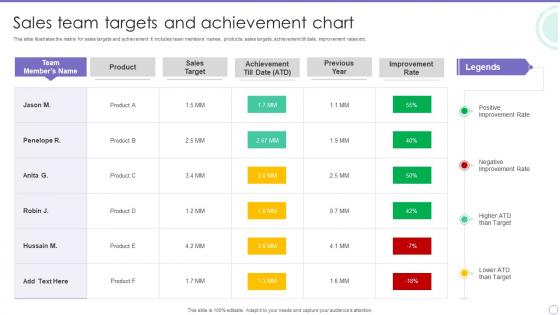
Sales Team Targets And Achievement Chart




Try Before you Buy Download Free Sample Product
 Impress Your
 Audience
 100%
100% Editable
 Save Hours
 of Time


This slide illustrates the matrix for sales targets and achievement. It includes team members names, products, sales targets, achievement till date, improvement rates etc.
People who downloaded this PowerPoint presentation also viewed the following :
Sales Team Targets And Achievement Chart with all 6 slides:
Use our Sales Team Targets And Achievement Chart to effectively help you save your valuable time. They are readymade to fit into any presentation structure.





FAQs for Sales Team Targets
Focus on the big ones first - revenue per rep, conversion rates, and how long your sales cycle takes. Pipeline velocity matters too. Yeah, you'll want activity metrics like calls and demos, but honestly reps just game those numbers anyway. Win/loss ratio and average deal size? Those actually move the needle. Don't forget customer acquisition cost - that one bites you if you ignore it. Just throw together a weekly dashboard with maybe 4-5 metrics max. Trust me, you don't want to drown in spreadsheets when you're trying to spot problems early.
Look through your CRM data first - see where deals usually get stuck and which types of customers actually close. Sales cycles have patterns if you know where to look. Response times matter way more than people think, so track those along with how often you're following up. Deal velocity is huge too. Honestly, the whole thing feels like homework at first, but once you find that one metric that directly hits your quota? Game changer. Don't overthink it - just pick one number that matters and figure out what it's telling you about your pitch.
Yeah, sales training makes a huge difference - I've watched teams completely turn around after getting some solid coaching. Your reps need to know the product cold and actually handle objections without panicking. Discovery questions are key too, honestly way more important than most people realize. Don't do it as a one-off thing though, that's pretty much useless. Monthly sessions work better, maybe some role-playing stuff to keep skills fresh. When people feel confident about what they're selling, their close rates shoot up. It's one of those things that seems obvious but so many companies half-ass it.
Oh totally, outside stuff can completely tank your sales even when you're crushing it. When the economy sucks, people just stop buying or take forever to decide. But when things are good? Sales practically make themselves. You've also got weird seasonal stuff - like B2B basically dies in summer because everyone's at the beach or whatever. Regulatory changes mess things up too. Honestly, the trick is just paying attention to these patterns so you can adjust your forecasts and time your big pushes right. No point launching a major campaign when half your prospects are mentally checked out.
Start with one-on-ones to figure out what's really going on - could be skills, motivation, or just personal stuff. Break those huge monthly targets into weekly micro-goals that don't feel impossible. Public shoutouts work surprisingly well, honestly. Have them shadow your best performers for a few days. Oh, and check if their territory or leads actually suck - no point setting someone up to fail. The whole thing's about making success feel possible again. Quick wins are everything for rebuilding confidence right now.
Honestly, CRMs are game-changers because they keep all your customer stuff in one spot instead of scattered across sticky notes and random spreadsheets. You can actually track who you've talked to and when, plus they'll bug you about follow-ups so you don't ghost potential clients. The automated email thing is clutch too. But here's the thing - you'll get solid data on what's actually moving the needle in your sales process, not just what you think is working. My buddy swears by the reporting features. Just don't be that person who sets it up and never touches it again.
Honestly, base your targets on real data - what your team actually did before, any territory changes, new products, that stuff. Don't just pull numbers out of thin air because it sounds good. I've watched too many reps get crushed by impossible goals and it kills morale fast. Break everything into quarters so you can fix things early if they're going sideways. Here's the thing though - get your sales team involved in setting these numbers. They know their accounts way better than you do, and they'll actually work toward goals they helped create instead of fighting them.
Honestly, scripts can help a ton when you're new or dealing with tricky objections. You won't forget the important stuff mid-call. But here's the thing - nobody wants to talk to someone who sounds like they're reading off a teleprompter. That's instant hang-up territory. What works better? Think of scripts more like guidelines you can tweak based on who you're talking to. I'd make a few different templates for common situations instead of one rigid thing you memorize. Way more natural that way.
Look, the biggest wins come from fixing where people bail out of your funnel. Figure out those drop-off points first - that's your gold mine right there. Streamline how you qualify leads, then personalize follow-ups based on where someone actually is in their journey. Automate all the boring repetitive tasks so your team can build real relationships instead. A/B test everything - emails, landing pages, the works. What you think converts probably doesn't, honestly. Oh and track your numbers weekly, not monthly. Monthly reviews are basically useless when you're trying to move fast.
Honestly, most companies mess this up because nobody's actually talking to each other. Start with a weekly 30-minute call where sales tells marketing which leads are actually converting (and why), while marketing shares what campaigns are coming down the pipeline. Make it two-way though - sales needs to give feedback on messaging that works, marketing should share lead quality data back. I'd set up some kind of shared dashboard too so you're both looking at the same numbers. Sounds obvious but like... most teams skip this step entirely then wonder why nothing works. Build from there once you get the rhythm down.
Honestly, sales incentives work great when you don't mess them up. Clear goals plus good rewards = motivated team. Pretty simple formula. But I've seen so many companies screw this up by making targets impossible or pitting everyone against each other. Mix individual stuff with team rewards so nobody feels left out. And here's what most people miss - tie incentives to the actual behaviors you want, not just hitting numbers. Like, rewarding collaboration or customer satisfaction too. Oh, and definitely ask your team what they actually care about first. Money isn't everything for everyone.
Dude, tech can totally transform your sales process. CRM systems automate lead scoring and follow-ups automatically. Email sequences nurture prospects while you sleep - honestly game-changing. Analytics dashboards show you which deals are actually worth chasing (saved me so much wasted time). AI chatbots handle those basic customer questions now too. Sales enablement platforms give your team instant access to proposals and pricing during calls. My advice? Start by automating whatever repetitive stuff is driving you crazy first. Then gradually add more tools once you're not overwhelmed. The ROI is pretty insane once you get rolling.
Honestly, most sales people screw up three things: they never follow up (seriously, so many deals just die from this), they don't qualify leads properly, and they talk way too much. I used to do the same thing - just ramble about features instead of actually listening. Your prospects will literally tell you how to sell to them if you shut up for five minutes. Ask better questions upfront so you're not chasing dead-end leads. A decent CRM helps with follow-ups, but the real game changer? Actually understanding their problems before you pitch anything.
Honestly, cultural stuff can totally make or break your sales game internationally. Like in Japan, I spent months just building relationships before even hinting at my product - but try that approach in Germany and they'll think you're wasting their time. Some places want the direct pitch, others need the whole song and dance first. Your negotiation style has to shift too. What kills it in NYC might be completely wrong for Mumbai or wherever. I guess the main thing is actually researching local customs instead of just translating your usual spiel. Oh and don't assume anything - I've seen so many people bomb because they didn't adapt their whole approach.
Look, following up after the sale is what turns decent salespeople into legends. You're not just chasing one transaction - you're building relationships that pay off long-term through repeat business and referrals. Honestly, this is where most reps drop the ball and miss out on easy money. Happy customers basically become your unpaid marketing team, which is pretty sweet when you think about it. The math works too: keeping existing customers costs way less than finding new ones. My advice? Hit them up within 48 hours, then do monthly check-ins. Nothing fancy needed.
-
SlideTeam is my go-to resource for professional PPT templates. They have an exhaustive library, giving you the option to download the best slide!
-
Satisfied with the way SlideTeam resolved my query regarding the right business PPTs that I was having difficulty finding. I found the perfect match with their assistance.