


Six staged target achievement business icons flat powerpoint design





Try Before you Buy Download Free Sample Product
 Impress Your
 Audience
 100%
100% Editable
 Save Hours
 of Time


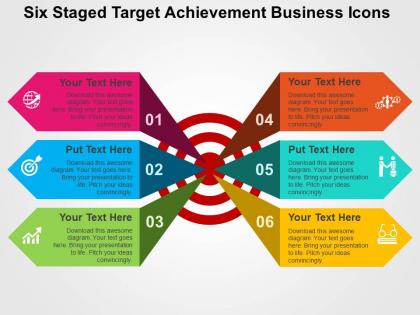
By knowing what you want to achieve, you know what you have to concentrate on and improve. So, use our six staged target achievement business icons flat PowerPoint Design Slide. The slide has six staged visual which can be used to showcase six points necessary to achieve the targets and goals of a firm with related icons. This slide can be used by marketing and business related presentations. There are never enough resources to do everything so setting goals can help you to prioritize. Place your resources behind what you really want to do, rather than on things you are doing by default or by deflection. By incorporating this slide into your business presentations, you can set smart and sharp goals, which will allow you to measure how well effectively you are moving towards achieving them. By using this graphic, you can set goals which can help to release your creative energies so you can focus on how to achieve them. So, start downloading and using the slide now. Every element is duly considered by our Six Staged Target Achievement Business Icons Flat Powerpoint Design. Steer clear of hasty decisions.
People who downloaded this PowerPoint presentation also viewed the following :
Six staged target achievement business icons flat powerpoint design with all 4 slides:
Earn appreciation with our Six Staged Target Achievement Business Icons Flat Powerpoint Design. Your listeners will surely laud your performance.


FAQs for Six staged target achievement business icons
Honestly, most business icons are just really good at spotting stuff everyone else overlooks. They take crazy risks that would make most people sweat. But here's the thing - they're also masters at pivoting when something isn't working. Like, they'll completely change direction without their ego getting in the way. What really gets me though is how they can obsess over their main goal while constantly tweaking how they get there. And don't even get me started on their storytelling skills - they make you actually care about whatever they're building. My advice? Figure out what angle you see that others don't yet.
Icons are way more powerful than people realize - they literally create instant connections with your customers. Look at Apple's clean icons that scream "premium and simple." That stuff works. Your icons should match your brand vibe and make navigation super obvious. Nobody wants to guess what a button does, you know? Good icons reduce mental effort so people actually stick around longer on your site. Pick ones that feel right for your brand personality, but honestly? Test them with real users first. What makes sense to you might confuse everyone else.
Look, innovation is what makes the difference between being just another successful exec and becoming a true business icon. Take Jobs, Bezos, or Musk - they didn't play it safe. Instead, they completely flipped entire industries on their heads. Sure, half their ideas seemed totally insane at first (remember when people thought the iPhone was just an overpriced toy?). But that's the point. Real icons don't just tweak existing stuff - they solve problems in ways that feel impossible until suddenly they're not. You want lasting impact? Focus on the crazy ideas that make people think you've lost your mind.
Check out how successful entrepreneurs handled their early struggles and steal their core approaches. Buffett's long-term mindset or Sara Blakely's bootstrap approach? Gold. Don't copy their exact moves though - markets are totally different now. Instead, focus on their decision-making process and how they bounced back from failures. The failures teach you way more than the wins anyway. Pick 2-3 people whose stories click with you and really dive into their messy early days. That's where the real lessons are hiding.
Honestly, it's usually personal scandals that destroy these big-name CEOs. Financial stuff, racist comments, just being completely oblivious during a crisis. Social media makes it ten times worse - like, one stupid tweet and you're done. Bad treatment of employees is huge too. Environmental stuff matters now more than ever. Oh, and putting profits over people in really obvious ways always backfires. The crazy thing is most of this could be avoided with better judgment and a decent PR team. Stay true to your actual values, have a crisis plan ready. Something will eventually blow up - that's just business reality these days.
Dude, this stuff can make or break you internationally. Colors hit different everywhere - like that red you think screams "power"? In some places it just screams "danger." My buddy's company used a thumbs-up icon and it completely tanked in the Middle East. Whoops. What looks sleek and minimal to us might just look cheap to cultures that are all about ornate details. Religious stuff, local customs, even random historical context all matter way more than you'd expect. Honestly? Get some local people to look at your icons before you launch. Focus groups or cultural consultants will save you major headaches later.
Okay so think of it this way - your business icon becomes like this always-on brand ambassador hitting millions of people instantly. You can post their thoughts, show behind-the-scenes stuff, share their expertise to build real connections. LinkedIn works amazing for thought leadership content. Instagram and TikTok? That's where you show their human side - honestly people are obsessed with that authentic content. The trick is staying consistent and genuine though. When followers see regular, real posts, your icon becomes way more relatable and trustworthy. Pick maybe 1-2 platforms where your audience actually spends time and just post consistently there.
Honestly, what makes someone iconic vs just successful is whether they're building other leaders too. Jobs and Bezos didn't just create great companies - they mentored whole generations of people who went on to do big things themselves. That ripple effect is huge. People remember you for elevating others, not just your own wins (though those don't hurt lol). The mentorship part shows you can spot talent early. Plus when your leadership style becomes something others want to copy, that's when you know you've made it. Focus on how many future leaders you're creating instead of just your own achievements.
Oh totally! Look at how Elon's crazy ventures or Sara Blakely's Spanx story make starting a company feel possible for regular people. These icons definitely push specific trends too - everyone's doing AI startups now because of tech leaders, or going direct-to-consumer after seeing Warby Parker blow up. Sometimes I swear half of Silicon Valley thinks they're the next Steve Jobs lol. But here's what actually matters: steal their thinking and strategies, not just the flashy stuff on the surface. That's where the real lessons are.
Pick someone who actually fits your brand, not just the biggest celebrity you can afford. Sports legends are perfect for fitness stuff, tech founders work for startups - you get the idea. Your audience will totally call BS if it feels forced (and trust me, some brands are painfully obvious about this). The connection needs to feel real. What story does this person tell about your product? That's honestly more important than how many followers they have. Let that genuine connection drive everything else and you'll be fine.
Honestly, studying business failures is way more educational than success stories. Overconfidence gets these leaders every time - they expand too aggressively or completely ignore obvious market shifts because "they know best." Classic mistake. Watch for patterns like ethical shortcuts, terrible crisis communication, and refusing to change their leadership style as the company grows. What really gets me is how predictable it all becomes once you see it. These brilliant people just... stop listening to anyone who disagrees with them. Get too comfortable, maybe? Anyway, learn their warning signs and set up ways to call yourself out before you make the same dumb moves.
Honestly, these business icons go through wild reputation swings depending on what's happening. Look at Elon - total visionary in 2012, now people are way more divided. Steve Jobs keeps getting different takes even after he died. Media eats up the whole rise-and-fall thing, it's like their favorite storyline. When times are good, CEOs are "innovative." Scandal hits? Suddenly they're greedy. Then if they bounce back, boom - they're resilient leaders again. Even dead ones aren't safe when new stuff comes out or society changes what it values. Pay attention to how current icons get covered and you'll see these patterns happening live.
Dude, business leaders today are under crazy pressure compared to like 20 years ago. Everyone's watching - customers, investors, employees. They can't just worry about making money anymore. Gotta think about how they treat workers, what they're doing to the environment, all that stuff. Plus people expect them to speak up on social issues, which honestly seems exhausting to me. The whole "profit with purpose" thing is real now. If you're looking at famous CEOs, check out how they handle that balance. Some do it better than others, but none of them can ignore it anymore.
Look, diversity efforts basically change who we see as the "typical" successful business leader. No more just white guys in suits being the default CEO poster boys. Companies that spotlight diverse leaders? They're literally reshaping what success looks like to everyone watching. Your employees start seeing bosses who actually look like them - that's huge for changing what people think they can achieve. Consumers eat this up too, honestly. They connect way better with brands that have diverse faces at the top. Here's what I'd do: check which leaders your company puts in the spotlight. You amplifying different voices, or just the same old crowd?
Most big business leaders go about it three main ways: building sustainable products, starting foundations, or just speaking out on issues they care about. Look at Patagonia's whole environmental thing, or how Gates pours money into global health. Musk basically made electric cars cool again. Honestly, some of these guys are genuinely passionate about making change. Others? Total PR move if you ask me. But hey, the results still matter. They've got the money and influence to actually move the needle on stuff. If you're thinking about doing something similar, figure out what problems actually connect to what your company does well.
-
Really like the color and design of the presentation.
-
Unique design & color.