

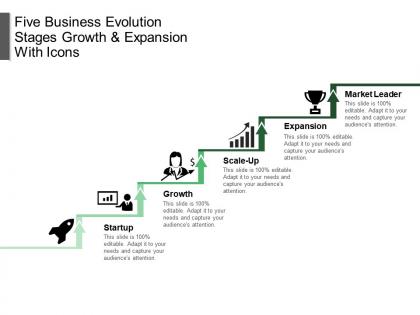
Five business evolution stages growth and expansion with icons




Try Before you Buy Download Free Sample Product
 Impress Your
 Audience
 100%
100% Editable
 Save Hours
 of Time


Demonstrate that you have a fine eye for detail with our Five Business Evolution Stages Growth And Expansion With Icons. It helps display an artistic bend.
People who downloaded this PowerPoint presentation also viewed the following :
Five business evolution stages growth and expansion with icons with all 5 slides:
Express friendship with our Five Business Evolution Stages Growth And Expansion With Icons. They assist in developing goodwill.




FAQs for Five business evolution stages growth and
So basically there are four main phases: startup (you're just trying to survive), growth (scaling everything up), maturity (you've made it), and then renewal or decline. Here's the thing though - what saves your ass in startup mode will completely backfire once you hit growth stage. Trust me on this one! Early on you're scrappy, all about the customers. Growth means you need actual processes and you're hiring like crazy. Maturity stage? That's when you gotta innovate or you'll get stagnant real quick. Your whole leadership vibe needs to shift with each phase too, plus how you measure success. Can't just stick with the same playbook forever.
Honestly, get your product-market fit locked down before anything else. Once that's solid, you can scale what's actually working instead of throwing stuff at the wall. I know delegating feels scary as hell, but you've gotta start hiring people and letting go of control. Standardize your sales process and how you onboard customers - makes everything way more predictable. Track metrics that matter, not just the flashy ones that look good in screenshots. Oh, and make sure you've got enough cash runway because this whole growth thing costs money upfront before you see any real returns.
Honestly, market research is like your GPS for business - tells you exactly where you stand. Are customers still finding you for the first time? Ready to buy more stuff from you? Or maybe the whole market's changed and you need to switch gears completely. Without knowing what people actually want, you're basically flying blind on whether to grow or try something new. I always tell people to start with surveying existing customers about what they need next - that's your best bet for figuring out your next move. Way better than guessing, trust me.
Oh totally, you've gotta adapt your style big time. Early on you're basically doing everything - super hands-on, making all the calls because nobody else can. But once you start scaling? That's when you need to actually trust your team leads and delegate the real stuff. I learned this the hard way tbh. Around 20-50 employees is usually when founders hit that wall - you're literally bottlenecking growth if you don't evolve. Eventually you become more of the vision person while others handle daily ops. It's weird letting go but necessary.
Honestly, cash flow is gonna be your biggest headache - way worse than you think. Then there's hiring decent people and actually keeping them around, which is brutal right now. Your company culture? Good luck maintaining that when you're suddenly managing tons more people. Simple processes turn into complete chaos once you hit multiple locations. Can't micromanage everything anymore either, so delegation becomes this whole thing. Quality control gets messy fast too. Here's what I learned the hard way - get your systems locked down FIRST, then scale. Don't wing it.
Honestly, tech can totally throw your business timeline out the window. You'll adopt some automation or better data tools thinking it's no big deal, then suddenly you're scaling way faster than expected without hiring tons of people. It's wild how quickly you go from startup mess to needing actual systems and processes. Sometimes feels overwhelming - like you skipped half the learning curve, you know? But here's the thing: don't fight those tech-driven jumps between growth stages. Just make sure your team culture keeps up with all the new systems, or you'll have fancy tools but confused people.
Focus on different stuff depending where you're at. Customer acquisition cost and conversion rates matter early on - plus retention numbers that show if people actually want what you're building. Cash flow though? Track that from day one. I can't tell you how many founders I know who got burned ignoring it. Once you've got some traction, shift to revenue per customer and monthly recurring revenue. Later stages are all about lifetime value and profit margins. Honestly just pick 3-5 metrics that make sense for your stage right now. Don't get lost in spreadsheet hell - start tracking consistently even if the numbers suck at first.
Dude, partnerships are honestly a game-changer when you're bootstrapping. Find businesses that serve your same crowd but aren't competing directly - like a web designer teaming up with a copywriter, you know? You can split marketing costs, share customers, maybe even build something together. I've watched tiny companies absolutely crush it this way instead of trying to do everything solo (which is exhausting btw). Start with just one solid partnership first. Test it out, see what clicks, then grow from there. Oh, and definitely hash out expectations early - saves so much drama later.
Honestly, customer feedback is like having a GPS for your business - shows you when you're going the wrong way. It'll drive product improvements and reveal opportunities you never saw coming. Plus, what customers actually want vs what you think they want? Yeah, those are usually two totally different things. Set up feedback systems early - surveys, interviews, even digging through support tickets. That way you're pivoting based on real pain points instead of just winging it. Makes transitions between growth stages way smoother too. Trust me, data beats gut feelings every time.
Yeah, competition definitely speeds up how fast businesses have to change, but it really depends on what industry you're in. Tech moves crazy fast - companies are basically reinventing themselves every few months. I mean, look how ChatGPT made everyone panic and suddenly scramble to build AI features. But then you've got stuff like utilities or heavy manufacturing that moves way slower since competition works differently there. Higher competitive pressure usually means faster evolution. The tricky part is when you're in a chill market - that's often when something unexpected hits you from left field.
Honestly, you've got some decent moves here. Product innovation is your first bet - either polish what you have or pivot completely using what you already know. Going after new markets could be game-changing too, like different customer types or international stuff. I've watched companies totally reinvent themselves this way and it's wild how well it can work. Strategic partnerships or buying out competitors might help you grab more market share. Just don't wait too long though, cash runs out faster than you think. Start by figuring out what strengths you can actually build from.
Look, innovation isn't just some buzzword - it literally keeps your business alive. When you're starting out, you need that breakthrough idea to even get people's attention. Then as you grow, those smaller improvements help you beat competitors and grab more customers. Companies that get lazy with innovation? They're toast. I've seen it happen so many times. During the mature phases, innovation becomes your secret weapon for reinventing yourself when growth stalls. Here's what I'd do: bake it into your culture from day one, not just throw money at R&D later.
Money changes everything depending where you're at. Early days? You need way more runway than you think - like seriously, double whatever number you have in your head. Most people totally blow this part. Once you're growing, it's all about scaling up - hiring people, expanding into new markets, that whole thing. Then when you hit maturity, you're more focused on steady cash flow and maybe buying other companies or funding R&D. Each phase needs different amounts of cash and comes with different risks. Don't try raising a massive round super early though. Match your funding to where you actually are right now.
Talk to your team constantly - seriously, this makes or breaks everything. People hate change when they're left in the dark. Start by explaining exactly what stage you're moving to and why it matters. Map out which processes and roles need to shift. Give everyone time to adjust and train them properly. Oh, and don't forget to celebrate the small wins! That stuff actually keeps people motivated. I'd set up regular check-ins too so you can tackle concerns early and pivot if something isn't working. Communication really is like 90% of successful transitions.
Look at Netflix - they went from mailing DVDs to streaming everything. Amazon? Started selling books, now they sell literally everything. Apple used to just make computers but pivoted hard into phones and became this whole lifestyle thing. 3M is probably the best example though - they're constantly jumping between different products and somehow nail it every time. Tesla's interesting too - they launched with expensive cars then worked their way down to regular people. The pattern is these companies don't just react to changes, they see what's coming first. That's the real key.
-
Informative design.
-
Great quality product.