

Business opportunities and challenges with icons





Try Before you Buy Download Free Sample Product
 Impress Your
 Audience
 100%
100% Editable
 Save Hours
 of Time


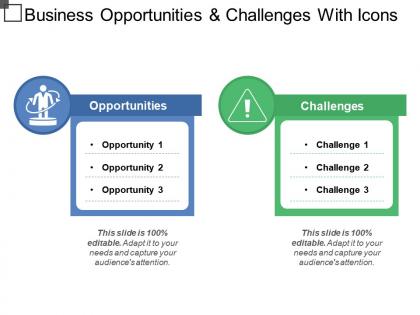
You need to discuss some delicate issues. Our Business Opportunities And Challenges With Icons give you the soft touch.
People who downloaded this PowerPoint presentation also viewed the following :
Business opportunities and challenges with icons with all 5 slides:
Avoid favoritism with our Business Opportunities And Challenges With Icons. Ensure everyone gets a fair chance.



FAQs for Business opportunities and
Honestly, most successful entrepreneurs just refuse to quit when things get messy. They see failure as data, not defeat - which sounds cheesy but it's true. Risk-taking is big too, but smart risks, not reckless ones. The best ones have this weird ability to spot opportunities that everyone else walks right past. Adaptability matters more than having a perfect plan (plans change anyway). Oh, and persistence - sometimes to an annoying degree. But here's the thing: these aren't born traits. You can actually develop this stuff if you practice thinking differently about setbacks and opportunities.
Honestly? Talk to strangers before you build anything. I learned this the hard way - wasted like 3 months on something nobody wanted. Make a quick landing page or mockup, then see if random people actually sign up. Your friends will just be nice to you, which isn't helpful at all. Try surveys, interviews, maybe even presell the thing. Real feedback from real people is everything. Can't get 10-20 strangers genuinely excited? Keep tweaking until you can. It's way better to pivot early than realize later you've been building the wrong thing.
Look, market research is like your GPS before a road trip - you need to know if people actually want what you're making. Skip it and you'll probably end up building something nobody cares about (seen this happen way too many times). Start simple: throw together some surveys, check out your competition. You'll find pricing that works, discover competitors hiding in plain sight, maybe even spot gaps you can jump into. This stuff shapes everything - your features, how you talk to customers, your whole business model really. Don't dump money into development until you've got the basics down.
Pick 2-3 platforms max where your people actually are and post consistently there. Don't try to be everywhere - it's exhausting and honestly kinda pointless. Share real stuff: behind-the-scenes moments, quick tips, customer wins. Just be yourself because people trust real humans, not polished robots. Daily posting for 30 days on one platform builds solid momentum. Reply to comments genuinely (not just heart emojis lol). Connect with other entrepreneurs in your space. The algorithm matters, sure, but building actual relationships trumps everything. Track what gets people talking and do more of that. Value-driven content wins every time.
So there's basically four main routes: bootstrapping, angels, VCs, and crowdfunding. Bootstrapping keeps you in total control but growth is slow as hell. Angels are solid - they mentor you and don't totally screw you on terms. VCs throw serious cash at you but want a huge chunk plus control (which honestly can be worth it if you're ready). Crowdfunding's cool for testing if people actually want your thing, though most campaigns kinda flop unless your marketing game is on point. I'd probably go bootstrap or angel route first - you don't give up as much and can figure stuff out before the big league pressure hits.
Honestly, you've gotta be strategic about this stuff. Figure out who has skills you're missing, then reach out with specific questions instead of that generic "can I pick your brain?" nonsense. LinkedIn's the obvious choice, but industry events work great too - even cold emails if you actually research the person first. Always give something back though. Share articles they'd find interesting, connect them with other people, whatever. Oh, and this is huge - actually follow their advice and tell them how it went. Mentors love seeing their suggestions in action. I'd set up regular check-ins every few months so you don't just disappear after getting help.
Honestly, most people screw this up by talking about features nobody cares about (I definitely used to). Focus on three things: what problem you're solving, how you solve it differently, and any proof it's working. Keep it under 30 seconds - way shorter than you think. Numbers make everything better too. Like "we've helped 500 companies cut costs by 40%" sounds way more legit than just saying you help businesses save money. Practice until it doesn't sound robotic. You're not trying to close anything right there, just get them interested enough to chat later.
Dude, you gotta watch every penny and plan at least 3 months out. Make a basic spreadsheet - money in vs money out. Super simple stuff, but founders constantly wing it and get screwed. Send invoices right away, then chase late payments hard. Your business literally depends on it. Try keeping 3-6 months expenses saved up if you can swing it. Anything that doesn't make money or keep the lights on? Cut it. Oh, and here's something most people miss - push suppliers for better payment terms while getting customers to pay faster. Even tiny changes there add up fast.
Honestly, you need thick skin for this stuff. Entrepreneurship is just failure after failure with some wins mixed in - rejected pitches, product launches that flop, running out of money. I've watched super smart founders quit after one big setback, which is crazy to me. That's what separates people who succeed from those who don't. When you're resilient, you bounce back quicker and actually learn from the mess-ups instead of letting them destroy you. My advice? Start thinking of failures as just information, not some reflection of who you are as a person.
Think of innovation like investing - set aside maybe 10-20% of your resources for experiments but keep your main business bulletproof. So many founders I know got distracted by the latest trend and killed their cash flow! Build on what's already working instead of going all-in on crazy moonshots. Start small, test fast, then scale whatever actually makes money. Oh and honestly? Your best growth usually comes from just improving your current products while carefully picking new opportunities that actually fit your model. Don't overthink it.
Okay so you'll need the basics: executive summary, market analysis, who your competition is, what you're actually selling, how you'll market it, operations stuff, team bios, and financial projections. Honestly, that executive summary is make-or-break since investors barely have attention spans these days. If you need funding, throw in how much you're asking for plus realistic timelines. Oh and don't try to sound like some fancy consultant - simple language wins. I'd sketch out an outline first, then tackle each section one by one instead of bouncing around everywhere.
Okay so first thing - figure out what regulations actually hit your industry because there's probably more than you think. Get your business registered properly and grab whatever licenses you need. Tax stuff and employment laws if you're hiring people, obviously. Honestly? Don't try to DIY this whole thing. Find a decent business lawyer and accountant upfront - yeah it costs money but trust me, it's worth it. I learned this the hard way with my cousin's bakery disaster a few years back. Set up quarterly check-ins with them to catch any new requirements before they bite you.
Document everything first - seriously, map out your processes this week. Automate whatever you can so you're not micromanaging every little thing. Cash flow is brutal during growth (way worse than I expected when I scaled), so watch it like a hawk. Don't hire out of panic - be strategic about it. Pick one or two areas to focus on instead of trying to expand everything at once, which honestly just creates chaos. Keep your current customers happy while you're growing. Losing them is like... well, it's incredibly dumb and expensive. Short sentences work. Longer ones help with flow and readability too.
Honestly, I just started treating failures like research instead of disasters. Your startup bombs? Figure out what went wrong - bad assumptions, missed signals, whatever. I used to spiral over every mistake but that's honestly pointless. Keep a notes doc where you write down 3 things you learned each time something fails. The entrepreneurs crushing it right now? They've all failed hard before. My friend Sarah always says her biggest flop taught her more than any success - sounds cheesy but it's true. Next time you mess up, ask what the data's telling you instead of beating yourself up.
Dude, emotional intelligence is honestly a game-changer for entrepreneurs. You've gotta read people well - investors, customers, your team. Plus managing your own stress when everything's chaos (which happens way more than you'd think lol). It helps you communicate better and make smarter calls when emotions are all over the place. The startup life is brutal emotionally, so staying level-headed matters. I'd start with really listening to people and doing regular check-ins with yourself about how you're actually feeling. Sounds cheesy but it works.
-
Editable templates with innovative design and color combination.
-
Editable templates with innovative design and color combination.