

Team charter with strengths and ground rules organizational team building program




Try Before you Buy Download Free Sample Product
 Impress Your
 Audience
 100%
100% Editable
 Save Hours
 of Time


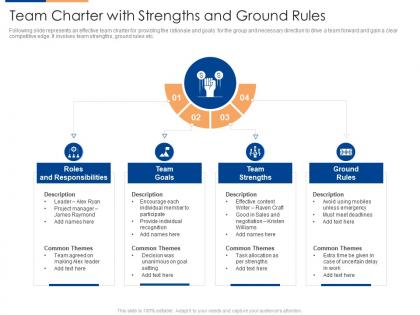
Following slide represents an effective team charter for providing the rationale and goals for the group and necessary direction to drive a team forward and gain a clear competitive edge. It involves team strengths, ground rules etc.
People who downloaded this PowerPoint presentation also viewed the following :
Team charter with strengths and ground rules organizational team building program with all 2 slides:
Use our Team Charter With Strengths And Ground Rules Organizational Team Building Program to effectively help you save your valuable time. They are readymade to fit into any presentation structure.
FAQs for Team charter with strengths and ground rules organizational
You definitely need the basics covered - purpose, roles, how you'll communicate, and who decides what. Meeting schedules and success metrics too, obviously. But seriously, don't skip the conflict resolution part. I've watched teams implode because they thought they'd "figure it out later" when tensions hit. Spoiler: they didn't. Timelines matter more than people think - fuzzy deadlines are momentum killers. Oh, and here's the thing that actually makes or breaks it: get everyone involved in writing the damn thing. If leadership just hands down a charter, people won't buy in. Block out time for the whole team to work through it together.
Honestly, you should totally make a team charter - it's like having a roadmap so nobody's confused about who does what. Saves you from those super awkward moments where everyone thought someone else was handling the big presentation (been there!). When things get crazy later, you'll have something solid to point back to. The key is doing it together as a team upfront rather than just having your manager dictate it. Trust me, it prevents so much drama when people actually know how decisions get made. Takes a bit of time initially but you'll be glad you did it when deadlines start hitting.
Think of your team charter like having a good referee - you've already decided the rules before things get messy. When people start butting heads, you can just point back to what everyone agreed on for communication and decisions instead of making it personal. Honestly, it's just smart conflict prevention that looks like planning. Plus you won't get those awkward "wait, I thought YOU were doing that" moments since roles are clear from day one. Next time drama starts brewing, try pulling out the charter first. Keeps things about the actual work, not hurt feelings.
Be specific about everyone's role without drowning in details. Cover the big stuff - who owns which deliverables, who makes final calls, and who's your expert on what. Honestly, I've seen team charters that read like novels and they just collect dust. Focus on what actually matters for your project. Also, call out those gray areas where people might clash or duplicate work. Short sentences work too. The whole point is someone should be able to scan it quickly and know exactly who to bug about whatever issue comes up. Nobody wants to decode a mystery when they're stuck.
Don't just dump a finished charter on them - that's a recipe for eye rolls and ignored emails (trust me, been there). Get everyone involved in writing it together. Let them hash out the goals and ground rules as a group. People actually care about stuff they helped create, which sounds obvious but somehow everyone forgets this. Once you've got it done, bring it up during meetings when decisions come up. Reference it when things get messy. Otherwise it'll just sit there doing nothing. The whole trick is making them feel like co-creators instead of just people who have to sign something they didn't write.
Quarterly reviews are usually a good baseline, but honestly don't get too hung up on the schedule. When you add new people or your project scope changes dramatically - that's when you really need to revisit it. I've watched teams ignore theirs for like 6 months straight, then act surprised when nobody knows who's doing what anymore. Just set a calendar reminder but also tell people they can speak up if something feels weird. The whole point is keeping it relevant to how you're actually working, not just having some document gathering dust somewhere.
Just use PowerPoint or Google Slides honestly - your team already knows how to use them and you can all edit together. Canva's nice too if you want it to look prettier without doing much work. Don't overthink the tool though, I've seen people spend way too long on that part. Content's what actually matters. Break it into clear sections - team purpose, roles, goals, working agreements. One main point per slide or people zone out. Oh and make it interactive when you're presenting, don't just read off slides like a robot. Pick whatever your team's already comfortable with and you'll be fine.
Your charter needs to nail down communication basics first - what platform for what (Slack for quick stuff, email for formal things), how fast people should respond, meeting schedules. Honestly, I've watched good teams implode over this seemingly simple stuff. Cover whether folks can actually disconnect after work hours and how to handle truly urgent situations. Oh, and definitely include guidelines for tone in written messages because wow, those go sideways fast. The real trick? Getting everyone to buy in upfront. Then you can point back to it when things inevitably get weird.
So basically, your team charter is like having a project GPS - it tells everyone exactly what you're building and why. You'll want to nail down your purpose, what you're actually delivering, and how you'll know if you succeeded. Trust me, this saves you from endless "oh wait, should we be doing X too?" meetings later on. When people start asking for random add-ons (and they will), just circle back to the charter. Does their request fit what we originally agreed to do? If not, that's a different project. Just make sure you write it clearly enough that it's actually helpful when those weird edge cases pop up.
Look at what your company's actually trying to accomplish this year, then write your team goals to connect directly to that stuff. I usually aim for like 3-4 solid objectives that clearly feed into the bigger picture. Don't just assume people will see the connection - spell it out in your charter. Honestly, this is where a lot of teams mess up because they think it's obvious how their work matters. It's not. Short sentences work great for some goals. Others need more explanation to show exactly how you're contributing to those organizational priorities. Makes everything way clearer for everyone involved.
Honestly, the worst thing you can do is make it super vague - like those generic mission statements nobody reads. Be specific about who does what and when. Oh, and don't write it alone! I made that mistake once and everyone just ignored it lol. Get your whole team involved so they actually care about following it. Setting crazy unrealistic deadlines is another trap - you'll just piss everyone off later. Keep checking back on it too. Otherwise it becomes one of those documents that sits there doing nothing. Make it together, keep it doable, and actually use the damn thing.
Oh def add way more communication stuff to your charter for remote work. Like which channels to use, response times, meeting rules - seriously the camera-on thing needs to be decided upfront or it gets weird. If you're in different time zones, nail down overlap hours and how async work flows. Virtual meeting etiquette too (mute yourselves people!). Remote teams need everything spelled out that would just happen naturally in an office. Oh and do your first charter convo over video so everyone's actually on the same page from the start.
Definitely get stakeholder input before you draft that charter - it'll save you tons of pain later. They know the organizational priorities and constraints your team might totally miss. Quick interviews upfront help you nail down realistic timelines and figure out who actually makes decisions. Plus they'll tell you what success looks like from their perspective, which honestly might be different than what you're thinking. Without their buy-in early, you risk building something that doesn't match expectations. Oh, and they usually spot potential roadblocks you haven't considered yet. Worth the extra effort.
Dude, think of it like having receipts for your team project. Everyone signs off on who does what, how you'll work together, and what the goals are. No more "oh I didn't know I was supposed to do that" drama later. When people start slacking, you literally just pull up the charter and be like "remember this?" It keeps all the decision-making transparent too - nobody's left wondering what happened in some meeting they weren't invited to. Honestly saved my butt so many times when group projects went sideways. Just forces everyone to actually commit upfront instead of winging it.
Honestly, involving your team in writing the charter is a game-changer. People actually follow rules they helped create instead of just pretending to care. You'll catch stuff you'd never think of too - different perspectives always surface issues or ideas that would slip past you. My old boss used to just hand us these documents and wonder why no one cared lol. The whole process gets everyone talking about priorities upfront, which prevents drama later. Just don't ask for input and then ignore it. That'll backfire hard.
-
Excellent work done on template design and graphics.
-
Informative design.