

Team Operating Cadence Meeting Plan




Try Before you Buy Download Free Sample Product
 Impress Your
 Audience
 100%
100% Editable
 Save Hours
 of Time


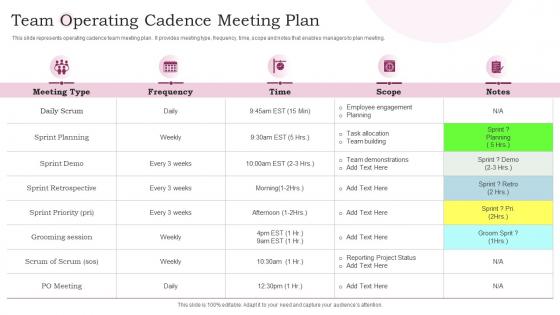
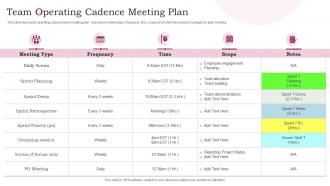
This slide represents operating cadence team meeting plan. It provides meeting type, frequency, time, scope and notes that enables managers to plan meeting.
People who downloaded this PowerPoint presentation also viewed the following :
Team Operating Cadence Meeting Plan with all 6 slides:
Use our Team Operating Cadence Meeting Plan to effectively help you save your valuable time. They are readymade to fit into any presentation structure.





FAQs for Team Operating
Honestly, the communication alone makes it worth it - people finally know what's going on instead of guessing. Weekly check-ins help you spot problems before they blow up, and your team feels way less isolated (remote work can be brutal for that). Everyone stays on the same page with priorities too. The planning gets so much better when you have that regular rhythm. Oh, and fewer nasty surprises, which is huge. Start weekly and see how it goes - you might need to tweak the timing based on your team's vibe. Building those relationships is probably the biggest win though.
Honestly, the rhythm you set with team check-ins totally changes how your project plays out. Weekly meetings? You'll spot problems early and make quick fixes before they blow up. Daily standups work but can get annoying fast - just saying. If you only sync every two weeks, sure you save some time initially, but then issues pile up and suddenly you're way behind. More frequent feedback loops definitely boost your deliverable quality too. I'd start weekly and see how it feels for your specific team - some groups need more, others less.
Honestly, just pick the same time every week and stick with it. Your brain craves routine anyway. Avoid Monday mornings at 8am - nobody's functioning yet and you'll get zombie stares. I always send the agenda ahead of time so we're not sitting there like "sooo... what now?" Keep it tight - 30-45 minutes tops. Oh, and end 5 minutes early! People will actually love you for this because they can grab coffee before their next call. Make sure someone else can run it if you're sick. Include all the dial-in stuff in the calendar invite so people aren't scrambling.
Honestly, having regular team check-ins is like magic for accountability. You know you'll have to face everyone next week and explain what happened with that project you promised to finish. Nobody wants to be the person who constantly shows up empty-handed - it's awkward as hell. The meetings create this rhythm where people naturally share what's blocking them and make public commitments. I've seen it work way better than those random "how's it going?" Slack messages. Just gotta stay consistent with timing and actually circle back on what folks said they'd tackle.
Honestly, rotating who runs the meeting makes a huge difference - people actually pay attention when it's their turn. Switch things up with breakout rooms or quick polls instead of the same boring format every week. We started doing "wins and blockers" and it's way better than endless updates nobody cares about. Keep them short though, like 25 minutes tops. Send the agenda beforehand so people aren't blindsided. The biggest thing? Actually follow through on what you decide - otherwise why even bother meeting? Oh, and set timers for each topic or you'll end up in those painful 20-minute tangents about nothing.
You need those regular check-ins when you can't just walk over to someone's desk. Daily standups work great - keep them to 15 minutes though or people zone out. Weekly retros help too. Without this stuff, everyone ends up working in their own bubble and assumptions start piling up. Small problems turn into big headaches real quick. I've seen teams completely drift apart without some kind of rhythm. Find what works for your group - maybe it's more check-ins, maybe less. Start somewhere and tweak it. The goal is staying connected without drowning everyone in meetings.
Honestly, it depends on your team size. Small teams (2-5 people) can just huddle when stuff comes up - daily standups feel excessive. Medium teams around 6-12 usually do well with daily standups plus weekly planning sessions. Bigger or remote teams get messy though. You'll need squad-level dailies and then broader sync meetings on top of that. Cross-functional teams are the worst because everyone's on different timelines, so you might need separate rhythms that only merge at big milestones. Start with whatever feels right for how your team actually talks, then tweak it based on what keeps work moving.
Honestly, just track whether you're actually hitting your sprint goals and if blockers get sorted quickly. Survey your team every few months about meeting value - they'll tell you straight up if things suck. Watch team energy too. Are people engaged or just zombie-walking through standups? That's your biggest red flag right there. Quick decisions that actually stick = good sign. Meetings that drag on forever with no real outcomes = time to shake things up. I'd also check if your rhythm moves real work forward or just creates meetings for the sake of meetings (we've all been there). Trust me, you'll feel the difference.
Technology basically handles all the boring stuff so you can focus on real work. Slack and Asana are lifesavers - way better than sitting through another pointless meeting. Everyone can see what's happening, deadlines, who's doing what. Automated reminders keep things moving even when half your team's working weird hours or async. The trick is finding tools that match how you already work instead of forcing everyone to learn some complicated system. I made that mistake once - total disaster. Start with something simple, then add more if you need it.
Honestly? Most teams I've seen do well with 2-3 structured meetings weekly. Daily standups are clutch - keep them short though. Then maybe a planning session and retrospective. Don't go overboard because nobody wants to live in meetings when there's actual work to do. Each one should have a clear purpose and time limit. Once your team starts rolling their eyes at calendar invites, you've gone too far. I'd start basic and see what clicks. Some weeks you'll need more check-ins, others people just need heads-down time to actually get stuff done.
Ugh, bad team rhythm is the worst. You'll miss deadlines constantly and nobody knows what anyone else is doing. Communication just falls apart without regular check-ins. Projects end up dragging on forever - I swear some meetings could've been emails but then you need the opposite too, you know? People get disconnected and lose motivation fast. Decision-making slows to a crawl. The whole momentum dies. Honestly, just start with consistent meeting times and actually stick to them. Sounds boring but it works. Even those "pointless" weekly syncs help more than you'd think.
Don't make feedback this big separate thing - just weave it into stuff you're already doing. Sprint retros, standups, one-on-ones. People need to know it's coming so they can mentally prep. Creating that safe space is huge though. Some folks will never speak up in meetings but they'll write you paragraphs later or pull you aside. I've seen that so many times. Be consistent with when you ask for it. Multiple ways to give it. Honestly, start with just one feedback routine and build from there - otherwise it feels overwhelming and people shut down.
Honestly, start with retrospectives - figure out what's actually slowing you down. Change one thing at a time though. Maybe sprint length, or how many meetings you're doing. I've watched teams try to fix everything simultaneously and it's a disaster. Track stuff like cycle time and how happy people actually are so you know if changes matter. Small tweaks beat massive overhauls every time. Oh, and give changes like 2-3 cycles before you decide they suck. Set up monthly check-ins just for talking about cadence - sounds boring but it works.
Honestly, having a consistent team rhythm makes such a huge difference for morale. People get way less stressed when they know what to expect - like when meetings happen, check-ins, all that stuff. It's kinda like how a good playlist flows versus just hitting shuffle. Regular touchpoints keep everyone aligned and you catch problems before they blow up. But when the cadence is all over the place? Creates so much anxiety because nobody knows when they'll hear from each other next. I'd start by looking at your current meeting schedule - might be some obvious gaps messing with team vibes.
People always think team cadence means everyone's gotta march in perfect sync, but that's totally wrong. It's more about having predictable rhythms - like knowing when standup is, when reviews happen, stuff like that. The structure actually gives you more flexibility to plan your focused work time. Oh, and faster definitely doesn't mean better (learned that one the hard way). You want to find the right tempo for how your team actually communicates and gets things done. Honestly, rigid lockstep kills creativity anyway.
-
Incredibly beautiful designs that will help you get noticed! These eye-catching templates are perfect for corporate presentations that can be altered to fit any occasion or taste.
-
It is my first time working with them and that too on a friend's recommendation. I would say, I am not expecting such a worldly service at this low price.