


Team performance observation dashboard snapshot organizational team building program




Try Before you Buy Download Free Sample Product
 Impress Your
 Audience
 100%
100% Editable
 Save Hours
 of Time


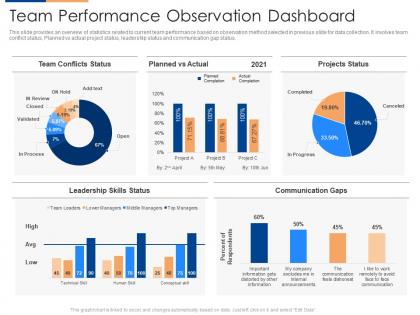
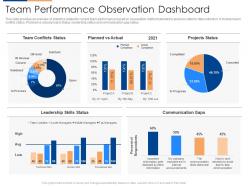
This slide provides an overview of statistics related to current team performance based on observation method selected in previous slide for data collection. It involves team conflict status, Planned vs actual project status, leadership status and communication gap status.
People who downloaded this PowerPoint presentation also viewed the following :
Team performance observation dashboard snapshot organizational team building program with all 2 slides:
Use our Team Performance Observation Dashboard Snapshot Organizational Team Building Program to effectively help you save your valuable time. They are readymade to fit into any presentation structure.
FAQs for Team performance observation dashboard snapshot organizational
Track your output stuff - productivity, quality, hitting deadlines. But honestly? The team health metrics are way more telling. Engagement scores, turnover, how people actually work together. I'd throw in some learning/development tracking too since that shows if you're building for the long haul. The whole point is balancing what gets shipped with whether your team can keep shipping it without burning out. Oh, and start with just 3-4 metrics or you'll drown in spreadsheets (trust me on this one).
Honestly, good communication is like the secret sauce for teams that actually work well together. When people can talk openly, trust builds naturally and you avoid those annoying misunderstandings that derail everything. Short version: everyone knows what they're supposed to do and feels heard, so they give a damn about the work. You'll catch problems while they're still small instead of waiting for the dumpster fire. Oh, and regular check-ins are clutch - but make sure it's not just you talking at people. Create space where your team can be real about what's broken without getting their heads bitten off.
Honestly, leadership makes or breaks everything on a team. Good leaders? They actually listen to people and don't breathe down your neck constantly. Communication flows better when there's trust - people aren't scared to speak up or pitch ideas. Your leader's decision-making style totally shapes how fast things get done too. I've seen teams fall apart because their manager was either absent or way too controlling (ugh, the micromanagers are the worst). The leaders who actually care about helping you grow your skills? Those are gold. Clear vision helps when projects go sideways, which they always do.
Okay so diverse teams crush it compared to homogeneous ones - you get all these different perspectives attacking the same problem. People from different backgrounds, ages, cultures? They approach stuff completely differently. Groupthink becomes way less of an issue. Meetings actually get interesting when someone challenges assumptions in a way you'd never think of. But here's the thing - psychological safety is huge. If people clam up because they don't feel comfortable, you're screwed. You've gotta actively make space for everyone to jump in, not just whoever talks the loudest. Otherwise you're basically wasting all that potential.
Honestly, start with making sure everyone's on the same page about what you're actually trying to accomplish. Regular check-ins are huge - but not those soul-crushing status updates, more like real talks about what's blocking people. I know it sounds corny, but those virtual coffee things or team lunches actually work. Mix up who's running different projects so people get to see how others think. Oh, and this is probably the biggest thing - people need to feel safe speaking up. When someone can ask a "dumb" question without getting side-eye, that's when the magic happens.
Honestly, team culture is like your team's operating system - it runs everything behind the scenes. Good culture makes people feel safe taking risks and sharing wild ideas instead of hoarding their work. Trust speeds things up crazy fast. But toxic environments? They breed fear and backstabbing that just kills creativity. I've seen teams where the whole becomes way less than the sum of its parts because everyone's protecting themselves. Culture either amplifies what you've got or completely tanks it. Best thing you can do is just start acting how you want everyone else to act.
Yeah, definitely go with SMART goals - you know, specific, measurable, all that stuff. But here's what actually works: get your team involved in setting them instead of just dropping goals on people. I learned this the hard way lol. Have everyone weigh in on what's realistic and what they actually care about. Connect each goal to the bigger picture so they get why it matters. Write it down somewhere everyone can see and do weekly check-ins. Oh, and start small - maybe 2-3 goals max. You can always pile on more once these stick.
Honestly, ditch those quarterly reviews - they're pretty useless by the time they happen. Try weekly or bi-weekly check-ins instead. Focus on specific stuff that just happened, not generic "nice work" comments. Get your team giving feedback to each other too, because they notice things you won't. Oh, and definitely call out what's going well! People shut down if it's always about problems. The whole thing only works if everyone feels safe being honest though. Maybe start with one person? See what timing feels right - you'll figure out what works through trial and error.
Honestly, remote work's a mixed bag for teams. You lose those random hallway conversations that actually matter more than you'd think. But people get way more focused time without office chaos. Communication gets weird - more planned but happens less often. What's worked for me is being really intentional about staying connected. Video calls over messages when you can, regular check-ins that aren't just work stuff, maybe even some random chat time. Team vibes will definitely change, but it doesn't have to tank if you're proactive about it.
Team activities actually work because they give people chances to connect outside the usual work stuff. When coworkers get to know each other personally, they communicate way better on real projects. Escape rooms are great for this - or cooking challenges, anything where people have to genuinely work together. I've noticed the biggest difference happens when people who never normally talk start collaborating naturally. Oh, and they're definitely more fun than sitting through another meeting! Try doing something every few months, but don't force anyone to participate. That always backfires.
Oh man, communication issues are the worst - people just don't know what they're supposed to be doing half the time. Then you've got that thing where everyone's too scared to actually say what's wrong because leadership gets defensive. Clear roles help a ton. Regular check-ins too, but make them actually safe spaces where people can complain without consequences. Honestly? You have to go first with being vulnerable - can't expect your team to open up if you're still playing it safe. Also conflicting priorities from above will kill any team, so try to shield them from that chaos when you can.
Honestly, EQ is a game changer for teams. When people can actually read emotions and manage their own reactions, you skip so much unnecessary drama. Better communication happens naturally - like, people actually listen instead of just planning what they'll say next. Teams with higher emotional intelligence create that safe space where everyone's comfortable throwing out wild ideas or saying "yeah, I messed up." Which is huge, right? My advice? Watch the room during meetings. If someone seems checked out or frustrated, just ask. Sometimes a quick "hey, how are you feeling about this?" prevents everything from going sideways later.
Honestly, the best way is checking productivity and quality scores before/after training - that's your baseline right there. Survey your people too because they'll be brutally honest about whether it was actually useful or total BS. I'd also watch retention rates and internal promotions since good training usually leads to both. The tricky part? You need to measure immediate stuff AND long-term changes in behavior. Quick wins don't always stick, you know? Set up quarterly check-ins to compare these numbers. Oh, and track how fast people actually use new skills on real projects - that's where you'll see if it really worked.
Honestly, you gotta tackle conflict before it turns your team into a bunch of passive-aggressive zombies. Make people feel safe to actually speak up - nobody wants to be that person who rocks the boat, but someone has to. When disagreements happen, go after the problem, not each other. Ground rules help too, plus making sure everyone knows their lane so there's less stepping on toes. Oh, and this might sound weird, but conflict's actually useful for making better decisions. Regular check-ins catch drama early before it explodes.
Honestly, start with getting just one team firing on all cylinders - the rest kind of takes care of itself. High-performing teams are like magnets for good people, and they end up setting the bar for everyone else. Innovation goes through the roof. People actually want to stay at your company (wild concept, right?). Plus your numbers improve across the board. I've seen it happen - these teams basically become leadership factories and make the whole organization more adaptable. The ripple effect is real, but you gotta nail that first team before worrying about scaling it everywhere.
-
Helpful product design for delivering presentation.
-
Wonderful templates design to use in business meetings.