


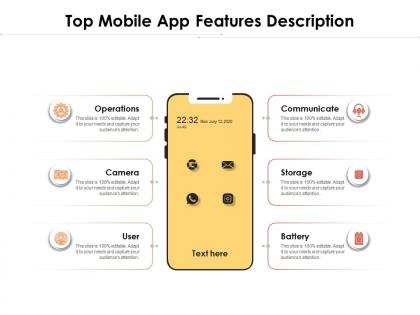
Top mobile app features description




Try Before you Buy Download Free Sample Product
 Impress Your
 Audience
 100%
100% Editable
 Save Hours
 of Time


Our Top Mobile App Features Description are topically designed to provide an attractive backdrop to any subject. Use them to look like a presentation pro.
People who downloaded this PowerPoint presentation also viewed the following :
Top mobile app features description with all 2 slides:
Use our Top Mobile App Features Description to effectively help you save your valuable time. They are readymade to fit into any presentation structure.
FAQs for Top mobile
Honestly, focus on the basics first - intuitive navigation and fast loading are non-negotiables. Clean interface that doesn't make people overthink stuff. Push notifications are great but seriously, don't spam people or they'll just disable everything. Make sure basic functions work offline (saves you so many headaches later). Search needs to actually work well, and please make it accessible for everyone. Different device sizes should display properly - I've seen so many apps that look terrible on tablets. Oh, and I know it's tempting to add cool features right away, but nail these fundamentals first. You'll thank yourself later.
Dude, personalization is a game changer because it makes users feel like your app actually knows them. Instead of shoving generic stuff at everyone, you're showing them what matters to *them* specifically. People stay way longer when content feels relevant - it's like the difference between a good conversation and some random person yelling at you on the street, you know? Start simple with personalized notifications based on how they use the app. Then maybe work up to custom dashboards or feeds. Honestly, most apps are already collecting the data anyway, so just use it to create those "whoa, this app gets me" moments that keep people hooked.
Dude, push notifications are your secret weapon for getting people back into your app. They're perfect for stuff like cart reminders, personalized updates, or dropping news about cool new features. Just don't go crazy with the timing - learned that the hard way when users complained about getting pinged at like 3am lol. Good notifications can bump your retention by 20-40% though, which is pretty solid. I'd start by grouping your users into different segments, then test out various message styles. You'll figure out what actually makes them tap that notification instead of just swiping it away.
So in-app analytics are basically your backstage pass to see what users actually do in your app. You can spot where people bail out, which features they're obsessed with, and what's making them frustrated. Track stuff like screen time and tap patterns - honestly way more useful than I expected when I first started looking into this. The data helps you A/B test changes and fix slow loading times. Oh, and you can personalize content too based on what people prefer. Just don't go crazy tracking everything right away or you'll get overwhelmed. Focus on your main user journey first.
For sure start with multi-factor auth - can't really get around that anymore. Encryption for everything going in and out is a must. Session management gets overlooked way too often but you need auto-logouts and proper token handling. Biometrics are pretty slick for user experience while keeping things secure. Oh and definitely validate all your inputs to block injection attacks - seen that bite people before. Your API endpoints need to be locked down tight too. Maybe throw in some security audits down the road. Those should cover your main weak spots.
Dude, onboarding is literally make-or-break for retention. People who actually finish a solid onboarding flow? They're like 3-5x more likely to stick around. You've got maybe 30 seconds before users peace out - honestly probably less with how impatient everyone's gotten. Skip the boring generic tour thing. Instead, get them to that "holy shit, this actually works" moment as fast as possible. Don't dump every single feature on them right away. Pick ONE thing that'll make them go "okay yeah, I need this" and focus everything on that. Show them winning at something real, not just clicking through slides.
Okay so sharing features are honestly a game-changer for apps. Users basically become your free marketing team when they post stuff from your app to their friends. Plus people stick around longer when they can easily share things - makes them feel more invested, you know? The viral aspect is insane too. One good share can snowball into tons of new users. Oh and it builds that social proof thing where people trust your app more when they see friends using it. I'd go with Facebook, Instagram, and Twitter first since those drive the most actual traffic.
Honestly, offline functionality is a game changer for user retention. Your users are on subways, flights, dead zones - you know how frustrating it is when apps just break without wifi. If they can still browse cached content or do basic tasks that sync up later, they'll stick around way longer. It's one of those invisible features nobody thinks about until it saves their ass. I'd focus on whatever your most-used features are first - like don't try to make everything work offline right away, that's just overwhelming.
Honestly, just nail the basics first - consistency, clean layouts, and making the important stuff obvious. Don't make users guess where things are or how stuff works between screens. White space is clutch, seriously don't jam everything together. Your main buttons should be thumb-friendly and super easy to spot. Oh and this is key - figure out your loading screens and error messages upfront, not when you're scrambling at the end. I always start with wireframes to get the flow right before getting distracted by all the pretty colors and animations.
So gamification works by hitting people's competitive side and that whole need to achieve stuff. Points, badges, leaderboards - the usual suspects. Honestly, it's crazy how addictive a simple streak counter can be (I'm looking at you, Duolingo). Don't just throw badges at random stuff though - that feels cheap. Your game elements need to actually make sense with what your app does. I'd start with maybe daily challenges or some achievement system? See what clicks with users first. Oh, and progress bars are weirdly satisfying too. Test small before going all-out with the gamification thing.
Honestly, just focus on making it fast and dead simple first. Autocomplete is a must - people expect it now. Put your search bar somewhere obvious so users don't get annoyed hunting around for it. Voice search is becoming pretty standard too, though I'd worry about that after you get the basics down. Handle typos well because, let's be real, everyone makes them. Your results should load quickly with decent previews so people know what they're clicking on. Filters are great but only if they actually make sense for what you're searching. Start simple, then add the bells and whistles once everything works smoothly.
Dude, third-party APIs are a lifesaver. Instead of building payment systems or maps from scratch, you just plug into existing ones. Weather data, social logins, all that stuff is already out there. I mean, why waste months coding something that Stripe or Google already perfected? Your app gets better features faster. Users are happy, you're not pulling your hair out debugging payment flows at 2am. These companies have whole teams maintaining their APIs too, so they're usually rock solid. Definitely scope out what's available before you start building anything major yourself.
Voice control and screen reader stuff should be your top priority - that's where you'll help the most people. Also bump up text sizes and add high contrast options. Oh, and haptic feedback is clutch for deaf users since vibrations can replace sound alerts. Don't sleep on alternative inputs either, like switch controls for people with mobility issues. Apple and Google's APIs actually make this pretty painless now. Pro tip: just turn on VoiceOver or TalkBack and try using your app. You'll spot problems instantly.
Dude, location services are game-changers for apps. Your users get stuff that's actually useful based on where they are - like restaurant suggestions nearby or store deals when they're walking past. Geofencing is pretty cool too, it can auto-check people into events or send them relevant notifications. I mean, it's kinda wild how well it works when you nail it. Just don't be weird about their data, you know? Pick one solid use case first that'll actually make their day easier instead of trying to do everything at once.
Definitely start with in-app rating prompts, but don't be that app that asks right after crashing - so annoying. Add some feedback forms for bug reports and maybe simple thumbs up/down buttons on your main features. I'd throw in a feedback widget that's always there too. Oh, and exit surveys when people delete the app - that's where you get the really brutal honest stuff about what sucks. Actually responding to feedback helps a lot, even just a quick "thanks, we're looking into it." Just pick whichever one seems easiest to build first and go from there.
-
Unique research projects to present in meeting.