


Top Ways To Reach Your Target Audience Powerpoint Presentation Slides




Try Before you Buy Download Free Sample Product
 Impress Your
 Audience
 100%
100% Editable
 Save Hours
 of Time


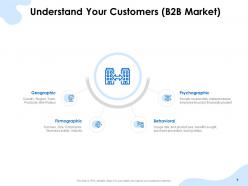
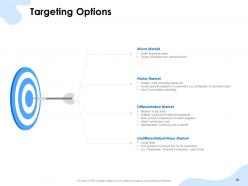
Top Ways To Reach Your Target Audience PowerPoint Presentation Slides is a gripping way to present your customer strategy. Using our effective target marketing PPT theme you can showcase the buyer persona to portray the target market segment. Depict your B2B or B2C market based on geographic, psychographic, and behavioral parameters through this consumer strategy PowerPoint presentation. Illustrate marketing targeting options like micro-market, niche market, differentiated market, and mass-market via our increasing customer reach PPT deck. Methods used to target and address audience PowerPoint themes are useful for marketers to present a step-by-step customer strategy. Strong data visualization tools included in this marketing strategy PPT template help you elucidate market size analysis, competitive landscape, etc. Use this marketing to the right audience PowerPoint presentation to describe customer success metrics like customer churn, and net promoter score. By downloading our marketing strategy PowerPoint deck, you will get access to vital stats on customer behavior, preferences, and habits.
People who downloaded this PowerPoint presentation also viewed the following :
Content of this Powerpoint Presentation
Slide 1: This slide introduces Top Ways to Reach Your Target Audience. State Company name and begin.
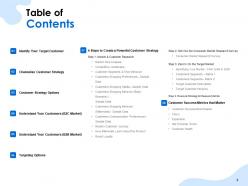
Slide 2: This slide displays Table of Contents
Slide 3: This slide explains Customer Comes First.
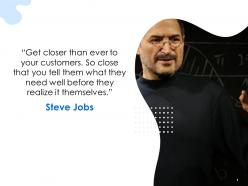
Slide 4: This slide displays quotes written by Steve Jobs.
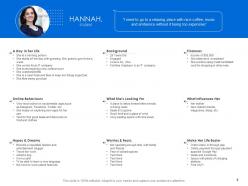
Slide 5: This slide represents details of Student named Hannah.
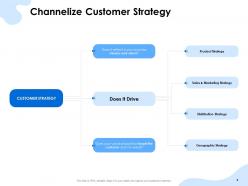
Slide 6: This slide shows Channelizing Customer Strategy.
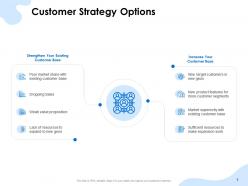
Slide 7: This slide shows Customer Strategy Options
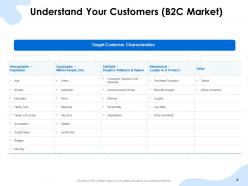
Slide 8: This slide shows Target Customer Characteristics.
Slide 9: This slide tells to Understand Your Customers (B2B Market)
Slide 10: This slide shows Targeting Options.
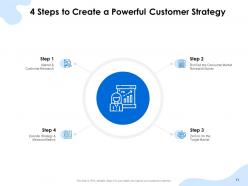
Slide 11: This slide shows 4 Steps to Create a Powerful Customer Strategy.
Slide 12: This slide showcases Step - 01 Market & Customer Research.
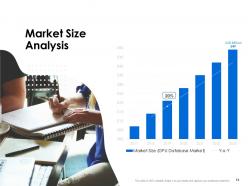
Slide 13: This slide shows Market Size Analysis
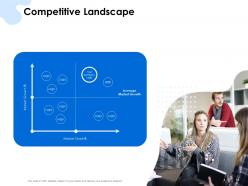
Slide 14: This slide displays Competitive Landscape
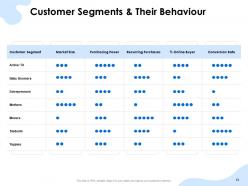
Slide 15: This slide shows Customer Segments & Their Behavior.
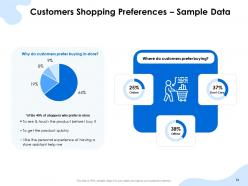
Slide 16: This slide displays Customers Shopping Preferences – Sample Data
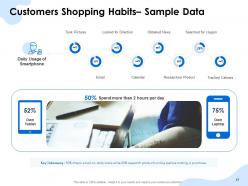
Slide 17: This slide showcases Customers Shopping Habits– Sample Data
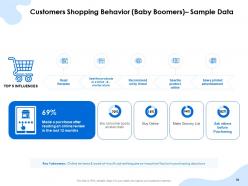
Slide 18: This slide displays Customers Shopping Behavior (Baby Boomers)– Sample Data.
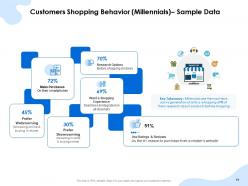
Slide 19: This slide shows Customers Shopping Behavior (Millennials)– Sample Data.
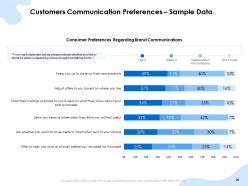
Slide 20: This slide showcases Customers Communication Preferences – Sample Data.
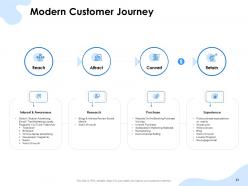
Slide 21: This slide showcases Modern Customer Journey.
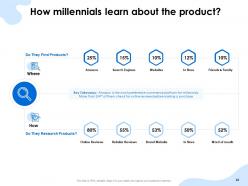
Slide 22: This slide describes How millennials learn about the product?
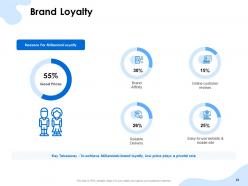
Slide 23: This slide shows Brand Loyalty
Slide 24: This slide displays Step - 02. Roll Out the Consumer Market Research Survey
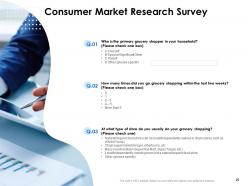
Slide 25: This slide displays Consumer Market Research Survey
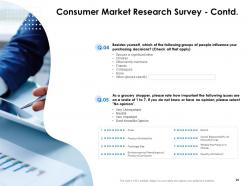
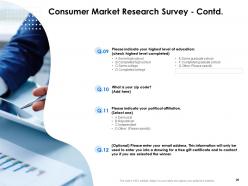
Slide 26: This slide is continued with Consumer Market Research Survey - Contd.
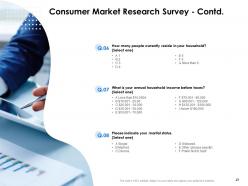
Slide 27: This slide is continued with Consumer Market Research Survey.
Slide 28: This slide is continued Consumer Market Research Survey.
Slide 29: This slide displays Step - 03. Zero In On the Target Market.
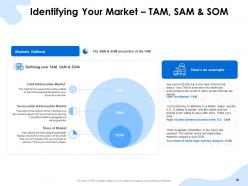
Slide 30: This slide showcases Identifying Your Market – TAM, SAM & SOM
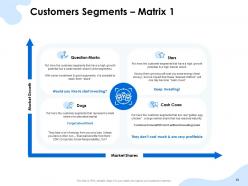
Slide 31: This slide showcases Customers Segments – Matrix 1
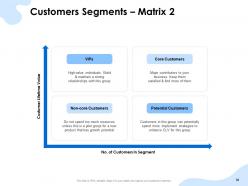
Slide 32: This slide displays Customers Segments – Matrix 2
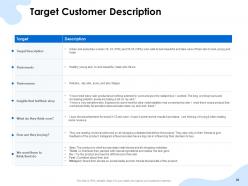
Slide 33: This slide showcases Target Customer Description.
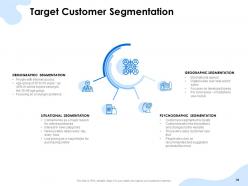
Slide 34: This slide shows Target Customer Segmentation
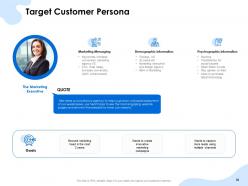
Slide 35: This slide shows Target Customer Persona.
Slide 36: This slide displays Step - 04 Execute Strategy & Measure Metrics.
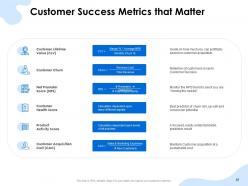
Slide 37: This slide shows Customer Success Metrics that Matter
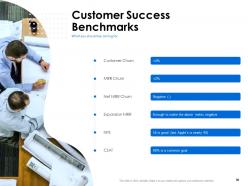
Slide 38: This slide showcases Customer Success Benchmarks.
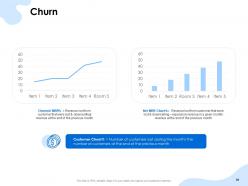
Slide 39: This slide shows Churn rate.
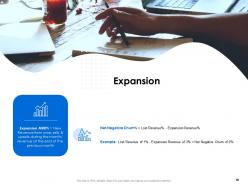
Slide 40: This slide displays Expansion.
Slide 41: This slide displays Net Promotor Score.
Slide 42: This slide displays Customer Health.
Slide 43: This is How to Develop the Perfect Target Customer Personas Icons Slide.
Slide 44: This slide is titled as Additional Slides for moving forward.
Slide 45: This slide displays Agenda.
Slide 46: This slide shows Company Introduction.
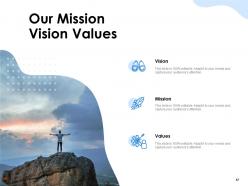
Slide 47: This slide displays Our Mission, Vision and Values.
Slide 48: This slide displays Our Goals.
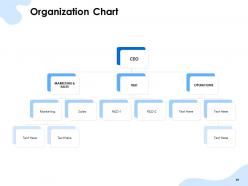
Slide 49: This slide shows Organization Chart
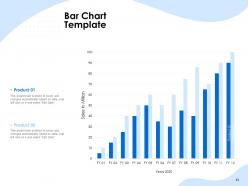
Slide 50: This is Bar Chart Template with Products Comparisons.
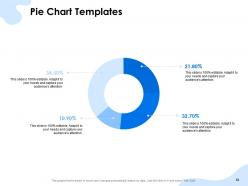
Slide 51: This slide displays Pie Chart Template
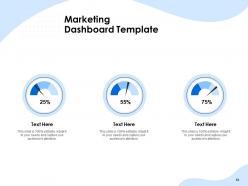
Slide 52: This is Marketing Dashboard Template.
Slide 53: This slide displays Linear Diagram.
Slide 54: This slide displays Circular Diagram
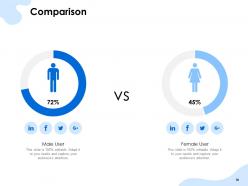
Slide 55: This slide displays Comparison in percentage.
Slide 56: This slide shows Marketing Roadmap Template.
Slide 57: This slide displays Timeline
Slide 58: This is Thank You slide with address, email address and contact number.
Top Ways To Reach Your Target Audience Powerpoint Presentation Slides with all 58 slides:
Use our Top Ways To Reach Your Target Audience Powerpoint Presentation Slides to effectively help you save your valuable time. They are readymade to fit into any presentation structure.


FAQs for Top Ways To Reach Your Target Audience
Check your Google Analytics and social media insights first - that data beats guessing every time. Build buyer personas from what you're actually seeing in the numbers and customer behavior. Competitor stalking is totally fair game too (why reinvent the wheel?). A/B test different messages to see what clicks. Surveys work great, or just chat with your sales team about the questions they get constantly. Sometimes the obvious stuff is right there. Mix the hard data with real customer feedback and you'll figure out who you're really talking to pretty quick.
Honestly, I just make 3-4 different template versions and swap them depending on who I'm presenting to. Executives want the big picture stuff right upfront - metrics, key points, done. They're busy and won't sit through detailed breakdowns. Your technical people are the opposite though - they actually want to see the data and processes behind everything. Sales teams? Just hit them with benefits and ROI numbers. I've found most audiences fit into one of those buckets anyway. Don't overthink it - you're not rebuilding from scratch each time, just tweaking the content depth and what you put first. Figure out what's bugging your audience most, then structure everything to tackle that problem right away.
Honestly, just ask your users what they think - that's gonna tell you way more than guessing. Set up some A/B tests with different template styles, or check your click rates and how long people actually stay on the page. I've watched whole teams completely change their designs just from a few user comments (which is kinda wild but makes sense). Don't ask vague stuff like "do you like this?" Get specific about what's readable, what works, what doesn't. Oh, and make it ongoing - you'll keep learning what actually clicks with people instead of just hoping your templates work.
Honestly, visual storytelling works because our brains are wired for stories and pictures way more than boring bullet points. People remember narratives - it's just how we're built. Instead of drowning them in stats, try showing a real customer's journey or a simple before/after scenario. I've seen presentations where everyone's scrolling their phones, then someone tells one visual story about an actual person and suddenly everyone's paying attention. Emotions hook people first. Then you can hit them with the data. Replace your next slide of numbers with an illustrated timeline or customer map - you'll actually see people lean forward instead of tuning out.
Oh man, it's definitely assuming everyone thinks like you do. Like, you might geek out over product specs, but most people just want to know if it'll fix their headache. Marketers do this ALL the time - they're super tech-savvy so they think customers are too. Wrong. Also? Stop thinking demographics = behavior. Two 35-year-old suburban moms can shop completely differently. I swear, half these "buyer personas" are just made up in meetings. Go actually talk to real customers instead of guessing what they want.
Check your analytics religiously - that's where the real gold is. Instagram Insights will show you which posts actually get people talking and sharing. Peak activity times matter too, so note when your audience is most active. Hashtag performance can be surprisingly revealing about what topics hit different. Videos vs. carousels vs. photos - see what format your people prefer. Oh, and read through the comments! That's honestly my favorite part because you'll see exactly how they describe things. Do a monthly deep dive and build your content around whatever keeps working.
Dude, this is huge - corporate people want super clean slides with data, bullet points, and tons of white space. They're basically scanning for info quickly. But creatives? Total opposite. Give them bold colors, weird layouts, interactive stuff that actually excites them. I bombed a presentation to designers once with the most boring template ever, so trust me on this lol. You gotta match the vibe to who's sitting there. Quick test: are they trying to crunch numbers or get pumped up about ideas? That'll tell you everything.
Know your audience before you pick colors or fonts. Older people need bigger text and better contrast - learned this the hard way once. Younger crowds can handle trendy stuff. Tech people want that clean, minimal look but healthcare folks prefer something more traditional and trustworthy. Cultural background matters too since colors mean different things to different groups. Honestly, I've watched presentations crash just because the design didn't match the room's vibe. Don't go with what you like. Research who's actually sitting there, then design for them.
Honestly, personalized templates work because people can tell when you're actually talking to *them* vs. blasting everyone with the same boring message. Nobody reads those "Dear valued customer" emails anyway, right? When you split your audience into segments - like newbies vs. longtime users - and adjust your messaging to match where they're at, engagement can literally jump 20-50%. It's pretty wild. I'd start with just 2-3 template versions based on your biggest groups and see what clicks. The whole thing about addressing specific pain points really does make a difference - way better than generic fluff that could apply to anyone.
Focus on engagement rate, reach, and click-throughs first - they actually show if people give a damn about what you're posting. Bounce rate and time on page matter too since there's no point driving traffic that immediately leaves. Comments and shares are honestly the best indicators though, way better than just likes. Oh and saves! People only save stuff they actually want to reference later. Track your follower growth but don't obsess over it - I'd rather have 100 engaged followers than 1000 dead ones. Once you nail these basics, then you can get nerdy with platform-specific stuff.
Honestly, you've gotta dig deep into who your audience actually is - their values, how they communicate, what matters to them. I made the mistake once of assuming what worked for one group would work everywhere. Spoiler: it didn't. Focus groups are your friend here. Test stuff with people from different backgrounds and actually listen. Use diverse imagery that feels real, not forced - people can smell tokenism from miles away. Pay attention to cultural holidays and sensitivities too. Start by looking at what you're already doing and spot the blind spots. Then maybe create some loose guidelines so your team doesn't accidentally step in it.
Honestly, short surveys are your best friend - like 5-7 questions tops or people just nope out. I learned this the hard way! Mix multiple choice with maybe one open-ended question for the good stuff. Don't ask leading questions either, that's basically cheating. For polls, just use Instagram stories or LinkedIn instead of sending people to some random survey site. Nobody wants extra steps. Oh, and timing matters - hit them when they're actually online, not during Monday morning chaos. Always tell people what you found out afterward. They helped you, so return the favor.
Start with something they actually deal with every day - a problem that makes them go "oh god, yes, that's exactly my life." Real customer stories work way better than generic examples. I always do this mini-story arc thing: here's the mess, here's why it matters (like, really matters), then boom - here's how we fixed it. Seriously, I've watched people's eyes glaze over at data presentations completely snap back to attention when you say "Company X tried this and here's what went down." Make it feel like you're just talking to them. Always end with "so what's this mean for you?"
Honestly, people are so used to scrolling through TikTok and Instagram that sitting through old-school presentations feels brutal now. Your audience expects interaction - polls, live Q&A, videos that actually grab attention. Just talking at slides for an hour? That's dead. They want to participate, not zone out on their phones (which they'll do anyway if you're boring). Even something simple like a quick poll makes a huge difference. I learned this the hard way at my last work presentation - added one interactive element and suddenly everyone was paying attention instead of checking emails.
Check your audience quarterly through surveys and watch those engagement numbers - they'll tell you everything. Social media is gold too, that's where people actually talk about what they want. Most teams just recycle the same boring stuff forever (drives me crazy honestly). Set up a regular review schedule to refresh your designs and try new formats. Small changes work way better than waiting for some massive redesign project. Your templates should grow with your audience naturally - like, don't overthink it but definitely don't ignore the data you're getting.
-
Design layout is very impressive.
-
Nice and innovative design.
-
Great product with effective design. Helped a lot in our corporate presentations. Easy to edit and stunning visuals.
-
Best Representation of topics, really appreciable.