

Training and development proposal powerpoint presentation slides





Try Before you Buy Download Free Sample Product
 Impress Your
 Audience
 100%
100% Editable
 Save Hours
 of Time


It is an undeniable fact that providing proper training to the employees equips them with the right skills thus helping them develop in their field and deliver competent work. Many organizations concerned about grooming their employees are looking for companies that provide training services, hence a well-structured training proposal can really act as a good marketing tool. Use this comprehensively designed professional PPT template to quote your services competently. Outline your training objectives such as effective leadership, resolving key issues, etc. Also, describe your training process and talk about your team members and their expertise that will play a major role in persuading your clients. Grab more training projects for both small and large organizations using this informative training and development proposal template. This industry-training compliant proposal template will help you in pitching your services efficiently in front of your potential clients. Since training and development service industry is quite competitive, stand out of the pack and win more projects with this informative template. This PPT is designed in such a way that it will help you in creating the right proposal for any training service that your organization provides. So, download this fully customizable and editable Training And Development Proposal Powerpoint Presentation Slides to save yourself from the hassle of creating a proposal from scratch.
People who downloaded this PowerPoint presentation also viewed the following :
Content of this Powerpoint Presentation
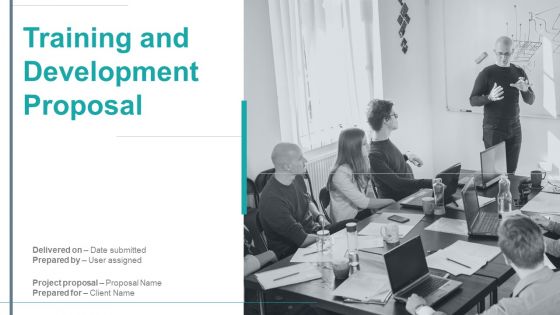
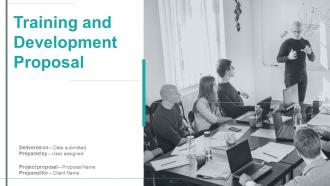
Slide 1: This slide introduces Training and Development Proposal. Mention Client Name, Proposal Name, Date submitted.
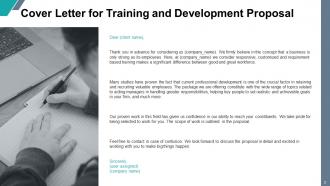
Slide 2: This is cover letter slide with signature and company name.
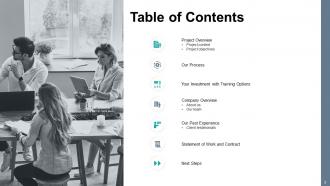
Slide 3: This slide displays Table of Contents containing Project Overview, Project context, Project objectives, Our Process, Your Investment with Training Options, Company Overview, About us, Our team, Our Past Experience, Client testimonials, Statement of Work and Contract, Next Steps
Slide 4: This slide is continued with Table of Contents containing Project Overview, Project context, Project objectives, Our Process, Your Investment with Training Options, Company Overview, About us, Our team, Our Past Experience, Client testimonials, Statement of Work and Contract, Next Steps
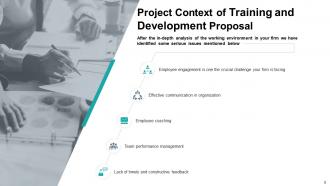
Slide 5: This slide showcases Project Context of Training and Development Proposal.
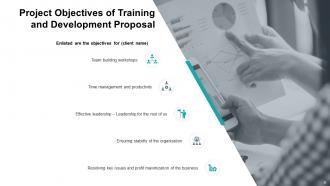
Slide 6: This slide displays Project Objectives of Training and Development Proposal.
Slide 7: This slide displays Table of Contents containing Project Overview, Project context, Project objectives, Our Process, Your Investment with Training Options, Company Overview, About us, Our team, Our Past Experience, Client testimonials, Statement of Work and Contract, Next Steps
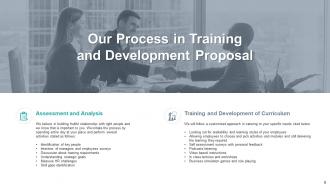
Slide 8: This slide presents Our Process in Training and Development Proposal such as Assessment and Analysis, Identification of key people, Interview of managers and employees surveys, Discussion about training requirements, Understanding strategic goals, Measure HR challenges and Skill gaps identification
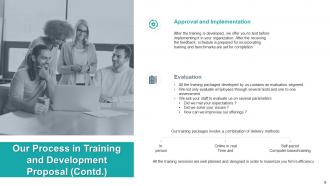
Slide 9: This slide is continued with Our Process in Training and Development Proposal
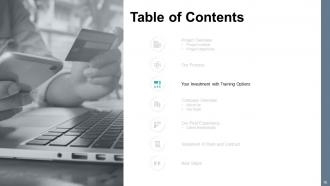
Slide 10: This slide displays Table of Contents containing Project Overview, Project context, Project objectives, Our Process, Your Investment with Training Options, Company Overview, About us, Our team, Our Past Experience, Client testimonials, Statement of Work and Contract, Next Steps
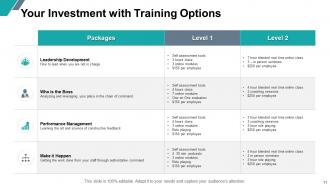
Slide 11: This slide showcases Investment with Training Options.
Slide 12: This slide also displays Table of Contents containing Project Overview, Project context, Project objectives, Our Process, Your Investment with Training Options, Company Overview, About us, Our team, Our Past Experience, Client testimonials, Statement of Work and Contract, Next Steps
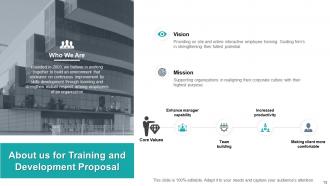
Slide 13: This is About us slide for Training and Development Proposal. Showcase your vision,mission and core values.
Slide 14: This is Our Team slide.
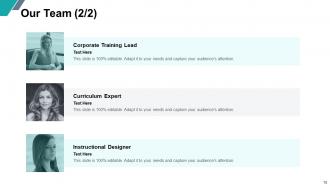
Slide 15: This is also Our Team slide.
Slide 16: This slide displays Table of Contents contaning Project Overview, Project context, Project objectives, Our Process, Your Investment with Training Options, Company Overview, About us, Our team, Our Past Experience, Client testimonials, Statement of Work and Contract, Next Steps
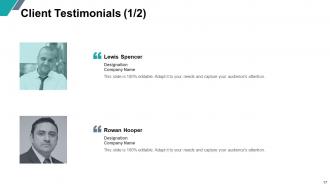
Slide 17: This is Client Testimonials slide with Company Name and Designation.
Slide 18: This is also Client Testimonials slide.
Slide 19: This slide displays Table of Contents containing Project Overview, Project context, Project objectives, Our Process, Your Investment with Training Options, Company Overview, About us, Our team, Our Past Experience, Client testimonials, Statement of Work and Contract, Next Steps
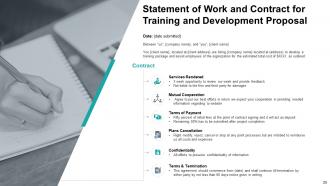
Slide 20: This slide explains Statement of Work and Contract for Training and Development Proposal
Slide 21: This is also Table of Contents slide containing Project Overview, Project context, Project objectives, Our Process, Your Investment with Training Options, Company Overview, About us, Our team, Our Past Experience, Client testimonials, Statement of Work and Contract, Next Steps
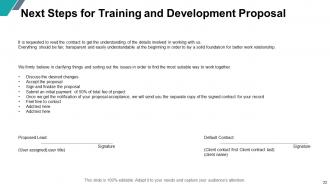
Slide 22: This slide displays Next Steps for Training and Development Proposal.
Slide 23: This is Contact slide with Email address and contact numbers.
Slide 24: These are Additional Slides.
Slide 25: This is About us slide.
Slide 26: This is Our Mission slide with Vision,Mission and Goal.
Slide 27: This is 30 60 90 Days Plan slide.
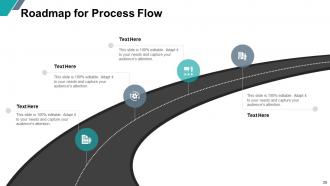
Slide 28: This slide showcases Roadmap for Process Flow.
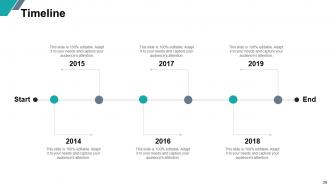
Slide 29: This is 7 years Timeline slide.
Training and development proposal powerpoint presentation slides with all 29 slides:
Use our Training And Development Proposal Powerpoint Presentation Slides to effectively help you save your valuable time. They are readymade to fit into any presentation structure.




FAQs for Training and development proposal
So basically, you're trying to close skill gaps and keep people from jumping ship - which honestly sounds like what half the companies I know need right now. Focus on giving your team real development paths, both technical stuff and leadership training. The whole point is building a culture where learning just becomes normal, not some forced corporate thing. You want measurable productivity gains in six months, so start thinking about who'd be good for the pilot program. Performance boost plus better retention? That's hitting two birds with one stone.
Honestly, I'd hit this three ways before diving into training. Send out surveys so people can rate their own skills first - you need that baseline. Performance reviews and project data will show you the real gaps though. Focus groups with team leads are where you get the good stuff - they'll tell you straight up who's struggling with what. Way better than guessing, right? Once you've got all three pieces, you can actually build learning paths that make sense for each person instead of shoving everyone through the same boring modules.
So they're doing this three-part thing for training. Hands-on workshops for the main stuff - honestly makes sense since you can actually practice and bug people with questions. Online modules too, which is clutch because you can do those whenever (way better than being stuck in some boring lecture hall). Oh, and one-on-one coaching for the personal development bits. Pretty smart actually - hits different ways people learn and works around your crazy schedule. Keep an eye on your calendar next week though, they're sending workshop signups and login info.
Honestly, I'd focus on three things: knowledge tests at 30 and 90 days, checking if their actual performance metrics improve, and feedback surveys. The surveys are clutch - people don't sugarcoat whether training was garbage or not. But here's the thing everyone misses: you gotta see if they're actually using this stuff day-to-day, not just passing tests. Maybe have managers do quick check-ins around the 60-day mark? Oh, and start mapping out how you'll track everything now so you're not scrambling later trying to collect data.
Okay so budget-wise, you've got your obvious stuff first - trainer fees, materials, any software subscriptions. But here's what always bites people: the hidden costs. Employee time away from their actual jobs, overtime coverage, venue rental if you're doing it in-person. Travel expenses too, obviously. Honestly, I always tell people to add like 10-15% on top because something *always* costs more than you think it will. Maybe break it down quarterly? That way leadership can see how the spending hits throughout the year instead of one massive chunk.
So the training's actually smart about this - it'll hit those exact skill gaps from your assessment. Three main tracks: digital stuff, project management, and communication. Each department gets their own content too, which is clutch because nobody wants to sit through irrelevant scenarios. You'll get before/after tests to see if it's actually working, not just going through the motions. Oh, and definitely check your team's individual results beforehand. That way you can point them toward what they actually need instead of just throwing them into everything.
So it's a 6-month rollout broken into three chunks. First phase starts next month - that's your basic foundational stuff, runs about 8 weeks. Then you've got specialized skills training for another 8 weeks. The last bit is where people actually practice everything, and honestly? That phase always drags because everyone needs more time than they think. Good news is there's buffer time built in, so you won't be totally screwed if things run late. Oh, and your team should probably start figuring out who needs what training tracks now.
Sarah Martinez from L&D is running most sessions - she's got her PHR cert and 8 years experience, plus knows our systems inside out. Jake from IT will handle the tech stuff since he's got CompTIA Security+ and actually makes sense when explaining things (rare for IT, lol). Lisa might jump in for compliance parts too since she wrote our handbook. Block out time when those calendar invites hit your inbox. These'll fill up crazy fast and you don't want to get stuck in makeup sessions later.
Honestly, mix things up with hands-on stuff and group work - nobody wants to sit through another boring presentation. Break it into shorter chunks with case studies and problem-solving activities. Track progress with small wins and celebrate them (people love that). Let everyone pick a specialized track based on their career goals too. The trick is making it feel useful for their actual job, not just something HR mandates. Oh, and definitely survey your team first about what skills they want. You'd be surprised how much buy-in you get when people feel heard.
So we'll measure ROI with four main things: how much more productive people get, whether they actually stick around longer, their performance scores, and revenue per employee. Usually takes about 3-6 months to see real changes. The retention stuff is honestly where the money is - way cheaper than constantly hiring new people, you know? Plus we'll survey everyone to see if they feel more confident and are actually using what they learned. Oh, and I'll shoot you that measurement framework next week so you can see exactly how we crunch the numbers.
Honestly, just do post-session surveys and those quick check-ins during breaks - but here's the key part: actually use the feedback. Set up monthly meetings where your team reviews comments and spots patterns. Like if everyone's saying "too fast" or "need more practice time," you know what to fix. I'd also follow up with people after 30 days to see what they remember. The trick is documenting what changes you make based on their input. That way you can prove the whole cycle works instead of feedback just vanishing into thin air like usual.
So you get this workbook plus online access to templates, videos, all that stuff. The job aids are actually decent - little reference cards you can stick by your computer. Email support lasts 90 days after training, and there's monthly Q&A calls with other people from the program. Honestly, I'd save that portal link somewhere obvious because you'll end up using it way more than expected. The whole online thing stays live for a year, which is pretty solid.
Honestly, we're just gonna squeeze it into those weird 15-20 minute gaps you already have - you know, between meetings or when projects slow down. The modules are pretty short anyway. Plus we're working it into monthly team meetings (ugh, more agenda items, but at least it replaces some boring updates). Really though, 30 minutes a week is enough for most people. The whole point is making it feel normal instead of this big scary extra thing you have to do. Short bursts work way better than trying to block out huge chunks of time.
Honestly, scheduling's gonna be your biggest headache - everyone's "busy" but really they just don't prioritize it. Plus remote people love claiming tech issues when they're clearly checking email or whatever. I'd do multiple time slots and record everything so there's no excuses. Engagement's tricky too. Skip the boring lecture format and throw in polls, breakout rooms, actual activities. Oh, and give them homework before and after each session. Sounds annoying but it keeps people invested instead of just showing up to zone out. Trust me, accountability from day one makes all the difference.
Honestly, training programs work way better than just throwing money at people. Your employees will feel like you actually care about their growth. Dead-end job vibes are what make people bail, so when they can see real advancement opportunities, they stick around longer. Plus confident employees with new skills are just more engaged - it's kinda obvious but companies miss this all the time. I'd expect satisfaction scores to bump up in maybe 3-6 months since most people genuinely like learning relevant stuff. Track your retention rates and how many people you're promoting internally to see if it's actually working.
-
Qualitative and comprehensive slides.
-
It saves your time and decrease your efforts in half.
-
Appreciate the research and its presentable format.