


Manpower training proposal powerpoint presentation slides




Try Before you Buy Download Free Sample Product
 Impress Your
 Audience
 100%
100% Editable
 Save Hours
 of Time


Imparting necessary technical training to the new joiners as required by their respective job roles is essential for every corporate office. Corporate induction these days includes a well-programmed training schedule for new employees to make sure they are up to date with the latest technologies and formats for working in their fields. Communication skills, formal presentations, professional conduct and etiquettes, technical training, etc can all be taught to employees to increase their efficiency. The Manpower Training Proposal PowerPoint Presentation Slides is specially designed to provide your upskill services company a leg up in gaining your newest client. Propose your team for training the new recruits of your client company with a well-written cover letter. The table contents allow you to get through all the major highlights of your recruit training proposal PPT in a comprehensive manner. Introduce to them the overall scope of services provided by your team on the very first slide to hook them in for more details. Elucidate your detailed plan of action for your prospective consumers and partners within this aesthetically planned PowerPoint proposal deck. Detail the relevance of different topics like foreign language training, corporate training, professional development, as well as personality development in the company training PowerPoint deck. List the various components of your proposed workshop like corporate communication, Microsoft suite proficiency, personality development, etc within the dedicated slides included with this PowerPoint training proposal. Highlight your expertise in professional grooming by showcasing detailed assessment plans and timelines for the sessions to your client firm. Specially designed graphs, charts, and line diagrams ensure that your pitch is presented in the best possible outline with our employee training PowerPoint presentation. Download this presentation proposal for employee training to boost your business ratings.
People who downloaded this PowerPoint presentation also viewed the following :
Content of this Powerpoint Presentation
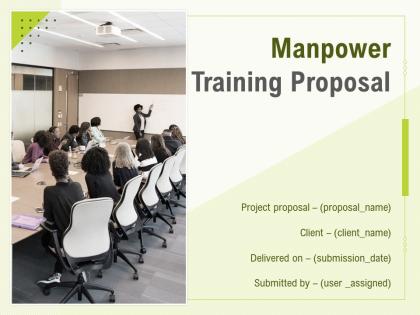
Slide 1: This slide introduces Manpower Training Proposal. State proposal name, Client name, Submission date and User name.
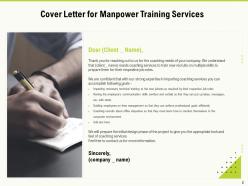
Slide 2: This slide displays Cover Letter for Manpower Training Services.
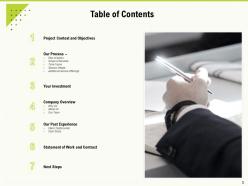
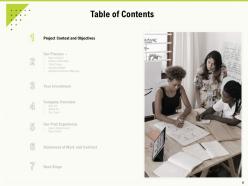
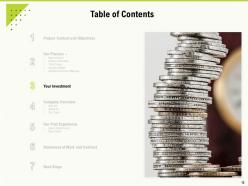
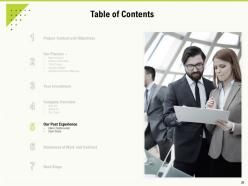
Slide 3: This slide displays Table of Contents.
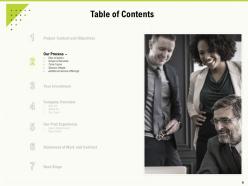
Slide 4: This slide shows Table of Contents of the presentation.
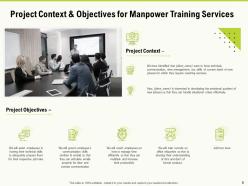
Slide 5: This slide showcases Project Context & Objectives for Manpower Training Services.
Slide 6: This slide displays Table of Contents of the presentation.
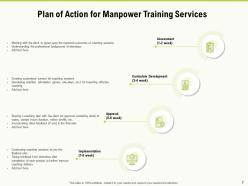
Slide 7: This slide represents Plan of Action for Manpower Training Services.
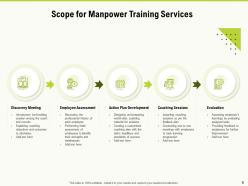
Slide 8: This slide displays Scope for Manpower Training Services.
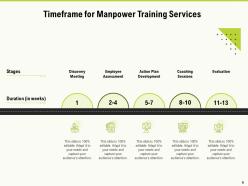
Slide 9: This slide describes Timeframe for Manpower Training Services.
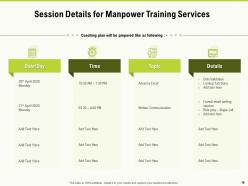
Slide 10: This slide showcase Session Details for Manpower Training Services
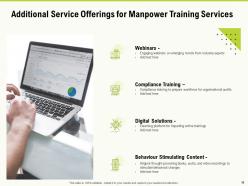
Slide 11: This slide displays Additional Service Offerings for Manpower Training Services
Slide 12: This slide displays Table of Contents.
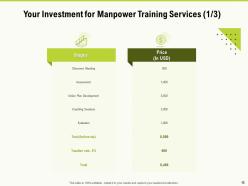
Slide 13: This slide shows Investment details for Manpower Training Services.
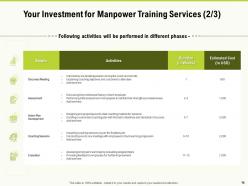
Slide 14: This slide shows Investment details for Manpower Training Services. Contaning the activities will be performed in different phases -
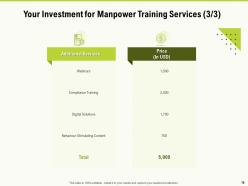
Slide 15: This slide presents Investment for Manpower Training Services.
Slide 16: This slide displays Table of Contents.
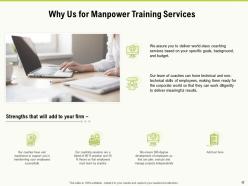
Slide 17: This slide shows reasons for choosing us for Manpower Training Services
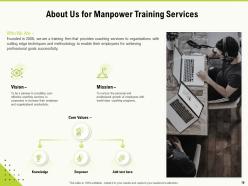
Slide 18: This is About Us slide to showcase Company specifications.
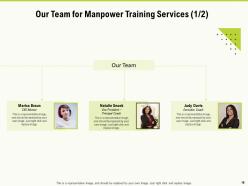
Slide 19: This is Our Team slide with names and designations.
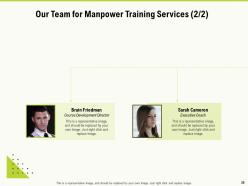
Slide 20: This is also Our Team slide with names and designations.
Slide 21: This slide displays Table of Contents.
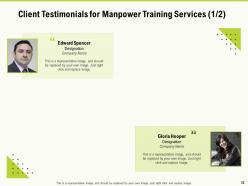
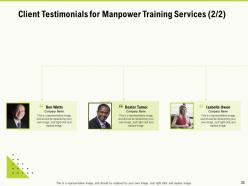
Slide 22: This slide represents Client Testimonials for Manpower Training Services.
Slide 23: This slide displays Client Testimonials for Manpower Training Services.
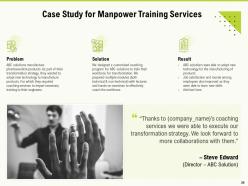
Slide 24: This slide showcases Case Study for Manpower Training Services.
Slide 25: This slide depicts Table of Contents.
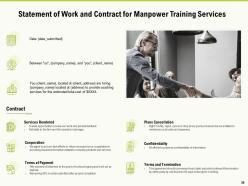
Slide 26: This slide represents Statement of Work and Contract for Manpower Training Services.
Slide 27: This slide depicts Table of Contents of the presentation.
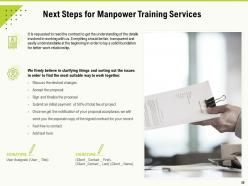
Slide 28: This slide showcases Next Steps for Manpower Training Services.
Slide 29: This is Contact Us slide with Address, Contact number and Email address.
Slide 30: This is Icons Slide for Manpower Training Proposal.
Slide 31: This slide is titled as Additional Slides for moving forward.
Slide 32: This is About Us slide to showcase Company specifications.
Slide 33: This slide displays Vision and Mission for Manpower Training Proposal.
Slide 34: This is 30 60 90 Days Plan slide.
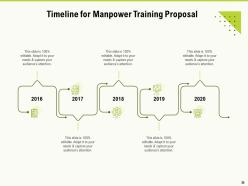
Slide 35: This slide displays Timeline process.
Slide 36: This slide shows Roadmap process.
Manpower training proposal powerpoint presentation slides with all 36 slides:
Use our Manpower Training Proposal Powerpoint Presentation Slides to effectively help you save your valuable time. They are readymade to fit into any presentation structure.

FAQs for Manpower training proposal
Okay so first thing - figure out exactly what skills are missing, don't just wing it. Then map out what success actually looks like with real numbers you can track. I always think the vague "better customer service" proposals are trash honestly. You need timelines, budget, and what happens after training ends. The whole point is showing ROI upfront or nobody's gonna care. Start with your biggest problem areas first. That way you're solving actual issues instead of just checking boxes. Oh and make sure you explain how this connects to business results - that's what gets approval.
Honestly, start by just asking people what they're good at vs. what they actually need to do their jobs well. Survey your team, chat with managers about where they see gaps - the usual stuff. Performance reviews can show you patterns too. Industry trends matter since things change so fast now (which is kind of exhausting tbh). I'd definitely do some one-on-ones with your key people to dig deeper. Focus groups work great for this. Once you've got all that info, figure out which gaps are gonna hurt you most and build training around those first.
Honestly, you need both the numbers stuff and the feel-good metrics. Track completion rates, test scores, how fast people get competent, plus whether they're actually performing better at work afterward. But also grab employee satisfaction surveys and retention data - I've watched companies get obsessed with test scores while people hate the training and quit, which is kinda backwards. Manager feedback on whether staff apply skills matters too. My advice? Keep it simple with like 4-5 key things on a dashboard you check monthly. That way you'll catch problems early instead of realizing six months later your program sucks.
Look, online training is super convenient but people zone out constantly. In-person stuff actually gets people talking and asking questions - way better retention there. On-the-job training sticks the most since you're using it right away, though it totally depends on who's training you (some people are just terrible teachers lol). I'd honestly go hybrid if you can swing it. Start with online modules for the basics, then do hands-on sessions to actually practice. Don't just pick one method - match your content to whatever delivery makes the most sense for that specific topic.
Honestly, you HAVE to get employee feedback first - I can't stress this enough. Survey your team about skill gaps and what they're struggling with day-to-day. Ask about their career goals too. I've watched so many training programs crash and burn because managers just guessed what people needed. Their input shows you which programs will actually make a difference. Plus people are way more likely to participate when they see their suggestions in the final proposal. Makes total sense, right? Start with a quick survey or maybe some focus groups before writing anything up.
Honestly, you've gotta switch things up based on how people actually learn. Some need visuals - infographics, videos, that stuff. Others are all about listening, so maybe podcasts or just good old discussion groups. Then there's the hands-on people who need workshops they can actually *do* something in. I swear, another death-by-PowerPoint session and I might lose it. Self-paced online modules work great for the introverts who need processing time. Live sessions hit different though - some folks just need that real-time energy. Survey your team first to see what they want, then create like 2-3 different paths through the same material.
Build reinforcement into your training from the start - don't just tack it on later. Most companies totally skip this step and then act shocked when everyone forgets everything (seriously, it's like going to the gym once and expecting to stay ripped). Schedule follow-ups at 30, 60, and 90 days to refresh concepts and tackle real problems people are facing. Set up peer mentoring groups or lunch-and-learns so knowledge actually sticks around. Oh, and tie skill use to performance reviews - people need accountability or they'll just go back to old habits. Plan your reinforcement while you're designing the main training.
Break your budget into clear chunks - trainer fees, materials, venue, and participant time (seriously, people always forget that last one). Get specific with realistic numbers. Don't lowball or you'll hate yourself later. Include obvious stuff like course materials but also the sneaky costs like lost productivity when everyone's in training. I learned that the hard way once. Justify why each thing is actually needed for your goals. Being upfront about everything prevents those awkward "wait, this costs HOW much?" moments during approval. Oh, and throw in a 10-15% buffer because something always comes up.
So first thing - you gotta nail down all your compliance stuff. Safety regs, certifications, mandatory hours, the whole deal. Employment law is a big one too since you need equal access for everyone plus accommodations. IP gets tricky if you're borrowing content or making your own proprietary materials (honestly that's where people mess up most). Oh and check union agreements - they might have specific rules about training. My bad, almost forgot that part. Start with whatever compliance list you have now and compare it to your proposal. You'll spot the gaps pretty quick.
VR simulations are actually pretty sweet for hands-on practice - people think it'll be awkward but get into it quickly. Mobile apps work great for those random 10-minute breaks too. I'd definitely throw in some gamification stuff like badges or leaderboards because honestly, adults love that competitive element more than they admit. Video calls handle remote training fine, and there's AI platforms now that adapt to how fast each person learns. Oh, and interactive e-learning beats those boring slide decks every time. Just don't go crazy implementing everything at once - pick maybe two tools to start.
Honestly, I'd start with community colleges and trade schools - they've got the facilities and instructors already there. Industry associations are pretty solid too for certifications and finding experts who actually know their stuff. Coursera and LinkedIn Learning offer decent corporate rates if you're buying in bulk. Oh, and here's something that works really well - team up with other companies in your space to split training costs. Way cheaper that way. First thing though, figure out exactly what skills you need. Then maybe reach out to a few potential partners this quarter just to see what's out there.
Start with your company's big picture goals - where do you want to be in 2-3 years? Then figure out what skills your team actually needs to get there. Get leadership involved early because they eat up that direct connection between training costs and real results. Build some wiggle room for new stuff that'll inevitably pop up (trust me, it always does). Create a basic chart showing how each training ties to your goals. Oh, and review it every quarter or you'll drift off course. The whole thing sounds obvious but most companies skip the backwards planning part and just throw training at people randomly.
Honestly, mentorship programs are huge for this stuff. Set up regular check-ins and make sure people can come back for refresher sessions when they need them. Most companies just do the training once and then act surprised when everyone forgets everything lol. Get people into peer groups so they can actually work through real problems together. Maybe do quarterly assessments to catch gaps early. Having a solid knowledge base helps too - people will definitely hit walls months later and need somewhere to look things up. The trick is scheduling those follow-ups before you even start training.
Honestly, just survey people first - you'd be surprised how many companies skip this obvious step. Ask about learning styles, accessibility stuff, and what skills they're actually missing. Mix up the formats because some folks need hands-on workshops while others want online modules they can knock out whenever. Timing's huge too since parents have pickup duties and people work different shifts. Budget for interpreters or materials in other languages if your workplace needs it. The whole thing basically comes down to asking what people actually want instead of guessing. Quick pulse survey before you finalize anything and you'll be golden.
Make learning actually fun instead of another chore. Have managers ask "what'd you learn this week?" in meetings and get excited about the answers. Lunch-and-learns work great - people teaching each other stuff they already know. Give them actual work time for it, not just their evenings (because who wants homework as an adult?). Connect learning to promotions, not random courses nobody cares about. When someone messes up trying something new, talk about what they figured out. Honestly, just pick one thing and try it this month.
-
Innovative and Colorful designs.
-
Design layout is very impressive.
-
Really like the color and design of the presentation.
-
Much better than the original! Thanks for the quick turnaround.