


TV Show Pitch Deck Ppt Template
TV shows compete well with other sources of human interaction and help young people develop ideas and values around the world. It broadens global understanding of international issues and knowledge of different cultures. Grab our efficiently designed TV Show pitch deck that serves as an effective tool in attracting investors. The Deck is specifically designed to summarize the show process with details about its mission statement, rise in viewers, and purpose defining its brand and culture. It presents facts about various problems limiting user experience and solutions provided by the distribution plan. We have catered data to different phases of the product development process of TV shows, sales, and distribution channels for revenue generation. Key members involved in the leadership team are presented. It caters to slides about various metrics determining TV shows performance, SWOT analysis of the sector, and the competitive landscape of major players. Customize this 100 percent editable pitch deck based on your requirements now.
TV shows compete well with other sources of human interaction and help young people develop ideas and values around the wor..




























-

- Google Slides is a new FREE Presentation software from Google.
- All our content is 100% compatible with Google Slides.
- Just download our designs, and upload them to Google Slides and they will work automatically.
- Amaze your audience with SlideTeam and Google Slides.
-

Want Changes to This PPT Slide? Check out our Presentation Design Services
-

- WideScreen Aspect ratio is becoming a very popular format. When you download this product, the downloaded ZIP will contain this product in both standard and widescreen format.
-
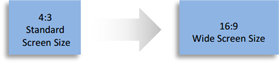
- Some older products that we have may only be in standard format, but they can easily be converted to widescreen.
- To do this, please open the SlideTeam product in Powerpoint, and go to
- Design ( On the top bar) -> Page Setup -> and select "On-screen Show (16:9)” in the drop down for "Slides Sized for".
- The slide or theme will change to widescreen, and all graphics will adjust automatically. You can similarly convert our content to any other desired screen aspect ratio.
Compatible With Google Slides

Get This In WideScreen
You must be logged in to download this presentation.


Do you want to remove this product from your favourites?
PowerPoint presentation slides
Provide your investors essential insights into your project and company with this influential TV Show Pitch Deck Ppt Template. This is an in-depth pitch deck PPT template that covers all the extensive information and statistics of your organization. From revenue models to basic statistics, there are unique charts and graphs added to make your presentation more informative and strategically advanced. This gives you a competitive edge and ample amount of space to showcase your brands USP. Apart from this, all the thirty two slides added to this deck, helps provide a breakdown of various facets and key fundamentals. Including the history of your company, marketing strategies, traction, etc. The biggest advantage of this template is that it is pliable to any business domain be it e-commerce, IT revolution, etc, to introduce a new product or bring changes to the existing one. Therefore, download this complete deck now in the form of PNG, JPG, or PDF.

People who downloaded this PowerPoint presentation also viewed the following :
Content of this Powerpoint Presentation
Slide 1: This slide introduces TV Show Pitch Deck. State Your Company Name and begin.
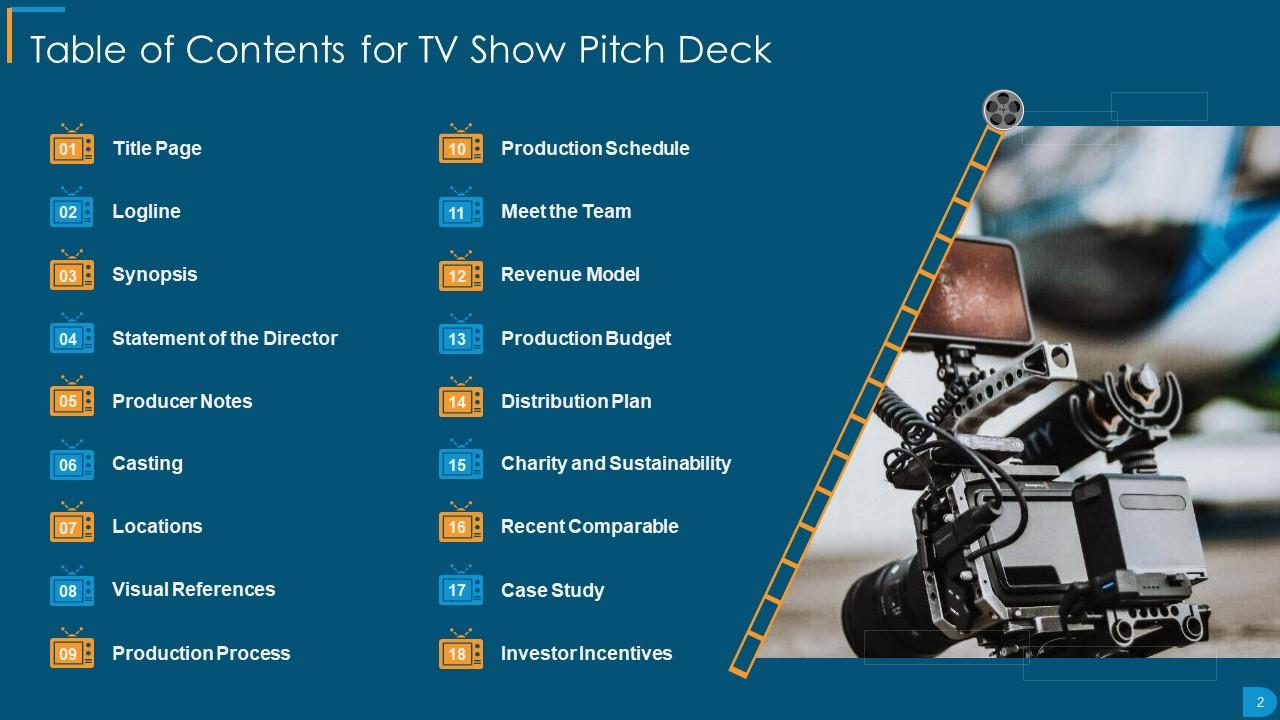
Slide 2: This slide presents Table of Contents for TV Show Pitch Deck.
Slide 3: This slide exhibits introduction purposes and includes information about the company's project title.
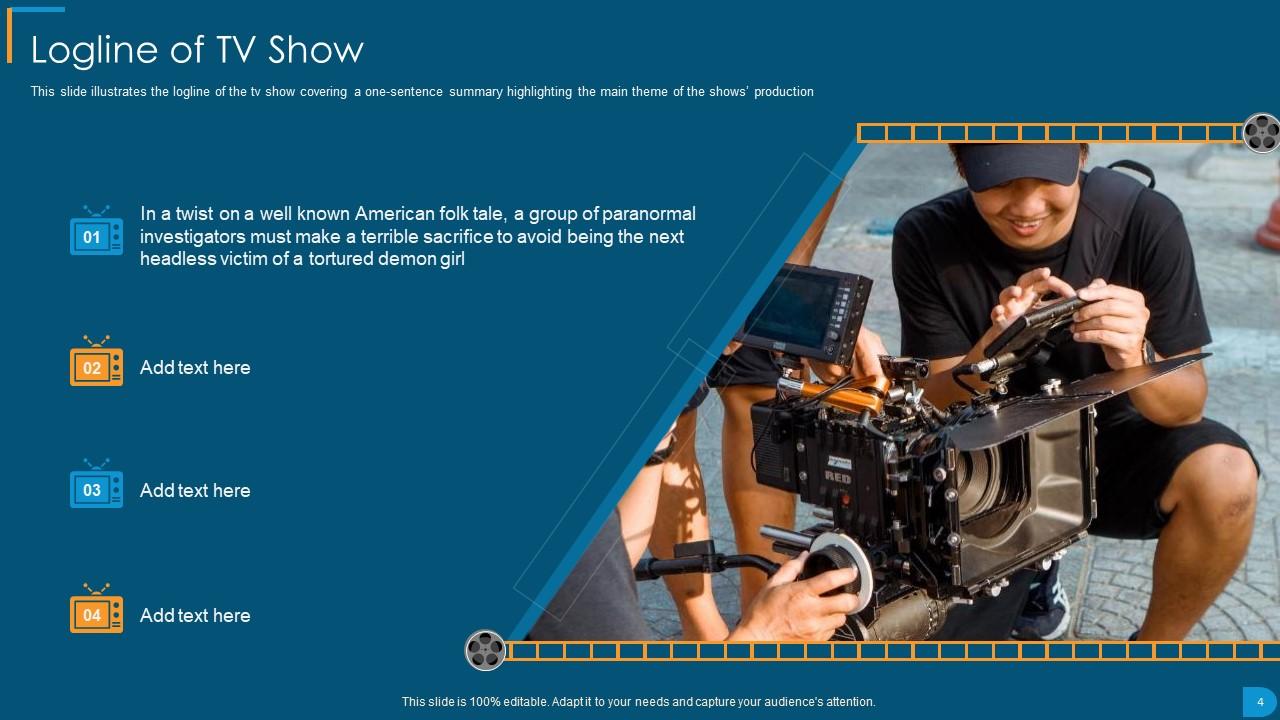
Slide 4: This slide illustrates the logline of the tv show covering a one-sentence summary highlighting the main theme of the shows’ production.
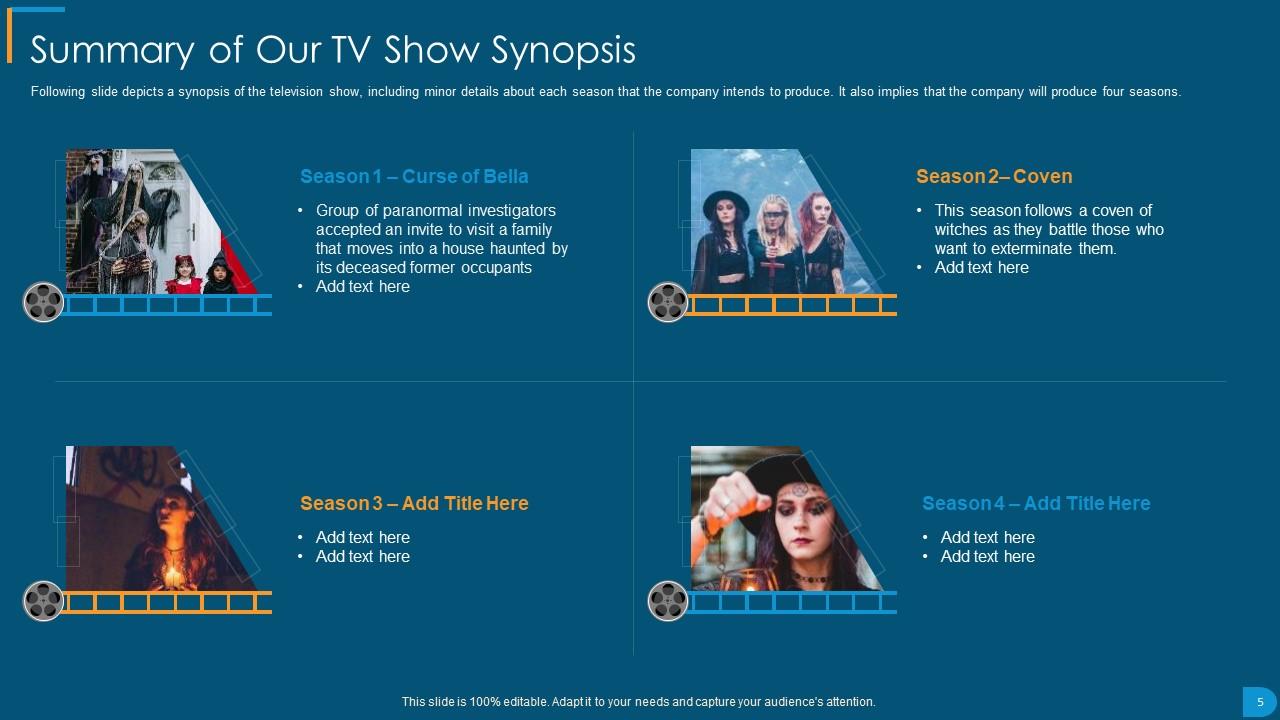
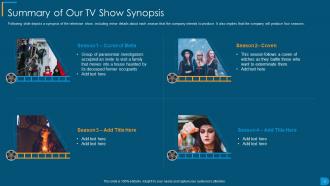
Slide 5: This slide depicts a synopsis of the television show, including minor details about each season that the company intends to produce.
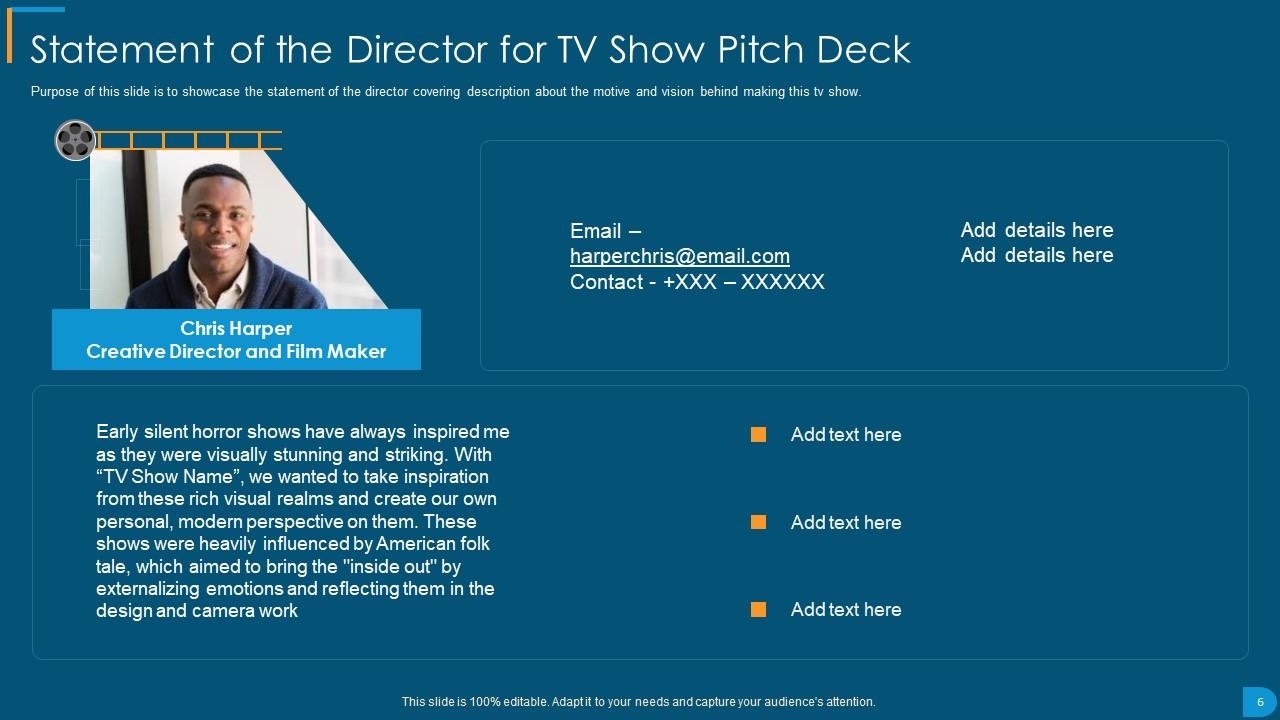
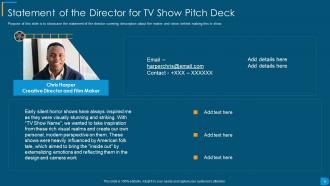
Slide 6: This slide showcase the statement of the director covering description about the motive and vision behind making this tv show.
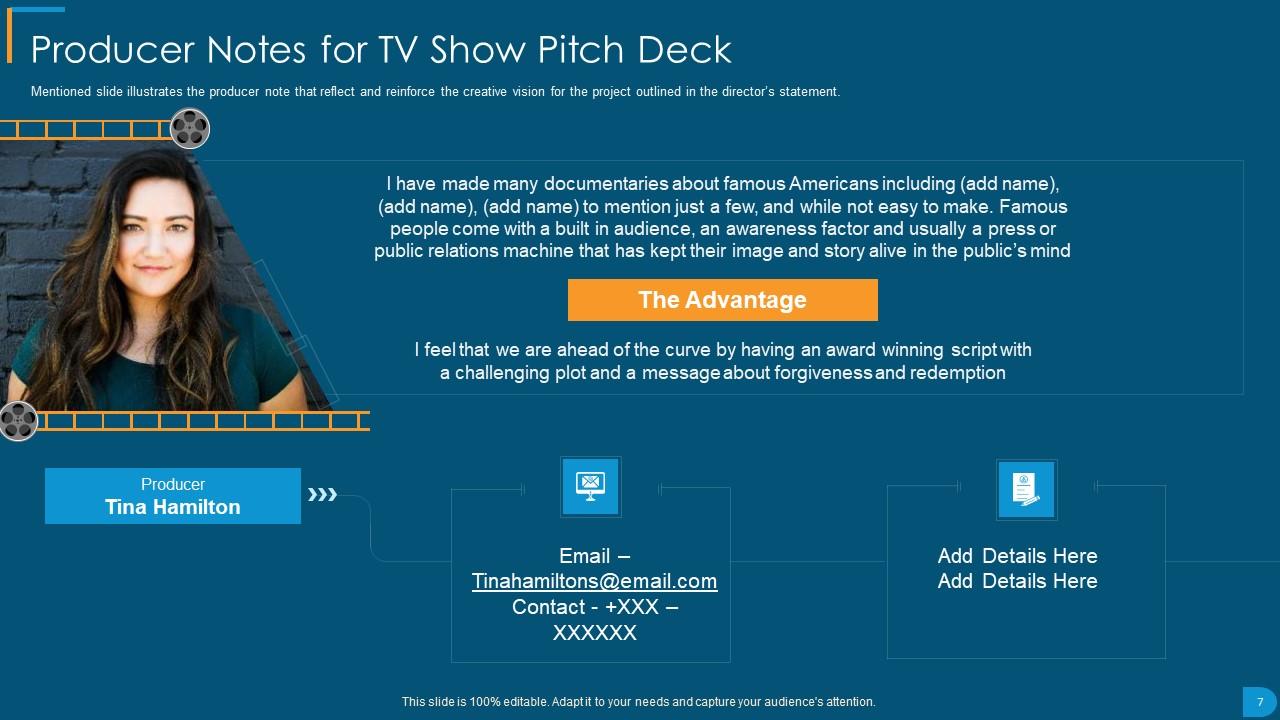
Slide 7: This slide illustrates the producer note that reflect and reinforce the creative vision for the project outlined in the director’s statement.
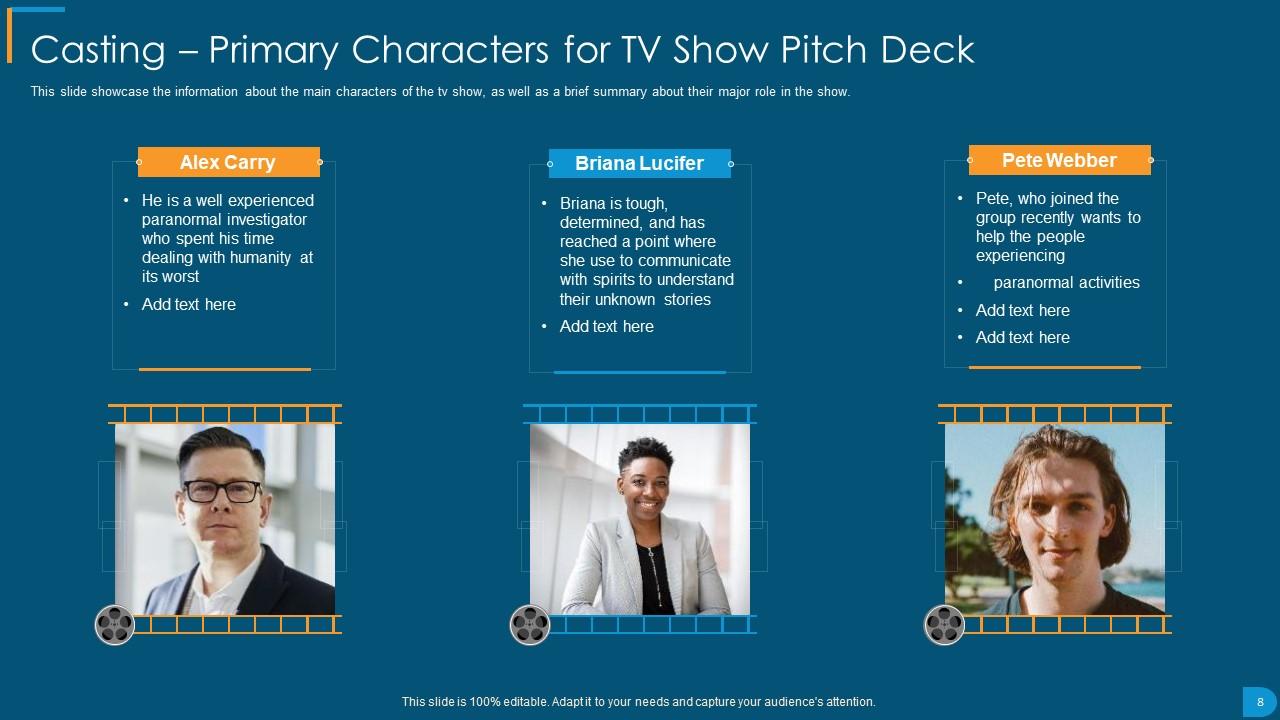
Slide 8: This slide showcase the information about the main characters of the tv show, as well as a brief summary about their major role in the show.
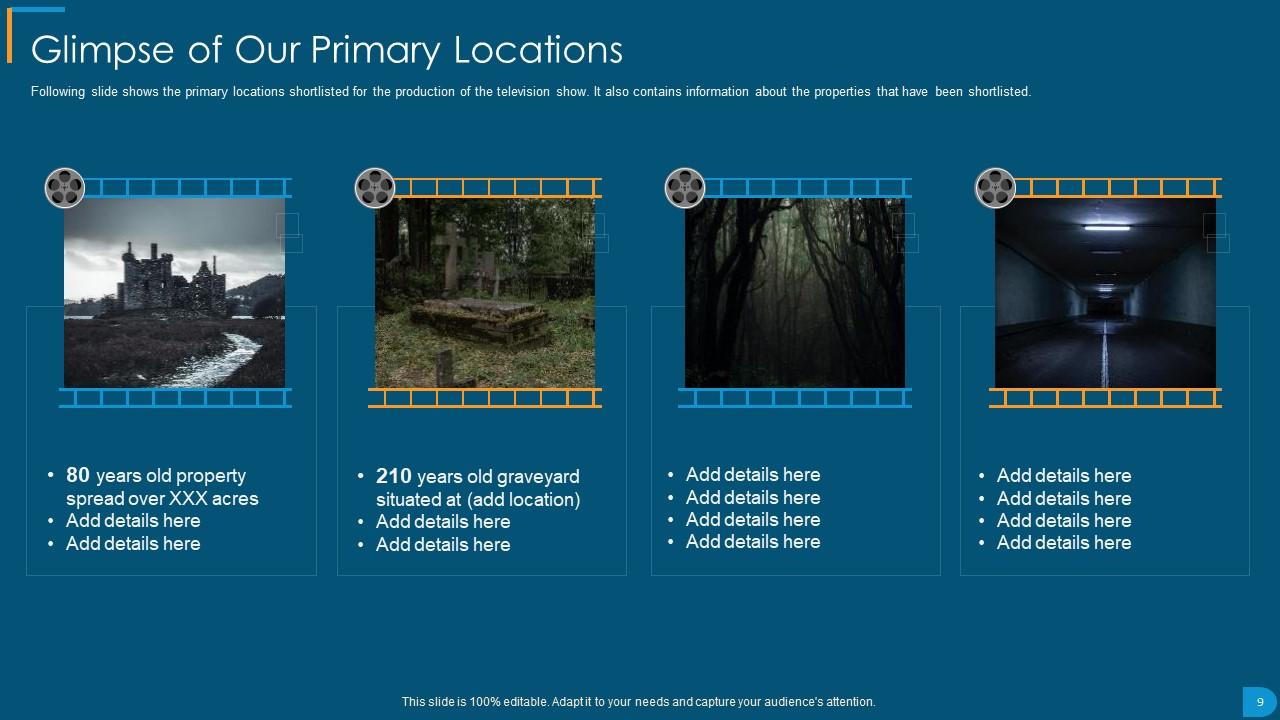
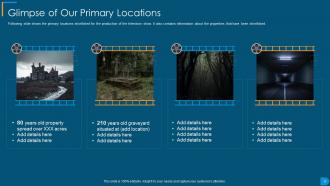
Slide 9: This slide shows the primary locations shortlisted for the production of the television show.
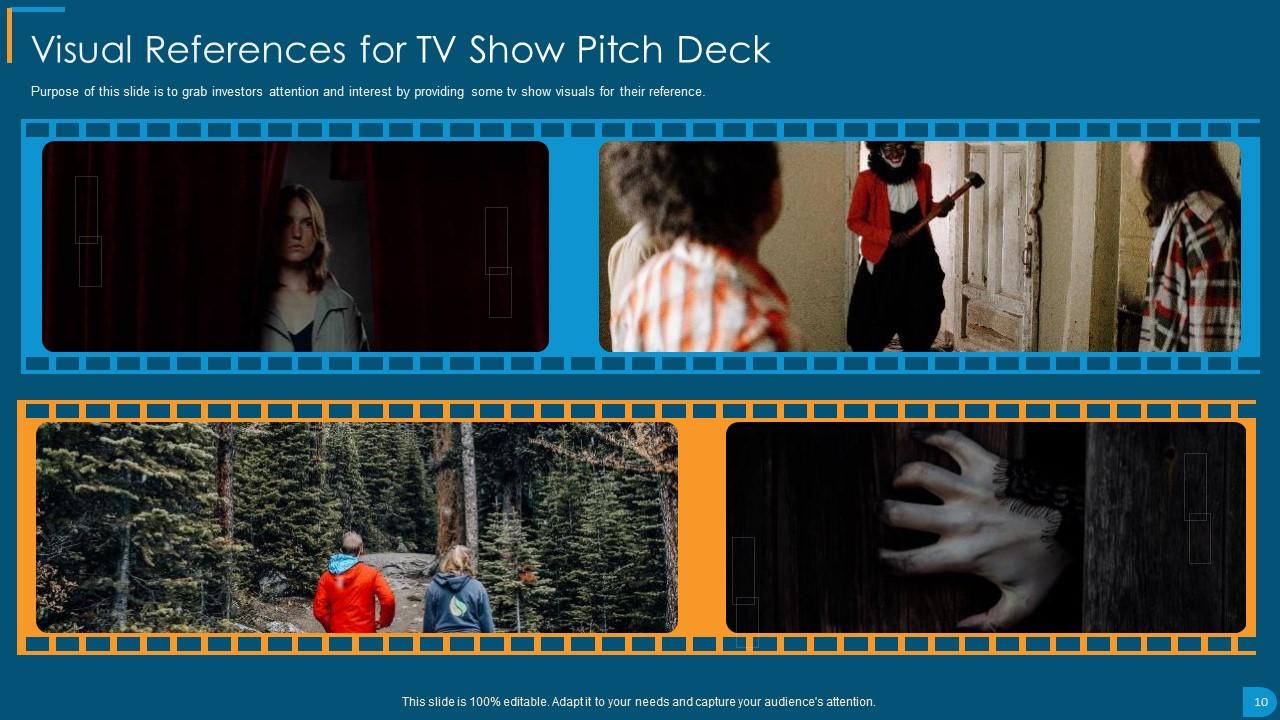
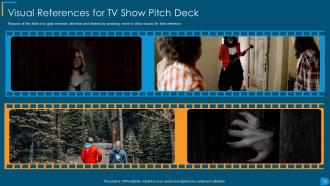
Slide 10: This slide grab investors attention and interest by providing some tv show visuals for their reference.
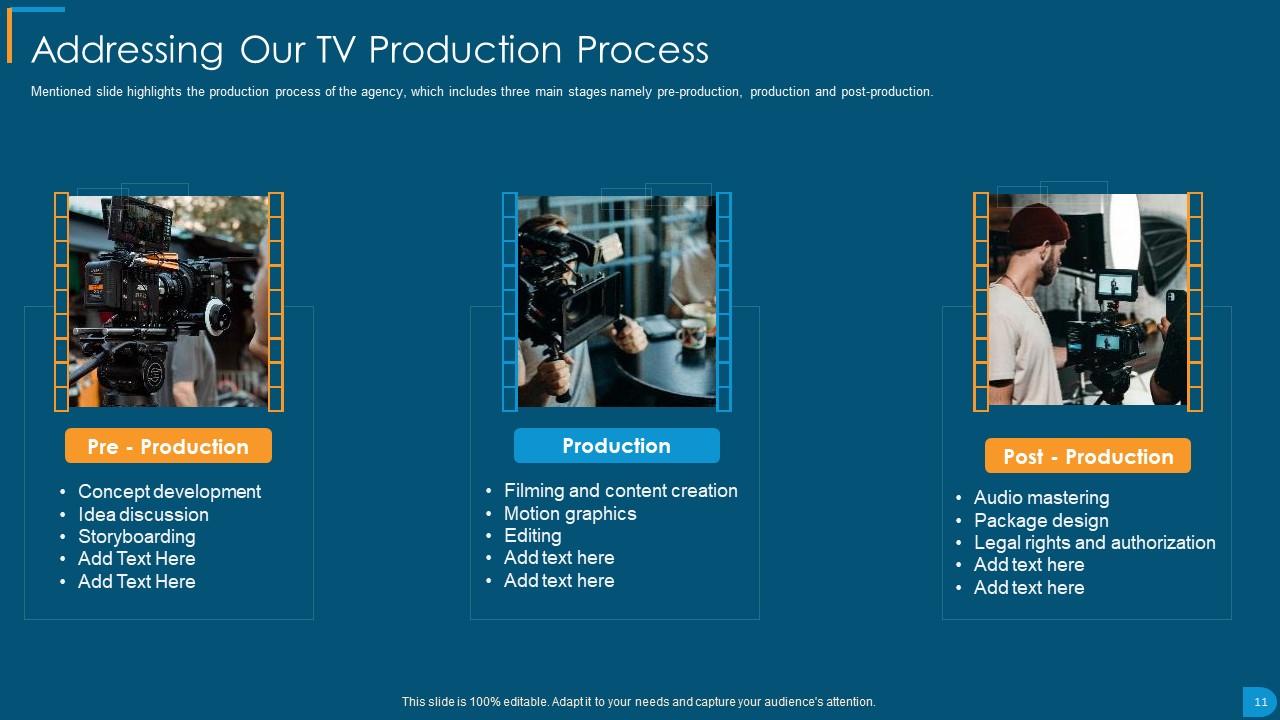
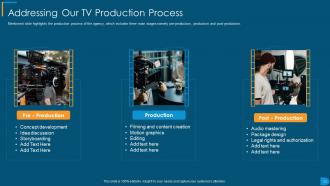
Slide 11: This slide highlights the production process of the agency, which includes three main stages namely pre-production, production and post-production.
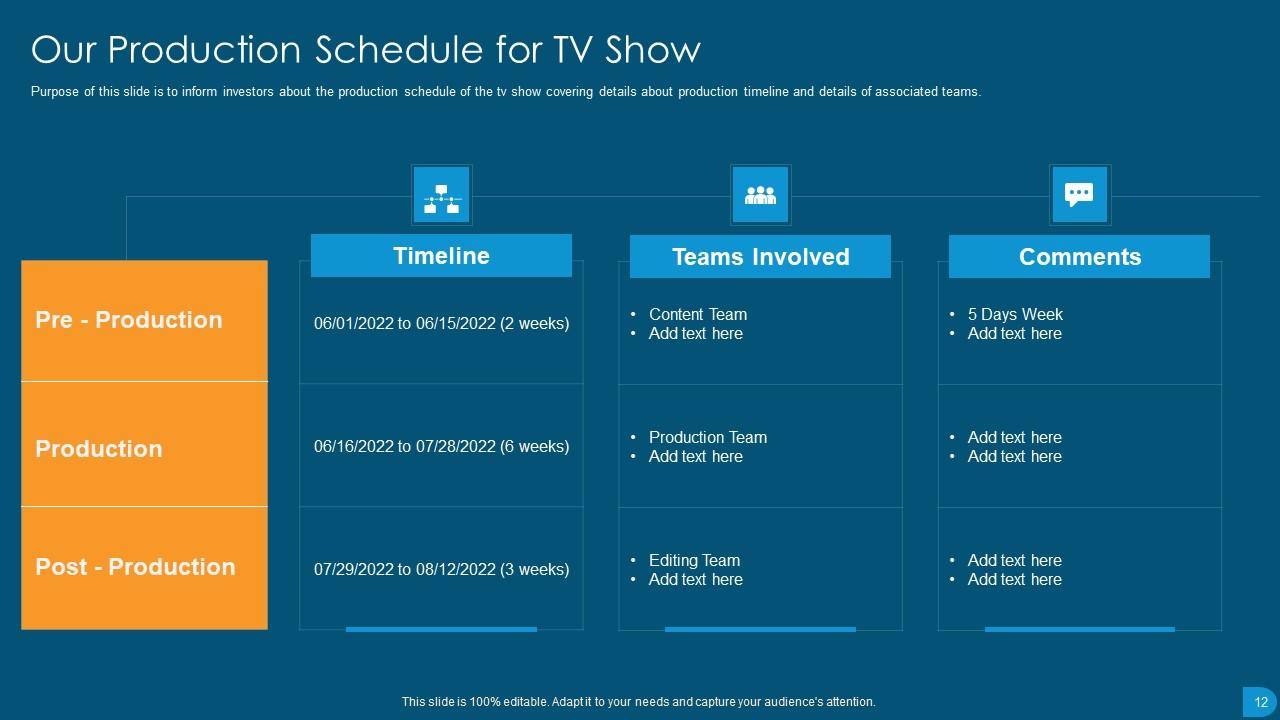
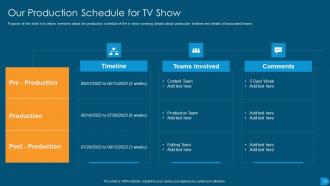
Slide 12: This slide inform investors about the production schedule of the tv show covering details about production timeline, etc.
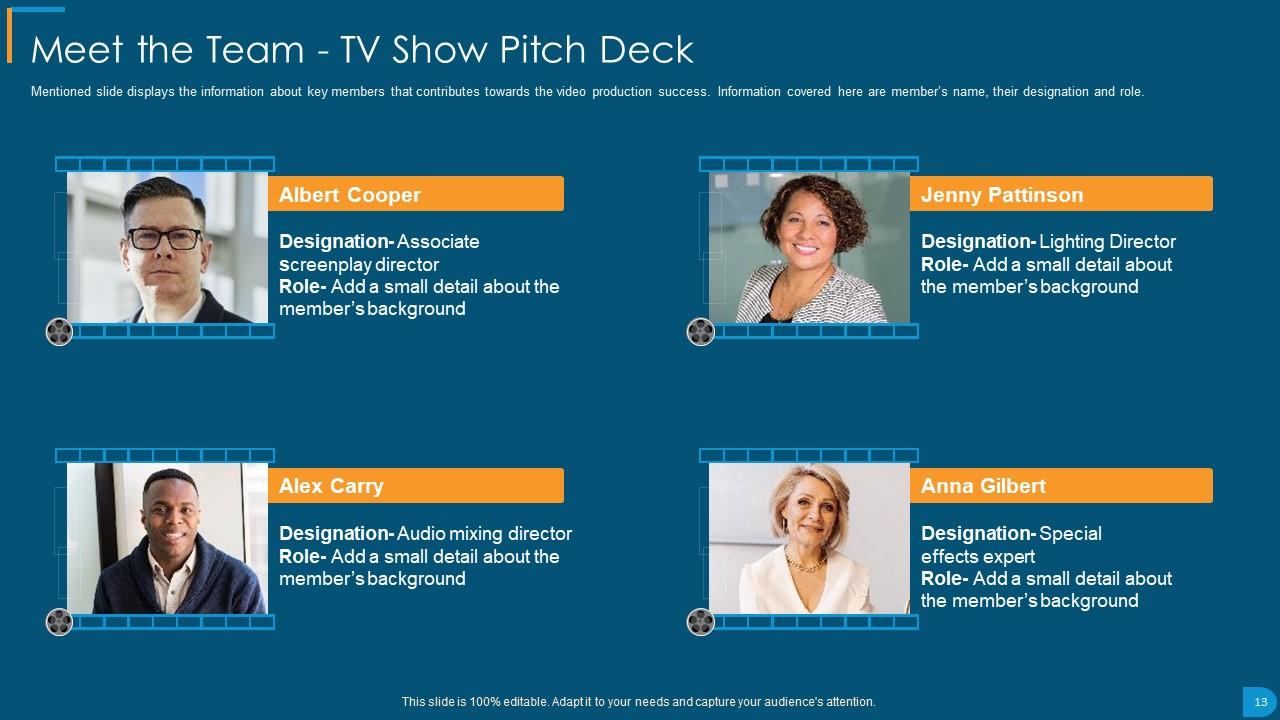
Slide 13: This slide displays the information about key members that contributes towards the video production success.
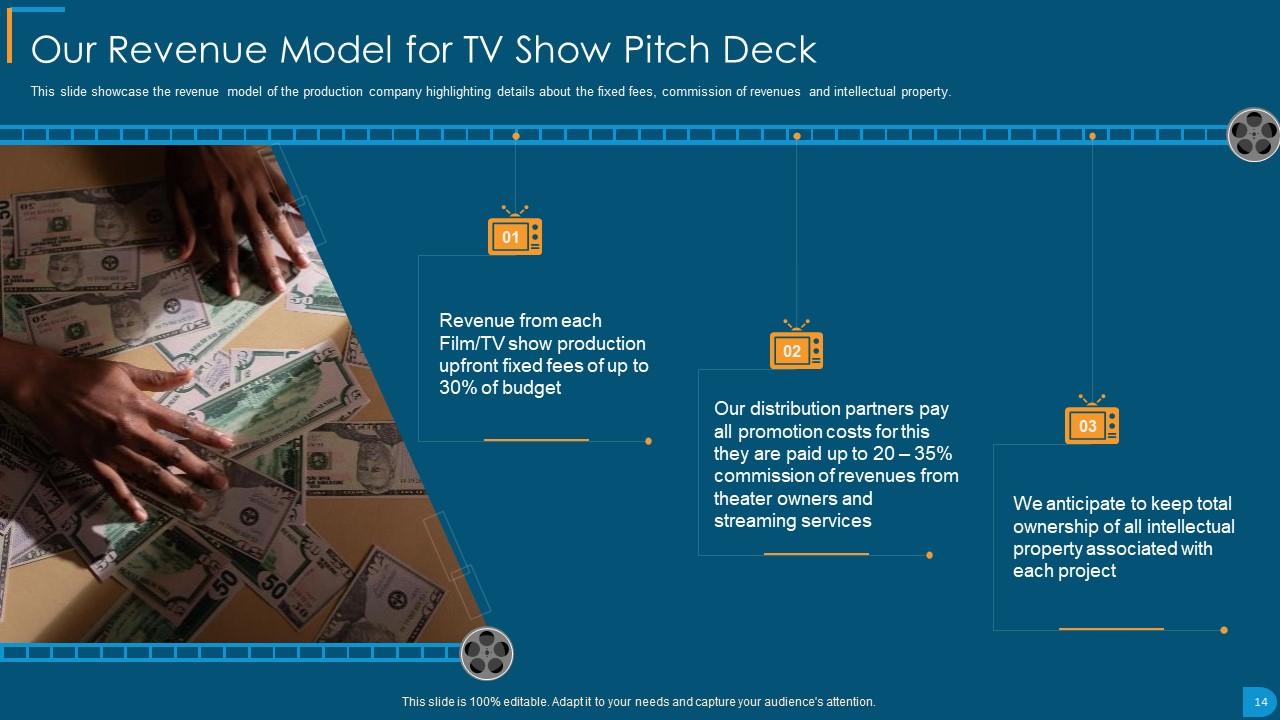
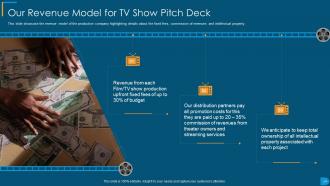
Slide 14: This slide showcase the revenue model of the production company highlighting details about the fixed fees, etc.
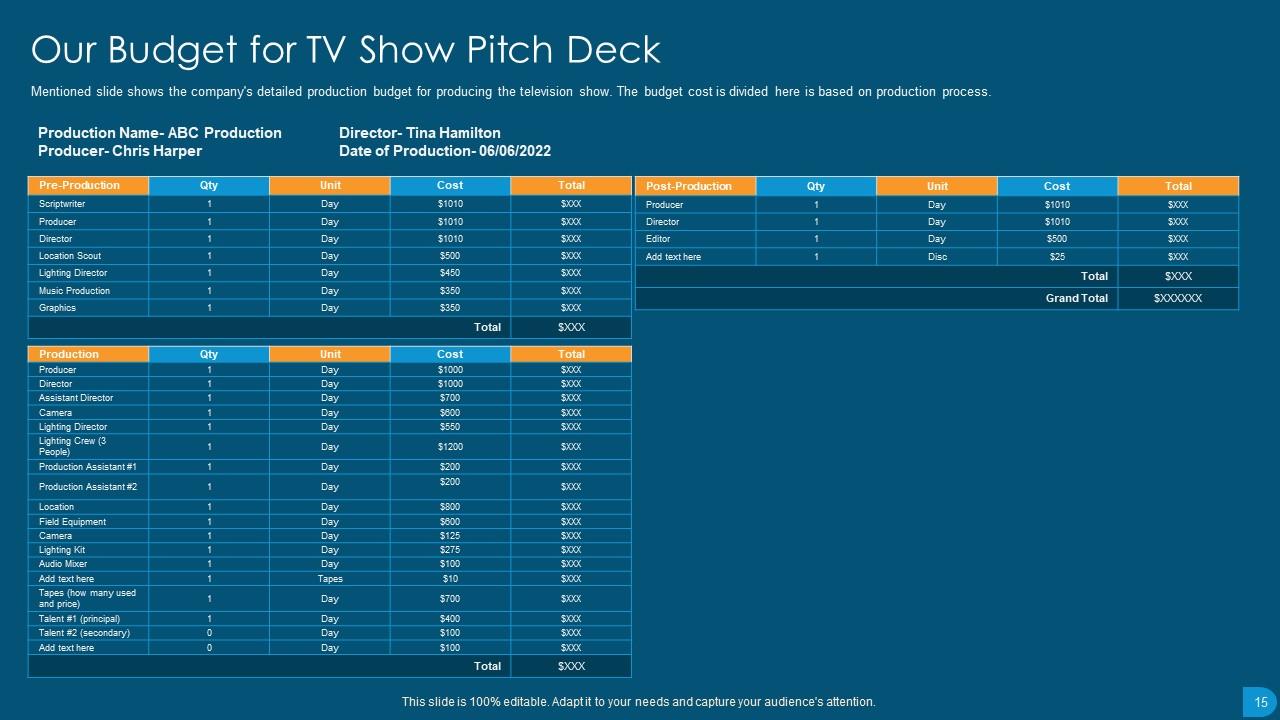
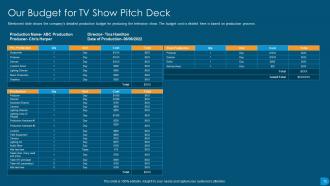
Slide 15: This slide shows the company's detailed production budget for producing the television show.
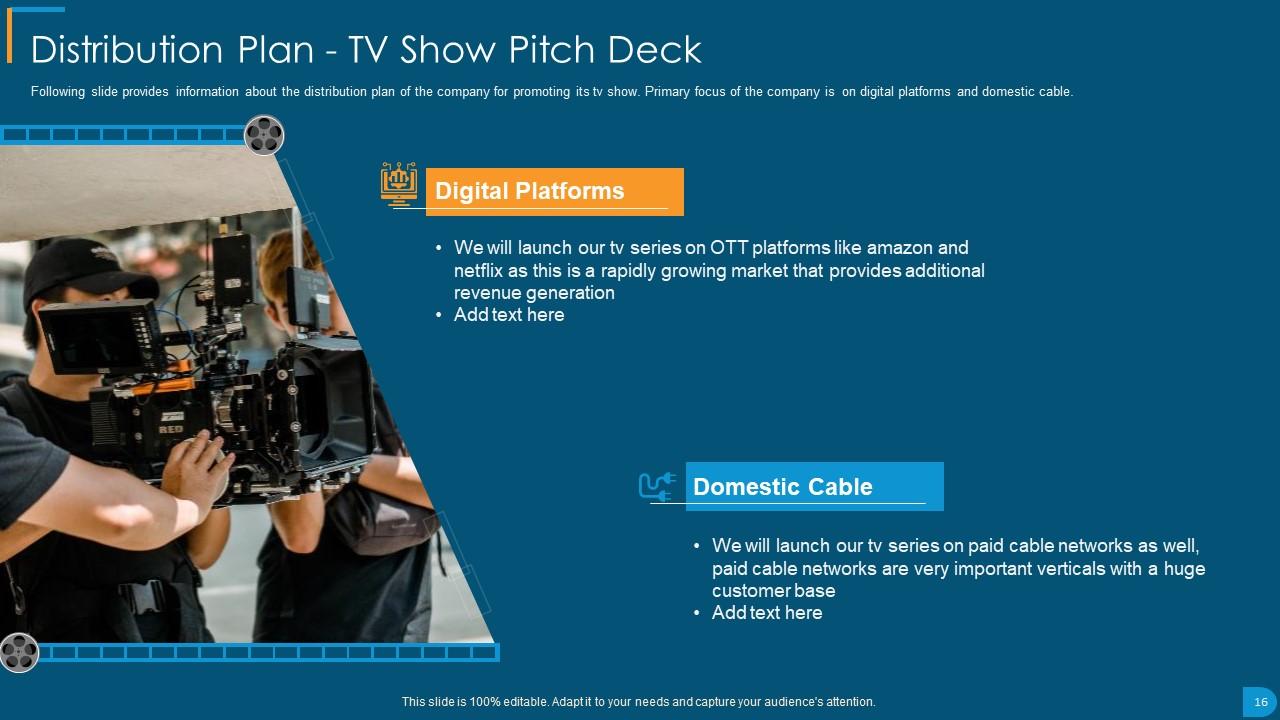
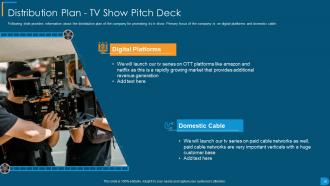
Slide 16: This slide presents about the distribution plan of the company for promoting its tv show.
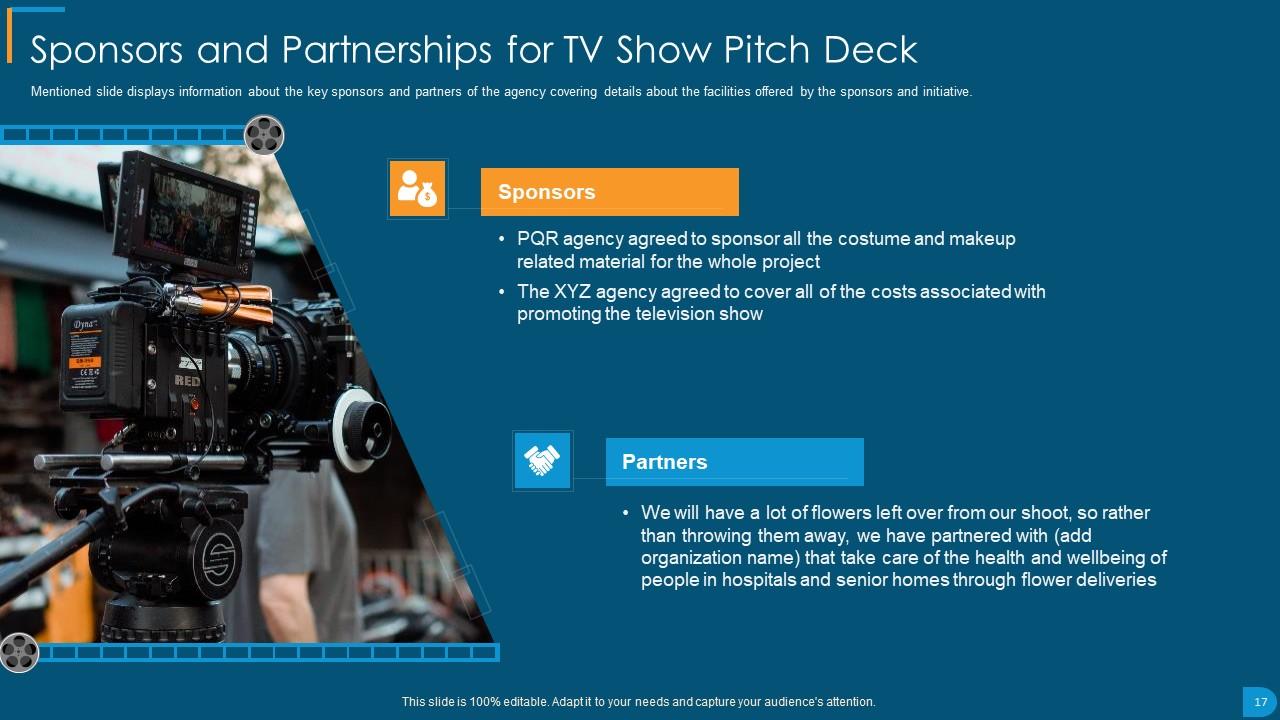
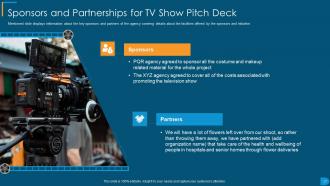
Slide 17: This slide displays information about the key sponsors and partners of the agency covering details about the facilities offered by the sponsors and initiative.
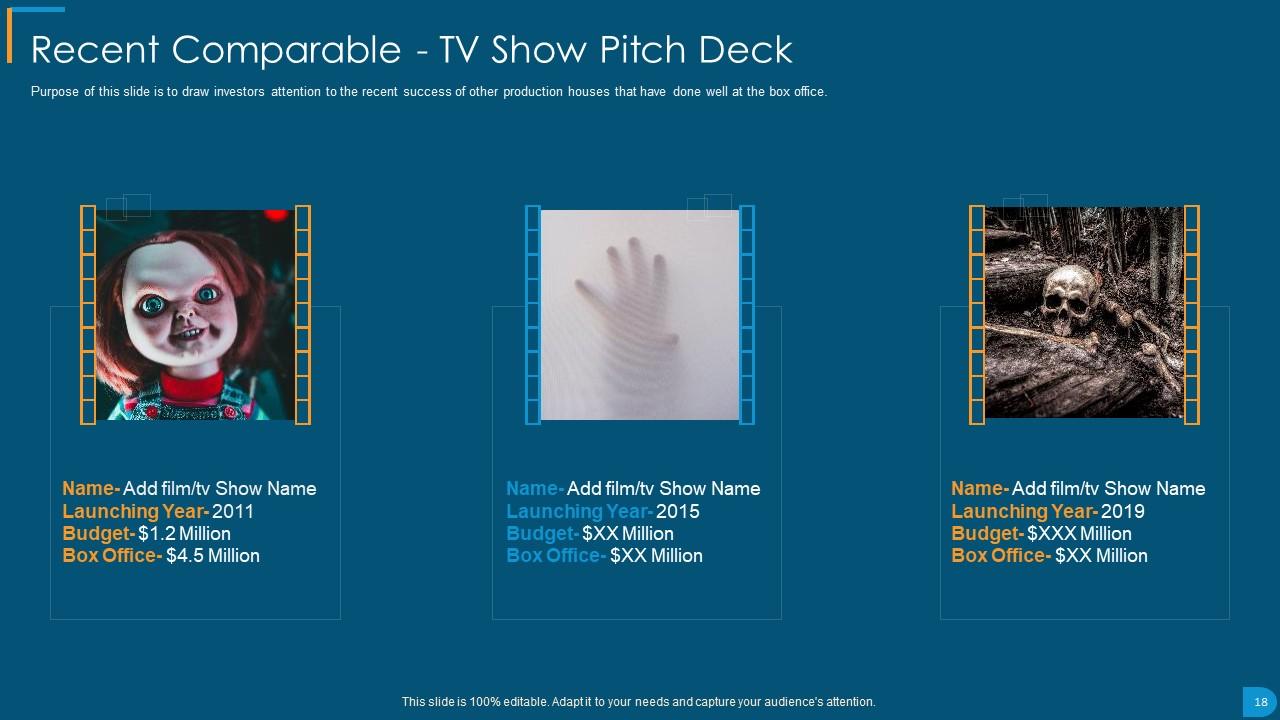
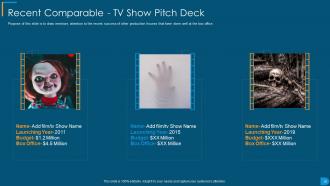
Slide 18: This slide exhibits how to draw investors attention to the recent success of other production houses.
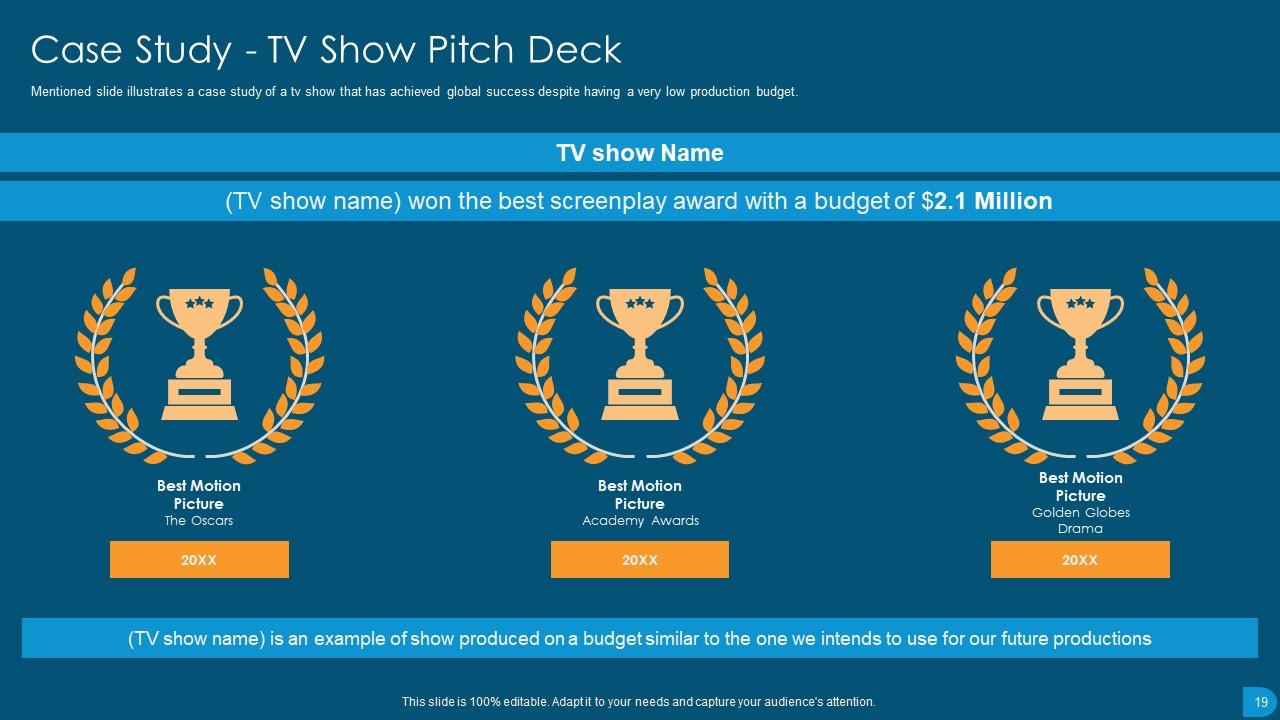
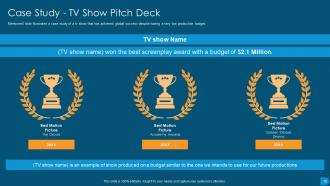
Slide 19: This slide illustrates a case study of a tv show that has achieved global success despite having a very low production budget.
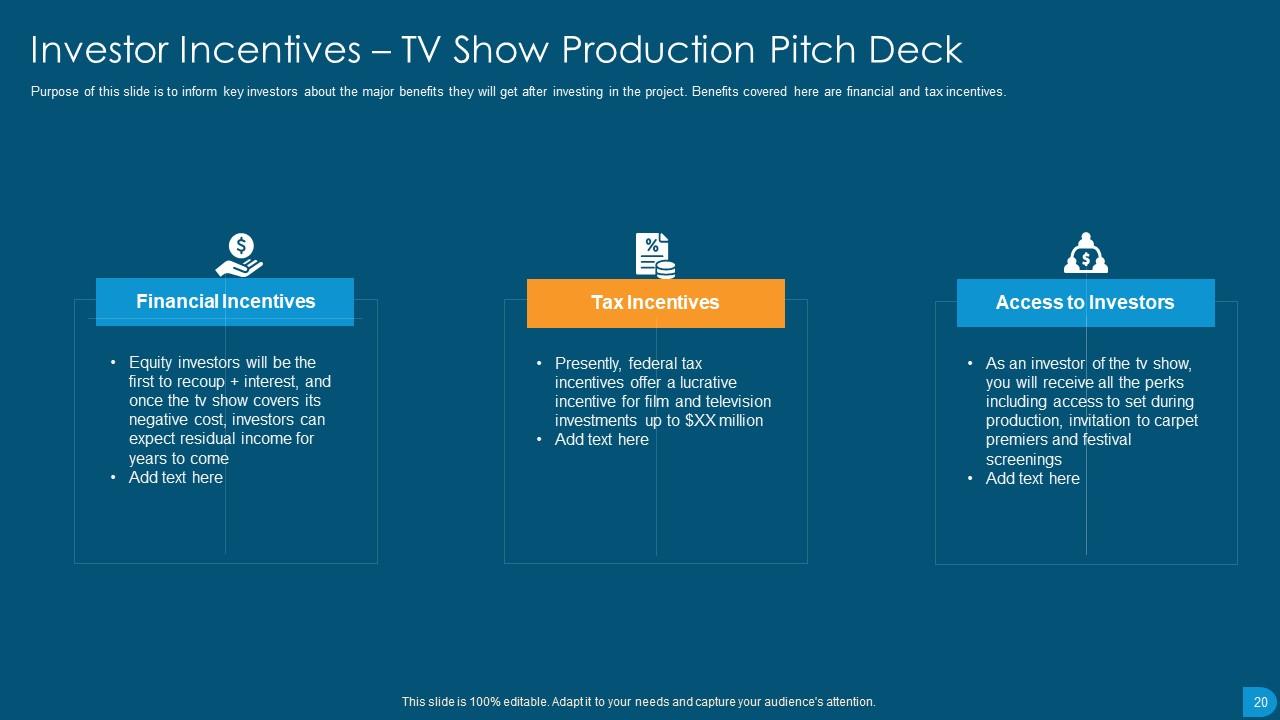
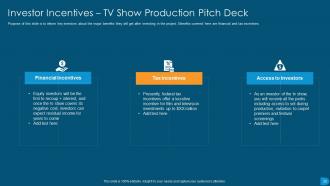
Slide 20: This slide exhibits inform key investors about the major benefits they will get after investing in the project.
Slide 21: This slide shows Contact Information for TV Show Pitch Deck.
Slide 22: This slide displays Icons for TV Show Pitch Deck.
Slide 23: This slide is titled as Additional Slides for moving forward.
Slide 24: This is Our Mission slide with related imagery and text.
Slide 25: This is About Us slide to show company specifications etc.
Slide 26: This is Our Target slide. State your targets here.
Slide 27: This slide depicts Venn diagram with text boxes.
Slide 28: This slide provides 30 60 90 Days Plan with text boxes.
Slide 29: This slide contains Puzzle with related icons and text.
Slide 30: This slide shows Post It Notes. Post your important notes here.
Slide 31: This slide displays Mind Map with related imagery.
Slide 32: This is a Thank You slide with address, contact numbers and email address.
TV Show Pitch Deck Ppt Template with all 37 slides:
Use our TV Show Pitch Deck Ppt Template to effectively help you save your valuable time. They are readymade to fit into any presentation structure.
-
Commendable slides with attractive designs. Extremely pleased with the fact that they are easy to modify. Great work!
-
Easy to edit slides with easy to understand instructions.
