


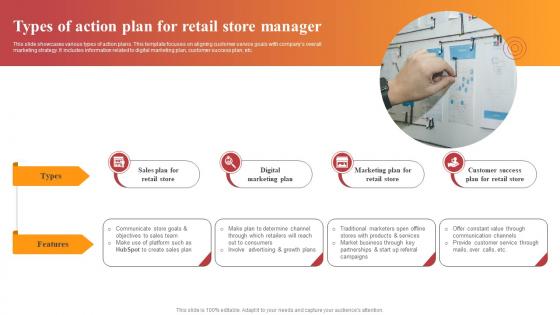
Types Of Action Plan For Retail Store Manager




Try Before you Buy Download Free Sample Product
 Impress Your
 Audience
 100%
100% Editable
 Save Hours
 of Time


This slide showcases various types of action plans. This template focuses on aligning customer service goals with companys overall marketing strategy. It includes information related to digital marketing plan, customer success plan, etc.
People who downloaded this PowerPoint presentation also viewed the following :
Types Of Action Plan For Retail Store Manager with all 6 slides:
Use our Types Of Action Plan For Retail Store Manager to effectively help you save your valuable time. They are readymade to fit into any presentation structure.





FAQs for Types Of Action Plan For
Start with goals you can actually measure - "boost weekend sales 15%" beats "do better" any day. Break those into real tasks with deadlines and put someone's name on each one. Weekly check-ins keep things moving, but honestly? Build in wiggle room because stuff always goes wrong. I cannot stress this enough - fix the real problem, not whatever's on the surface. Oh, and keep it simple! The fanciest plan in the world is worthless if your team ignores it.
Okay so first thing - handle anything that's both urgent AND important. Customer complaints? Do those immediately because nobody wants to deal with pissed off customers later. After that, jump on the money-making stuff like setting up displays or running promotions. Honestly, I learned this the hard way - batch your similar tasks together instead of bouncing around all day. Like, make all your vendor calls in one block. Each week just dump everything on paper first, then rank it by what'll actually move the needle on sales. Works way better than winging it.
Your team's feedback is honestly the most important part of building any action plan. They're the ones dealing with stuff daily that you probably don't even know about - like which systems are actually broken or where customers get annoyed. I can't tell you how many managers I've seen create these elaborate plans that totally flop because they never asked anyone who actually does the work. Just grab people during shifts and ask what's driving them crazy. Maybe do a quick survey or team meeting. That way you're fixing real problems, not imaginary ones, and people will actually want to help when you roll things out.
Pick KPIs that actually connect to what you're trying to achieve - sales numbers, customer satisfaction, efficiency stuff like that. Weekly or monthly check-ins work best to see if you're hitting your targets. Honestly, I've learned to track both the hard data and just how things feel day-to-day on the ground. Simple spreadsheet or dashboard does the trick. Your team's feedback is gold since they're actually doing the work - don't skip that part. And tweak things as you go instead of waiting months to course-correct.
Focus on three main things: training your staff, improving customer experience, and getting your inventory right. Your team needs solid upselling techniques - that's where real money gets made. Visual merchandising is honestly game-changing but everyone ignores it for some reason. Dig into your sales data to see what's flying off shelves versus what's just sitting there. Build out seasonal promotions and work on your loyalty program too. Start with whatever's driving you crazy right now though. If your staff can't suggestive sell to save their lives, hit training first.
Honestly, digital tools saved my sanity when I was drowning in action plans. Monday and Asana are solid for tracking store stuff - way better than those messy spreadsheets. You'll get automated reminders for training deadlines, which is clutch because I used to forget everything. The analytics dashboards are pretty cool too, all those graphs and charts (maybe I'm weird but I actually like looking at data). Best part? No more playing phone tag with your district manager - just share updates instantly. Oh, and don't go crazy downloading every app at once. Pick one tool first and actually learn it before moving on.
Honestly, getting everyone involved from the start is everything. Do brainstorming sessions where people can toss out any idea - even the weird ones that end up being genius later. Give each person ownership of something that plays to what they're good at. Weekly check-ins are clutch for keeping momentum going. People share wins, problems, whatever. The whole point is they feel like they're building this thing with you, not just taking orders. Oh, and try making people "champions" of different pieces - sounds cheesy but it actually works. They'll surprise you with how much they care when it's really theirs.
Dude, seasonal changes totally flip your whole planning game. Q4? You're all about holiday stuff and staying open late. Then Q1 hits and you're focused on cutting costs and clearing out old inventory. Nobody wants swimsuits sitting around in January, trust me on that one. Staffing gets tricky too - you'll need way more people during busy seasons. The smart move is building wiggle room into your quarterly plans so you can ramp up or down. Honestly, start tracking your monthly sales now because every business has different patterns.
So here's what actually works - start with your deadline and work backwards, breaking everything into bite-sized pieces. Retail is chaos though, especially during busy seasons, so pad your timeline with extra buffer time. I'd say add like 20-30% more than you think you need based on what your team's done before. Your staff definitely needs to be part of the planning since they deal with the daily madness and know what's realistic. Oh, and prioritize your must-dos first! You can always squeeze in the extras later if there's time left.
Honestly, don't treat your action plan like it's written in stone. Build in backup options right from the start - multiple scenarios for your big moves. Check in weekly to see what's actually working versus what's flopping. Supply chain stuff keeps screwing everyone over lately, so definitely stay flexible with timelines. Keep your team in the loop about potential changes so they're not blindsided. Short version: your plan should evolve as you go. When unexpected crap hits (and it will), you'll be tweaking instead of starting over completely. Way less stressful that way.
Honestly, just pick the metrics that actually connect to what you're trying to fix - sales per square foot, conversion rates, how much people spend per visit. Inventory turnover too if you're dealing with stock issues. Don't go overboard though, like 3-5 max or you'll lose your mind in spreadsheets. Customer satisfaction and how your team feels about work both matter since unhappy people = bad results. I'd throw in foot traffic and basket size to see if your merchandising tweaks are doing anything. Weekly dashboard reviews beat monthly deep dives every time.
Look at your POS data first - it's probably full of useful stuff you're ignoring. Purchase patterns should drive what you stock. Low feedback scores? That tells you exactly where to focus training. I'd also map out how people move through your store and rearrange things accordingly. Survey responses are gold for fixing customer service issues. Demographics help you figure out which products to push and how to market them. The trick is actually doing something with all this info instead of just collecting it. Turn each insight into real tasks for your team, you know?
Honestly, break it down into smaller chunks or you'll go crazy. Figure out what's killing you most - like always running out of popular stuff or having tons of seasonal junk nobody wants. Set a real goal, something like "cut overstock by 15% this quarter." Then just chip away at it weekly. Regular inventory checks are huge, and you gotta stay on top of your suppliers (they're terrible at communicating, I swear). Set up automatic reorder points so you're not constantly scrambling. The key thing? Check your progress every week. Small problems turn into expensive disasters way faster than you'd think.
So short-term stuff is basically putting out fires - weekly targets, scheduling, fixing whatever broke that day. Usually 1-3 months tops. Long-term is the bigger picture: annual goals, renovations, new product lines. That's 6+ months out and needs way more planning. I'm honestly always juggling short-term chaos because retail is insane like that. But you gotta have both working together or you're screwed. What I do is figure out the big goals first, then chop them into smaller weekly tasks. Otherwise you're just running around with no direction.
Honestly, action plans are like having a game plan ready when the market goes sideways. Customers start demanding eco-friendly stuff? You're not scrambling because you've already mapped out your response. Mix it up with quick tactical moves for immediate changes and bigger strategic plans for major shifts. I've watched so many managers crash and burn when they don't have frameworks ready to go. Pick 2-3 trends hitting your store right now and write out specific steps with deadlines. While your competition's still trying to figure out what happened, you're already three moves ahead. It's honestly the difference between thriving and just surviving these days.
-
Amazing variety of PowerPoint slides. Really helpful in designing professional presentations.
-
“You have the structure in place that are easy to explore new opportunities.I will be recommending your services to other people.”